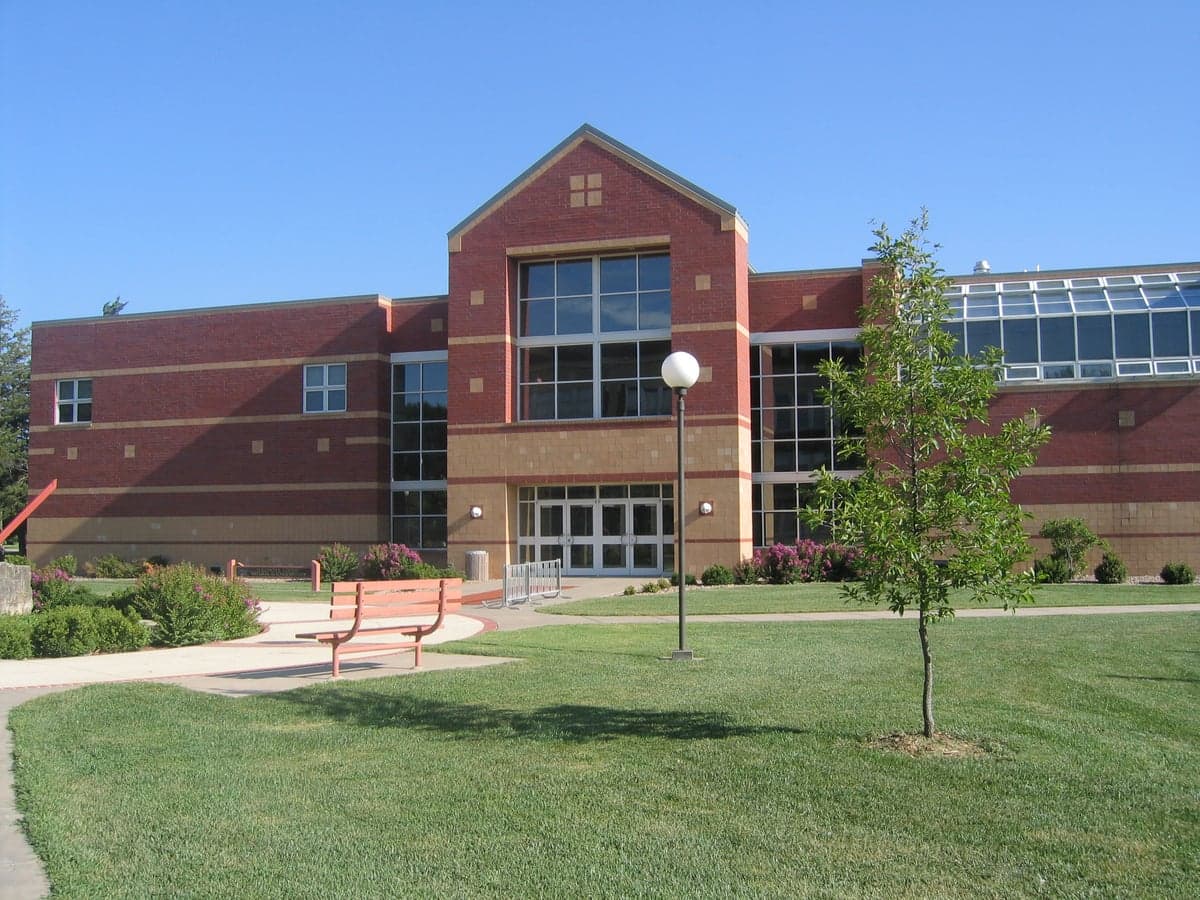
Photo: Wikipedia
Demographics of Hillsboro, KS
Affluence Level in Hillsboro, KS
A middle-class area roughly in line with national averages across income, home values, education, and employment.
People of Hillsboro, KS
The people of Hillsboro, Kansas, today number 2,716, forming a tight-knit community where 88.1% of residents identify as White, 3.9% as Hispanic, 3.3% as Black, and 1.2% as foreign-born. The city retains a distinctly Mennonite heritage, visible in its quiet streets, locally owned businesses, and a college-educated rate of 33.9% that slightly exceeds the state average. Hillsboro’s identity is rooted in religious settlement and agricultural pragmatism, creating a population that values stability, self-reliance, and community cohesion.
How the city was settled and grew
Hillsboro’s founding population arrived in the 1870s and 1880s as part of a deliberate Mennonite migration from Russia. These German-speaking Mennonites, fleeing religious persecution and military conscription under the Russian Empire, were drawn to central Kansas by the promise of fertile land and religious freedom. The Santa Fe Railroad’s arrival in 1879 made the area accessible, and the town was officially platted in 1880. The original settlers—primarily of Dutch and German ancestry—established the North Hillsboro neighborhood around the railroad depot, building simple frame houses and the first Mennonite church. A second wave of Mennonites from the Crimea and Volga regions arrived in the 1890s, settling what became South Hillsboro, where they built larger farmsteads and the Tabor College campus (founded 1908). These early residents were almost entirely White, agrarian, and deeply religious, with the Mennonite church serving as the social and cultural anchor. By 1900, the population had reached roughly 800, and the town’s character as a conservative, family-oriented farming community was firmly set.
Modern era (post-1965)
The post-1965 period brought modest demographic shifts. The Immigration and Nationality Act of 1965 opened doors to non-European immigrants, but Hillsboro’s remote location and limited industrial base meant little direct impact. Instead, the most significant change was domestic: the decline of small family farms pushed some younger residents toward Wichita or Kansas City, while a small but steady in-migration of non-Mennonite families arrived seeking affordable housing and a slower pace. The East Hillsboro neighborhood, developed in the 1970s along D Street, absorbed many of these newcomers—mostly White working-class families employed at the local grain elevator or the Hillsboro Community Hospital. The Hispanic population, now 3.9%, began arriving in the 1990s, primarily as agricultural laborers for the surrounding wheat and cattle operations, settling in rental properties along Main Street near the old depot. The Black population (3.3%) is largely composed of families connected to Tabor College or the nearby Marion County Detention Center, concentrated in the College Hill area around Tabor’s campus. The East/Southeast Asian community (0.7%) and Indian-subcontinent community (0.4%) are small, mostly professionals or academics affiliated with the college, living in the newer West Hillsboro subdivision built in the 2000s. Overall, the city remains overwhelmingly White and culturally Mennonite, with diversity arriving slowly and in small numbers.
The future
Hillsboro’s population is aging and slowly shrinking—down from 2,900 in 2010—and future growth depends on attracting younger families and workers. The city’s diversity is likely to increase modestly, driven by Hispanic families moving from larger Kansas cities for affordable housing and by Tabor College’s recruitment of out-of-state and international students. The West Hillsboro subdivision, with newer homes and larger lots, is the primary area for new construction and will likely absorb most future in-migration. The North Hillsboro historic district, with its aging housing stock, may see gradual turnover as older residents pass away and younger buyers renovate. The cultural identity will remain strongly Mennonite and conservative, but the growing Hispanic presence—already visible in local churches and the school system—will add a new layer to the community’s character. The foreign-born share (1.2%) is unlikely to rise dramatically given the lack of major employers, but the city’s low cost of living and safe reputation could attract remote workers and retirees from more expensive states.
For someone moving in now, Hillsboro offers a stable, religiously grounded community where change comes slowly and neighborly trust runs deep. The population is overwhelmingly White and conservative, but small pockets of diversity are emerging in West Hillsboro and around Tabor College. The city is not becoming a melting pot—it is becoming a slightly more varied version of its historic self, where newcomers are welcomed as long as they respect the existing rhythms of church, family, and farmland.

* Values derived from national, state, county, city and local statistics and may differ in a specific area. Last updated: 2026-11-06T23:09:56.000Z
Narrative content on this page is AI-generated and may contain mistakes. Verify any details that matter before acting on them.
ReloMaps may earn a commission from affiliate links at no extra cost to you.

