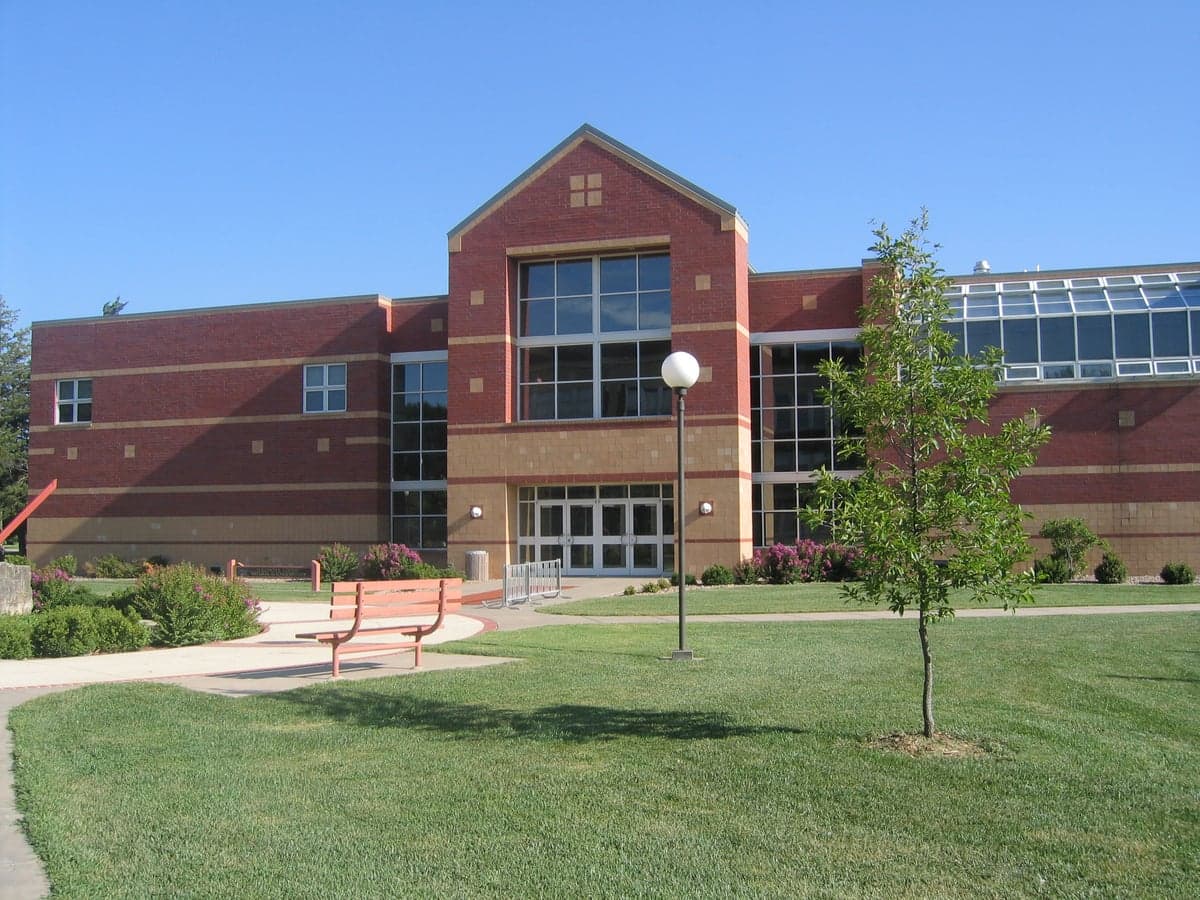
Photo: Wikipedia
Political ClimatePolitical Climate in Hillsboro, KS
District shown is the primary district for this city’s centroid. Cities may span multiple districts.
Inherited from parent county — no local data available.
* Lean and PVI are calculated from Hillsboro, KS’s own 2020 presidential results (precinct returns summed to the city), with 2024 estimated from the surrounding county’s 2020–2024 shift, Cook-style. Sources: state election offices; VEST 2020 precinct results (CC BY 4.0).
Political rankings in Kansas
- Most Conservative Cities in Kansas
- Most Liberal Cities in Kansas
- Best Liberal-Leaning Towns in the Midwest
- Safest Liberal-Leaning Towns in the Midwest
- Safest Conservative-Leaning Towns in the Midwest
- Affordable Small Towns for Conservatives
- Most Affordable Liberal-Leaning Small Towns in the U.S.
- Safest Conservative-Leaning Cities in the U.S.
- Most Conservative Counties in Kansas
- Most Liberal Counties in Kansas
Local Political AnalysisPolitical Analysis of Hillsboro, KS
Hillsboro, Kansas, leans solidly Republican, with a Cook Partisan Voting Index (PVI) of R+10, making it slightly more conservative than the state of Kansas as a whole, which sits at R+9. This isn't a new development—the area has been a Republican stronghold for decades, but the margin has tightened a bit in recent cycles as the broader state has shifted rightward. In practice, that means local elections are often decided in the GOP primary, and Democratic candidates rarely run competitive races here. The trajectory is stable: Hillsboro isn't swinging blue anytime soon, but the gap between its lean and the state's lean is narrowing, reflecting a slow, subtle moderation in the surrounding rural areas.
How it compares
Compared to the rest of Kansas, Hillsboro is a touch redder, but the difference is small enough that most residents wouldn't notice it in daily life. The real contrast shows up when you look at nearby towns like Marion (R+12) or Peabody (R+11), which are even more conservative, or at cities like Newton (R+7) and Wichita (R+8), which are slightly more moderate. The biggest political divide isn't between Hillsboro and the state—it's between Hillsboro and the urban cores of Kansas City or Lawrence, where the PVI flips to D+5 or D+10. In Hillsboro, you'll see more Trump signs than in Johnson County, but the local GOP is more focused on agriculture policy and school funding than on national culture wars. The state's R+9 rating means Kansas is already a reliably red state, so Hillsboro's R+10 doesn't make it an outlier—it just reinforces the regional pattern.
What this means for residents
For conservative residents, Hillsboro is a comfortable fit. Local government, school board meetings, and county commission decisions tend to align with traditional Republican values: low taxes, limited regulation, and support for agriculture. You'll find that most of your neighbors share your political views, and local candidates rarely face serious opposition from the left. For liberal residents, the reality is different. You won't be ostracized, but you'll be in a clear minority. Political conversations at the coffee shop or church potluck will lean right, and you'll need to be selective about where you voice dissenting opinions. That said, Hillsboro is a small, close-knit community where personal relationships often trump political labels—people are more likely to judge you by your character than your party registration. The trajectory suggests this dynamic will persist, though younger residents moving in from more diverse areas may slowly shift the tone.
Culturally, Hillsboro stands out for its strong Mennonite and Swiss heritage, which influences local policy in subtle ways. The town has a higher-than-average emphasis on community service and volunteerism, and there's a pragmatic, live-and-let-live attitude that softens the hard edges of partisan politics. You won't see the same level of political signage or heated debates as you might in a suburb of Wichita. Instead, the political climate here is quieter, more consensus-driven, and deeply rooted in local issues like water rights and school consolidation. For anyone moving here, the key takeaway is that Hillsboro's politics are predictable and stable—if you're looking for a place where your vote will feel impactful, this isn't it, but if you want a community where people get along despite their differences, you'll find that here.

State Political ClimatePolitical Climate in Kansas
State Political AnalysisPolitical Environment in the State
Kansas has been a reliably Republican state for decades, with a Cook Partisan Voting Index of R+9, meaning it votes about nine points more Republican than the nation as a whole. The dominant coalition is a mix of rural conservatives, suburban moderates, and a growing libertarian-leaning wing, but the state has also shown a surprising willingness to elect Democratic governors — Kathleen Sebelius (2003–2009), Mark Parkinson (2009–2011), Laura Kelly (2019–present) — who have tempered the legislature's more aggressive impulses. Over the last 10–20 years, the state has shifted rightward on cultural and fiscal issues, but the 2012–2017 "Brownback experiment" in deep tax cuts created a lasting wariness of radical supply-side economics, even among many Republicans.
Urban vs. rural divide
The political map of Kansas is a textbook case of urban-rural polarization. The two major Democratic strongholds are Wyandotte County (Kansas City, Kansas) and Douglas County (Lawrence), home to the University of Kansas. These two counties alone deliver a huge share of the Democratic vote statewide. Johnson County, the affluent Kansas City suburb, has been the real battleground: once reliably Republican, it has trended toward Democrats in presidential years, flipping blue in 2020 and 2024, driven by college-educated voters in places like Overland Park and Shawnee. Meanwhile, the rest of the state — from the Flint Hills to the High Plains — is deeply red. Sedgwick County (Wichita) leans Republican but is more competitive than the rural counties, while Shawnee County (Topeka) is a purple swing area that often decides statewide races. The rural-urban split means that a candidate can win the popular vote statewide while losing every county east of I-135 except Johnson and Douglas.
Policy environment
Kansas has a flat state income tax rate of 5.7% as of 2025, down from a top rate of 6.45% a decade ago, and the state sales tax is 6.5% with local add-ons that can push it over 10% in some cities. The regulatory posture is generally business-friendly, with a right-to-work law and no state-level minimum wage above the federal $7.25. Education policy is a perennial flashpoint: the state has seen repeated school funding lawsuits, and the legislature has passed bills expanding school choice, including a 2024 universal education savings account program that lets families use public funds for private or homeschool expenses. Healthcare policy is mixed — Kansas expanded Medicaid under the Affordable Care Act in 2023 after years of legislative resistance, but abortion is heavily restricted: a 2022 state constitutional amendment failed, but the legislature has since passed a near-total ban (the "Value Them Both" framework) that is currently tied up in court. Election laws have tightened: a 2021 law requires photo ID for voting, limits advance voting to two weeks, and bans ballot harvesting.
Recent policy direction
The last five years have seen Kansas move decisively in a conservative direction on most fronts, but with notable exceptions. On gun and self-defense law, Kansas is a constitutional carry state (since 2015) and has preemption laws that block local gun ordinances — Lawrence and Kansas City, Kansas have tried to pass local restrictions but been overruled by the legislature. On parental and education rights, the 2024 school choice law is the biggest shift, along with a 2023 law requiring schools to notify parents of any changes to a student's health or well-being (the "Parents' Bill of Rights"). On speech and privacy, Kansas has no broad shield law for journalists, but the state has not passed any major internet censorship or surveillance expansion bills recently. On medical and bodily autonomy, the abortion ban is the headline, but the state also has a 2023 law banning gender-affirming care for minors, overriding a veto from Governor Kelly. On property rights, Kansas has strong eminent domain protections and no statewide rent control. On taxation, the trend is toward further cuts: the 2024 session saw a phased reduction of the food sales tax to 0% by 2025. On voting and ballot access, the 2021 law made it harder to vote by mail and shortened the early voting window, but turnout has remained high — over 65% in 2024.
Civil unrest & political movements
Kansas is not known for large-scale civil unrest, but there have been flashpoints. The 2020 George Floyd protests in Kansas City, Kansas and Lawrence saw some property damage and arrests, but nothing on the scale of larger metros. The anti-abortion movement is highly organized, with groups like Kansans for Life holding significant sway in the legislature. On the left, the Kansas People's Action and the Mainstream Coalition are active in Johnson County and Lawrence, focusing on education funding and voting rights. Immigration politics are relatively quiet — Kansas has no sanctuary cities, and a 2023 law requires law enforcement to cooperate with federal immigration authorities. There has been no serious secession or nullification rhetoric, though some rural counties have passed "Second Amendment sanctuary" resolutions. Election integrity controversies flared after 2020, with the Kansas GOP pushing for audits and tighter rules, but no major fraud was found. A new resident would notice the political divide mostly in yard signs and local news coverage — the state is polarized but not volatile.
Projection
Over the next 5–10 years, Kansas is likely to remain a solidly Republican state at the federal level, but the growing population in Johnson County could make statewide races more competitive. The Democratic base is concentrated and growing in the Kansas City suburbs, while rural counties continue to lose population. The libertarian streak in Kansas politics — skepticism of both big government and social conservatism — could become more influential, especially as younger voters from Manhattan (Kansas State University) and Lawrence enter the electorate. The school choice law and abortion restrictions may accelerate the out-migration of some liberal-leaning families from rural areas to Johnson County or out of state entirely. A new resident moving in now should expect a state where the legislature will continue to push conservative cultural and fiscal policies, but where the governor's office may remain a Democratic check — and where the real action is in the suburbs, not the statehouse.
For a new resident, the bottom line is this: Kansas offers a low-tax, business-friendly environment with strong gun rights and school choice, but with a political climate that is actively conservative on social issues. If you lean right, you'll find a state that generally aligns with your values and where your vote counts. If you lean left, you'll find strong communities in Lawrence, Kansas City, and parts of Johnson County, but you'll be in a minority at the state level. The practical takeaway is that your experience will depend heavily on where you live — the political reality of Overland Park is very different from that of Dodge City or Salina.
* Values derived from national, state, county, city and local statistics and may differ in a specific area. Last updated: 2026-11-06T23:09:56.000Z
Narrative content on this page is AI-generated and may contain mistakes. Verify any details that matter before acting on them.
ReloMaps may earn a commission from affiliate links at no extra cost to you.

