Photo: Wikipedia
Political ClimatePolitical Climate in Hancock, WI
District shown is the primary district for this city’s centroid. Cities may span multiple districts.
Inherited from parent county — no local data available.
* Lean and PVI are calculated from the surrounding county’s 2020 and 2024 presidential results, Cook-style — a finer measure here than its congressional district (WI-6).
Political rankings in Wisconsin
- Most Conservative Cities in Wisconsin
- Most Liberal Cities in Wisconsin
- Best Liberal-Leaning Towns in the Midwest
- Safest Liberal-Leaning Towns in the Midwest
- Safest Conservative-Leaning Towns in the Midwest
- Affordable Small Towns for Conservatives
- Most Affordable Liberal-Leaning Small Towns in the U.S.
- Safest Conservative-Leaning Cities in the U.S.
- Most Conservative Counties in Wisconsin
- Most Liberal Counties in Wisconsin
Local Political AnalysisPolitical Analysis of Hancock, WI
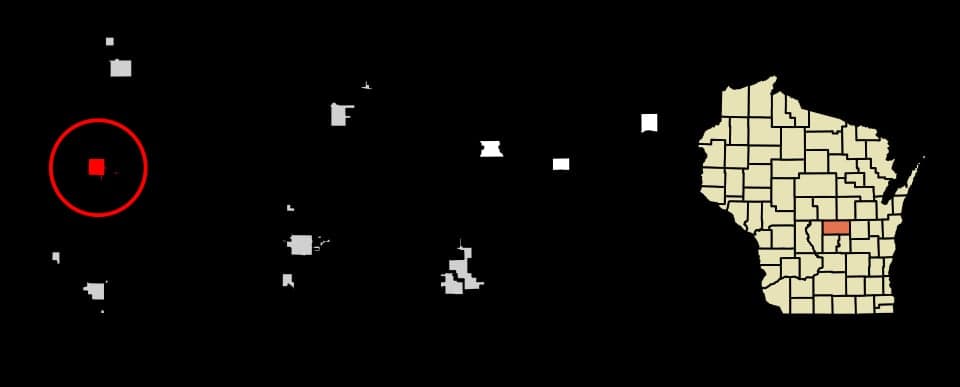
Hancock, Wisconsin, sits in a deeply conservative pocket of the state, with a Cook Partisan Voting Index (PVI) of R+18. That means the area consistently votes about 18 points more Republican than the national average, making it one of the more reliably red communities in central Wisconsin. The surrounding county, Waushara, has voted for the GOP presidential candidate by margins of 30 points or more in recent cycles, and that trend shows no sign of slowing down. While the state of Wisconsin as a whole is a pure toss-up — with a Cook PVI of EVEN — Hancock feels like a different political universe, where Democratic candidates rarely break 35% of the vote in local races.
How it compares
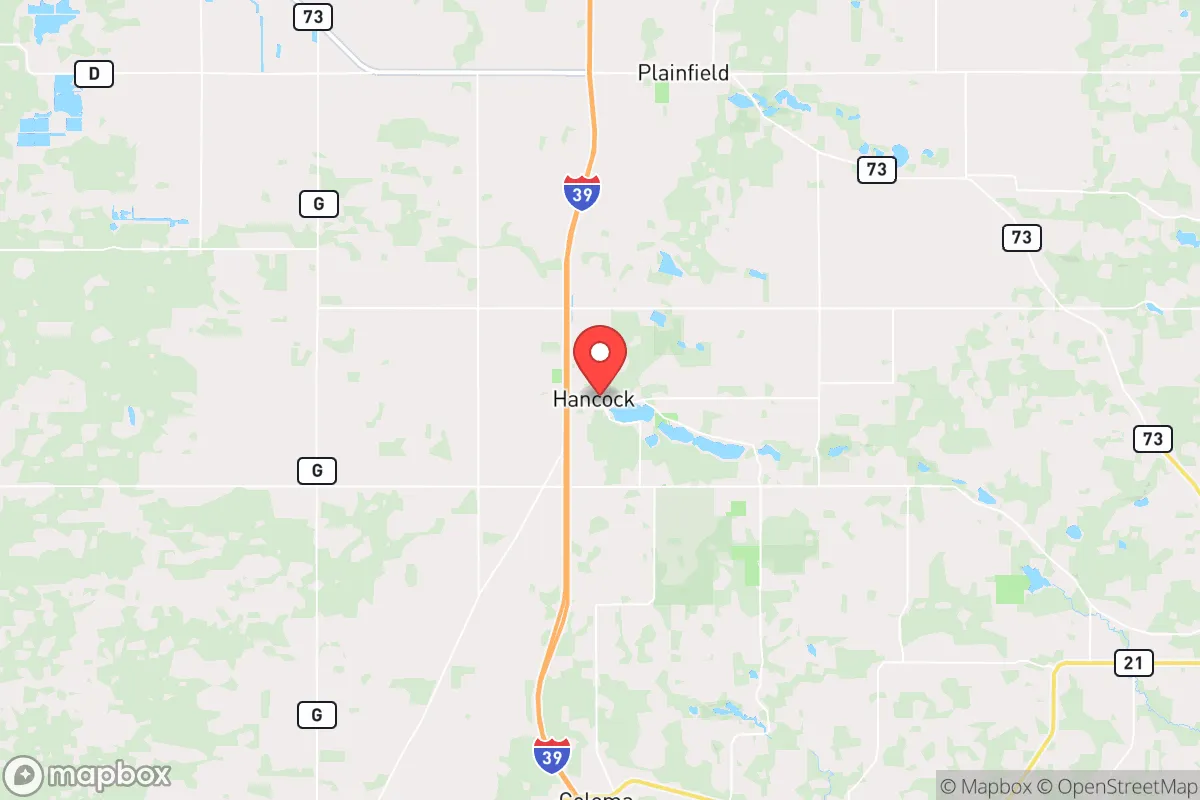
The contrast between Hancock and the rest of Wisconsin is stark. The state's political identity is defined by its razor-thin margins: in 2020, Joe Biden won Wisconsin by just over 20,000 votes out of nearly 3.3 million cast. But that statewide drama barely registers in Hancock. Here, the political conversation is shaped by local concerns — farm policy, school funding, and property taxes — rather than the urban-suburban battles that decide statewide elections. Drive 30 miles east to Oshkosh or 40 miles south to Madison, and you'll find a completely different political climate. Oshkosh leans slightly Republican but is far more competitive, while Madison is one of the most liberal cities in the Midwest. Even nearby Stevens Point, about 20 miles north, is a blue dot in a red region thanks to the University of Wisconsin-Stevens Point. Hancock, by contrast, is surrounded by small towns like Coloma and Plainfield that share its deep-red lean, creating a consistent conservative corridor along Highway 21.
What this means for residents
For conservative residents, Hancock offers a comfortable political environment where their views are the norm. Local government, school board meetings, and community events tend to reflect conservative values without much pushback. You'll find plenty of Trump signs in yards during election season, and the local Republican Party is active and well-organized. For liberal residents, the reality is more isolating. They're likely in the minority at town hall meetings and may feel hesitant to voice their opinions openly. That said, the area isn't hostile — it's more of a quiet, live-and-let-live culture where political disagreements rarely boil over into personal conflicts. The biggest practical impact is on policy: property taxes are relatively low compared to liberal-leaning parts of the state, and there's strong support for gun rights and agricultural interests. Social services and public transit are limited, reflecting the area's preference for small government.
Culturally, Hancock and its surroundings are defined by a strong sense of self-reliance and community. The annual Hancock Lions Club events and local church gatherings are the social anchors, not political rallies. There's a noticeable distrust of state government in Madison, which many locals see as out of touch with rural life. This sentiment has only deepened in recent years, as debates over COVID-19 restrictions and election integrity have widened the urban-rural divide. Looking ahead, the area's political trajectory seems locked in: as long as the state's population continues to concentrate in Milwaukee, Madison, and their suburbs, Hancock's conservative identity will likely grow more pronounced, not less. For anyone moving here, the key is understanding that politics is a backdrop, not the main event — most people are more concerned with the price of diesel and the condition of the county roads than with the latest D.C. drama.

State Political ClimatePolitical Climate in Wisconsin
State Political AnalysisPolitical Environment in the State
Wisconsin is the ultimate swing state, with a Cook PVI of EVEN that perfectly captures its knife-edge political balance. Over the past 20 years, the state has lurched from reliably blue in presidential races (voting for Democrats from 1988 to 2012) to a dead-even battleground where margins are measured in thousands of votes—Trump won it by 22,748 in 2016, Biden by 20,682 in 2020. The dominant coalitions are a shrinking but still potent union-and-urban Democratic base in Milwaukee and Madison, squared off against a growing, energized conservative coalition in the WOW counties (Waukesha, Ozaukee, Washington) and the rural north and west. The trajectory is a slow, grinding polarization: the suburbs are getting redder, the cities bluer, and the rural areas are bleeding population but not political intensity.
Urban vs. rural divide
The political map of Wisconsin is a story of three distinct regions. Milwaukee County is the Democratic anchor, delivering around 70% of its vote to Democrats, powered by the city's Black and Latino populations and progressive white voters. Dane County (Madison) is the state's liberal engine, with a margin that has grown from +30 points in 2000 to +50 points in 2024—driven by the university, tech workers, and state government employees. The WOW counties—Waukesha, Ozaukee, and Washington—are the Republican counterweight, routinely giving the GOP 60-65% of the vote. These are the classic "collar counties" where white suburbanites have shifted rightward since the 1990s, fueled by school choice, tax aversion, and cultural conservatism. The rural northwoods and western driftless area (around La Crosse and Eau Claire) are reliably Republican but with lower turnout, while the Fox Valley (Appleton, Green Bay, Oshkosh) is the true swing region—blue-collar, Catholic, and historically union, but trending red on cultural issues. The key flip in 2016 was Racine County, a former blue-collar Democratic stronghold that went for Trump and has stayed red since.
Policy environment
Wisconsin's policy environment is a patchwork of conservative governance under a Republican legislature and a Democratic governor (Tony Evers, elected 2018, re-elected 2022). The state has a flat income tax of 4.4% (down from 7.75% in 2011), one of the lowest corporate tax rates in the Midwest, and no estate tax. Property taxes are above the national median but capped by state law. Education policy is a national battleground: Wisconsin has one of the oldest and largest school voucher programs (the Milwaukee Parental Choice Program, started in 1990), and in 2023 the legislature expanded it statewide with no income cap. The state also has a "right-to-work" law (passed 2015) that weakened public-sector unions, and Act 10 (2011) effectively ended collective bargaining for most public employees. Healthcare is mixed: Wisconsin expanded Medicaid under the Affordable Care Act in 2014, but the legislature has refused to create a state-based exchange, leaving residents on the federal marketplace. Election laws are moderately restrictive: voter ID is required (since 2011), absentee ballot drop boxes were banned by the state Supreme Court in 2022, and same-day voter registration is still allowed—a rare bipartisan holdover.
Recent policy direction
The last five years have seen a sharp rightward shift on cultural and gun issues, tempered by Evers' veto pen. In 2023, the legislature passed a constitutional carry bill (permitless carry), which Evers vetoed; the GOP is expected to try again if they win the governorship in 2026. The state has a "stand your ground" law (passed 2011) and a 48-hour waiting period for handgun purchases (vetoed by Evers in 2023). On education, the 2023-25 budget included a $1 billion increase in school choice funding and a ban on teaching critical race theory in K-12 (though enforcement is vague). Parental rights were strengthened with a 2023 law requiring schools to notify parents of any mental health or gender identity discussions. On abortion, a 1849 law banning nearly all abortions was briefly in effect after Dobbs, but a 2023 Dane County judge blocked it; the state Supreme Court, now 4-3 liberal, is expected to rule it unconstitutional in 2025. Medical marijuana was legalized in 2023 for severe conditions, but recreational use remains illegal. Property rights are strong: Wisconsin has no statewide zoning preemption, but local control is robust. On voting, the 2022 Supreme Court ruling banning drop boxes was a major restriction; the legislature also passed a bill requiring absentee ballots to be received by Election Day (not just postmarked), which Evers vetoed.
Civil unrest & political movements
Wisconsin has been a flashpoint for political violence and protest. The 2020 Kenosha unrest after the Jacob Blake shooting saw two nights of rioting, arson, and the killing of two protesters by Kyle Rittenhouse, who was acquitted in 2021. The state has a strong and visible militia movement, particularly the Wisconsin Defense Force and Three Percenters, who were active at the 2020 Capitol protests in Madison. On the left, the Wisconsin Alliance for Retired Americans and Indivisible chapters are active, and the 2011 Act 10 protests drew 100,000 people to the Capitol. Immigration politics are relatively quiet—Wisconsin is not a border state and has no sanctuary cities, though Milwaukee and Madison have "welcoming city" ordinances that limit cooperation with ICE. Election integrity remains a live issue: the 2020 election saw Trump's campaign file multiple lawsuits, and a 2022 audit by the nonpartisan Legislative Audit Bureau found no widespread fraud but did identify administrative errors. The Waukesha Christmas parade attack in 2021, where a man drove through the parade killing six, was not politically motivated but inflamed cultural tensions. A new resident would notice the ubiquity of political yard signs, the intensity of local talk radio (especially WISN in Milwaukee), and the fact that every election cycle feels like a national crisis.
Projection
Over the next 5-10 years, Wisconsin will likely remain a toss-up, but the demographic trends favor Republicans. The state's population is aging and white (80% non-Hispanic white), with slow growth (3.3% since 2010). In-migration is mostly from Illinois, bringing moderate-to-conservative retirees to the WOW counties and the northwoods. The Milwaukee metro is losing Black residents to the South, while Madison is growing fast with young professionals who lean left. The state Supreme Court flipped to a 4-3 liberal majority in 2023, which will likely protect abortion access and block gerrymandering challenges (the current maps are heavily GOP-favored). The 2024 election will be a test: if Trump wins Wisconsin again, the GOP will push harder on election law changes; if Biden wins, expect continued gridlock. The key swing will be the WOW counties—if they continue to shift right, the GOP can overcome Milwaukee and Dane margins. A new resident moving in now should expect a decade of close elections, constant legislative drama, and a state that feels like it's always on the verge of tipping one way or the other.
For a new resident, the bottom line is that Wisconsin offers a genuinely competitive political environment where your vote matters—but it also means constant tension. If you're conservative, you'll find a state where the legislature is solidly red, gun laws are permissive, and school choice is robust, but you'll need to live in the WOW counties or the Fox Valley to feel culturally at home. If you're liberal, you'll find sanctuary in Madison or Milwaukee, but you'll face a gerrymandered legislature that blocks most of your priorities. The practical takeaway: choose your county carefully, because in Wisconsin, local politics is national politics writ small.
* Values derived from national, state, county, city and local statistics and may differ in a specific area. Last updated: 2026-11-18T18:32:22.000Z
Narrative content on this page is AI-generated and may contain mistakes. Verify any details that matter before acting on them.
ReloMaps may earn a commission from affiliate links at no extra cost to you.

