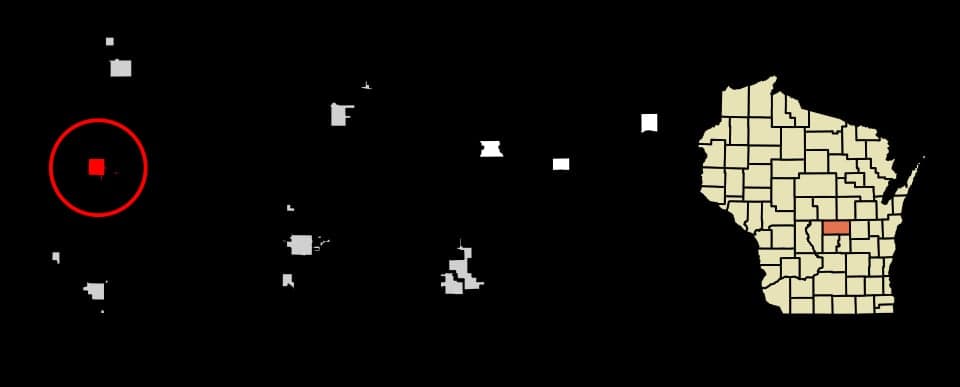
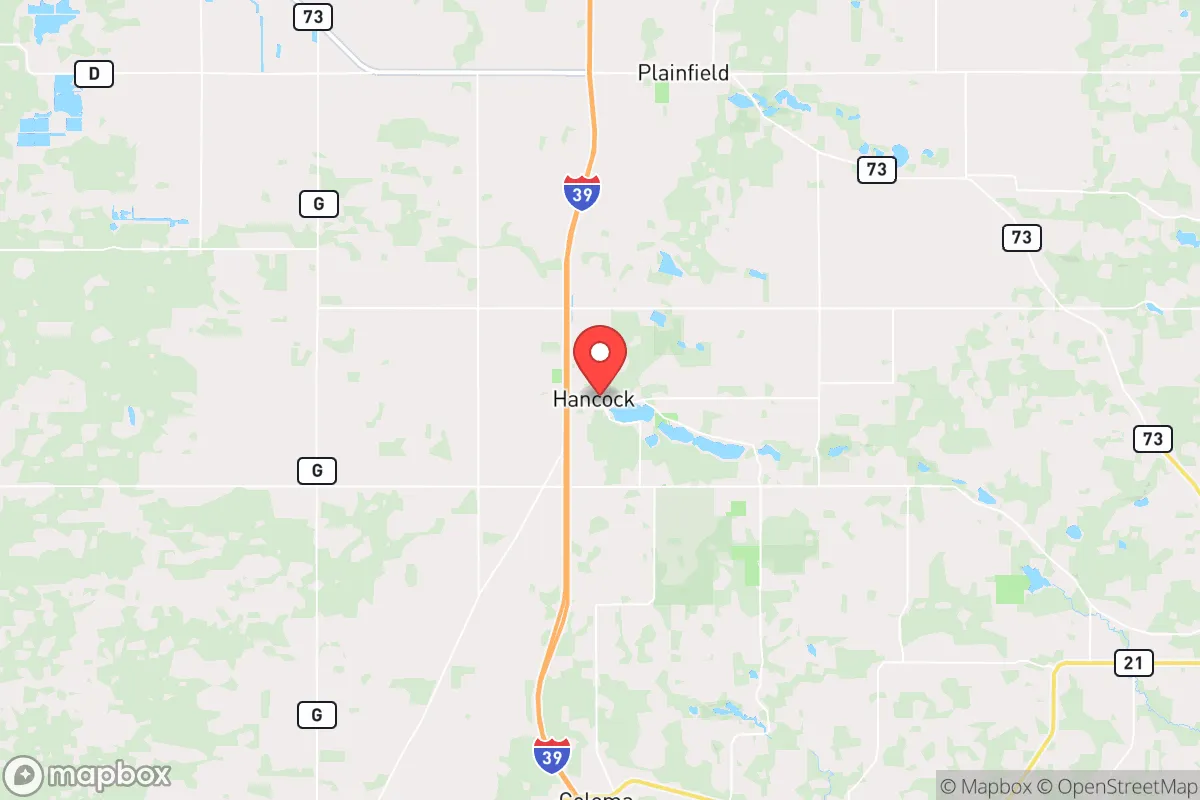
Photo: Wikipedia
Strategic Assessment of Hancock, WI
Workable tactical position. Some exposure to population density or targets, but generally defensible in a crisis.
What does the Strategic Assessment tell us?
Our Strategic Assessment grades tactical survivability of an area. Major population centers, military targets, fallout zones, natural disasters, and border exposure all drive risk — lower exposure means a more defensible position in a crisis.
This is heavily inspired by Joel Skousen's Strategic Relocation book. Highly recommended you checkout the book ($)What does this tell us?
Our Strategic Assessment grades tactical survivability of an area. Major population centers, military targets, fallout zones, natural disasters, and border exposure all drive risk — lower exposure means a more defensible position in a crisis.
This is heavily inspired by Joel Skousen's Strategic Relocation book. Highly recommended you checkout the book ($)Strategic Pillars
Key Distances
Regional Safe Places
Below is our recommended "safe zones" in Wisconsin and the surrounding area based on our strategic heuristics. For most people, it's unrealistic to live in a “safe zone” full-time due to work, family or other personal reasons. They tend to be more rural. However, many of these areas are perfect for second homes and retreat properties that double as a vacation home or even a short-term rental.
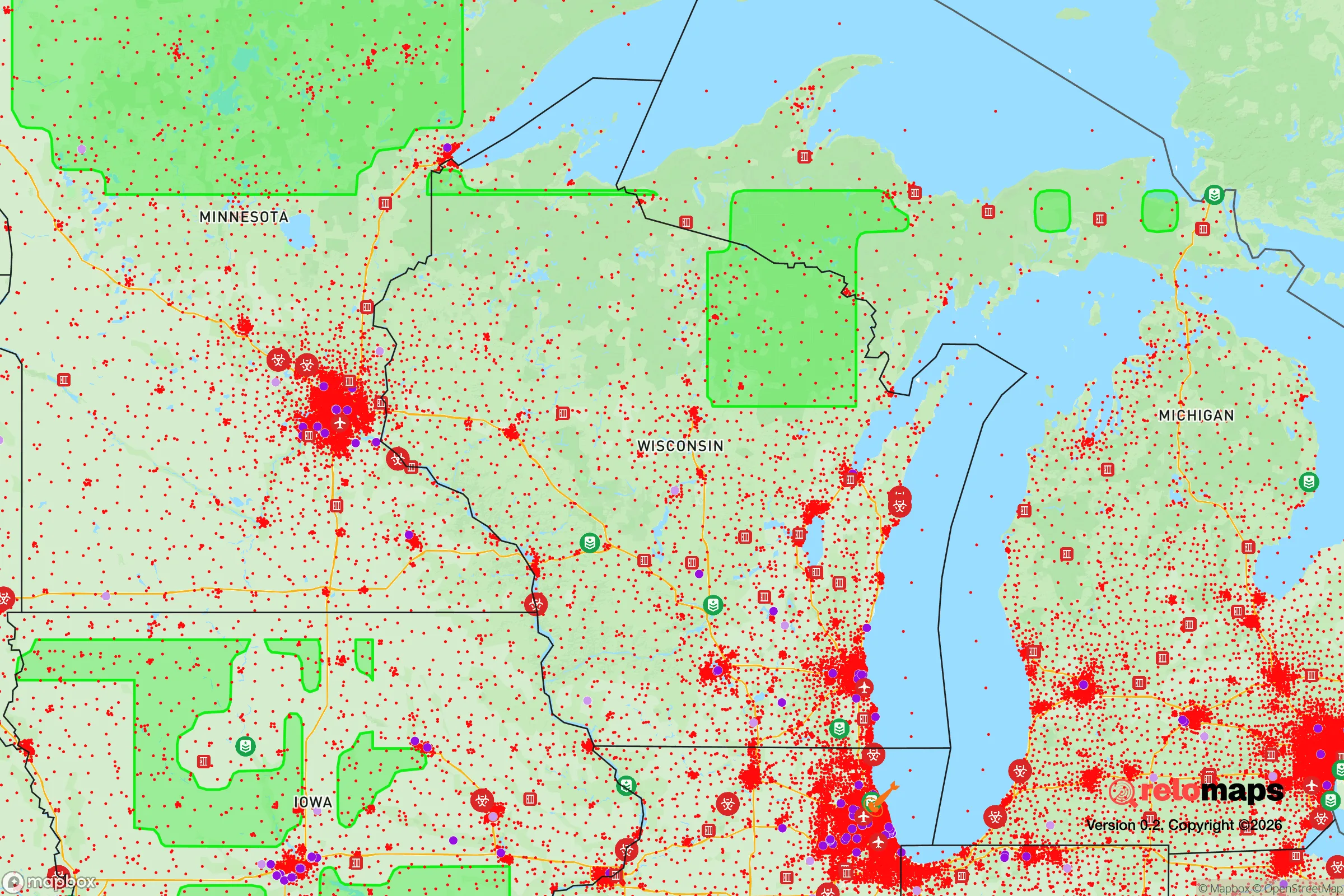
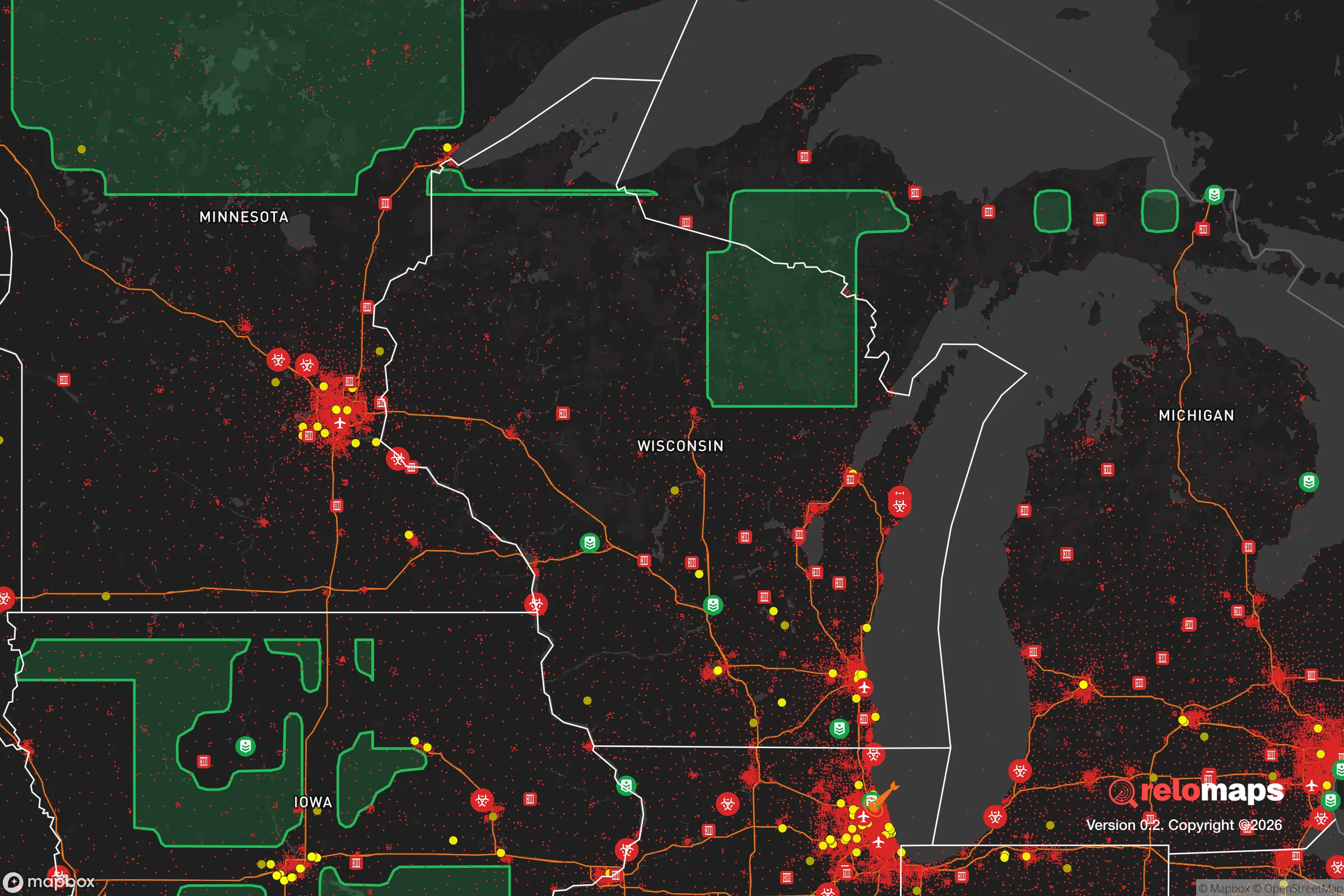


Important Note: For informational purposes only. This does not mean nothing bad ever happens in the green zones. Please use common sense. This is based on public data and modeled with AI. We tried to take a conservative approach but mistakes happen. We update this regularly as new information becomes available.
Solar Generator Recommendations
Backup power matters more here than in safer locations. We've picked three solar generators across budgets and capacity tiers — start with the budget unit if you only need a few essentials, or step up if you want to run a fridge and HVAC for days at a time.

Jackery Portable Power Station Explorer 300
Budget OptionPower on the Go: Weighing only 11 lbs, it's convenient to set up and store with book-sized foldable solar panels

BLUETTI Portable Power Station AC180
Designed for both indoor and outdoor scenarios, AC180 is highly capable as it has a robost capacity and continuous output power.

EF ECOFLOW DELTA Pro Ultra Power Station
Upgraded PickEcoFlow DELTA Pro Ultra is a whole-home energy system designed to grow with your family. Integrated with the Smart Home Panel 2, it scales to meet your evolving energy needs — keeping your home powered, intelligent, and secure through every stage of life.
We earn a commission, at no additional cost to you.
Strategic Assessment Analysis
Hancock, Wisconsin, presents a mixed strategic picture for the relocation-minded reader focused on resilience and self-sufficiency. Its primary advantage is a low population density and a location that is far enough from major metropolitan targets to reduce, but not eliminate, exposure to many man-made risks, while its position in the Central Sands region offers unique natural resource advantages. However, the area’s economic dependence on a single industry, its position relative to major transportation corridors, and its proximity to several significant infrastructure and military assets require careful consideration for anyone prioritizing long-term preparedness.
Geographic position and natural advantages for long-term stability
Hancock sits in Waushara County, squarely within Wisconsin’s Central Sands region, a landscape defined by glacial outwash that creates exceptionally well-drained, sandy soils. This is a double-edged sword: the soil is poor for traditional row-crop farming without heavy irrigation, but it makes the area less prone to the flooding and standing water that plague other parts of the state. The area’s flat to gently rolling terrain is a practical advantage for building, road access, and potential off-grid energy installations like solar panels. The region’s primary natural advantage is its abundant groundwater. The Central Sands sits atop a vast, shallow aquifer that provides reliable, high-quality water for irrigation and domestic use. For a relocator, this means well water is a realistic and sustainable option, a critical factor for long-term water security. The local climate is continental, with cold, snowy winters and warm, humid summers. While this presents challenges for year-round food production without a greenhouse, the growing season (roughly 130-150 days) is sufficient for many cold-hardy crops. The area is not prone to earthquakes, hurricanes, or wildfires on the scale seen in other parts of the country, making its primary natural risks winter storms, occasional tornadoes (typically low-intensity in this part of the state), and drought, which is mitigated by the aquifer.
Risk exposure and proximity to fallout-relevant landmarks
Hancock’s location is a study in relative isolation with notable exceptions. It is roughly 90 miles from Milwaukee and 100 miles from Madison, placing it outside the immediate blast and thermal zones of a major urban nuclear event, but within the range of potential fallout patterns depending on wind direction. The most significant nearby risk is Fort McCoy, a major U.S. Army installation located about 30 miles to the northwest near Sparta. This is a high-value military target. A strike on Fort McCoy would likely produce significant fallout that could affect Hancock depending on weather conditions. Additionally, the area is within 50-60 miles of the Point Beach Nuclear Plant (near Two Rivers) and the Kewaunee Power Station (now decommissioned but still storing spent fuel). A radiological incident at either site, while statistically unlikely, is a credible risk that a resilience-minded relocator must acknowledge. The area is also crisscrossed by major transportation corridors, including Interstate 39 and U.S. Highway 51, which run directly through or near Hancock. These highways are primary routes for freight, including hazardous materials, and would be evacuation or movement corridors during a crisis, potentially bringing unwanted traffic and attention. The presence of large-scale industrial agriculture, particularly potato and vegetable processing facilities, means a steady flow of heavy truck traffic and the storage of agricultural chemicals, a localized but real hazard.
Practical resilience for a relocator: food, water, energy, and defensibility
For a relocator serious about self-sufficiency, Hancock offers a strong foundation with some critical gaps. Water is the area’s strongest asset. The shallow aquifer means a properly drilled well can provide a reliable, independent water source. The sandy soil, while poor for some crops, is excellent for septic systems, reducing a common infrastructure vulnerability. Food production is feasible but requires adaptation. The sandy soil is ideal for root vegetables (potatoes, carrots, beets) and crops like asparagus and berries, but it is nutrient-poor and requires significant amendment for leafy greens and grains. The short growing season makes a greenhouse or high tunnel a near-necessity for year-round food security. Local agriculture is dominated by large-scale potato and vegetable operations, so access to local, non-industrial food sources (small farms, farmers markets) is present but not abundant. Energy independence is achievable but requires investment. The area has good solar potential, though winter cloud cover is a factor. Wood heating is a practical and common option, given the surrounding forests. Wind potential is moderate; small-scale turbines can be effective but require proper siting. The local power grid is rural and can be prone to outages from winter storms, making backup power a wise investment. Defensibility is moderate. The flat terrain offers few natural defensive chokepoints. The town itself is small (population around 200), which reduces the risk of large-scale social unrest but also means a small, potentially insular community. Building a resilient property would require careful siting—away from main roads, with good visibility of approaches, and with a reliable water source. The local economy is heavily tied to agriculture and the nearby Wild Rose Health Services hospital and clinics. This creates a degree of economic vulnerability; a downturn in the potato market or a closure of a major employer would hit the area hard. The nearest major medical center is in Stevens Point (about 25 miles north), which is a consideration for long-term health security.
Overall, Hancock offers a viable but not ideal strategic location for the resilience-focused relocator. Its strongest cards are abundant groundwater, low population density, and distance from primary urban targets. Its weaknesses are the proximity to Fort McCoy and nuclear power plants, the dependence on a single agricultural economy, and the need for significant investment in soil improvement and climate-controlled growing to achieve food self-sufficiency. For a single individual or family willing to invest in a well, a greenhouse, and a robust backup power system, Hancock provides a defensible, low-risk base of operations. However, those seeking a location with a more diversified local economy, better natural defenses, or a longer growing season may want to look further north or west. The area is a solid "B" grade for resilience—good fundamentals, but with specific, manageable risks that require active mitigation.

* Values derived from national, state, county, city and local statistics and may differ in a specific area. Last updated: 2026-11-18T18:32:22.000Z
Narrative content on this page is AI-generated and may contain mistakes. Verify any details that matter before acting on them.
ReloMaps may earn a commission from affiliate links at no extra cost to you.

