
Photo: Wikipedia
Political ClimatePolitical Climate in Guilford, CT
District shown is the primary district for this city’s centroid. Cities may span multiple districts.
Local Political AnalysisPolitical Analysis of Guilford, CT
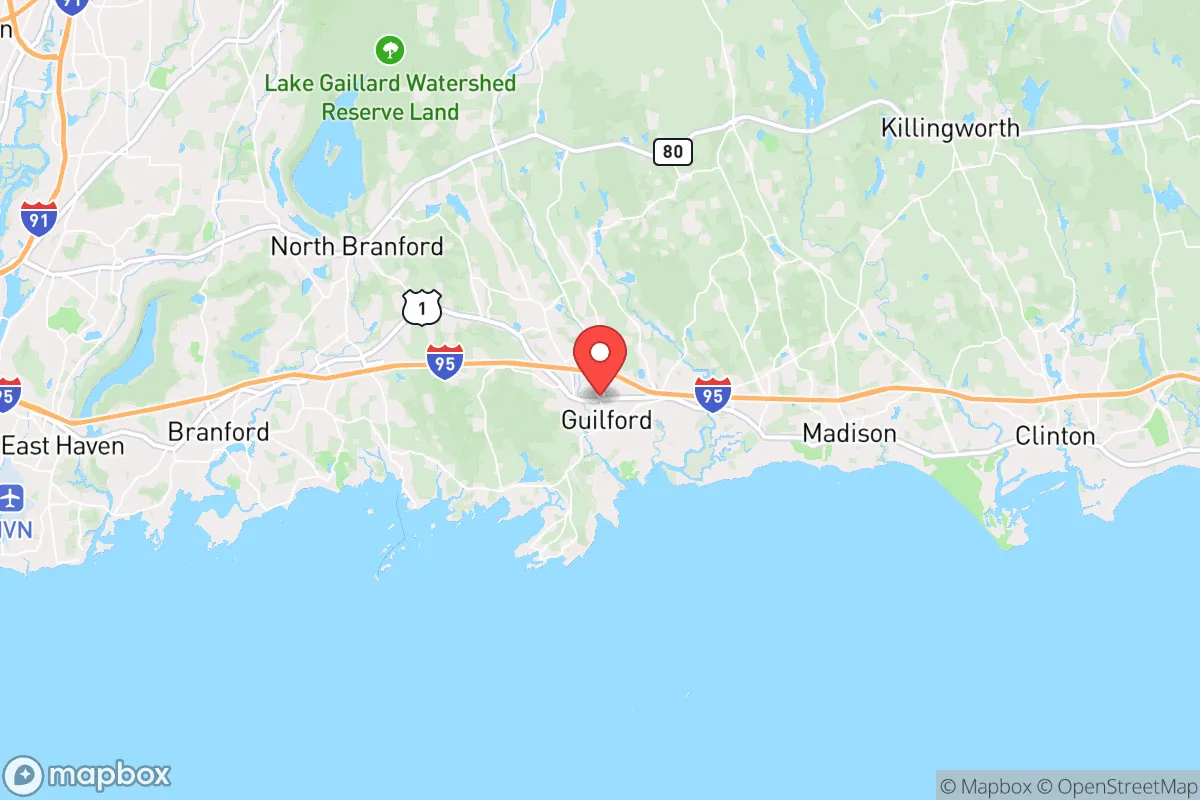
Guilford is a solidly Democratic town, and it’s been trending that way for a while. The Cook PVI of D+8 puts it right in line with the state of Connecticut as a whole, which also sits at D+8. That means Guilford is a reliable blue vote in presidential elections, but it’s not as deep blue as some of the more urbanized areas like New Haven or Hartford. If you look at the surrounding towns, you’ll see a real mix: Madison, just to the east, is more of a swing town that leans Republican in local races, while Branford to the west is also Democratic but with a stronger moderate streak. Guilford sits right in the middle of that coastal corridor, and its politics reflect a blend of educated professionals, longtime families, and a growing number of commuters who work in New Haven or even New York City.
How it compares
Compared to the rest of Connecticut, Guilford is a pretty good mirror of the state’s overall political makeup. The D+8 rating is identical, so you’re not getting a radical outlier here. But the difference is in the local texture. In Guilford, you’ll find a lot of Democrats who are more on the moderate side—think fiscal responsibility mixed with social liberalism—rather than the progressive activism you might see in New Haven or Hartford. The town’s Republican minority is small but organized, and they tend to focus on local issues like zoning, taxes, and school spending rather than national culture wars. That’s a contrast with towns like Killingworth or Durham, which are more rural and lean Republican. In state elections, Guilford consistently sends Democrats to the General Assembly, but those Democrats often have to appeal to a pragmatic, suburban base that doesn’t love big tax hikes or radical policy shifts.
What this means for residents
For liberal residents, Guilford is a comfortable place to live. You’ll find like-minded neighbors, and the town’s policies on things like environmental protection, public education, and social services generally align with progressive values. But it’s not a monoculture. Conservative residents aren’t marginalized here; they just know they’re in the minority. The town’s political reality means that conservative voices are heard on the Board of Finance and the Planning & Zoning Commission, where fiscal restraint and property rights are often debated. In practice, this creates a balance: the town invests in schools and open space, but it’s also careful about keeping taxes in check. The trajectory is toward a slightly more Democratic tilt as younger families move in from more expensive areas, but the change is gradual. Longtime residents will tell you that Guilford used to be more of a purple town, with a stronger Republican presence in the 1990s and early 2000s. That’s shifted, but the shift has been steady, not sudden.
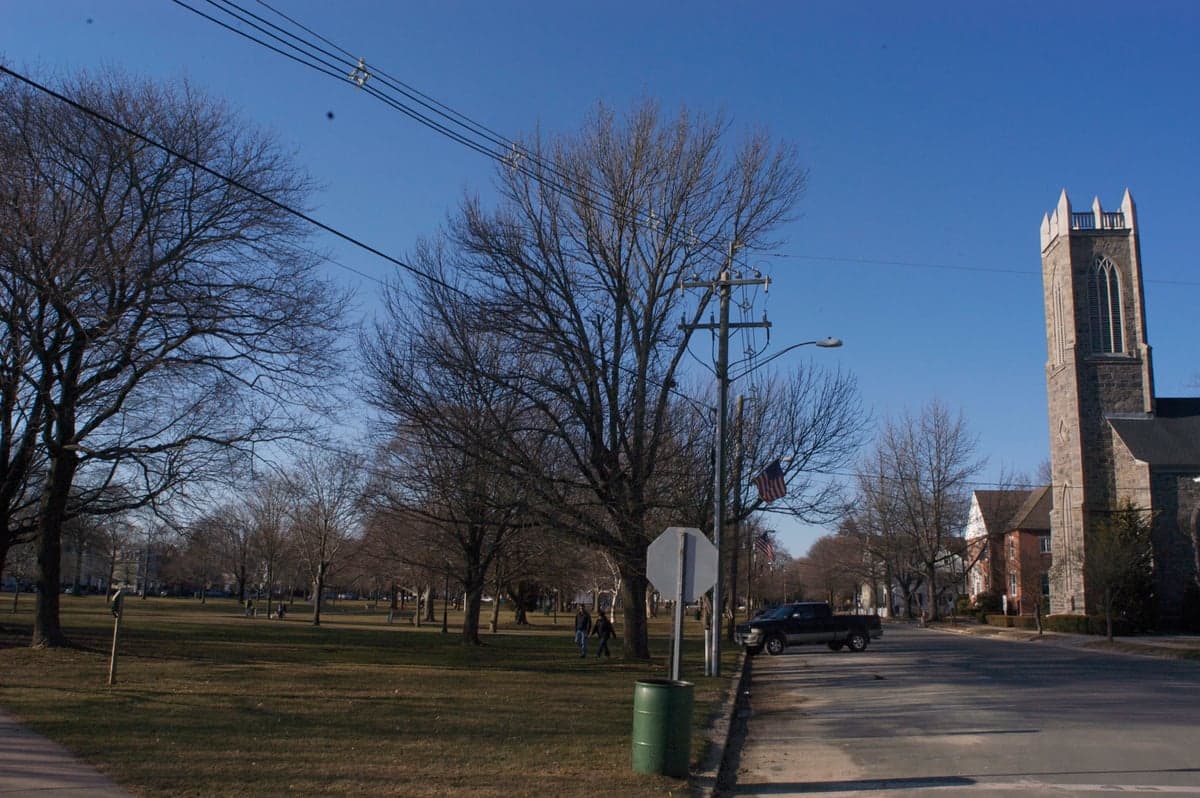
One cultural distinction worth noting is Guilford’s strong sense of local identity and history, which tends to moderate political extremes. The town’s historic green, its strict zoning laws, and its emphasis on preserving the shoreline and rural character mean that both parties often agree on the big picture: keep Guilford as it is. That shared goal can defuse some of the partisan tension you see in other places. For a conservative, the frustration might be that national Democratic policies dominate, but locally, there’s still room to influence decisions on development and spending. For a liberal, the frustration might be that the town isn’t moving faster on affordable housing or climate action. But overall, the political climate in Guilford is one of stable, moderate Democratic control, with a respectful, if sometimes tense, dialogue between the two sides. It’s a town where you can disagree with your neighbor at the town meeting and still wave to them at the farmers market the next morning.

State Political ClimatePolitical Climate in Connecticut
State Political AnalysisPolitical Environment in the State
Connecticut has been a reliably Democratic state for decades, carrying a Cook Partisan Voting Index of D+8, meaning it votes about eight points more Democratic than the national average in presidential elections. The state hasn't backed a Republican for president since George H.W. Bush in 1988, and both U.S. Senate seats and all five House seats are currently held by Democrats. However, this blue veneer masks a more complicated reality: the state has a strong, organized Republican minority that holds significant sway in the legislature and at the local level, and the political culture is far more moderate and pragmatic than in deep-blue states like California or New York. Over the last 10-20 years, the Democratic advantage has actually narrowed slightly in state-level races, even as the national Democratic brand has strengthened here, driven by affluent suburban voters repelled by Trump-era Republicanism.
Urban vs. rural divide
The political map of Connecticut is a classic story of three distinct regions. The urban core — Hartford, New Haven, and Bridgeport — are Democratic strongholds, delivering margins of 70-80% for Democratic candidates. These cities are home to large minority populations, union households, and public-sector workers who form the backbone of the state party. The suburbs of Fairfield County, particularly towns like Greenwich, Stamford, and Westport, have shifted sharply toward Democrats over the past decade, driven by college-educated professionals who prioritize social liberalism and fiscal moderation. This shift has been decisive: Fairfield County alone can offset Republican gains in the rest of the state. The rural and exurban areas — the Litchfield Hills, the Quiet Corner in the northeast, and towns like Ledyard, Killingly, and Woodstock — are where Republicans dominate, often winning by 15-25 points. These are the areas where gun rights, local control, and tax aversion are the defining issues. The divide is stark: a voter in Hartford and a voter in Litchfield live in different political universes, yet both are essential to understanding the state's overall balance.
Policy environment
Connecticut's policy environment is a mixed bag that reflects its moderate Democratic governance. The state has a progressive income tax with rates from 3% to 6.99%, and a sales tax of 6.35% (with no tax on most clothing). Property taxes are among the highest in the nation, averaging about 2.1% of home value, which is a major concern for homeowners. The regulatory posture is generally business-friendly compared to neighboring New York, but still leans toward environmental and labor protections. Education policy is a flashpoint: the state has some of the best public schools in the country (especially in wealthy suburbs like West Hartford and Darien), but also some of the worst in the cities, leading to ongoing battles over school choice, charter schools, and funding equity. Healthcare is heavily regulated, with a robust Medicaid program and strong protections for pre-existing conditions at the state level. Election laws are moderately accessible: no-excuse absentee voting was expanded during the pandemic and made permanent, but same-day registration is not available, and voter ID laws are relatively lenient (you can sign an affidavit without a photo ID).
Recent policy direction
Over the past five years, Connecticut has moved in a distinctly progressive direction on several fronts, but with notable exceptions. On gun and self-defense law, the state already had some of the strictest laws in the nation, and in 2023 it passed a ban on open carry and raised the purchasing age for rifles to 21. Parental and education rights have been a battleground: the state passed a law in 2022 requiring school districts to adopt policies on transgender student participation in sports and use of facilities, but local implementation varies wildly. On speech and privacy, Connecticut has strong data privacy laws and a shield law for journalists, but also has a broad anti-discrimination law that some conservatives argue chills speech on religious and moral views. Medical and bodily autonomy is fully protected: abortion is legal up to viability, and the state has a "safe harbor" law protecting providers and patients from out-of-state prosecution. Property rights are a sore point: the state has a strong eminent domain framework and has used it for economic development, but property taxes remain the biggest burden. Taxation has seen a modest shift: in 2023, the state cut the income tax rate for middle-class earners from 5% to 4.5%, but also raised the top marginal rate on the wealthy to 6.99%. Voting and ballot access expanded with early voting (14 days) and no-excuse absentee ballots, both passed in 2023. The overall direction is toward more regulation and more social liberalism, but with enough fiscal moderation to keep the state from veering into the far-left territory of its neighbors.
Civil unrest & political movements
Connecticut has not seen the kind of large-scale civil unrest seen in other states, but it has its share of organized political movements. The Black Lives Matter protests in 2020 were significant in Hartford, New Haven, and Bridgeport, but were largely peaceful. The state has a strong and vocal Second Amendment movement, with groups like the Connecticut Citizens Defense League holding regular rallies at the state capitol, particularly when gun legislation is debated. Immigration politics are relatively calm: Connecticut is a sanctuary state, meaning local law enforcement does not cooperate with federal immigration enforcement for civil violations, but there is no major sanctuary city controversy like in San Francisco. Election integrity has been a low-grade issue: the 2020 election saw no major fraud cases, but Republican activists have pushed for stricter voter ID laws, which have not passed. The most visible flashpoint for a new resident would likely be the education battles in towns like Newtown and Ridgefield, where school board meetings have become heated over curriculum, library books, and transgender policies. These are the front lines of Connecticut's culture war, and they play out in local elections that often see higher turnout than state races.
Projection
Over the next 5-10 years, Connecticut is likely to remain a Democratic-leaning state, but the margin could narrow further. The key demographic trend is in-migration from New York, particularly from Westchester County and New York City, which is bringing more affluent, college-educated, and socially liberal residents to Fairfield County and the shoreline. This reinforces the Democratic advantage in the suburbs. However, the rural and exurban areas are also growing, driven by remote workers seeking lower taxes and more space, and these newcomers are often more conservative or libertarian. The state's aging population is a wild card: older voters are more likely to vote Republican, but they are also more likely to be concerned about property taxes and healthcare costs, which could push them toward moderate Democrats. The biggest risk for Democrats is the fiscal trajectory: the state has a large unfunded pension liability and high debt, which could force tax increases or service cuts that alienate the suburban moderates who currently keep them in power. A new resident moving in now should expect a state that remains blue, but with a more competitive and contentious political environment at the local level, especially around education and taxes.
For a conservative-leaning relocator, Connecticut offers a mixed picture. You will find strong communities of like-minded people in the Litchfield Hills, the Quiet Corner, and parts of the shoreline, and you will have a real voice in local politics, especially in town government and school boards. The state's gun laws are restrictive, but legal compliance is straightforward. The tax burden is high, but the services — schools, roads, healthcare — are generally good. For a liberal-leaning relocator, Connecticut is a comfortable fit: your values are reflected in state law, and you will find a welcoming environment in most suburbs and cities. The bottom line is that Connecticut is not a place where politics dominates daily life in the way it does in more polarized states. Most people are focused on the same things: good schools, safe neighborhoods, and manageable taxes. The political climate is a backdrop, not the main event, and that is likely to remain true for the foreseeable future.
* Values derived from national, state, county, city and local statistics and may differ in a specific area. Last updated: 2026-09-27T19:25:44.000Z
Narrative content on this page is AI-generated and may contain mistakes. Verify any details that matter before acting on them.
ReloMaps may earn a commission from affiliate links at no extra cost to you.

