
Photo: Wikipedia
Demographics of Guilford, CT
Affluence Level in Guilford, CT
An upper-middle-class area. Household wealth, education levels, and homeownership run ahead of national benchmarks.
People of Guilford, CT
Guilford, Connecticut, is a small, tightly-knit coastal town of 2,272 residents, characterized by its overwhelmingly White population (89.9%) and a high proportion of college-educated professionals (52.3%). The town’s identity is rooted in deep New England tradition, with a quiet, family-oriented atmosphere and a notably low foreign-born population of just 3.9%. This is a community where historic village centers and preserved colonial architecture define daily life, and where demographic change has been slow and measured compared to the broader state trends.
How the city was settled and grew
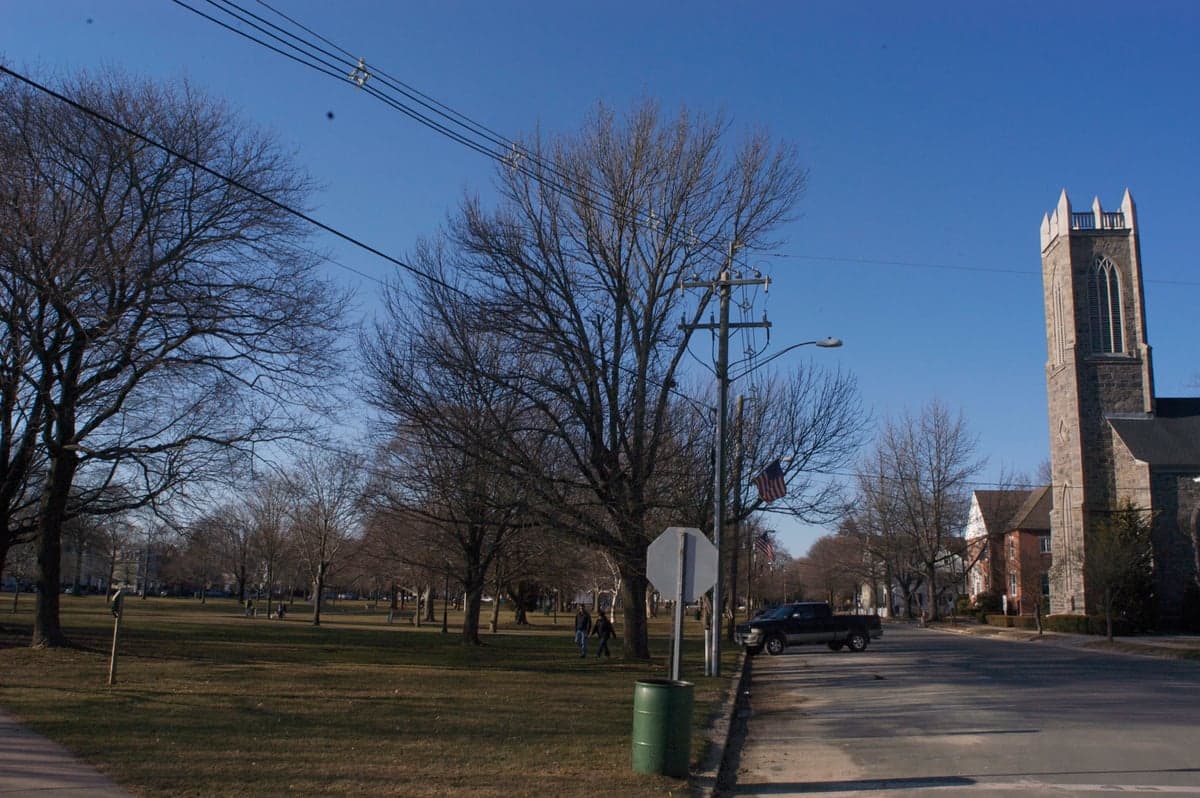
Guilford was founded in 1639 by a group of English Puritan settlers led by Reverend Henry Whitfield, who arrived from Surrey, England. The original settlement clustered around the Guilford Green, a central town square that remains the historic and social heart of the community. These early families were farmers, tradesmen, and mariners, drawn by the promise of religious freedom and fertile coastal land. The town’s economy for the next two centuries was built on agriculture, shipbuilding, and granite quarrying, with distinct neighborhoods emerging around these industries. The Brant Point area, along the Long Island Sound, became home to fishing families and mariners, while the Nut Plains district developed as a farming community inland. The arrival of Irish immigrants in the mid-19th century, many fleeing the Great Famine, added a new layer to the population; they settled primarily in the West Side neighborhood, working on the railroad and in the quarries. A smaller wave of Italian immigrants followed in the early 20th century, concentrating near the Clapboard Hill area, where they established small businesses and market gardens. These groups largely assimilated into the broader Yankee culture over generations, and by the mid-20th century, Guilford remained a predominantly White, Protestant town with a small Catholic minority.
Modern era (post-1965)
The post-1965 period, following the Hart-Cellar Immigration Act, brought only modest demographic shifts to Guilford. Unlike larger Connecticut cities, Guilford did not experience significant new immigration waves. The town’s growth instead came from domestic in-migration, particularly from New York City and other parts of the Northeast, as professionals sought larger homes and good schools. This suburbanization trend accelerated in the 1970s and 1980s, with new single-family homes built in the Long Hill and Lake Quonnipaug areas. The population became more educated and affluent, with the college-educated share now at 52.3%. The Asian population, at 3.0%, is the largest non-White group and is composed primarily of East and Southeast Asian families, many of whom are employed in the healthcare and technology sectors in New Haven and Hartford. They are dispersed throughout the town, with no single ethnic enclave. The Black population (2.0%) and Hispanic population (2.9%) are similarly small and integrated. The Indian subcontinent population is negligible at 0.4%. Guilford’s foreign-born share (3.9%) is well below the Connecticut state average, reflecting its character as a stable, long-established community with limited new immigration.
The future
Guilford’s population is projected to remain stable in size, with slow growth driven primarily by domestic migration of families and retirees. The town is not expected to become significantly more diverse in the near term. The high cost of housing and limited rental stock act as barriers to younger, more diverse populations. The East/Southeast Asian community may see modest growth as professionals continue to be drawn to the area’s school system and proximity to New Haven’s biotech and medical sectors. However, the overall White share is likely to remain above 85% for the foreseeable future. The town’s cultural identity is evolving slowly, with a growing emphasis on environmental conservation and local food systems, but the core character—quiet, historic, and family-centric—is unlikely to change dramatically. The next 10-20 years will likely see an aging population, with younger families being priced out, potentially leading to a slight decline in school enrollment.
For someone moving in now, Guilford offers a stable, safe, and historically rich environment with excellent schools and a strong sense of community. It is best suited for families and professionals who value tradition, low crime, and natural beauty over urban diversity and nightlife. The town is becoming more selective economically, but remains a quintessential New England coastal community where the past is still very much present.

* Values derived from national, state, county, city and local statistics and may differ in a specific area. Last updated: 2026-09-27T19:25:44.000Z
Narrative content on this page is AI-generated and may contain mistakes. Verify any details that matter before acting on them.
ReloMaps may earn a commission from affiliate links at no extra cost to you.

