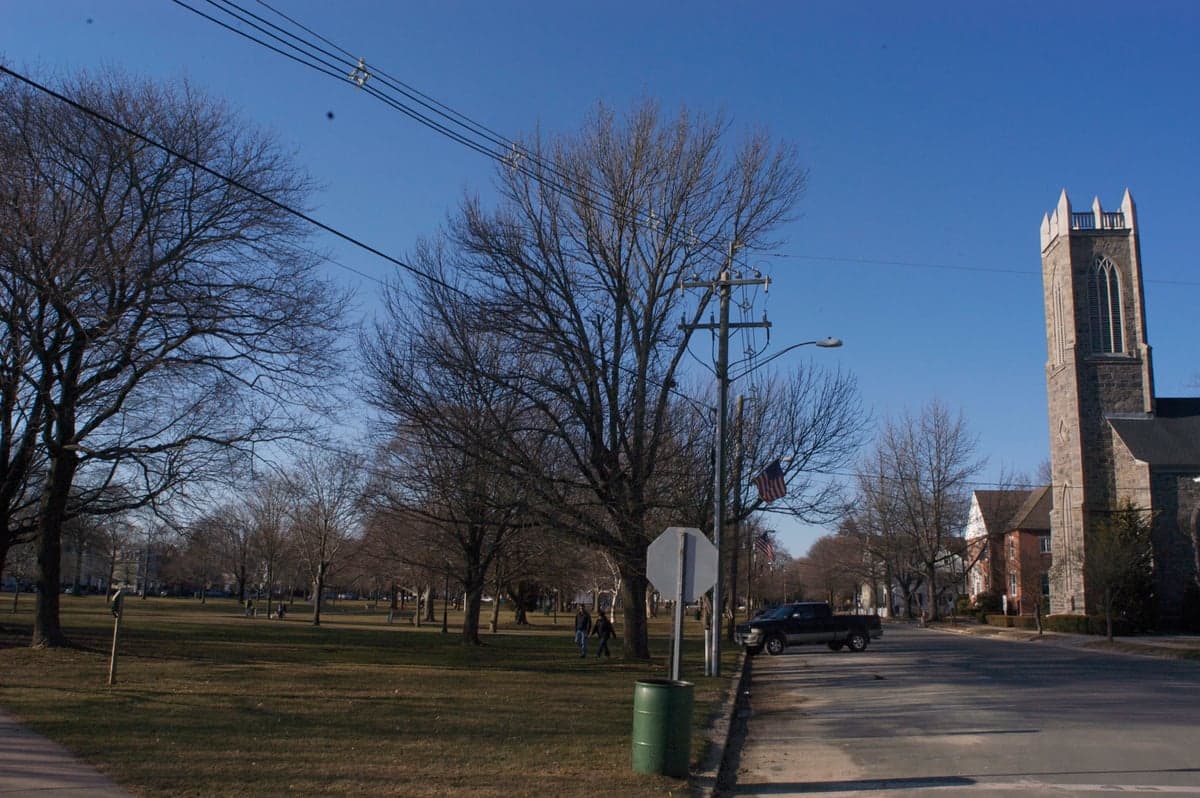

Photo: Wikipedia
Quality of Life in Guilford, CT
A high quality of life with strong walkability, manageable living costs, healthy neighborhood signals, and solid amenity access.
What does Quality of Life tell us?
Quality of Life blends cost of living, nearby amenities, socioeconomic signals, and neighborhood character. City-level scores represent the whole municipality; individual neighborhoods can differ.
What does this tell us?
Quality of Life blends cost of living, nearby amenities, socioeconomic signals, and neighborhood character. City-level scores represent the whole municipality; individual neighborhoods can differ.
Cost of Living
70% above national average
The Real Cost of Living in Guilford, CT for 2026
| Tier | Individual | Family (4) |
|---|---|---|
| Survival | $27k | $50k |
| Comfortable | $114k | $168k |
| Luxury | $145k+ | $224k+ |
| Elite (Top 5%) | $389k+ | $603k+ |
48%
The Area Signal
A metric tracking the socioeconomic signals of the area.
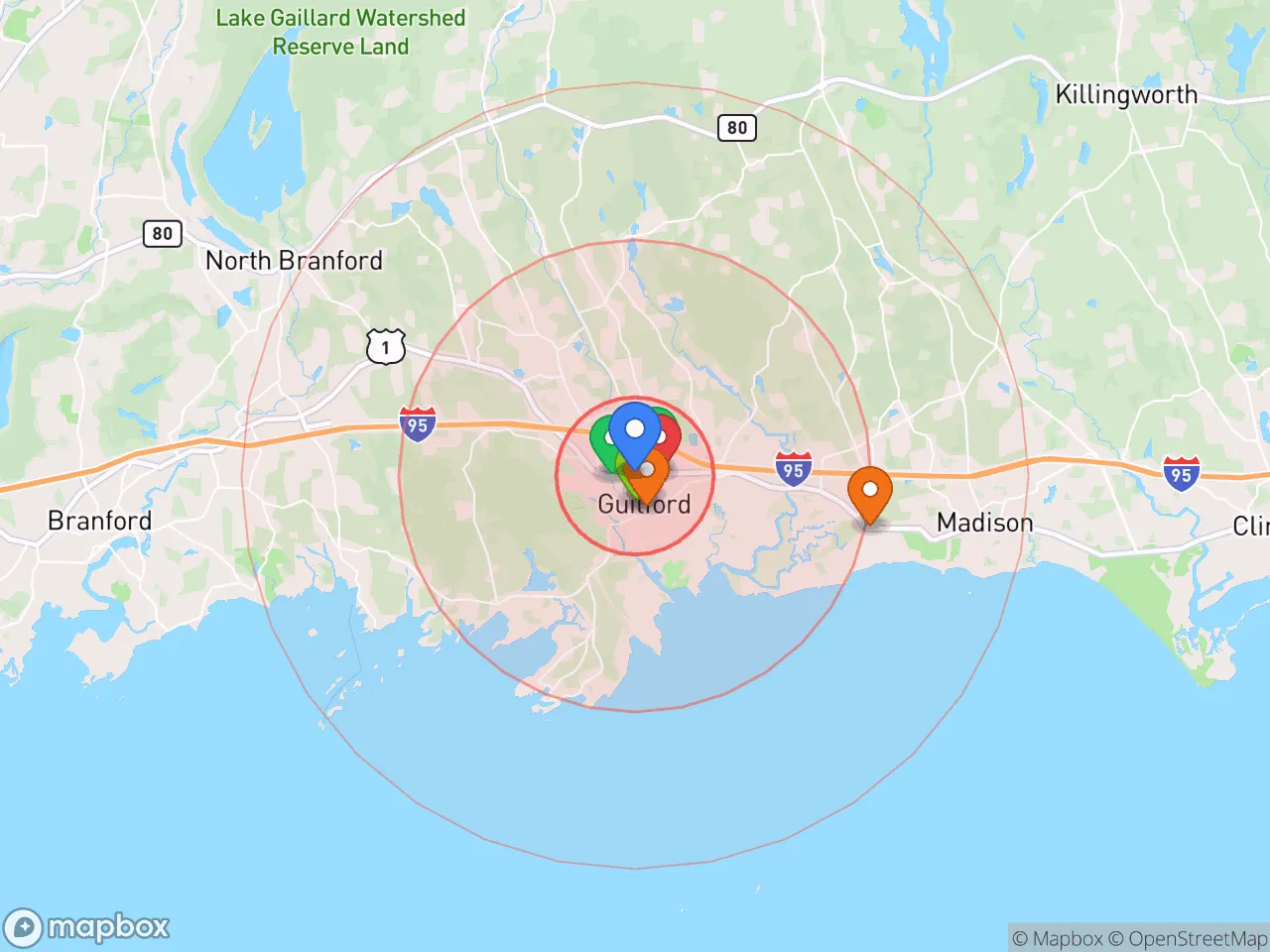
Hobbies
Explore the areaGroceries
5 within 10 miles
Gas
20 within 10 miles
Hospital
16 within 20 miles
Airport
JFK — John F. Kennedy International
Post Office
USPS — Guilford, CT
Critical Amenities
Quality-of-Life Analysis
Guilford, Connecticut, is a high-cost, high-amenity shoreline town where the quality of life is defined by a blend of historic New England charm, strong public schools, and proximity to both New Haven and the Long Island Sound. With a cost of living index of 170 (70% above the national average), Guilford attracts professionals, academics, and families who prioritize education, safety, and community character over low housing costs. The town’s population of roughly 22,000 is notably well-educated and affluent, with a median household income well above state averages, creating a stable, civically engaged environment.
Cost of living, housing, and affordability compared to nearby towns
Guilford’s cost of living is among the highest in the New Haven region, driven primarily by housing. The median home value sits at $586,500, significantly above the Connecticut median of roughly $350,000 and more than double the national figure. For renters, the median rent is $1,678, which is elevated but somewhat less extreme than the purchase market, reflecting a tight inventory of single-family rentals. Compared to neighboring shoreline towns like Madison (median home value ~$620,000) and Branford (~$400,000), Guilford lands in the upper-middle tier — pricier than Branford but slightly below Madison’s peak. The average commute time of 23.7 minutes is reasonable for the region, with many residents driving to New Haven (15–20 minutes) or taking the Shore Line East rail to New York City (roughly 2 hours). Property taxes in Guilford are typical for Connecticut at about 2.2% of assessed value, which adds a meaningful ongoing cost for homeowners. For budget-conscious buyers, the trade-off is clear: you pay a premium for Guilford’s school system, low crime, and coastal access, but you get a town that consistently ranks among the state’s most desirable places to live.
What daily life is like for families: schools, amenities, and recreation
Daily life in Guilford revolves around its highly rated public school system, which consistently ranks in the top 10–15% of Connecticut districts. The town operates four elementary schools, one middle school, and Guilford High School, all of which draw strong parent involvement and offer robust Advanced Placement programs. Beyond academics, the town’s defining amenity is its coastline: residents have access to multiple town beaches, the 1,000-acre Westwoods trail system for hiking and mountain biking, and the historic Guilford Green, which hosts a farmers market, summer concerts, and seasonal events. The town center along Boston Post Road and Whitfield Street offers a walkable mix of independent restaurants, coffee shops, and boutiques, though serious shopping and dining are a short drive to New Haven or the Westfield Meriden mall. Recreation is a major part of the lifestyle, with youth sports leagues, a public golf course, and the Guilford Art Center providing cultural programming. The rhythm is distinctly suburban and family-oriented — weekends are often spent at the beach, on the trails, or at school sports fields, and the town’s low crime rate (consistently among the safest in Connecticut) allows for a relaxed, outdoor-oriented daily routine.
Guilford is best suited for families and professionals who can absorb the high housing costs and who value school quality, safety, and coastal recreation above urban nightlife or low taxes. Empty nesters downsizing from larger homes in the area also find the town appealing, as do remote workers who want a scenic, quiet base within striking distance of New Haven and New York. Those on a tighter budget or seeking a more diverse, fast-paced environment may find Guilford too expensive or too quiet, but for the right household, it offers one of the highest quality-of-life packages on the Connecticut shoreline.

Crime in Guilford, CT
Lower crime rates than 90% of comparable U.S. locations.
Violent CrimeViolent Crime Analysis
Property CrimeProperty Crime Analysis
Crime Analysis
Guilford, Connecticut, is one of the safest shoreline communities in the state, with violent crime rates that are a fraction of both the national and state averages. The town recorded a violent crime rate of just 35.8 incidents per 100,000 residents, making it significantly safer than the vast majority of municipalities in New Haven County. Property crime, at 734.6 per 100,000, is also well below the national benchmark, though it remains the more common concern for residents and local law enforcement.
Crime in context
To understand Guilford’s safety profile, it helps to compare it to broader trends. The national violent crime rate hovers around 380 per 100,000, meaning Guilford’s rate is roughly 90% lower than the U.S. average. Even within Connecticut—a state with relatively low violent crime overall—Guilford stands out. New Haven, just 12 miles north, posts violent crime rates above 1,000 per 100,000, a stark contrast that underscores Guilford’s suburban insulation. Property crime in Guilford, while higher than violent crime, still sits below the Connecticut average of roughly 1,200 per 100,000. However, residents should note that property crime—particularly theft from vehicles and package theft—can fluctuate with seasonal tourism and proximity to the I-95 corridor.
What residents experience
For those living in Guilford, the day-to-day reality is one of low anxiety regarding personal safety. The town’s violent crime is almost entirely non-random, typically involving domestic incidents or disputes among known individuals. Random acts of violence against strangers are exceedingly rare. The Guilford Police Department maintains a visible community presence, and neighborhood watch programs are active in many of the town’s residential districts. Property crime is the primary nuisance: unlocked cars and unattended garages are the most common targets. Residents who practice basic security habits—locking doors, securing bicycles, and using outdoor lighting—dramatically reduce their already-low risk.
That said, Guilford is not immune to the broader regional trends affecting the New Haven metro area. Connecticut’s criminal justice system, particularly in New Haven County, has adopted increasingly progressive policies under local prosecutors and judges. These policies, while intended to reduce incarceration, have in practice led to shorter sentences and reduced consequences for repeat property offenders. Residents should be aware that this prosecutorial leniency can result in a revolving door for individuals arrested for theft, larceny, and drug-related property crimes. While Guilford’s distance from New Haven’s urban core provides a buffer, the county-wide judicial philosophy means that offenders caught in Guilford often face minimal jail time, which can embolden recidivism.
Neighborhood-level variation
Safety in Guilford is relatively uniform across its neighborhoods, though some patterns exist. The town’s coastal areas and the Guilford Center historic district see slightly higher foot traffic and occasional petty theft during tourist season. The more rural northern sections, near the Durham line, experience the lowest crime rates of all, largely due to lower population density and fewer commercial targets. The town’s two main commercial corridors—Boston Post Road (U.S. 1) and Route 77—see the bulk of reported shoplifting and vehicle break-ins. Overall, no neighborhood in Guilford approaches the crime levels of nearby cities like New Haven or Meriden, making it a consistently safe choice for families and retirees alike.
* Values derived from national, state, county, city and local statistics and may differ in a specific area. Last updated: 2026-09-27T19:25:44.000Z
Narrative content on this page is AI-generated and may contain mistakes. Verify any details that matter before acting on them.
ReloMaps may earn a commission from affiliate links at no extra cost to you.

