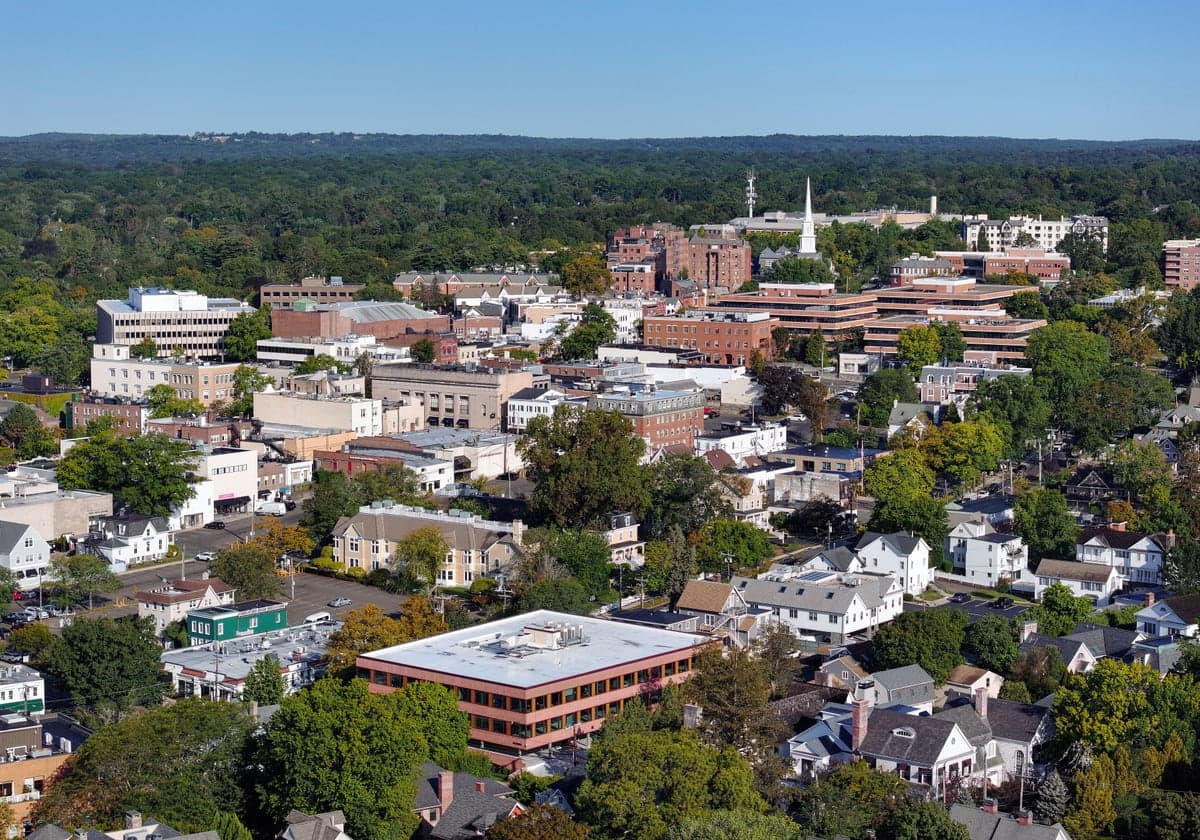
Photo: Wikipedia
Political ClimatePolitical Climate in Greenwich, CT
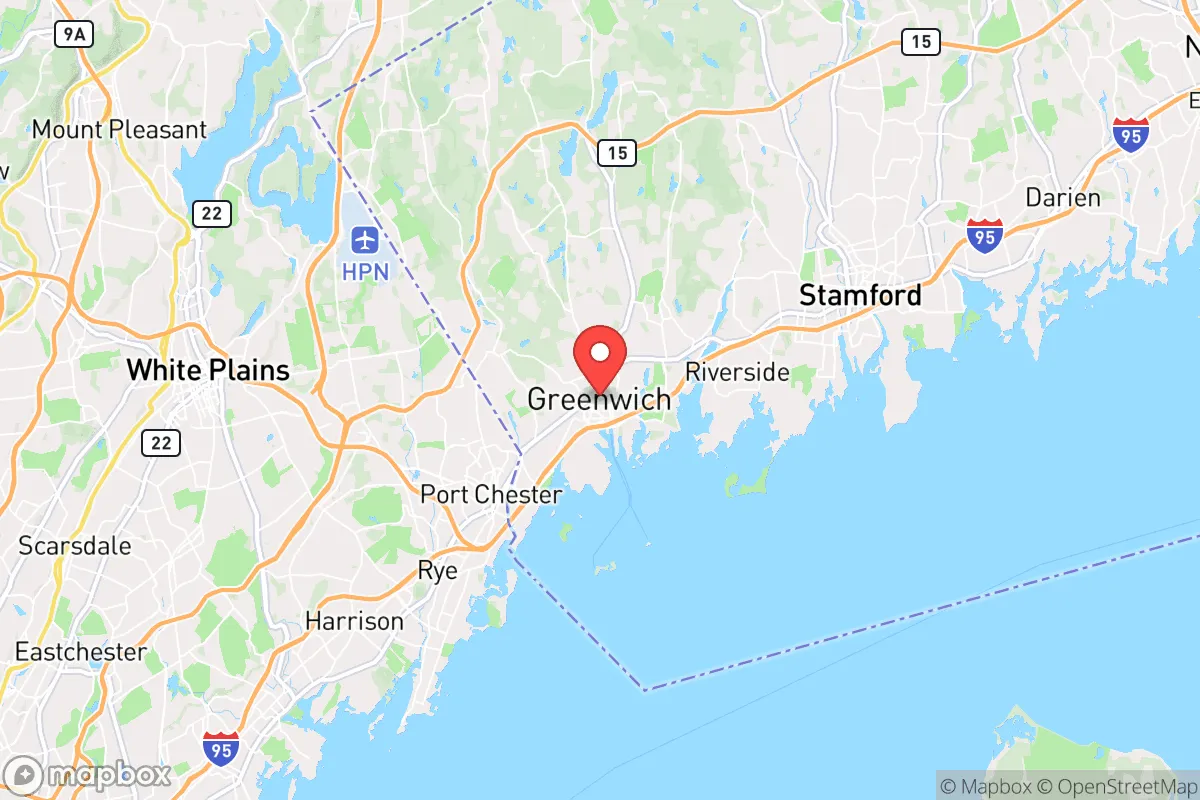
District shown is the primary district for this city’s centroid. Cities may span multiple districts.
Local Political AnalysisPolitical Analysis of Greenwich, CT
Greenwich, Connecticut, has long been a fascinating outlier in Fairfield County, and its political climate reflects that unique position. With a Cook Partisan Voting Index (PVI) of D+13, the town is significantly more Democratic than the state of Connecticut as a whole, which sits at D+8. This isn't a recent shift; it's a decades-long evolution from a reliably Republican stronghold—think Prescott Bush territory—into a solidly blue suburb, driven largely by the influx of New York City commuters and a growing professional class. The trajectory is clear: Greenwich is getting bluer, not redder, and the old guard of moderate Rockefeller Republicans has largely been replaced by a pragmatic, fiscally-conscious Democratic majority.
How it compares
To understand Greenwich's politics, you have to look at its neighbors. Drive 15 minutes north to Stamford, and you're in a D+20 environment—younger, more diverse, and more uniformly progressive. Head east to Darien or New Canaan, and you'll find towns that still lean Republican (roughly R+5 to R+10), with a stronger base of small-business owners and old-money families who resist the Democratic wave. Greenwich sits right in the middle: it votes Democratic in presidential and statewide races by comfortable margins, but local elections are often competitive, with Republicans winning select seats and school board positions. The town's PVI of D+13 means a Democrat running for Congress or state office starts with a clear advantage, but a well-funded moderate Republican—especially one focused on taxes and local zoning—can still draw 45-48% of the vote. That's a far cry from the 60-40 Democratic blowouts you see in Stamford or Bridgeport.
What this means for residents
For a liberal resident, Greenwich is a comfortable place to live politically. You'll find active Democratic town committees, a strong presence of environmental and social-justice advocacy groups, and neighbors who largely share your views on national issues like abortion rights and climate policy. The town's Democratic lean means state-level policies—like Connecticut's paid family leave, gun safety laws, and progressive income tax structure—are generally supported by the local delegation. For a conservative resident, the reality is more nuanced. You're not a pariah, but you're in the minority. The local Republican party is still active, especially around property tax caps, school curriculum debates, and zoning reform, but you won't see many Trump signs on lawns. The practical impact is that conservative voices tend to focus on local issues—fiscal restraint, public safety, and maintaining Greenwich's character—rather than national culture wars. Both sides can find common ground on keeping property taxes low and preserving open space, which is a distinctly Greenwich compromise.
Culturally, this political balance creates a town that is socially liberal but fiscally cautious. Greenwich residents overwhelmingly support environmental initiatives, public education funding, and diversity programs, but they also expect efficient government and low tax increases. The town's wealth—median household income over $200,000—means that debates often center on how to fund services without raising mill rates, rather than on ideological purity. You'll see Democratic candidates touting their business credentials and Republican candidates emphasizing their community service. The result is a political climate that feels less polarized than the national scene, more like a polite disagreement among neighbors who all want the same thing: a safe, beautiful, well-run town. Looking ahead, the trend toward the left will likely continue as younger families move in from New York City, but Greenwich's institutional conservatism—its zoning laws, its private clubs, its sense of tradition—will keep it from ever becoming a progressive stronghold. It's a blue town with a red streak, and that's exactly how most residents like it.

State Political ClimatePolitical Climate in Connecticut
State Political AnalysisPolitical Environment in the State
Connecticut is a solidly Democratic state with a Cook PVI of D+8, meaning it typically votes about eight points more Democratic than the national average. Over the last decade and a half, the state has shifted leftward in presidential races — Barack Obama won by 17 points in 2012, Joe Biden by 20 in 2020, and the trend held in 2024 — while the legislature has remained under Democratic supermajorities for most of that period. That said, this isn't a monolith: Fairfield County's wealthy suburbs still harbor a moderate Republican tradition, and the rural eastern and northwestern corners vote more like upstate New York or western Massachusetts. The state's political culture is defined less by flashy populism and more by a stable, establishment-driven Democratic machine that controls policy from Hartford, tempered by a vocal but outnumbered conservative minority in the outer suburbs and exurbs.
Urban vs. rural divide
The political map of Connecticut breaks cleanly along the old industrial corridor and the coastal commuter belt versus the hill towns and farming valleys. The five largest cities — Bridgeport, New Haven, Hartford, Waterbury, and Stamford — are Democratic strongholds that together deliver massive vote margins. Hartford and New Haven routinely give Democrats 80–85% of the vote, powered by large minority populations, union households, and university communities. Stamford and Greenwich, though wealthy and historically Republican in local races, have swung toward Democrats at the presidential level since 2016; Greenwich voted for Hillary Clinton and Joe Biden after decades of GOP wins. Suburban towns like Danbury and Milford are genuine swing areas — Danbury still elects Republican mayors but votes Democratic in statewide races. The rural north and east, places like Litchfield County and the Quiet Corner (around Willimantic and Putnam), lean Republican, though turnout is lower. The pattern is classic: Democratic cities and inner-ring suburbs, Republican exurbs and countryside, with the urban core deciding every statewide election.
Policy environment
Connecticut's policy landscape is shaped by its status as one of the highest-tax states in the country. The state has a progressive income tax with rates up to 6.99%, a 7.35% corporate tax, and property taxes among the highest nationally — though there is no sales tax on most clothing and footwear under $50. The state runs a large budget with generous public-sector pensions and a per-capita debt load that's among the heaviest in the U.S. Education policy is dominated by a powerful teachers' union and a decades-old school funding lawsuit (Sheff v. O'Neill) that drives magnet school construction and inter-district integration programs. Healthcare is heavily regulated; the state runs its own health insurance exchange and expanded Medicaid aggressively under the ACA. Election law is generally voter-friendly: same-day registration, no-fault absentee voting (passed in 2023), and early voting (implemented in 2024 after a constitutional amendment). There is no strict voter ID law — a flashpoint in recent sessions. For relocators, the practical reality is high cost and heavy regulation, but also robust public services and predictable infrastructure.
Recent policy direction
Over the past five years, Connecticut's Democratic supermajority has enacted a slate of laws that any relocator should weigh carefully. On gun and self-defense: in 2023, the legislature passed HB 6667, banning open carry of pistols and revolvers, raising the minimum age for long gun purchases to 21, and requiring a permit to buy ammunition. The state also tightened the existing assault weapons ban and expanded the "safe storage" mandate. The result is a legal environment that some gun owners view as among the most restrictive in New England. On parental and education rights: there is no statewide ban on teaching "critical race theory" or LGBTQ+ content, though individual school boards have become battlegrounds — particularly in towns like Southington and New Milford, where parents have organized against curriculum transparency. A 2021 law requires school districts to notify parents if their child requests a name or pronoun change — a compromise measure that satisfied neither side fully. On medical autonomy: abortion remains codified into state law (HB 5414, 2022) and is protected up to viability, with no waiting period or parental notification mandate for minors other than routine counseling. On property rights: Connecticut has no statewide rent control, but the legislature passed a 2023 law limiting evictions during winter months and requiring "just cause" for termination of leases — a substantial expansion of tenant protections that landlords in cities like New Haven and Bridgeport have challenged. On taxes: the 2023 state budget cut the marginal income tax rate for the middle bracket from 5% to 4.5% but also raised the top rate from 6.9% to 6.99% on income over $500,000 — a classic Connecticut shuffle. On voting and ballot access: the early voting law and no-excuse absentee voting were both passed in 2023, and the state also legalized ranked-choice voting for municipal elections in some cities (though not statewide). The overall direction is unmistakably progressive, with a focus on individual liberties as defined by Democratic majorities: expanded voting access, strict gun control, codified abortion rights, and stronger tenant and consumer protections.
Civil unrest & political movements
Connecticut doesn't see the dramatic protests that define larger states, but it has its share of political friction. In 2020, Black Lives Matter demonstrations in Hartford, New Haven, and New London were large and sustained, leading to the passage of the 2020 police accountability bill (requiring body cameras, banning chokeholds, and making it easier to decertify officers) — a law that sparked backlash from police unions and conservative town officials. The sanctuary state debate is active: the state's TRUST Act (2013) prohibits state and local law enforcement from detaining people solely based on immigration status, and a 2025 law limited cooperation with ICE detention requests. In towns like Danbury and Shelton, where the mayors are more immigration-skeptical, this has created tension between local police and state mandates. The "gown vs. town" dynamic is real in Storrs (UConn) and New Haven (Yale), where left-leaning student activism sometimes clashes with older, more conservative residents over issues like housing density and campus policing. Election integrity controversies flared after the 2020 and 2022 cycles, with conservative groups filing a lawsuit over the state's 2023 early voting law (ultimately upheld). The Connecticut Libertarian Party and a small "constitutional sheriff" movement in Litchfield County have gained some visibility, but they remain fringe. For a new resident, the most visible political marker is likely to be a yard sign: you'll see "Democrat" signs dominating city streets, while "Republican" or "No" signs on tax-related ballot measures pop up in the rural corners.
Projection
Over the next five to ten years, Connecticut is likely to stay Democratic but drift even further left in policy, while its electoral margin may narrow slightly due to demographic changes. In-migration from New York City — especially into Fairfield County and New Haven County — tends to bring younger, more diverse, and more progressive residents. At the same time, conservative-leaning families and retirees are leaving for lower-tax states like Florida, Texas, and the Carolinas, a trend that accelerated after the 2017 federal tax law capped the state and local tax (SALT) deduction. The result is a self-reinforcing loop: the state becomes more Democratic as its tax base shrinks, prompting further tax hikes that drive out more conservatives. However, the state's population is also aging, and the supermajority may erode slightly as the suburbs of New Haven and Hartford become more competitive in local races (Republicans won the mayor's office in Waterbury in 2023, for example). Expect continued battles over spending, pension reform, and housing density — the "Fair Share" housing bill (mandating multifamily zoning near transit) is a live wire that could reshape exurban politics. What won't change is the core dynamic: Connecticut is a one-party-dominant state where policy is made in Hartford with minimal Republican input, and that's unlikely to flip in any realistic 10-year scenario.
Bottom line for a new resident: If you're a conservative relocating to Connecticut, you should expect to live under a Democratic-controlled state government that will continue to raise taxes on high earners, tighten gun laws, and protect abortion and transgender rights. You'll find like-minded communities in the rural northwest (Litchfield County) and the eastern hills (around Windham and Tolland), but you'll have limited influence on statewide elections. If you're a liberal, you'll find a state that largely reflects your values — high-quality public services, strong unions, and a legal framework that enshrines your preferred policies — but you'll also pay some of the highest taxes in
* Values derived from national, state, county, city and local statistics and may differ in a specific area. Last updated: 2026-06-20T16:31:03.000Z
Narrative content on this page is AI-generated and may contain mistakes. Verify any details that matter before acting on them.
ReloMaps may earn a commission from affiliate links at no extra cost to you.

