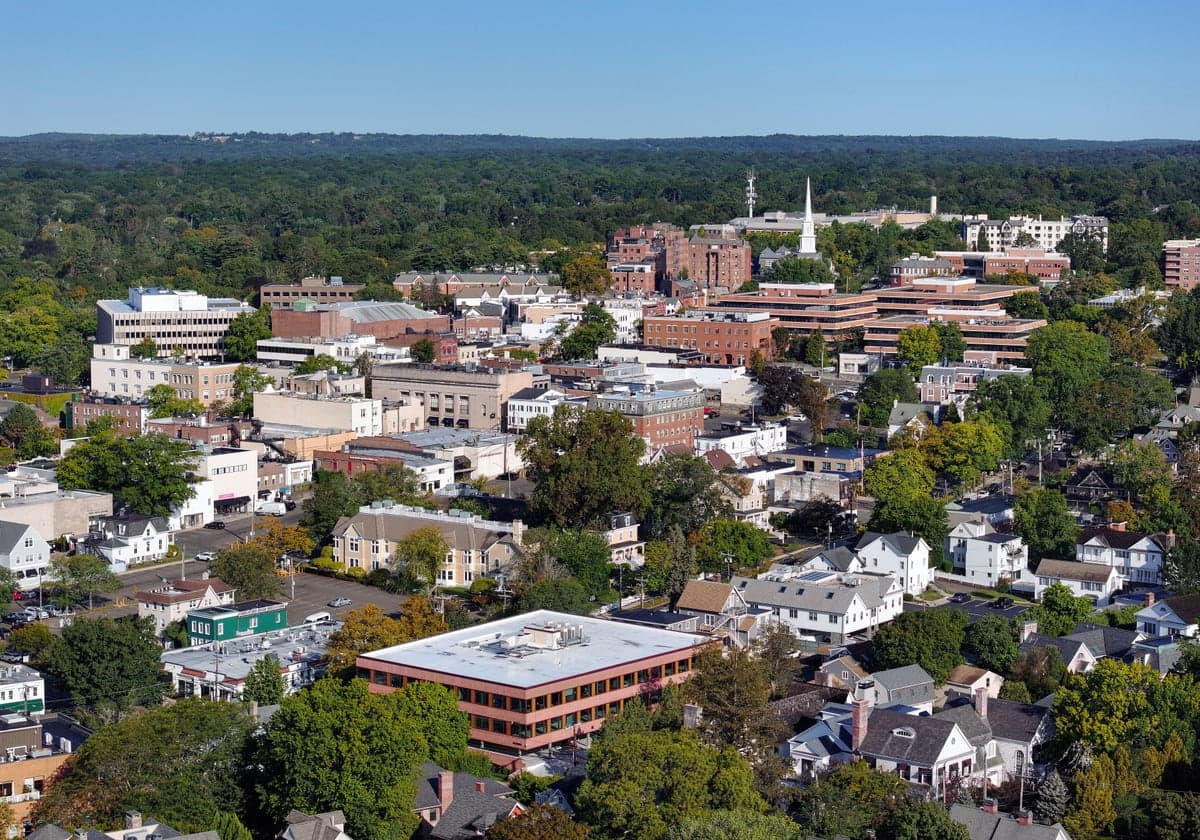
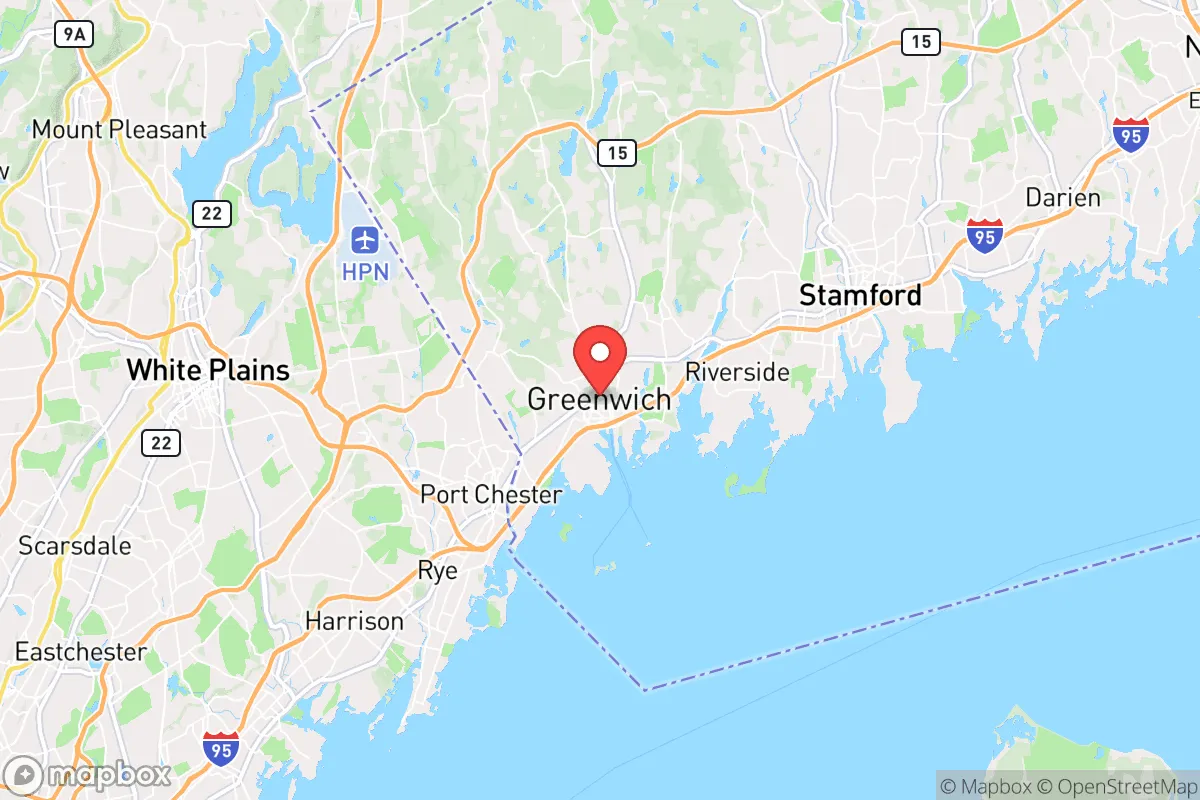
Photo: Wikipedia
Demographics of Greenwich, CT
Affluence Level in Greenwich, CT
A wealthy area with high-earning, well-educated households. Incomes, home values, and educational attainment meaningfully outpace national averages.
People of Greenwich, CT
The people of Greenwich, CT today form a highly educated, affluent, and increasingly diverse community of 14,528 residents. With 70.2% holding a college degree and a foreign-born population of 8.7%, the town is characterized by a blend of long-established families and newer professional arrivals, creating a distinctive identity that balances old-money tradition with modern global influence. The population is 62.7% White, 16.6% Hispanic, 6.0% Black, 4.3% East/Southeast Asian, and 2.3% Indian, reflecting a gradual but meaningful shift from its historically homogeneous character.
How the city was settled and grew
Greenwich was settled in 1640 by English Puritan colonists from the New Haven Colony, who purchased the land from the Siwanoy tribe. The original settlement clustered around the harbor in what is now Old Greenwich (originally Sound Beach), where farming, fishing, and shipbuilding formed the early economy. By the late 19th century, the arrival of the railroad transformed Greenwich into a summer retreat for New York City's industrial elite, who built sprawling estates in North Greenwich and Backcountry. These wealthy families—Rockefellers, Vanderbilts, and others—established the town's reputation as a haven for old money. Simultaneously, Irish and Italian immigrants arrived to work as domestic staff, gardeners, and laborers, settling in more modest neighborhoods like Byram and Glenville, where their descendants remain today. The post-World War II boom brought additional waves of middle-class families, particularly to Cos Cob and Riverside, as Greenwich became a premier commuter suburb for Manhattan professionals.
Modern era (post-1965)
The 1965 Hart-Cellar Act opened the door for new immigration, but Greenwich's transformation was slower than in nearby cities. The most significant post-1965 shift has been the growth of the Hispanic population, now 16.6%, concentrated heavily in Byram and parts of Glenville. This community, largely of Guatemalan, Mexican, and Puerto Rican origin, arrived primarily for service-sector jobs in landscaping, construction, and hospitality—industries that support the town's wealthy households. The Black population, at 6.0%, is more dispersed but has a notable presence in Byram and central Greenwich, with roots in earlier domestic-service migration. The East/Southeast Asian community (4.3%) and Indian community (2.3%) are newer arrivals, largely professionals in finance, technology, and medicine who moved to Greenwich for its top-ranked schools and proximity to New York City. These groups tend to settle in Riverside and Cos Cob, drawn by newer housing stock and strong school districts. Unlike many suburbs, Greenwich has not experienced white flight; instead, the White population (62.7%) has remained stable in absolute numbers, even as its share has declined due to diversification.
The future
Greenwich's population is projected to continue its gradual diversification, driven by two forces: the high cost of housing (median home price exceeding $2 million) and the town's global economic appeal. The Hispanic and Asian populations are expected to grow modestly, particularly in Byram and Glenville, where more affordable housing stock exists. However, the town's strict zoning laws and large-lot requirements in Backcountry and North Greenwich limit new development, keeping overall population growth flat. The Indian and East/Southeast Asian communities are likely to expand in Riverside and Cos Cob as professionals continue to be attracted by the school system and commute times. The White population will likely remain the majority but become less dominant, while the town's cultural identity evolves from "old WASP enclave" to a more cosmopolitan, globally connected suburb. The key demographic tension will be between affordability and exclusivity—Greenwich's future character depends on whether it can accommodate new groups without losing the character that drew them.
For someone moving in now, Greenwich offers a community that is still predominantly White and affluent but increasingly reflects the diversity of the broader New York metropolitan area. The town's identity is shifting from a closed, old-money bastion to a more open, meritocratic suburb where professional achievement and educational attainment matter as much as family name. New arrivals will find a place that values tradition but is adapting to a more global population, with the strongest growth in neighborhoods like Byram and Riverside offering the most accessible entry points.

* Values derived from national, state, county, city and local statistics and may differ in a specific area. Last updated: 2026-06-20T16:31:03.000Z
Narrative content on this page is AI-generated and may contain mistakes. Verify any details that matter before acting on them.
ReloMaps may earn a commission from affiliate links at no extra cost to you.

