Political ClimatePolitical Climate in Gordon, WI
District shown is the primary district for this city’s centroid. Cities may span multiple districts.
Local Political AnalysisPolitical Analysis of Gordon, WI
How it compares
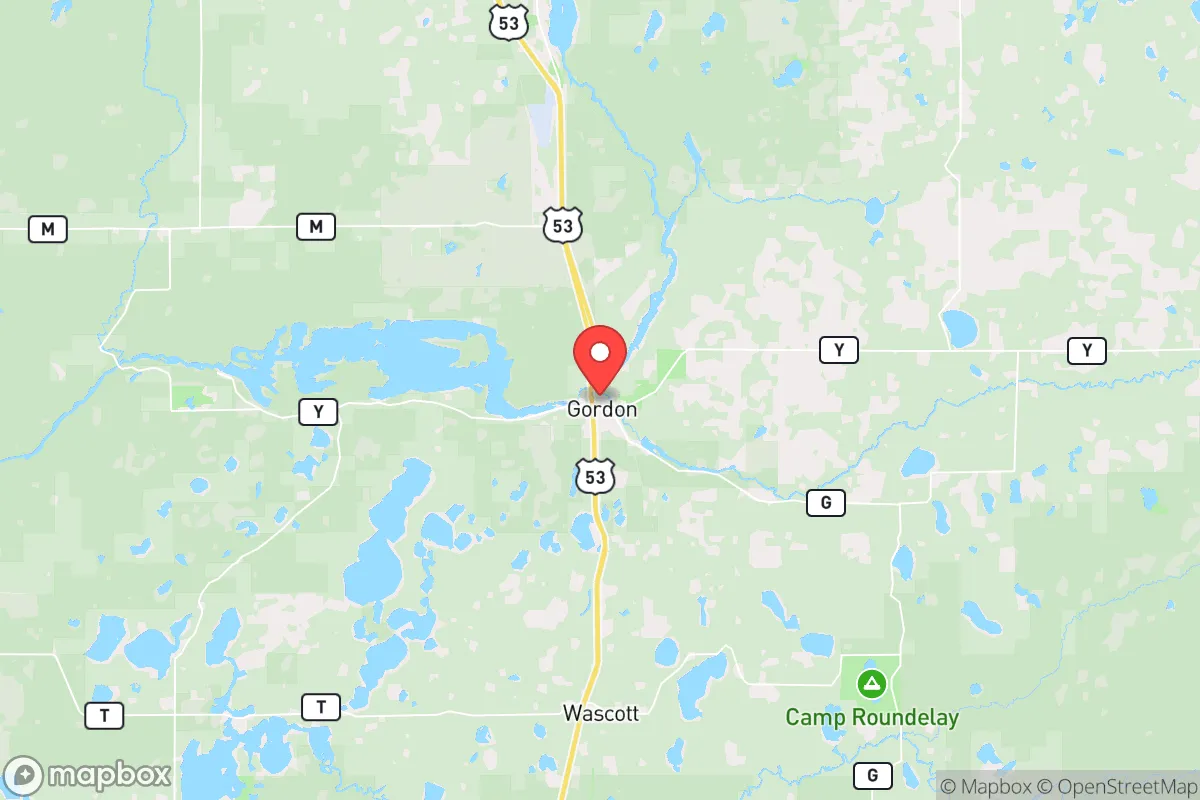
The difference between Gordon and the rest of Wisconsin isn’t just a number—it’s a lived reality. While the state flips between Democratic and Republican governors and senators (think Tony Evers vs. Scott Walker, or Tammy Baldwin’s narrow wins), Gordon’s precincts routinely go 65-70% Republican in presidential years. The nearest contrast is just 20 miles south in Solon Springs, which leans more moderate, and about 45 miles east in Ashland, a college town that’s solidly blue. Even Superior, the county seat 30 miles away, is a working-class port city that splits much more evenly—it’s the only part of Douglas County that keeps the county from being a total GOP lock. What’s happening here is the classic rural-urban divide: Gordon’s economy is tied to logging, hunting, and seasonal tourism, while Wisconsin’s political center of gravity sits in Madison and Milwaukee, where tech, education, and manufacturing drive a very different set of priorities.What this means for residents
For conservatives in Gordon, the lean means your vote carries real weight in local races—county board, school board, and town supervisor seats are almost always decided in the primary, not the general. You’ll find that the local GOP is well-organized, with signs up early and a strong presence at the town hall. But it also means you’re in the minority statewide, so issues like gun rights, property taxes, and logging regulations often feel like you’re fighting an uphill battle against Madison. For liberals, it’s the opposite: you’re likely one of a handful of blue voters in your precinct, so you’ll have to work harder to find your people—maybe at the library in Solon Springs or through regional groups based in Superior. But you’re not powerless; statewide races are so close that every rural vote counts, and Douglas County Democrats have a history of turning out when the stakes are high, like the 2018 and 2022 gubernatorial races that came down to a few thousand votes.Cultural and policy distinctions
Culturally, Gordon feels more like northern Minnesota than southern Wisconsin—folks here are more likely to talk about ice fishing conditions than Packers draft picks, and the nearest big-city news is Duluth, not Milwaukee. That shows up in policy too: the area is fiercely protective of its ATV trails, snowmobile routes, and the right to shoot on your own land, which puts it at odds with the state’s stricter wetland and zoning rules. The big local fight right now is over the proposed Nemadji Trail Energy Center in Superior—some see it as jobs, others as pollution—and Gordon’s split on it mirrors the broader state tension. Looking ahead, the trajectory is clear: as long as rural populations shrink and urban ones grow, Gordon will get redder, and Wisconsin will stay purple. That’s not a bad thing—it just means the real action is in the margins, and in a place like this, your vote and your voice still matter more than the pundits think.
State Political ClimatePolitical Climate in Wisconsin
State Political AnalysisPolitical Environment in the State
Wisconsin is the ultimate swing state, and I mean that in the most literal sense — its Cook PVI is EVEN, and it has flipped from blue to red and back again in presidential elections over the past two decades, landing for Trump in 2016 and 2024 after backing Obama twice. The state is a perfect 50/50 battleground where the outcome is decided by a razor-thin margin in the WOW counties (Waukesha, Ozaukee, Washington) outside Milwaukee and a handful of rural counties that have swung hard right since 2010. For a conservative-leaning relocator, the reality is that your vote carries real weight here, but you’ll be living in a state where the legislature is firmly Republican while the governor’s office and the state Supreme Court have recently flipped to Democratic control — a recipe for constant, high-stakes political trench warfare.
Urban vs. rural divide
The political map of Wisconsin is a textbook case of the urban-rural split. Milwaukee and Dane County (Madison) are the Democratic strongholds, delivering margins of 70-80% for Democratic candidates. Madison, home to the University of Wisconsin, is one of the most liberal cities in the Midwest, while Milwaukee’s African American and Latino populations anchor the Democratic base. The rest of the state is a sea of red. The WOW counties — Waukesha, Ozaukee, and Washington — are the suburban Republican firewall, consistently voting 60-65% Republican and providing the margin that keeps statewide races competitive. The real story, though, is the rural drift to the right. Counties like Marathon (Wausau), Brown (Green Bay), and Outagamie (Appleton) have shifted from purple to solid red over the past decade, driven by cultural backlash to COVID restrictions and Democratic positions on energy and agriculture. The Driftless Region in the southwest (Vernon, Crawford, Richland counties) remains a quirky mix of old-school populist Democrats and Trump voters, but even there the trend is redward. The Fox Valley — Appleton, Oshkosh, Neenah — is the key swing region; it went for Obama twice, then flipped hard for Trump, and now leans Republican but with a strong independent streak.
Policy environment
Wisconsin’s policy environment is a study in divided government. The state income tax is a flat 4.4% after recent cuts, down from a progressive structure that topped out at 7.65% a decade ago — a major win for conservatives. Property taxes are moderate, ranking around the middle nationally, but they vary wildly by district; Waukesha County homeowners pay roughly 1.8% of home value, while rural districts can be lower. The state has a right-to-work law (passed in 2015) and is a constitutional carry state for firearms (permitless carry since 2011). Education policy is a battlefield: the state has a robust school choice program (vouchers for private and religious schools, especially in Milwaukee and Racine), but the Department of Public Instruction is run by a liberal superintendent, and the governor has vetoed efforts to expand choice further. Election laws are a flashpoint: Wisconsin has no-excuse absentee voting, same-day voter registration, and voter ID requirements — a mix that both sides claim favors them. The state Supreme Court flipped to a 4-3 liberal majority in 2023 after Janet Protasiewicz’s election, and the court is now considering a challenge to the state’s heavily gerrymandered legislative maps, which could reshape the entire political landscape.
Recent policy direction
The last five years have been a tug-of-war. On gun rights, Wisconsin is already one of the most permissive states — no permit needed to carry, no waiting period, no universal background check — and the legislature has repeatedly blocked attempts to add red-flag laws. On abortion, the 1849 law banning the procedure was effectively reinstated after Dobbs, but a Dane County judge struck it down in 2023, and the state Supreme Court is now weighing the case; for now, abortion is legal up to 20 weeks, but the future is uncertain. Parental rights in education saw a win with Act 20 (2023), which requires schools to notify parents if a child requests a name or pronoun change, and bans instruction on gender identity and sexual orientation before 5th grade. Medical freedom was a huge issue during COVID: the legislature passed a bill banning vaccine mandates for private employers (vetoed by Governor Evers), but the state did see a wave of local school board recalls and mask-optional policies in conservative districts. Property rights are generally strong — Wisconsin is a “Dillon’s Rule” state, meaning local governments have only the powers the state grants them, which has limited local zoning restrictions in rural areas. Tax policy is trending conservative: the 2023-25 budget cut the top income tax rate from 5.3% to 4.4% and expanded the married couple credit. Voting access remains a stalemate: the legislature passed a bill requiring absentee ballots to be received by Election Day (not just postmarked), but Evers vetoed it; the current system with drop boxes is being litigated.
Civil unrest & political movements
Wisconsin has been a national flashpoint for political violence and protest. The 2020 Kenosha unrest after the Jacob Blake shooting — which included the killing of two protesters by Kyle Rittenhouse — is the most visible example, and it remains a deeply polarizing event. The 2020 election integrity controversy was massive: Trump’s legal challenges focused on Milwaukee and Green Bay, and the state legislature commissioned a $676,000 investigation by former Supreme Court Justice Michael Gableman that found no evidence of widespread fraud but recommended decertifying the 2020 election (which was legally impossible). Immigration politics are less intense than in border states, but the issue flared in 2023 when Evers proposed using state funds to help immigrants with work permits, and the legislature blocked it. Sanctuary policies are a local issue: Milwaukee and Dane County have “welcoming city” ordinances that limit cooperation with ICE, while conservative counties like Waukesha and Washington have passed resolutions declaring themselves “Second Amendment sanctuaries.” The Waukesha Christmas parade attack in 2021, where a man drove through the parade killing six people, became a flashpoint for debates on bail reform and mental health policy. On the left, the Wisconsin Farmers Union and Indivisible groups are active; on the right, the Wisconsin Institute for Law & Liberty (WILL) is a powerful legal advocacy group that has successfully challenged Evers’ executive orders on mask mandates and school closures.
Projection
Over the next 5-10 years, Wisconsin is likely to remain a toss-up, but the demographic trends favor the right. In-migration is overwhelmingly from Illinois, and those movers tend to be conservative-leaning families and retirees seeking lower taxes and less crime — they’re landing in the WOW counties and the Fox Valley. The Milwaukee metro is shrinking, while the Madison metro is growing but becoming even more liberal, which could actually hurt Democrats statewide by concentrating their votes. The rural counties are aging and shrinking, but they’re also getting redder, so their electoral weight is stable. The big wildcard is the legislative redistricting case before the state Supreme Court; if the court orders new maps that are less gerrymandered, Democrats could gain 5-10 seats in the Assembly, making the legislature competitive for the first time since 2010. That would mean a more moderate policy environment — possibly a repeal of right-to-work or a Medicaid expansion — but it would also mean more gridlock. By 2030, expect Wisconsin to look like a slightly redder version of Michigan: a Democratic governor and Supreme Court, a Republican legislature, and constant litigation over every major policy. For a conservative relocator, the state will remain a place where your vote matters, your taxes are low and trending lower, and your gun rights are secure, but you’ll need to be engaged in local politics to protect those gains.
Bottom line for a new resident: If you’re a conservative moving to Wisconsin, you’re coming to a state where you can live in a deep-red suburb like Waukesha or Franklin, send your kids to a school with a voucher, carry a gun without a permit, and pay a flat 4.4% income tax — but you’ll also be living under a Democratic governor who will veto any further conservative legislation, and you’ll see constant protests and legal battles over abortion, election laws, and education. It’s not a red state like Texas or Florida; it’s a purple state where the fight never ends, and that’s exactly why politically engaged people move here. If you want to live somewhere your vote actually decides the direction of the country, Wisconsin is the place.
* Values derived from national, state, county, city and local statistics and may differ in a specific area. Last updated: 2026-09-01T03:04:44.000Z
Narrative content on this page is AI-generated and may contain mistakes. Verify any details that matter before acting on them.
ReloMaps may earn a commission from affiliate links at no extra cost to you.

