Personal Sovereignty in Gordon, WI
Moderate friction. Expect trade-offs in some aspect of personal liberty and independence.
What does Personal Sovereignty tell us?
Personal Sovereignty measures your capacity for self-reliance and independence with minimal government friction. Higher scores mean fewer barriers between you and the way you want to live... but it assumes you have the space you need and good neighbors.
What does this tell us?
Personal Sovereignty measures your capacity for self-reliance and independence with minimal government friction. Higher scores mean fewer barriers between you and the way you want to live... but it assumes you have the space you need and good neighbors.
State Policy
Energy independence: Importer (15% of energy produced in-state)
Personal Liberty
Homesteading

Personal Liberty Analysis
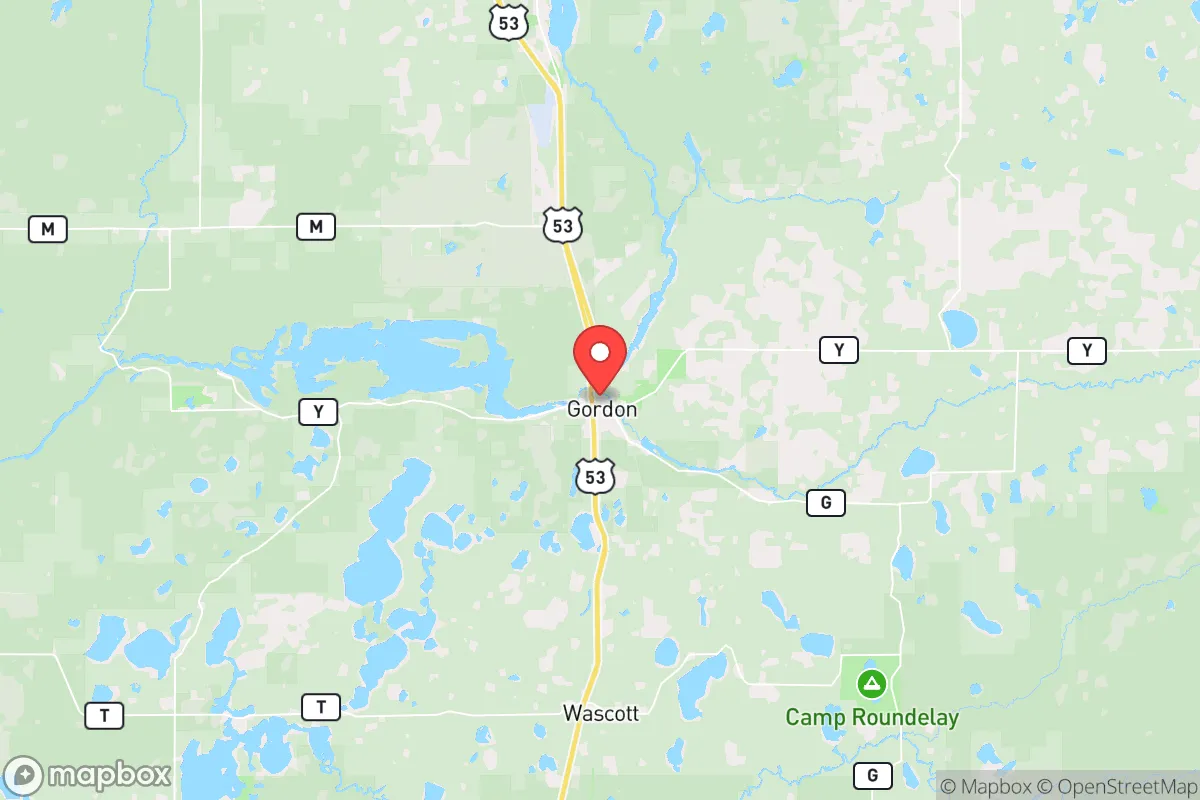
Gordon, Wisconsin, offers a notably high degree of personal sovereignty, rooted in a light-touch local government and a state legal framework that generally favors individual autonomy over collective mandates. Located in Douglas County, this unincorporated community of roughly 600 residents operates with minimal municipal oversight, meaning decisions about property use, daily life, and personal conduct are largely left to the individual. For a relocation audience prioritizing freedom from bureaucratic interference, Gordon represents a place where the default posture is permission rather than prohibition, though the trade-off is limited public services and infrastructure.
Tax burden and regulatory posture in Douglas County
Wisconsin’s overall tax burden is moderate compared to the national average, but Gordon benefits from being in a rural, unincorporated area where local levies are low. Property taxes in Douglas County average around 1.7% of assessed value, slightly below the state median, and Gordon itself has no municipal property tax because it lacks a village or city government. The absence of a local zoning ordinance in many parts of the township means fewer permitting hurdles for building, fencing, or land use changes. State income tax rates range from 3.5% to 7.65%, but for a typical household earning $60,000, the effective rate is roughly 5.2%. Sales tax in Douglas County is 5.5%, with no local add-ons. Regulatory oversight is primarily at the state level, with Wisconsin’s Department of Natural Resources (DNR) enforcing environmental rules on wetlands, shorelines, and well water. However, the county’s enforcement posture is generally reactive rather than proactive, and most landowners report minimal interaction with regulators unless they trigger a specific permit requirement. The overall regulatory environment is best described as light-touch but not libertarian — you can do most things without permission, but large-scale commercial or industrial projects will still face state-level review.
Self-defense and gun law specifics for Gordon residents
Wisconsin is a shall-issue state for concealed carry, meaning permits are issued to any applicant who passes a background check and completes a training course, with no discretionary denial by local authorities. Gordon residents enjoy the full suite of Second Amendment protections under state law: no permit is required to open carry a handgun or long gun, and concealed carry requires a license that is valid for five years. The state preempts local firearm ordinances, so Douglas County cannot impose its own restrictions beyond state law. Stand-your-ground principles apply, with no duty to retreat in any place where a person is lawfully present. Castle doctrine protections extend to occupied vehicles and places of business. Magazine capacity, firearm types, and ammunition are unregulated at the state level. The only notable restriction is a 48-hour waiting period for handgun purchases, which applies statewide. For a resident of Gordon, the legal environment for self-defense is among the most permissive in the Upper Midwest, comparable to Minnesota’s pre-2021 landscape but with fewer recent restrictions. The nearest gun ranges and retailers are in Superior (25 miles north) or Solon Springs (15 miles east), and private land shooting is common and generally tolerated as long as it does not create a nuisance.
Self-reliance and homesteading viability: lot sizes, zoning, and off-grid feasibility
Gordon’s rural character makes it a strong candidate for self-reliant living. Most residential parcels are 1 to 40 acres, with many undeveloped lots available for under $10,000 per acre. The township has no formal zoning ordinance, so building setbacks, lot coverage, and land use are governed primarily by state health and safety codes rather than local planning rules. This means you can build a workshop, keep livestock, or install a greenhouse without seeking a variance. Off-grid living is legally feasible: Wisconsin allows private wells (subject to DNR testing and permitting, typically $500–$1,000 for a new well), and septic systems must meet state sanitary codes, but there is no requirement to connect to municipal water or sewer. Solar panels and wind turbines are permitted without special county approval, though net metering with the local utility (Douglas County Electric Cooperative) is available but capped at 20 kW for residential systems. Rainwater collection is unrestricted for outdoor use, and composting toilets are allowed under state plumbing codes. The primary constraint is the short growing season (Zone 4a, with roughly 110 frost-free days), which limits year-round food production to cold-hardy crops and greenhouse cultivation. Hunting and fishing are popular and accessible, with public land access via the nearby Chequamegon-Nicolet National Forest and the St. Croix River. For a family seeking to reduce dependence on supply chains, Gordon offers a legal and practical environment that is highly accommodating to homesteading, with the main barriers being climate and distance to suppliers rather than regulation.
Personal liberties: parental rights, medical autonomy, speech, and property
Wisconsin law provides strong protections for parental rights in education and healthcare. Parents have the legal right to opt their children out of sex education, and the state does not require parental consent for a minor’s COVID-19 vaccination (though most providers require it as a matter of policy). Homeschooling is straightforward: parents must file an annual form with the school district and provide 875 hours of instruction per year, but there are no curriculum mandates, standardized testing requirements, or home visits. Medical autonomy is less protected than in some Western states; Wisconsin has a vaccine mandate for school attendance (with medical and religious exemptions), and the state’s medical marijuana program is limited to severe conditions, with no recreational cannabis. However, the rural character of Gordon means enforcement of drug laws is low-priority, and the county sheriff’s office focuses on violent crime and traffic safety rather than personal use. Free speech is fully protected under the First Amendment, and there are no local ordinances restricting signs, flags, or political expression. Property rights are robust: Wisconsin is a “right to farm” state, meaning agricultural operations are protected from nuisance lawsuits if they follow generally accepted practices. Eminent domain is rarely exercised in rural Douglas County, and property taxes are the primary ongoing cost of land ownership. The overall environment for personal liberties is conservative in the classical sense — the government is small, taxes are low, and most personal decisions are left to the individual, with the notable exception of cannabis prohibition and vaccine mandates for schoolchildren.
Compared to other rural areas in the Upper Midwest, Gordon, Wisconsin, offers a sovereignty profile that is stronger than most of Minnesota or Michigan’s Upper Peninsula but slightly less permissive than parts of Idaho or Montana. The absence of local zoning, low property taxes, and permissive gun laws create a baseline of autonomy that appeals to self-reliant individuals and families. The trade-offs are real: limited healthcare access (the nearest hospital is 25 miles away in Superior), harsh winters, and a thin social safety net. For a reader who values personal freedom over convenience and is willing to accept the responsibilities that come with minimal government, Gordon represents a viable destination where the state’s presence in daily life is minimal and the legal framework supports individual decision-making in most domains.

* Values derived from national, state, county, city and local statistics and may differ in a specific area. Last updated: 2026-09-01T03:04:44.000Z
Narrative content on this page is AI-generated and may contain mistakes. Verify any details that matter before acting on them.
ReloMaps may earn a commission from affiliate links at no extra cost to you.

