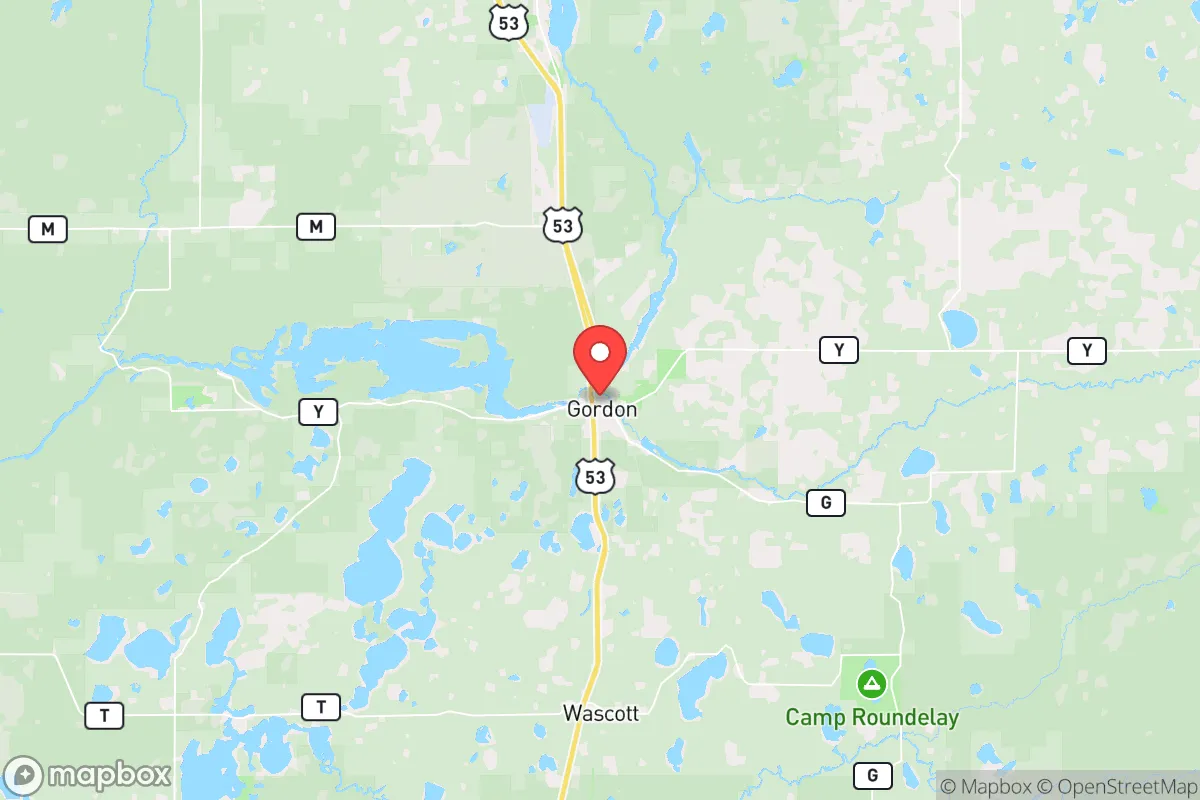
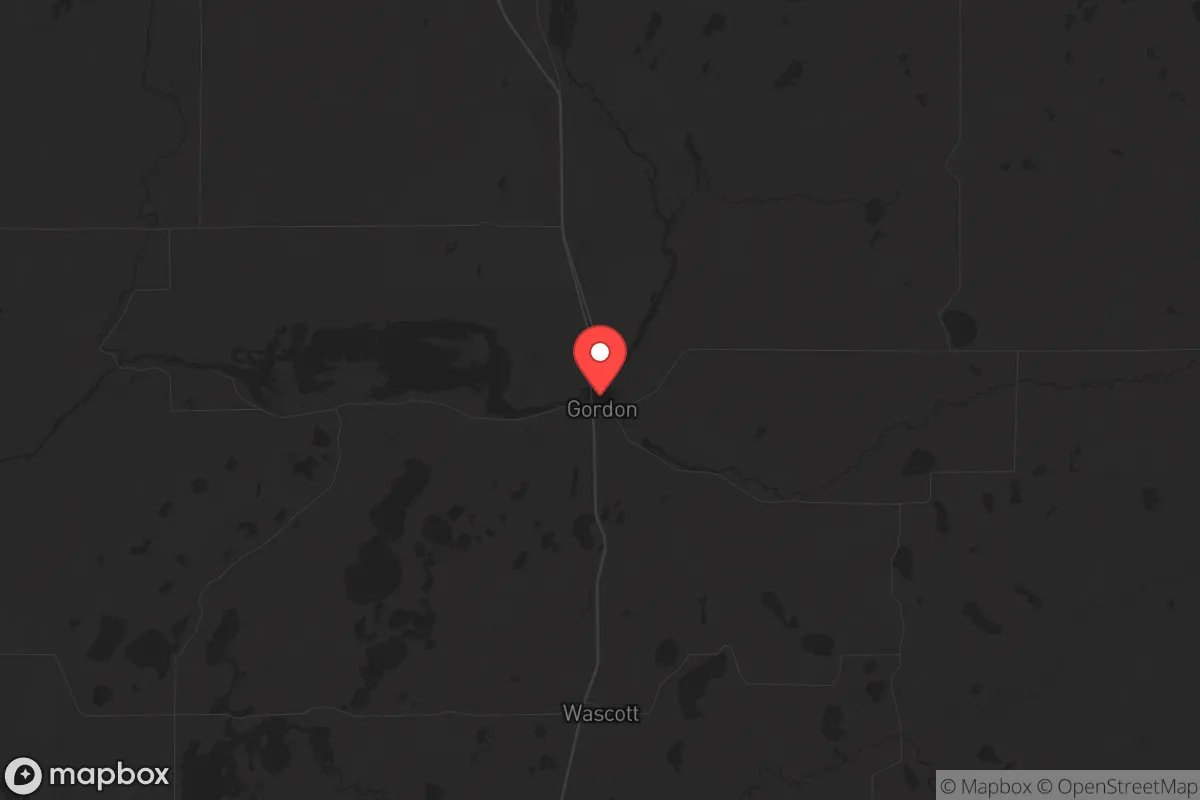
Strategic Assessment of Gordon, WI
Strong survivability profile. Good buffer from population centers, with manageable environmental and tactical risks.
What does the Strategic Assessment tell us?
Our Strategic Assessment grades tactical survivability of an area. Major population centers, military targets, fallout zones, natural disasters, and border exposure all drive risk — lower exposure means a more defensible position in a crisis.
This is heavily inspired by Joel Skousen's Strategic Relocation book. Highly recommended you checkout the book ($)What does this tell us?
Our Strategic Assessment grades tactical survivability of an area. Major population centers, military targets, fallout zones, natural disasters, and border exposure all drive risk — lower exposure means a more defensible position in a crisis.
This is heavily inspired by Joel Skousen's Strategic Relocation book. Highly recommended you checkout the book ($)Strategic Pillars

Key Distances
Regional Safe Places
Below is our recommended "safe zones" in Wisconsin and the surrounding area based on our strategic heuristics. For most people, it's unrealistic to live in a “safe zone” full-time due to work, family or other personal reasons. They tend to be more rural. However, many of these areas are perfect for second homes and retreat properties that double as a vacation home or even a short-term rental.
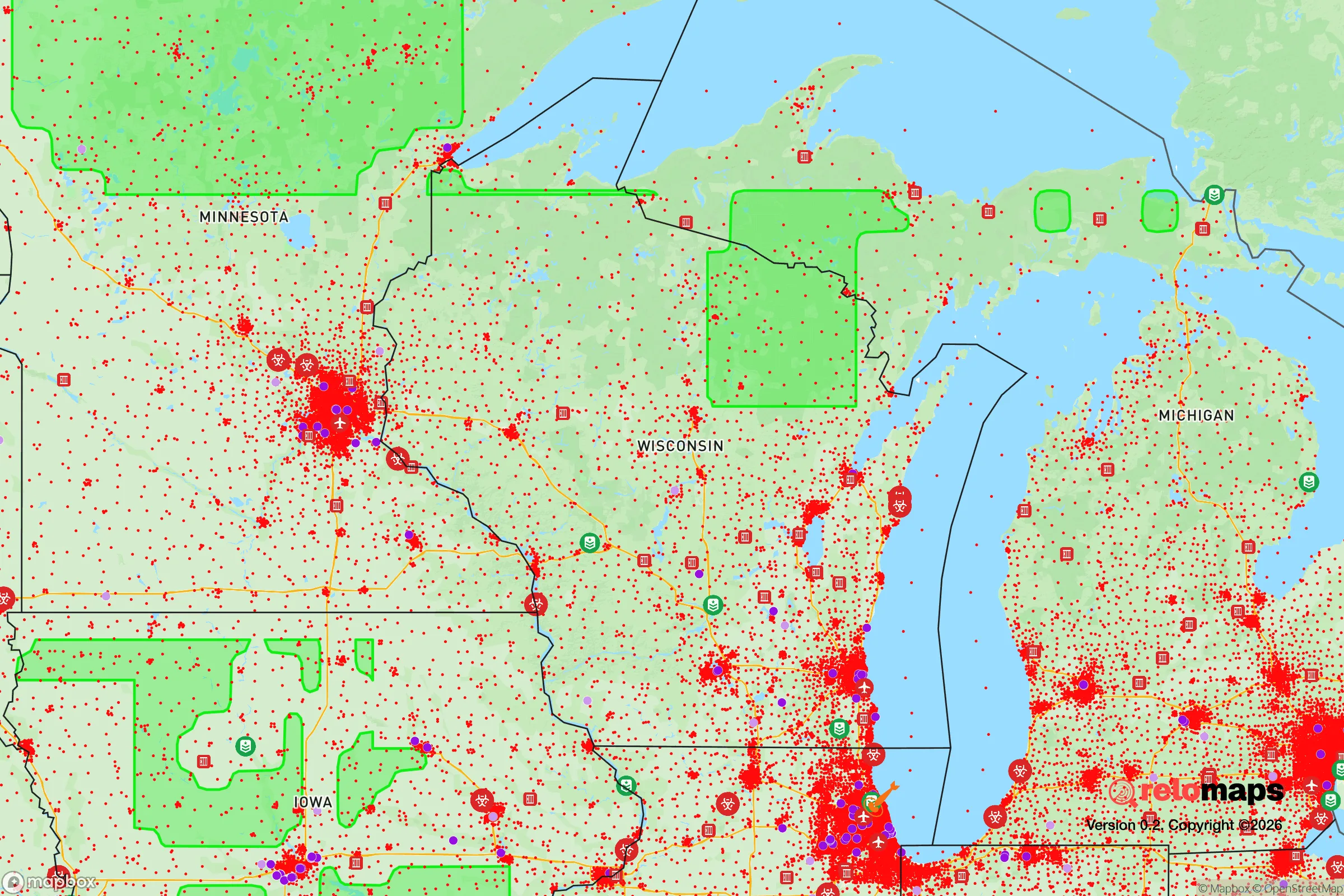
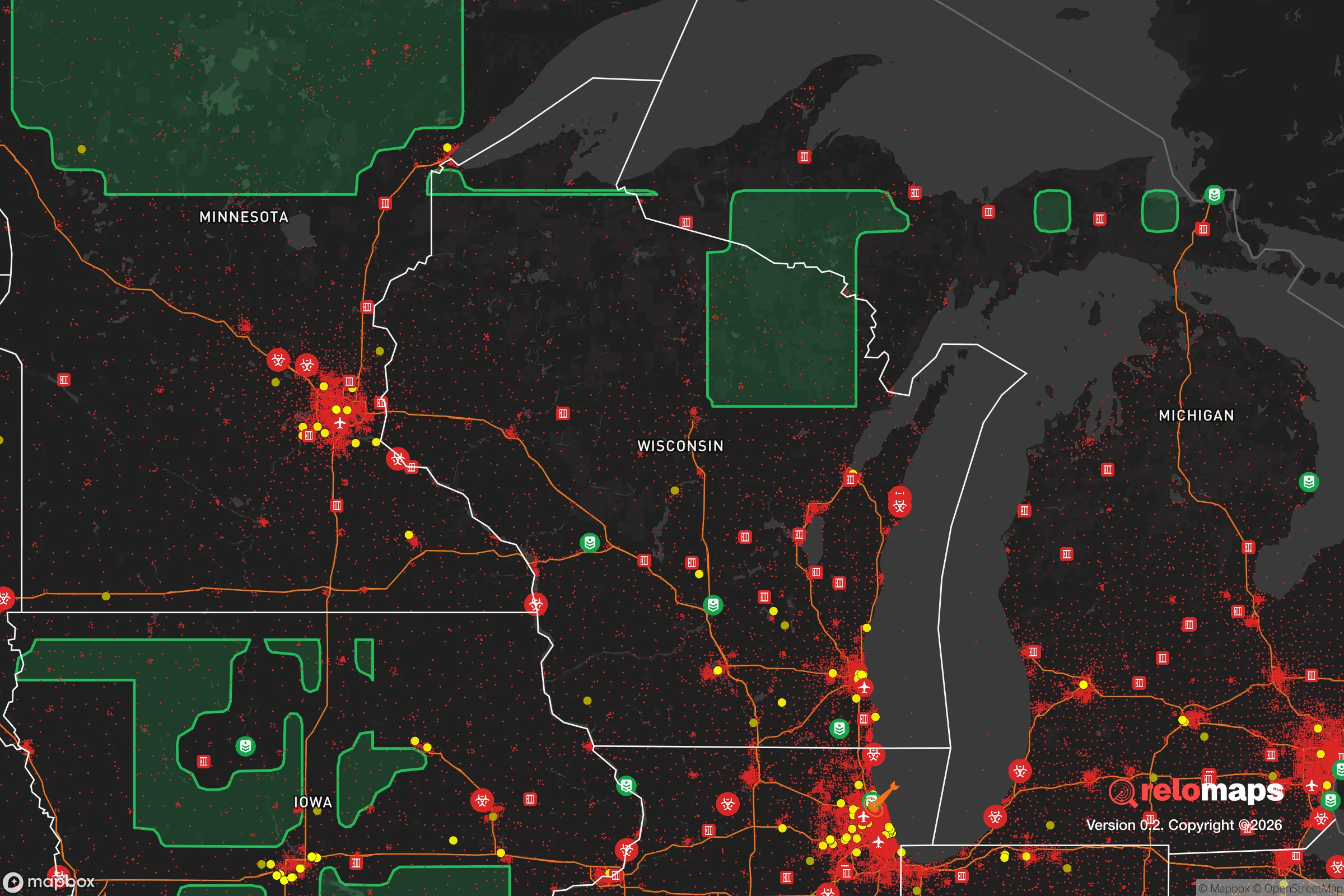


Important Note: For informational purposes only. This does not mean nothing bad ever happens in the green zones. Please use common sense. This is based on public data and modeled with AI. We tried to take a conservative approach but mistakes happen. We update this regularly as new information becomes available.
Solar Generator Recommendations
Backup power matters more here than in safer locations. We've picked three solar generators across budgets and capacity tiers — start with the budget unit if you only need a few essentials, or step up if you want to run a fridge and HVAC for days at a time.

Jackery Portable Power Station Explorer 300
Budget OptionPower on the Go: Weighing only 11 lbs, it's convenient to set up and store with book-sized foldable solar panels

BLUETTI Portable Power Station AC180
Designed for both indoor and outdoor scenarios, AC180 is highly capable as it has a robost capacity and continuous output power.

EF ECOFLOW DELTA Pro Ultra Power Station
Upgraded PickEcoFlow DELTA Pro Ultra is a whole-home energy system designed to grow with your family. Integrated with the Smart Home Panel 2, it scales to meet your evolving energy needs — keeping your home powered, intelligent, and secure through every stage of life.
We earn a commission, at no additional cost to you.
Strategic Assessment Analysis
Gordon, Wisconsin, sits in a sweet spot for a relocator who takes resilience seriously: it’s far enough from major metropolitan blast zones to matter, yet close enough to real infrastructure that you’re not completely off the grid. The town itself is small—roughly 150 permanent residents in the community proper, with the broader town of Gordon population hovering around 700—but its location in Douglas County, about 20 miles south of Superior and 15 miles from the Wisconsin-Minnesota border, gives you a strategic buffer that most suburban refugees won’t have. You’re looking at a place where the land is cheap, the water is abundant, and the neighbors are few—but you need to understand the full picture before you commit.
Geographic position and natural advantages for long-term self-sufficiency
Gordon’s real asset is the Chequamegon-Nicolet National Forest, which surrounds the town on three sides. That’s not just scenery—it’s a natural resource buffer that provides firewood, game, forage, and a massive barrier against urban sprawl. The area sits on the southern edge of the Lake Superior watershed, which means surface water is plentiful: the Namekagon River runs through town, and dozens of small lakes and wetlands dot the surrounding townships. For a serious prepper or homesteader, that’s the single most important factor—you won’t be drilling a 500-foot well and praying. The water table here is high, and most existing properties have shallow wells that produce reliably.
The terrain is gently rolling, forested, and mostly sandy loam—not prime farmland, but workable for root crops, berries, and small orchards if you amend the soil. Winters are brutal, with average January lows around -5°F and snowpack lasting from late November through March, but that cold is itself a defensive advantage: it limits year-round access for anyone who doesn’t know the roads, and it naturally preserves stored food. The growing season is short, roughly 100–110 days, so you’ll need a greenhouse or cold frames for real food security. Elevation is modest—around 1,200 feet—but the area is far enough inland that you’re not exposed to lake-effect extremes from Superior, which hammer the North Shore communities harder.
Risks, exposures, and proximity to fallout-relevant landmarks
Here’s where you need to be honest with yourself. Gordon is not a remote wilderness retreat—it’s a rural exurb with real exposure. The biggest risk is the Twin Cities metro, about 130 miles southwest. In a major conflict scenario, Minneapolis-St. Paul is a plausible target for airburst or ground-burst detonations, and prevailing westerly winds would carry fallout plumes directly toward northwestern Wisconsin. Depending on yield and wind speed, Gordon could see measurable fallout within 12–24 hours of a strike—not necessarily lethal levels, but enough to require sheltering for 48–72 hours and careful decontamination of food and water sources. You need a basement or interior room with plastic sheeting and tape, plus a radiation meter, if you’re serious.
Closer in, the Duluth-Superior port complex is about 30 miles north—a strategic chokepoint for iron ore and grain shipments, and a plausible secondary target. The oil refinery in Superior and the Enbridge pipeline terminal are specific industrial targets that could create localized hazards from fire or chemical release, though they’re not nuclear targets on their own. The Nemadji Trail Energy Center, a natural gas plant under construction near Superior, adds another industrial risk vector. On the natural side, the area’s main threats are winter storms, ice storms, and occasional tornadoes—Douglas County averages one or two tornado warnings per year, and straight-line winds can take down trees across roads for days. Wildfire risk is low but not zero, especially in dry autumns. Flooding is minimal due to the sandy soil and gentle slopes, though low-lying areas near the Namekagon can see spring runoff issues.
Practical resilience for a relocator: food, water, energy, and defensibility
Food security in Gordon is a mixed bag. The town has one small grocery store—Gordon Market—plus a couple of gas stations with basics, but you’re 20 minutes from Superior for real shopping, and 45 minutes from the larger big-box options in Duluth. That means you need to treat grocery runs as deliberate resupply missions, not casual errands. For self-sufficiency, the local soil and climate support potatoes, carrots, cabbage, and cold-hardy greens, and the surrounding forest is rich with deer, grouse, and turkey. Fishing in the Namekagon and nearby lakes is excellent—walleye, bass, and panfish are reliable. You’ll want to build a root cellar and invest in canning or dehydrating equipment, because a full freezer is a liability when power goes out for a week, which happens here every few years.
Water is Gordon’s strongest card. The high water table means shallow wells are common and productive, and the Namekagon River is a year-round surface source if you have a gravity filter or hand pump. You should still test for iron and manganese—common in this region—but the quantity is rarely an issue. For energy, you’re on the grid through Douglas County’s cooperative, but outages are frequent in winter storms, so a backup generator or solar array with battery storage is non-negotiable. Wood heat is the practical primary source: firewood is cheap and abundant, and most older homes have wood stoves or fireplace inserts. Propane is available locally, but you’ll want a 500-gallon tank and a delivery contract, not the 100-pound cylinders.
Defensibility is where Gordon gets interesting. The town itself is a loose collection of homes along Highway 53 and County Road Y, with no real choke points—that’s a weakness if you’re thinking about perimeter defense. But the surrounding forest offers excellent concealment, and the low population density means you can choose a property with natural barriers: a lake on one side, dense woods on another, a single driveway approach. The nearest law enforcement is the Douglas County Sheriff’s Office in Superior, a 25-minute response time in good weather, so you are your own first responder. The community itself is a mix of retirees, seasonal cabin owners, and a few year-round homesteaders—not a tight-knit mutual aid network, but not hostile either. You’ll need to build relationships deliberately, because in a real crisis, your neighbors are your only backup.
Overall, Gordon offers a solid strategic position for a relocator who wants rural self-sufficiency without going full off-grid hermit. The water abundance, forest resources, and low population density are genuine advantages, and the distance from primary targets—while not absolute—buys you critical time and reduces fallout intensity compared to closer suburbs. The trade-offs are real: brutal winters, short growing seasons, limited local supplies, and a defensibility profile that depends more on your property choice than the town itself. If you’re willing to invest in wood heat, water filtration, and a serious food storage plan, Gordon is a defensible, sustainable choice. If you’re looking for a ready-made fortress, you’ll need to build it yourself—but the raw materials are all here.

* Values derived from national, state, county, city and local statistics and may differ in a specific area. Last updated: 2026-09-01T03:04:44.000Z
Narrative content on this page is AI-generated and may contain mistakes. Verify any details that matter before acting on them.
ReloMaps may earn a commission from affiliate links at no extra cost to you.

