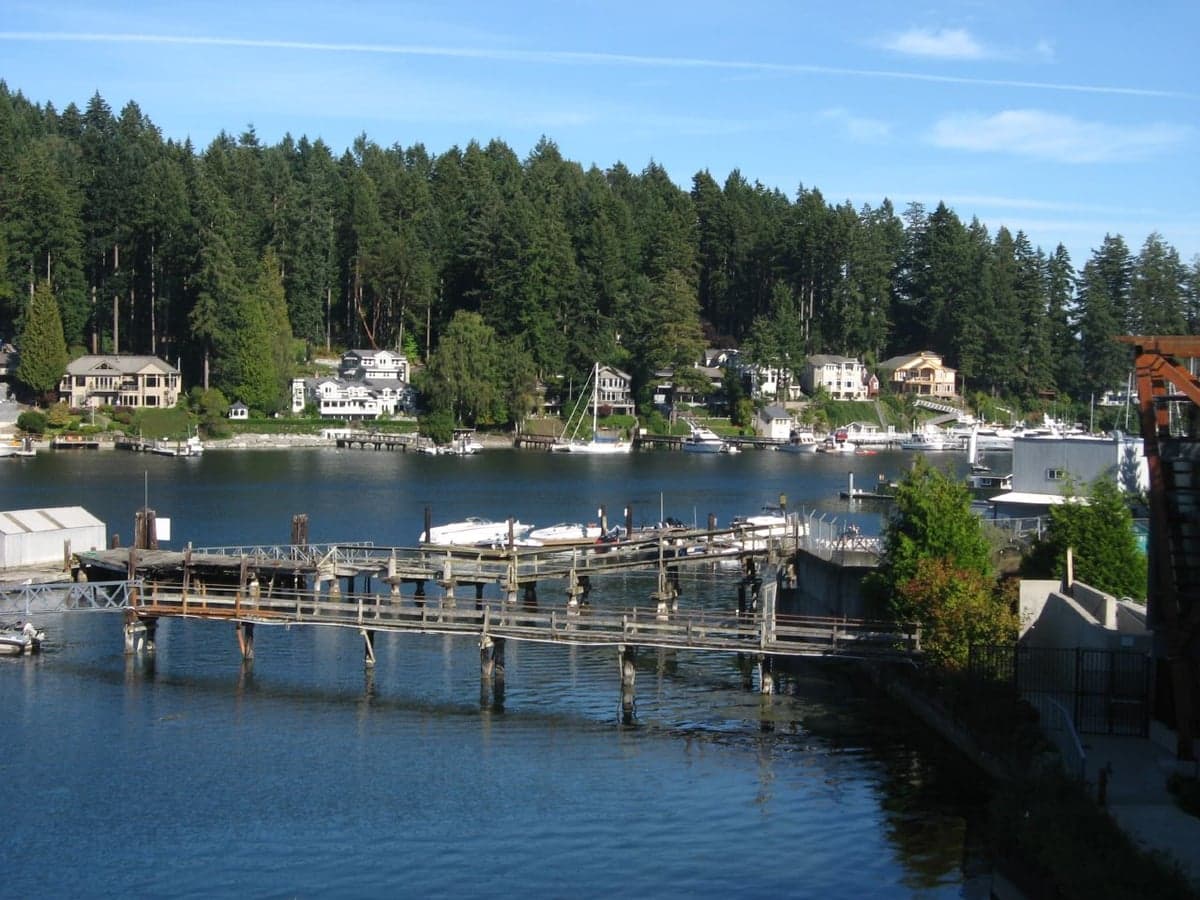
Photo: Wikipedia
Personal Sovereignty in Gig Harbor, WA
Viable for self-reliance. Generally workable, though some barriers may limit total independence.
What does Personal Sovereignty tell us?
Personal Sovereignty measures your capacity for self-reliance and independence with minimal government friction. Higher scores mean fewer barriers between you and the way you want to live... but it assumes you have the space you need and good neighbors.
What does this tell us?
Personal Sovereignty measures your capacity for self-reliance and independence with minimal government friction. Higher scores mean fewer barriers between you and the way you want to live... but it assumes you have the space you need and good neighbors.
State Policy
Energy independence: Importer (29% of energy produced in-state)
Personal Liberty
Homesteading

Personal Liberty Analysis
Gig Harbor offers a notably higher degree of personal sovereignty than many Puget Sound communities, largely because its city governance and Pierce County jurisdiction tend to be more restrained than Seattle or King County. While Washington State as a whole imposes a progressive tax structure and some regulatory constraints, Gig Harbor’s local culture and zoning policies create a buffer that allows residents more autonomy over property, daily life, and self-defense choices. For individuals and families who prioritize independence, this small city on the harbor provides a meaningful middle ground—state-level limitations are real, but local enforcement and community norms often lean toward a lighter touch.
Tax burden and regulatory posture in Gig Harbor compared to the state
Washington State has no personal income tax, which is a significant advantage for sovereignty-minded residents. Instead, the state relies on a high sales tax (8.2% in Gig Harbor as of 2026, including county and transit levies) and property taxes that average roughly 0.9% of assessed value. This structure rewards earning and saving while taxing consumption, aligning with a self-reliant ethos. Gig Harbor’s city government does not add a separate local income tax, and its regulatory posture on business and property is notably less aggressive than in larger urban centers. For example, the city’s permitting process for home additions or small workshops is straightforward, with typical review times under 30 days for minor projects—far faster than Seattle’s multi-month delays. Zoning in most residential areas allows accessory dwelling units (ADUs) by right, enabling multigenerational living or rental income without special hearings. The regulatory burden is moderate: you will encounter building codes and environmental reviews (especially near the shoreline), but the city’s planning department is known for practical, not punitive, enforcement. Overall, the tax and regulatory environment here is lighter than in King County but heavier than in rural Eastern Washington—a pragmatic balance for those who want access to coastal amenities without excessive oversight.
Self-defense and gun law specifics in Gig Harbor and Pierce County
Washington State’s gun laws have tightened in recent years, but Gig Harbor’s local culture and Pierce County’s sheriff’s office maintain a strong pro-self-defense stance. The state requires a background check for all firearm sales (including private transfers) and a 10-day waiting period for handguns, and it banned magazines over 10 rounds in 2022. However, Pierce County is a “shall issue” jurisdiction for concealed pistol licenses (CPLs), meaning the sheriff must approve qualified applicants within 30 days. As of 2026, CPL issuance remains routine, with no additional local restrictions beyond state law. Open carry is legal without a permit for anyone 18 or older who can legally possess a firearm, though it is uncommon in Gig Harbor’s commercial areas. The city itself has no local ordinances restricting firearms beyond state statutes, and the Pierce County Sheriff’s Department (which provides primary law enforcement for unincorporated areas and contracts with Gig Harbor) is known for respecting Second Amendment rights. For context, the sheriff’s office publicly opposed the magazine ban and has stated it will not enforce any future federal gun restrictions it deems unconstitutional. Self-defense law in Washington follows the “castle doctrine” (no duty to retreat in your home or vehicle) but does not have a broad “stand your ground” statute outside the home—a nuance that matters for defensive encounters on public property. For residents who prioritize armed self-defense, Gig Harbor offers a permissive local environment within a moderately restrictive state framework.
Self-reliance and homesteading viability: lot sizes, zoning, and off-grid feasibility
Gig Harbor’s residential zoning allows for meaningful self-reliance, though it is not a rural homesteading paradise. Standard single-family lots in the city range from 6,000 to 12,000 square feet, with many newer subdivisions on the outskirts offering half-acre to one-acre parcels. In unincorporated Pierce County areas just outside city limits (like the Rosedale or Purdy neighborhoods), lot sizes frequently exceed one acre, and some reach five acres. Zoning permits keeping chickens, bees, and small livestock (goats, sheep) on lots of 20,000 square feet or more, with no city permit required for up to six hens. Larger animals like horses require at least one acre per animal and a stable permit. Off-grid feasibility is limited: the city requires connection to municipal water and sewer for any habitable structure within its urban growth boundary. However, in the county’s rural zones, wells and septic systems are standard, and solar panels are permitted by right with no HOA interference. Rainwater collection for irrigation is allowed, though potable rainwater use requires a separate permit and filtration system. The climate—mild, with 40 inches of rain annually—supports year-round gardening, and many residents maintain substantial vegetable plots and fruit trees. Wood-burning stoves are legal for supplemental heat, but new installations require a permit and must meet EPA emissions standards. For those seeking true off-grid living, Gig Harbor is too developed and regulated; but for a suburban or exurban homesteading lifestyle—raising some food, generating solar power, and reducing utility dependence—it is entirely viable, especially on larger lots in the county.
Personal liberties: parental rights, medical autonomy, speech, and property
Washington State’s legal framework on personal liberties is mixed, but Gig Harbor’s local culture tilts toward individual discretion. Parental rights in education are a live issue: the state mandates comprehensive sex education and LGBTQ-inclusive curricula, but Gig Harbor’s school board (Peninsula School District) has resisted some state directives, maintaining opt-out policies for parents and refusing to implement certain gender-identity notification policies without parental consent. This local pushback gives families more control than in many Washington districts. Medical autonomy is constrained by state law: Washington has no parental consent requirement for minors to receive certain reproductive health services, and vaccine mandates for school attendance remain in effect (though medical and philosophical exemptions are available). The city’s healthcare landscape includes several private clinics and a hospital (St. Anthony’s) that respect patient choice within state boundaries. Free speech is robust—Gig Harbor has no local ordinances restricting public expression, and the city’s council meetings include public comment periods without prior approval. Property rights are generally strong: the city does not impose rent control, short-term rental regulations are minimal (no cap on Airbnb permits), and there is no local tree ordinance on private property (unlike Seattle’s strict tree protection rules). Eminent domain is rarely used, and the city’s comprehensive plan emphasizes property owner input. The one notable constraint is shoreline development: properties within 200 feet of the harbor require a Shoreline Master Program permit, which can restrict docks, bulkheads, and vegetation removal. For most inland properties, however, owners enjoy broad discretion over use and improvement.
Overall, Gig Harbor ranks as one of the more sovereignty-friendly communities in Western Washington. It lacks the extreme regulatory freedom of rural Eastern Washington counties like Ferry or Stevens, but it offers a practical balance: state-level taxes and laws are moderate, while local governance and cultural norms preserve significant personal autonomy. For a conservative-leaning individual or family who wants coastal access, good schools, and a community that respects self-reliance without requiring full off-grid commitment, Gig Harbor delivers a level of personal sovereignty that is increasingly rare in the Puget Sound region.

* Values derived from national, state, county, city and local statistics and may differ in a specific area. Last updated: 2026-11-15T00:00:33.000Z
Narrative content on this page is AI-generated and may contain mistakes. Verify any details that matter before acting on them.
ReloMaps may earn a commission from affiliate links at no extra cost to you.

