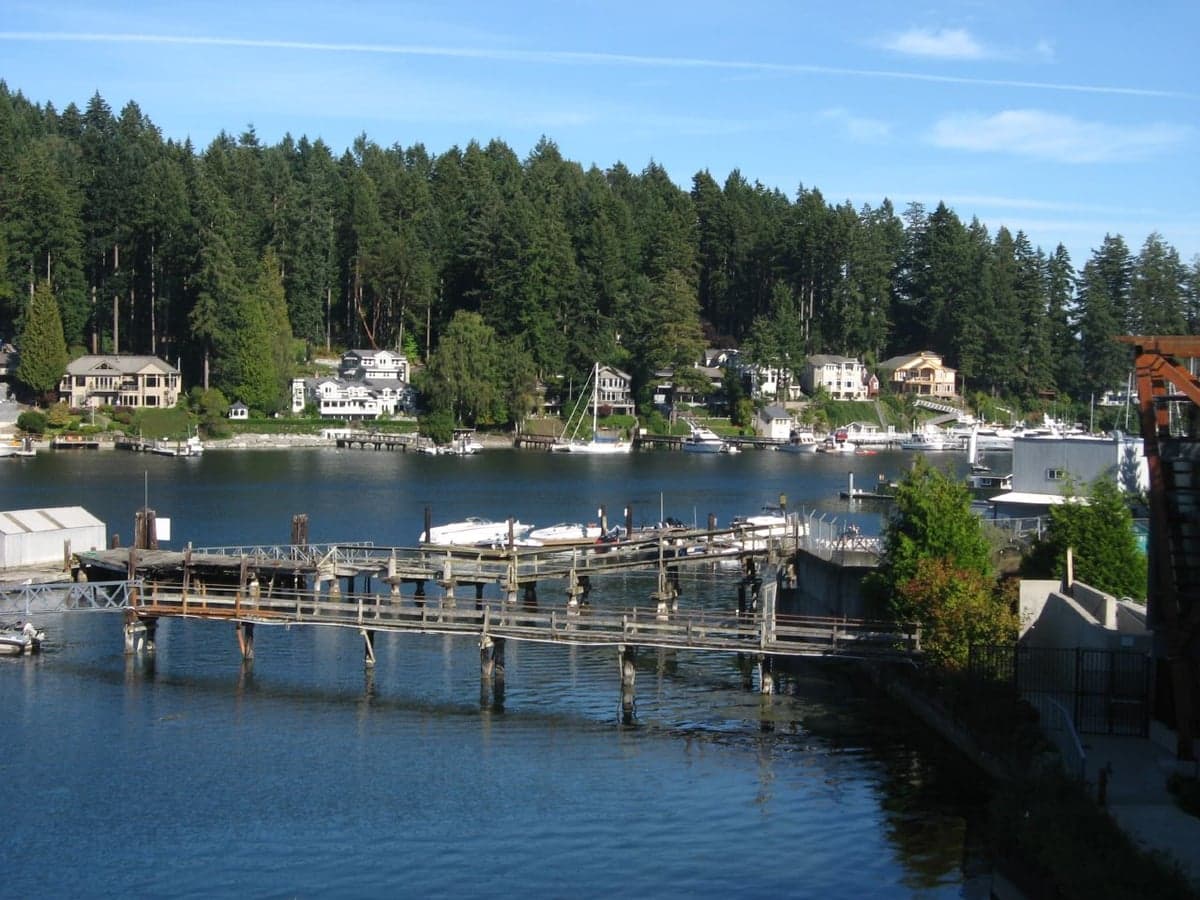
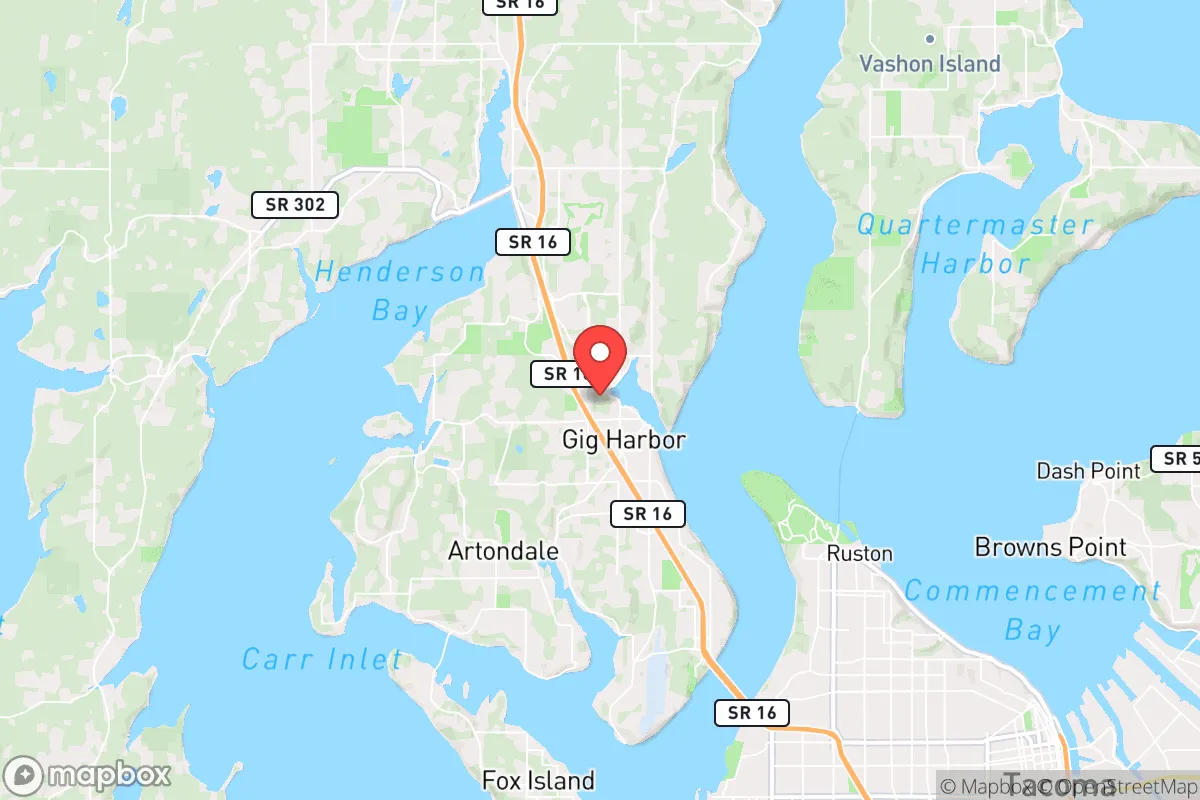
Photo: Wikipedia
Demographics of Gig Harbor, WA
Affluence Level in Gig Harbor, WA
An upper-middle-class area. Household wealth, education levels, and homeownership run ahead of national benchmarks.
People of Gig Harbor, WA
The people of Gig Harbor, Washington, today form a predominantly white, highly educated, and family-oriented community of 12,202 residents, with a notably low foreign-born share of just 1.5%. The city’s character is shaped by its maritime heritage and suburban affluence, reflected in a 50.6% college-educated population and a median household income well above the state average. Distinctive markers include a strong sense of local identity tied to the working waterfront and a demographic profile that is 80.7% white, with smaller Hispanic (5.2%) and East/Southeast Asian (3.1%) communities. This is a place where long-established families mix with recent domestic in-migrants seeking a slower-paced, scenic alternative to Tacoma and Seattle.
How the city was settled and grew
Gig Harbor’s human history begins with the ancestral lands of the Puyallup and Squaxin Island tribes, who used the protected harbor for fishing and trade for centuries. The first permanent non-Native settlers arrived in the 1850s, drawn by the deep-water harbor and abundant timber. The community’s founding is often credited to the Skansie brothers, Croatian immigrants who established a fishing and boat-building operation in the 1880s. This Croatian influence remains a point of pride, with the Skansie Brothers Park and the Harbor History Museum preserving that legacy. The original settlement clustered around what is now the Downtown Waterfront district, where Croatian, Scandinavian, and German families built homes and businesses. By the early 20th century, the town’s economy revolved around commercial fishing, boatbuilding, and lumber mills, with the Rosedale neighborhood to the north developing as a working-class area for mill and dock workers. The population remained small and overwhelmingly white through the 1950s, with the 1960 census recording just over 1,000 residents.
Modern era (post-1965)
The 1965 opening of the Tacoma Narrows Bridge transformed Gig Harbor from a sleepy fishing village into a commuter suburb. The bridge connected the peninsula directly to Tacoma, triggering a wave of domestic in-migration that accelerated through the 1970s and 1980s. Newcomers—predominantly white, middle- and upper-middle-class families from the Puget Sound region—settled in master-planned subdivisions like Canterwood, a gated golf-course community that became a magnet for affluent retirees and professionals. The Artondale area, inland from the harbor, saw rapid growth of single-family homes on larger lots, attracting families seeking good schools and space. The city’s Hispanic population, now 5.2%, began to grow in the 1990s, largely through domestic migration from other parts of Washington and California, with many settling in the more affordable Purdy area just south of the city limits. The East/Southeast Asian community (3.1%) is a smaller but established presence, with families concentrated in the Peacock Hill neighborhood, drawn by the area’s reputation for safety and strong schools. The Indian-subcontinent population remains negligible at 0.1%, and the Black population at 0.6% reflects the broader demographic patterns of the Kitsap Peninsula, which has historically had a very small African American community. The post-1965 era solidified Gig Harbor as a predominantly white, politically moderate-to-conservative suburb, with a cultural identity rooted in its maritime past but increasingly shaped by its role as a bedroom community for Tacoma and Seattle.
The future
Gig Harbor’s population is projected to grow modestly, with the city’s buildable land largely constrained by the surrounding peninsula and conservation areas. The population is becoming slightly more diverse, driven primarily by the growth of the Hispanic and East/Southeast Asian communities, though the white share (80.7%) remains dominant and is expected to decline only gradually. New residential development is concentrated in infill projects within the Downtown Waterfront district, where mixed-use condos and townhomes are attracting younger professionals and empty-nesters, and in the Burnham Drive corridor, where new subdivisions are being built on the last remaining large parcels. The city’s cultural identity is evolving from a purely family-oriented suburb toward a more diverse, multi-generational community, though the pace of change is slow. The next 10-20 years will likely see continued domestic in-migration from higher-cost areas in King County, reinforcing the city’s affluent, educated character, while the foreign-born share remains low. The key demographic tension will be between long-time residents who value the small-town feel and newcomers who bring demand for more urban amenities.
For someone moving in now, Gig Harbor offers a stable, safe, and scenic environment with excellent schools and a strong sense of community, but with limited racial and economic diversity. The city is becoming slightly more varied in its population, but the core identity—white, well-educated, and family-focused—is likely to persist for the foreseeable future. This is a place for those who prioritize natural beauty, low crime, and a slower pace over urban vibrancy or a highly multicultural atmosphere.

* Values derived from national, state, county, city and local statistics and may differ in a specific area. Last updated: 2026-11-15T00:00:33.000Z
Narrative content on this page is AI-generated and may contain mistakes. Verify any details that matter before acting on them.
ReloMaps may earn a commission from affiliate links at no extra cost to you.

