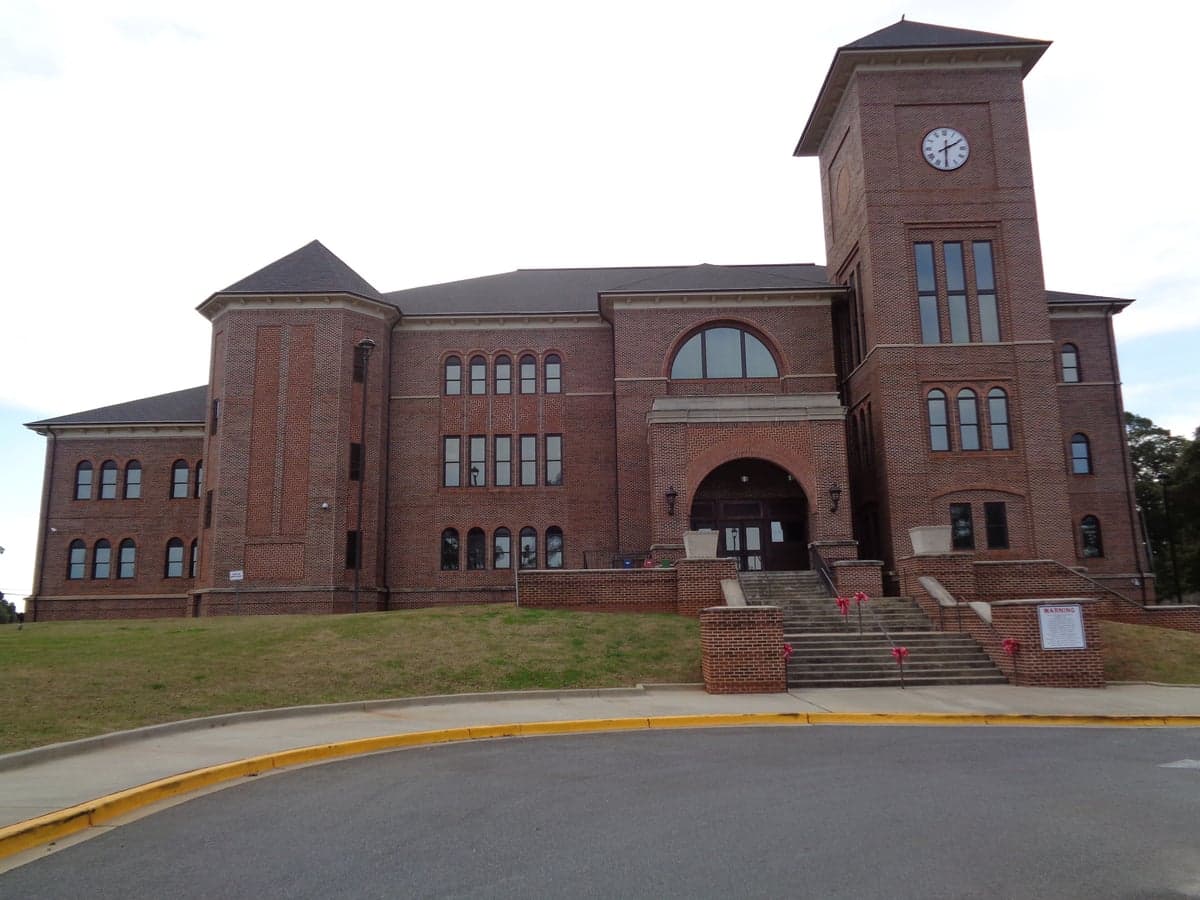
Photo: Wikipedia
Quality of Life in Sumter County
A livable area that tracks near national norms for affordability, walkability, and neighborhood health.
What does Quality of Life tell us?
Quality of Life measures an area by evaluating factors like cost of living, nearby amenities, country club access, airport proximity, socioeconomic signals and neighborhood character. For large states, this is a general average — quality of life can vary dramatically between metro areas, suburbs, and rural communities within the same state.
What does this tell us?
Quality of Life measures an area by evaluating factors like cost of living, nearby amenities, country club access, airport proximity, socioeconomic signals and neighborhood character. For large states, this is a general average — quality of life can vary dramatically between metro areas, suburbs, and rural communities within the same state.
Cost of Living
39% below national average
120%
The Real Cost of Living in Sumter County for 2026
| Tier | Individual | Family (4) |
|---|---|---|
| Survival | $14k | $25k |
| Comfortable | $24k | $35k |
| Luxury | $76k+ | $117k+ |
| Elite (Top 5%) | $100k+ | $155k+ |
Quality-of-Life Analysis
Sumter County, Georgia, offers a broad spectrum of quality-of-life options, from the historic college town of Americus to deeply rural unincorporated communities, attracting everyone from university faculty and students to agricultural workers and retirees seeking a low-cost, slow-paced lifestyle. The county’s character is defined by this contrast: a walkable, amenity-rich hub centered on Georgia Southwestern State University and the global headquarters of Habitat for Humanity, versus quiet crossroads and farmland where life revolves around local churches, family farms, and the region’s pecan and peanut harvests. With a cost of living index of 61 (39% below the U.S. average) and a median home value of just $122,300, the county provides tangible financial breathing room, but the experience of daily life shifts dramatically depending on whether you live within Americus’s city limits or out on a county road.
Largest town(s) & population centers
Americus is the county seat and undisputed population center, home to roughly 15,000 residents and the vast majority of the county’s jobs, shopping, and services. Daily life here revolves around the historic downtown square, which features locally owned restaurants, the Rylander Theatre, and the Windsor Hotel, alongside practical amenities like a Walmart Supercenter, a regional hospital (Phoebe Sumter Medical Center), and the main campus of Georgia Southwestern State University. The presence of Habitat for Humanity’s global headquarters and its nearby training center, the Carter Center-affiliated Rosalynn Carter Institute for Caregivers, gives Americus a civic-minded, nonprofit-oriented character uncommon for a town its size. Housing stock ranges from well-preserved Victorian homes in the historic district to newer subdivisions on the outskirts, with the median rent of $847 making it one of the most affordable college towns in the state. The average commute of 21 minutes is realistic for Americus residents, as most employment is local, though some workers commute to Albany (40 minutes west) or Cordele (25 minutes east).
Smaller towns & rural pockets
Outside Americus, Sumter County’s smaller communities offer a distinctly quieter, more agrarian way of life. Leslie (population ~400) is the largest of these, a former railroad town with a small grocery store, a post office, and a cluster of historic homes, but no major employers or chain retail. Plains (population ~600) is internationally known as the birthplace and home of President Jimmy Carter, but its daily reality is that of a tiny farming village: a single main street with the Plains Historic Inn, a few antique shops, and the Carter Boyhood Farm, which draws tourists but provides few year-round jobs. De Soto (population ~150) and Andersonville (population ~250, partially in Macon County) are unincorporated hamlets where residents rely on Americus or Albany for most needs. The rural pockets between these towns are dominated by pecan orchards, cotton fields, and pine plantations, with homes ranging from mobile homes on large lots to modest farmhouses. Internet access can be inconsistent in the most remote areas, and the nearest full-service grocery store may be a 20-minute drive.
Cost & lifestyle range
The cost of living varies noticeably across the county, though it remains low by national standards at every point on the spectrum. At the higher end, Americus’s historic district and the Lake Blackshear area (on the county’s western edge) command home prices of $180,000–$300,000 for restored homes or lakefront properties, with residents enjoying walkable access to downtown restaurants, the university’s cultural events, and water recreation. At the lower end, rural areas near Leslie and De Soto offer land and older homes for under $100,000, with mobile homes on acreage frequently listed for $40,000–$70,000. Rent follows a similar pattern: a two-bedroom apartment in Americus averages $750–$900, while rural rental houses can be found for $500–$650. Amenities thin out quickly outside Americus: there are no chain restaurants or movie theaters in Leslie, Plains, or De Soto, and residents of those communities drive 15–25 minutes for most shopping and healthcare. Property taxes are low across the county (roughly 0.8% of assessed value), and the absence of state income tax on Social Security benefits makes the rural areas particularly attractive to fixed-income retirees.
Sumter County works best for people who want genuine affordability and are comfortable with a trade-off: you can have a vibrant, walkable small-city life in Americus with cultural amenities and a university pulse, or you can have deep quiet and land in the rural communities, but you cannot have both in the same place. Retirees on a fixed budget, remote workers who need reliable internet (available in Americus and parts of Plains, less so in the deep rural areas), and young families seeking a first home under $150,000 will find the county compelling. Those who require urban nightlife, diverse dining, or high-end retail will feel the absence of a major metro area acutely, as Atlanta is a 2.5-hour drive north.

Crime in Sumter County
Crime rates similar to the national median for U.S. locations.
Violent CrimeViolent Crime Analysis
Property CrimeProperty Crime Analysis
Crime Analysis
Sumter County, Georgia, presents a mixed safety picture, with property crime rates notably higher than both state and national averages while violent crime remains below the national benchmark. The county's overall crime landscape is shaped by its small-town character and the presence of Americus as the county seat, where most incidents are concentrated. Residents and prospective movers should weigh the relatively low violent crime risk against elevated property crime concerns, particularly in Americus and along the U.S. 19 corridor.
Crime in context
Sumter County's violent crime rate of 276.2 per 100,000 residents sits below the national average of 380 per 100,000 but above Georgia's state average of approximately 240 per 100,000. Property crime, however, is a more pressing issue: the county's rate of 1,284.4 per 100,000 significantly exceeds both the national average of 1,954 per 100,000 and Georgia's average of roughly 2,100 per 100,000. This means a resident's likelihood of experiencing property crime—burglary, theft, or motor vehicle theft—is about 1 in 78 annually, compared to 1 in 200 for violent crime. The South Georgia Judicial Circuit, which covers Sumter County, has seen a mix of prosecutorial approaches in recent years, with some observers noting that progressive-leaning district attorneys in larger nearby circuits (such as the Macon Judicial Circuit) have influenced regional sentencing patterns, though Sumter's own DA office has maintained a relatively traditional stance.
What residents experience
Daily life in Sumter County varies sharply by location. Amercus, home to roughly 17,000 people, accounts for the majority of reported crime, with property thefts from vehicles and unsecured homes being the most common complaints. The area around Georgia Southwestern State University sees occasional petty theft and vandalism, though campus safety measures keep violent incidents rare. Smaller communities like Plains (population 700) and Leslie (population 400) report far fewer incidents, with residents often leaving doors unlocked and enjoying a slower pace. Andersonville, known for its historic prison site, has a negligible crime rate due to its tiny population and rural layout. The U.S. 280 corridor between Americus and Cordele sees periodic vehicle break-ins at gas stations and fast-food parking lots, particularly after dark.
Neighborhood-level variation
Within Americus, safety diverges noticeably. The historic district around Jackson Street and Wheatley Street benefits from active neighborhood watches and higher property values, keeping crime low. In contrast, areas near Martin Luther King Jr. Boulevard and the Eastview neighborhood experience higher rates of burglary and drug-related offenses. The county's rural stretches—particularly around DeSoto and Cobb—see almost no violent crime, though agricultural equipment theft is a recurring issue. For families, the safest bet is the Sumter County School District zone near the high school, where police patrols are more frequent and community engagement is strong. Overall, Sumter County's crime profile is manageable for those who choose their neighborhood carefully, but property crime demands vigilance, especially in Americus and along major highways.
* Values derived from national, state, county, city and local statistics and may differ in a specific area. Last updated: 2026-10-31T14:22:52.000Z
Narrative content on this page is AI-generated and may contain mistakes. Verify any details that matter before acting on them.
ReloMaps may earn a commission from affiliate links at no extra cost to you.

