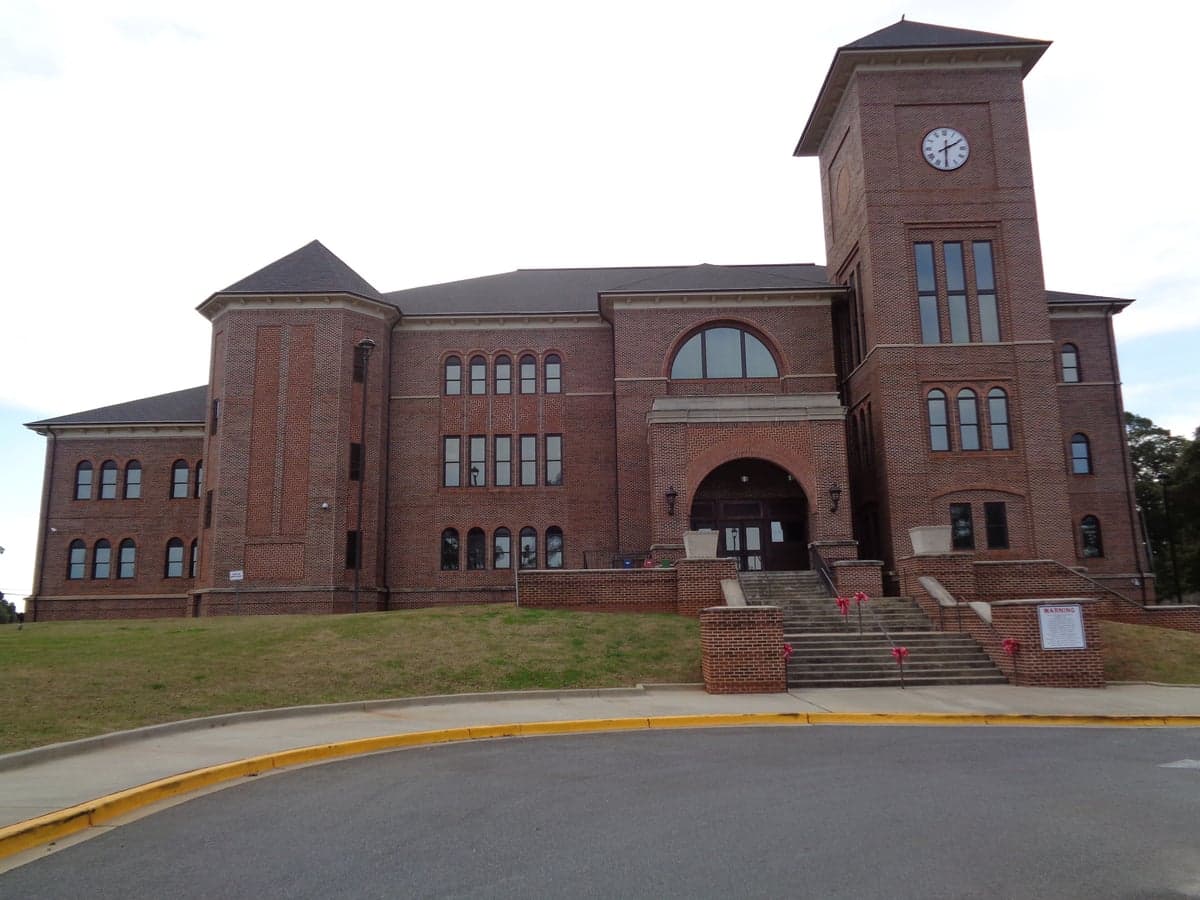
Photo: Wikipedia
Personal Sovereignty in Sumter County
Viable for self-reliance. Generally workable, though some barriers may limit total independence.
What does Personal Sovereignty tell us?
Personal Sovereignty measures your capacity for self-reliance and independence with minimal government friction. Higher scores mean fewer barriers between you and the way you want to live... but it assumes you have the space you need and good neighbors.
What does this tell us?
Personal Sovereignty measures your capacity for self-reliance and independence with minimal government friction. Higher scores mean fewer barriers between you and the way you want to live... but it assumes you have the space you need and good neighbors.
State Policy
Energy independence: Importer (26% of energy produced in-state)
Personal Liberty
Homesteading

Personal Liberty Analysis
Sumter County, Georgia, offers a notably light-touch environment for personal sovereignty, where state-level preemptions on firearms and property rights combine with a low cost of living to create a landscape that prioritizes individual autonomy. The county seat of Americus anchors a region where residents experience fewer regulatory hurdles than in metro Atlanta, though local ordinances in smaller towns like Plains and Leslie can introduce subtle variations in zoning and land use. For those seeking to maximize self-reliance, the area's rural character and relatively permissive legal framework make it a compelling option among Georgia's southwestern counties.
Tax burden and regulatory posture in Sumter County
Georgia's state-level tax structure is generally favorable to personal sovereignty, and Sumter County aligns with that posture. The state's flat income tax rate of 5.39% (as of 2026) is moderate, but the absence of a local income tax in Sumter County keeps the overall burden lower than in many states. Property taxes are a key consideration: Sumter County's millage rate hovers around 12.5 mills, which is below the Georgia average and significantly lower than metro Atlanta counties like Fulton or DeKalb. This translates to roughly $1,250 annually per $100,000 of assessed value, a figure that supports a leaner local government footprint. Regulatory posture is similarly restrained. Sumter County does not impose countywide building codes beyond state minimums, and there are no county-level rent control or business licensing ordinances that would add friction. However, the city of Americus enforces its own zoning code, which can restrict certain home-based businesses and accessory dwelling units in residential zones. By contrast, unincorporated areas near Cobb and DeSoto offer more flexibility, with no zoning overlay for agricultural or light commercial uses. The county's approach is best described as "hands-off until a nuisance arises," which appeals to those who prefer to manage their own property without bureaucratic interference.
Self-defense and gun law specifics in Sumter County
Georgia is a constitutional carry state, and Sumter County fully reflects that framework. No permit is required to carry a concealed firearm for anyone 21 or older who is legally allowed to possess a gun. The county sheriff's office in Americus issues Georgia Weapons Carry Licenses for reciprocity purposes, but the process is straightforward and typically completed within 30 days. Stand-your-ground laws apply statewide, meaning there is no duty to retreat before using deadly force in any place where a person is lawfully present. Sumter County's gun culture is deeply ingrained; shooting ranges like the Sumter County Gun Club near Americus are well-used, and firearm ownership is common in both rural and town settings. Local law enforcement generally takes a permissive stance on open carry, though private businesses in Americus and Plains may post signage prohibiting firearms. There are no county-level restrictions on magazine capacity, ammunition types, or firearm storage beyond state law. For residents in unincorporated areas near Andersonville or Leslie, discharging a firearm on private property is legal as long as it does not violate noise ordinances or endanger others. This creates a practical environment for self-defense training and recreational shooting without the permitting delays found in more restrictive states.
Self-reliance and homesteading viability in Sumter County
Homesteading and off-grid living are viable in Sumter County, particularly outside the city limits of Americus and Plains. Minimum lot sizes in unincorporated areas are typically 1 acre for residential use, though agricultural parcels of 5 acres or more are common and often come with lower tax assessments under Georgia's Conservation Use Valuation Assessment (CUVA) program. Zoning in the county is minimal: there are no countywide restrictions on rainwater collection, composting toilets, or solar panel installation. Off-grid feasibility is high, as the region's average annual rainfall of 48 inches supports rainwater catchment, and well drilling is straightforward with typical depths of 100-200 feet. The county does not require building permits for agricultural structures under 1,000 square feet, which simplifies the construction of barns, workshops, and chicken coops. However, the city of Americus requires permits for any new residential construction and enforces septic system inspections, so those seeking maximum autonomy should target parcels in unincorporated areas near Cobb, DeSoto, or the rural stretches around Andersonville. The local extension office in Americus offers soil testing and agricultural resources, which supports self-sufficiency efforts. For those raising livestock, the county allows up to 10 chickens on residential lots under 2 acres without a permit, and larger parcels have no limit on poultry or goats. This regulatory leniency makes Sumter County a strong candidate for a self-reliant lifestyle.
Personal liberties in Sumter County: parental rights, medical autonomy, and property
Georgia's legal framework provides broad protections for personal liberties, and Sumter County operates within that context. Parental rights are strongly protected under state law, with no county-level mandates that override a parent's authority over education, medical decisions, or religious upbringing. Homeschooling is straightforward: parents file a declaration of intent with the Georgia Department of Education and provide an annual assessment, but there are no county-level oversight boards or home visits. Medical autonomy is similarly respected; Georgia does not have a state-level vaccine mandate for adults, and Sumter County has not enacted any local health orders that restrict personal medical choices. The county's healthcare infrastructure is limited—the main facility is Phoebe Sumter Medical Center in Americus—but residents are free to seek care from any provider in the state. Property rights are robust: there is no countywide rent control, no inclusionary zoning mandates, and no transfer taxes on real estate sales. The county's approach to short-term rentals is permissive in unincorporated areas, though Americus requires a business license for Airbnb-style rentals. Speech and assembly are protected under state and federal law, and Sumter County has no local ordinances that restrict political signage, leafleting, or public gatherings beyond standard time-place-manner rules. This creates an environment where personal choices in health, education, and property use are largely left to the individual.
Overall, Sumter County ranks as one of the more sovereignty-friendly areas in Georgia's southwestern region. Its combination of constitutional carry, low property taxes, minimal zoning in rural areas, and strong parental rights protections places it ahead of more regulated counties like Fulton or DeKalb. For a conservative-leaning individual or family prioritizing personal freedom, the area offers a practical balance of autonomy and access to basic services. The key trade-off is that the most permissive environment exists outside the city limits of Americus and Plains, where local ordinances are lighter. For those willing to settle in unincorporated areas near Cobb, Leslie, or Andersonville, Sumter County provides a solid foundation for a self-directed life with fewer legal constraints than many other parts of the state.

* Values derived from national, state, county, city and local statistics and may differ in a specific area. Last updated: 2026-10-31T14:22:52.000Z
Narrative content on this page is AI-generated and may contain mistakes. Verify any details that matter before acting on them.
ReloMaps may earn a commission from affiliate links at no extra cost to you.

