Photo: Wikipedia
Political ClimatePolitical Climate in Coweta County
Showing district-level results — no local-only data available.
Local Political AnalysisPolitical Analysis of Coweta County
Coweta County has been a reliably conservative stronghold in west-central Georgia for decades, and that hasn't changed much recently — the Cook Partisan Voting Index (PVI) currently sits at R+15, meaning the county consistently votes about 15 points more Republican than the national average. That number tells the story at the macro level, but the real picture is more nuanced when you look inside the county's borders. The deep red of the rural areas and the southern reaches around Grantville and Moreland contrasts with the more moderate and even blue-leaning precincts in the booming suburb of Newnan, especially closer to the Interstate 85 corridor.
How it compares to Georgia as a whole
Coweta County stands out as significantly more Republican than the state of Georgia overall, which has been a competitive swing state in recent cycles. While Georgia narrowly voted for President Biden in 2020 and saw close Senate races, Coweta County remained deeply conservative — Trump carried the county with nearly 72% of the vote in 2020. To put it in perspective, Coweta votes more like Alabama's border counties than it does metro Atlanta. The county's R+15 PVI places it among the reddest counties in the Atlanta metropolitan statistical area, far to the right of Cobb or Gwinnett counties, which lean Republican but are much closer to the state average.
What this means for residents
For conservative residents, this political climate means their values are reflected in local governance — school boards, county commissions, and law enforcement leadership have consistently conservative majorities. The tax burden is relatively low, with no county-level sales tax on groceries and property taxes that trend below Georgia's metro-average. For liberal residents, the reality is that you're in a clear minority, but not isolated. Newnan's historic downtown and its growing creative class have created visible pockets of progressive activism — there are several active Democratic Party groups, and the city itself has shown more openness to inclusive policies than surrounding unincorporated areas. The practical effect is that you won't face hostility day-to-day, but you'll need to be comfortable being outvoted on most local ballot measures.
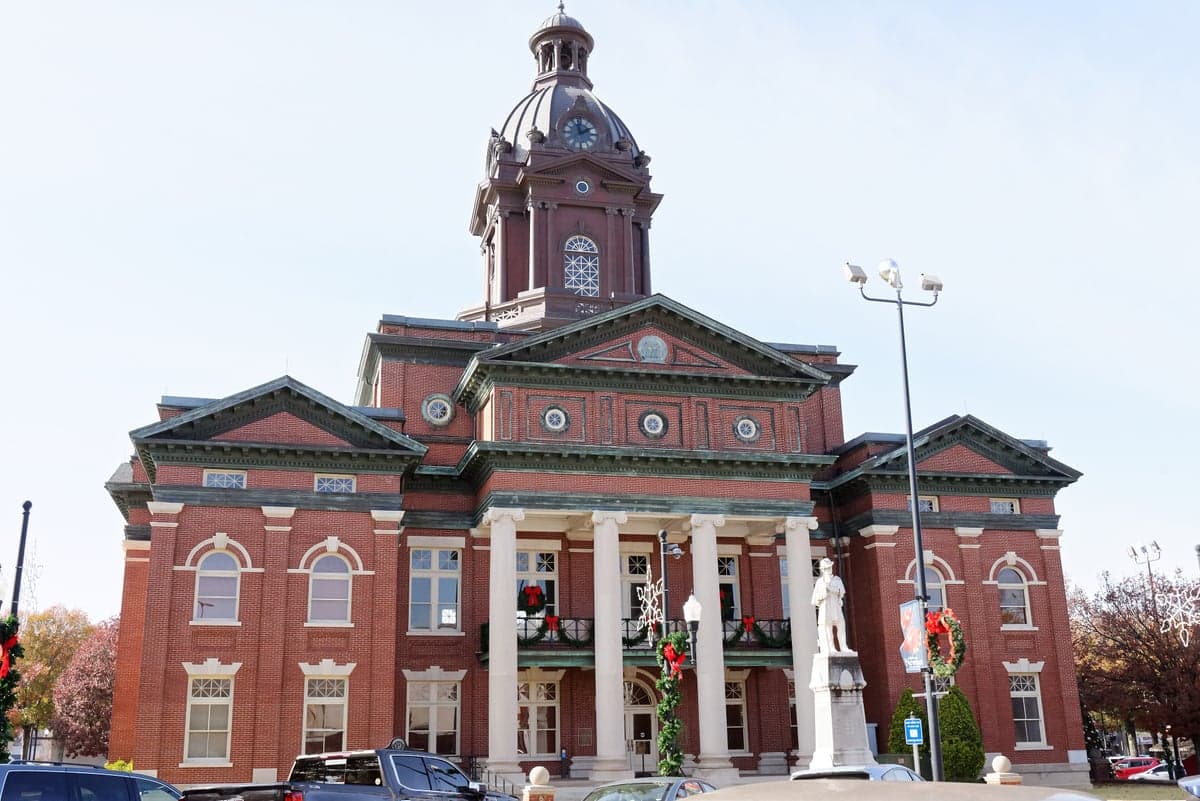
Culturally, Coweta County holds onto its Old South heritage proudly — you'll see Confederate monuments on the courthouse lawn in Newnan, and Confederate Memorial Day is still an official county holiday. That said, the suburban growth along the I-85 corridor is steadily bringing in a more diverse and younger population, which has slowly shifted the political conversation. The real cultural friction point right now is growth management — conservatives largely favor pro-development policies, while a cross-partisan coalition of long-time residents and newer arrivals is pushing for stricter zoning and preservation of the county's rural character. No matter where you land on the spectrum, the central reality of living here is that Coweta's politics mirror its geography: the further you get from the interstate, the redder it gets, and the closer you are to Newnan's square, the more you'll find a conversation worth having.

State Political ClimatePolitical Climate in Georgia
State Political AnalysisPolitical Environment in the State
Georgia has undergone a seismic political shift over the past two decades, transforming from a reliably Republican stronghold into the nation’s most competitive swing state. The state’s partisan lean is a razor-thin 50-50, with Democrats winning the presidential race in 2020 and both U.S. Senate runoffs in 2021, while Republicans swept back in 2022 and flipped a House seat in 2024. The dominant coalitions are now a fast-growing, diverse metro Atlanta coalition on the left and a deeply entrenched, vote-rich rural and exurban Republican base that still holds the majority in the state legislature and governor’s office.
Urban vs. rural divide
The political geography of Georgia is a textbook case of the urban-rural chasm. Metro Atlanta’s core counties — Fulton, DeKalb, Cobb, Gwinnett, and Clayton — now account for nearly 60% of the state’s vote, and they are solidly Democratic. Cobb and Gwinnett, both deep red as recently as the 1990s, flipped blue in 2016 and have stayed there, driven by massive in-migration from the Northeast and Midwest, plus a surge in Asian American and Latino voters. Gwinnett County alone added 300,000 new residents between 2010 and 2020, and the Democratic margin there grew from 2 points in 2012 to 18 points in 2020. Meanwhile, the rest of the state is overwhelmingly Republican. The “Golden Corridor” along I-75 from Macon to the Florida line is a GOP stronghold, with rural counties like Bleckley, Dodge, and Tift regularly voting 70-80% Republican. The state’s second- and third-largest metro areas, Augusta and Columbus, are split — their urban cores are Democratic, but the surrounding counties (like Columbia and Muscogee’s exurbs) lean red. The only blue spots outside Atlanta are Savannah’s Chatham County, Athens-Clarke County (home of UGA), and a handful of southwest Georgia counties with large Black populations.
Policy environment
Georgia’s policy environment reflects a Republican-controlled legislature and governor’s office, but one that must govern in a purple state. The state has a flat income tax rate that is scheduled to drop from 5.49% to 4.99% by 2029 under a 2022 law, and the business climate is generally business-friendly with no inventory tax or state property tax. Education is a major battleground: the state has a universal school voucher program for students in low-performing schools, passed in 2024 (HB 60), but it caps eligibility to 5% of enrollment. There is no state-level public health insurance option, and the state refused to expand Medicaid under the Affordable Care Act. Election laws are among the most debated in the nation: the 2021 SB 202 reined in absentee ballot drop boxes, added voter ID requirements for absentee ballots, and banned non-election officials from handing out food and water in line, but also expanded early voting hours in rural counties. The state has no initiative or referendum process, meaning major policy shifts require legislative action.
Recent policy direction
The trajectory over the past three years has been a mix of conservative acceleration and moderate constraint. On gun and self-defense law, Georgia passed permitless carry (HB 218) in 2022, allowing anyone 21 or older to carry a concealed handgun without a license. Local governments are preempted from regulating firearm possession. On parental and education rights, the 2024 “Parents’ Bill of Rights” (HB 1178) requires school districts to adopt policies that notify parents of their child’s health services and prohibits instruction on sexual orientation or gender identity in K-3, similar to Florida’s “Don’t Say Gay” law. On speech, the state has no unique digital speech protections beyond federal law, but a 2023 law (SB 222) created a “free expression” defense for college campus speakers. On privacy and surveillance, Georgia has strong warrant requirements for cell phone tracking (2015 law) but no comprehensive consumer data privacy law. On medical and bodily autonomy, the state’s 2019 heartbeat abortion ban (HB 481) was the strictest in the nation at passage, outlawing abortion at six weeks with no exceptions for rape or incest. A 2024 amendment added a “fetal heartbeat” civil cause of action against doctors. On property rights, eminent domain usage is restricted to public projects with clear compensation rules, per a 2006 constitutional amendment. On taxation, the trend is downward — the 2022 tax cut bill accelerated the rate reduction and doubled the standard deduction. On voting and ballot access, the recent direction is a tug-of-war: SB 202 restricted mail-in voting, but a 2024 bill (HB 581) allowed no-excuse absentee voting for seniors and the disabled. A 2025 lawsuit over the state’s new hand-count ballot requirement (which would have required all 6.5 million votes to be hand-counted) was settled by the state agreeing to use electronic tabulators.
Civil unrest & political movements
Georgia has been a flashpoint for organized political movements on both sides. The 2020 election aftermath saw massive protests at the state capitol, including an armed occupation of the Atlanta capitol grounds by QAnon adherents in January 2021. The “Stop the Steal” movement remains active, with the Georgia Republican Party’s 2024 platform calling for a hand-count of all paper ballots and the elimination of electronic voting machines. On the left, the Stacey Abrams-founded Fair Fight continues to mobilize voters, and the Atlanta “Bank” protests (2018-2023) saw repeated clashes between left-wing activists and police over the Atlanta police training center, which was permanently halted in 2023. Immigration politics are a live wire: in 2024, the legislature passed SB 160, which allows state and local law enforcement to enforce federal immigration law, and requires jails to honor ICE detainers. There is no serious secessionist movement, but “nullification” talk surfaces in rural school board meetings rejecting state standards. The election integrity debate remains the most visible flashpoint — during the 2024 recount, activists with the Georgia Election Integrity Coalition filmed ballot couriers and followed poll workers, leading to a restraining order.
Projection
Over the next 5-10 years, Georgia will likely remain a 50-50 state, but the demographic winds favor Democrats. The Atlanta metro is adding roughly 100,000 new residents per year, and those new arrivals are younger, more diverse, and more liberal. The share of the state population that is white non-Hispanic has fallen from 63% in 2000 to 51% in 2024, while the Asian American population has tripled and the Latino share has doubled. Rural Georgia is losing population — the 30 least-populous counties have seen a net decline of 15% since 2010. That means the Republican advantage in rural areas is becoming less valuable as their population share shrinks. However, the Republican legislature can still gerrymander congressional and state legislative maps, and the 2024 Supreme Court ruling in *Allen v. Milligan* forced the creation of a second Black-majority congressional district, which actually helped Republicans break their lock on the state by shifting suburban voters into safer GOP seats. A new resident moving in today should expect a state that is permanently competitive, with Democrats having a narrow edge in presidential elections and Republicans maintaining a firewall in the legislature through map-drawing. The tipping point will be exurban growth in once-rural counties like Forsyth, Henry, and Paulding, where Republican margins are already thinning.
For a new resident, the bottom-line implications are practical. If you lean conservative, you will find a state where your values are broadly reflected in law and culture outside Atlanta, but you will need to accept that the statewide vote will be close every cycle and control of the governor’s office and legislature is not guaranteed long-term. If you lean liberal, you will find a state where your vote in metro Atlanta is genuinely decisive, but you will live under conservative state laws on abortion, guns, and education that are not likely to change soon. Either way, Georgia is no longer a comfortable one-party state. You are moving into a political arena where every election is a battleground, and your vote will matter more than it does in most of the country. The trade-off is a state that is growing fast, economically dynamic, and politically alive — and that vitality is precisely what is drawing so many newcomers in the first place.
* Values derived from national, state, county, city and local statistics and may differ in a specific area. Last updated: 2026-07-03T03:15:17.000Z
Narrative content on this page is AI-generated and may contain mistakes. Verify any details that matter before acting on them.
ReloMaps may earn a commission from affiliate links at no extra cost to you.

