Photo: Wikipedia
Demographics of Coweta County
Affluence Level in Coweta County
A middle-class area roughly in line with national averages across income, home values, education, and employment.
People of Coweta County
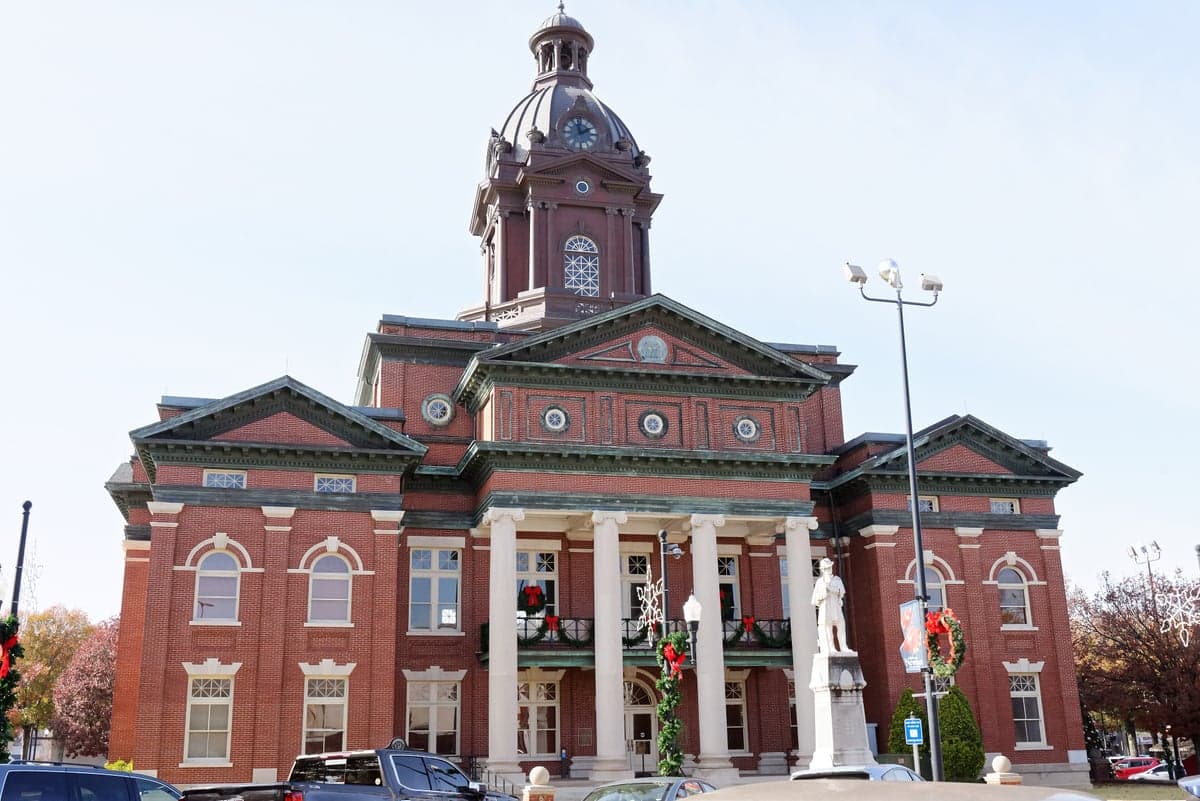
Coweta County today is a rapidly growing exurban community of 150,071 residents, blending its deep agricultural roots with Atlanta’s expanding southern fringe. The population is predominantly white (68.2%) with a significant Black minority (18.2%) and a growing Hispanic presence (7.9%), marking a shift toward greater diversity. Its identity is defined by a mix of historic small towns—Newnan, Senoia, Sharpsburg, and Grantville—and master-planned subdivisions, creating a place where traditional Southern values meet modern suburban convenience. The county’s character is distinctly conservative-leaning, with a strong emphasis on family, church, and community, yet it is increasingly attracting newcomers from across the country seeking space and affordability.
Settlement & growth (pre-1960)
Long before European settlement, the area now known as Coweta County was the heartland of the Creek Confederacy, specifically the Coweta tribe, from which the county takes its name. The Creeks established towns and hunting grounds along the Chattahoochee River and its tributaries, including the Flint River. Their forced removal via the Indian Removal Act of 1830 and the subsequent Trail of Tears (1830s) opened the land to white settlers, primarily from Georgia’s older coastal counties and the Upper South. These first settlers were overwhelmingly of English, Scots-Irish, and Welsh descent, seeking fertile cotton lands. The county was officially created in 1826 from land ceded by the Creeks, and the town of Newnan, established in 1828, quickly became the county seat and commercial hub.
The antebellum economy was built on cotton and enslaved labor. By 1860, enslaved Black people made up roughly 30-40% of the county’s population, working on large plantations in the fertile valleys around Newnan, Senoia, and Sharpsburg. The Civil War devastated the region—Sherman’s March to the Sea bypassed Newnan, sparing it from destruction, but the economic collapse of the plantation system reshaped the county. After the war, the population remained overwhelmingly white and Black, with the latter forming a majority in some rural districts. The post-Reconstruction era saw the rise of sharecropping and tenant farming, anchoring a struggling agricultural economy until the early 20th century.
The 20th century brought two transformative changes. First, the boll weevil infestation (1910s-1920s) destroyed cotton farming, forcing a painful shift to diversified agriculture (peanuts, corn, livestock) and sending many Black families north during the Great Migration. Second, the New Deal brought electricity and paved roads, but Coweta remained a sleepy, rural county through the 1950s. The population was roughly 20,000-30,000 for decades, concentrated in Newnan, Grantville (a cotton-mill town founded in the 1880s), and Moreland (a small crossroads community). World War II and the subsequent growth of Atlanta’s industrial base began a slow trickle of new residents, but major change was still decades away. A notable cultural marker: author Erskine Caldwell was born in Moreland in 1903, his works like “Tobacco Road” brutally depicting the rural poverty that defined much of Coweta’s early 20th-century character.
Modern era (post-1965)
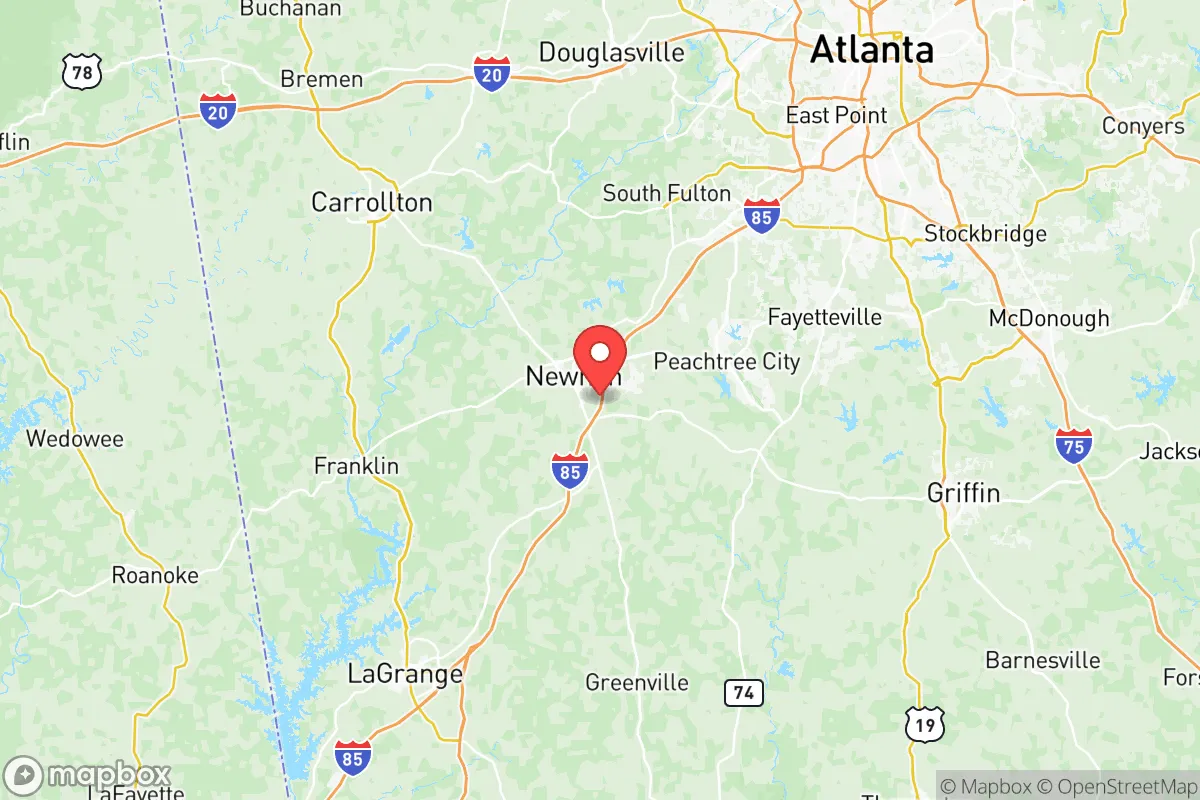
The 1965 Hart-Cellar Immigration Act had a limited direct effect on Coweta County, as the area remained overwhelmingly native-born well into the 1990s. The county’s foreign-born population today is a modest 3.5%, much lower than national averages. Instead, the defining demographic force since the 1970s has been domestic migration from the Rust Belt and, increasingly, from other parts of the Atlanta metro. The construction of Interstate 85 in the 1960s directly through the county—with exits at Newnan, Sharpsburg (exit 51), and Turin—was the catalyst. What had been a two-hour drive to Atlanta was cut to 45 minutes, making Coweta a viable commuter suburb.
Suburbanization exploded in the 1990s and 2000s. The population surged from 53,853 in 1990 to 89,215 in 2000, then to 127,317 in 2010. This growth was overwhelmingly white (new subdivisions like those in Ashley Place and SummerGrove attracted families from Atlanta’s intown neighborhoods and from out of state), but it also included a significant number of Black families moving from southern Fulton County and Clayton County, seeking newer homes and lower crime rates. The Hispanic population began to grow notably during this period, driven by construction and service-sector work; they now form 7.9% of the population, concentrated in Newnan’s southeastern side and in agricultural communities like Haralson. East/Southeast Asian communities (1.5%) are mostly professionals who have settled in the more affluent subdivisions around Newnan and Peachtree City (Fayette County, just east), though some have landed directly in Coweta. Indian subcontinent residents (0.5%) are a very small, highly educated group, often employed in technology and healthcare.
The character of Coweta’s modern growth has been notably different from its northern neighbors. While suburbanization brought chain stores and subdivisions, the county has strongly resisted the hyper-dense development of Gwinnett or Cobb counties. The historic downtowns of Newnan and Senoia have been preserved and revitalized; Senoia, in particular, gained notoriety as the filming location for “The Walking Dead,” which boosted its tourism and real estate market. The county remains politically conservative—voting heavily Republican in recent elections—and its schools, particularly the Northgate and Newnan High School districts, are highly regarded. However, the 2020s have brought rising home prices, pushing some working-class families (both white and Black) further south into Grantville and Luthersville, which are experiencing their own growth booms.
The future
Coweta County’s future is one of continued, but slowing, exurban expansion. The population is projected to reach roughly 200,000 by 2040, driven by ongoing domestic migration from more expensive metro Atlanta areas and from out-of-state (especially California, Florida, and New York). The county is becoming more diverse, but slowly: the Hispanic and Black shares are likely to rise, while the white share will continue to decline from its current 68.2%. East/Southeast Asian and Indian communities will likely grow from a very small base, as the county’s medical and tech sectors expand. New communities are forming not in ethnic enclaves but in broad, mixed-suburban developments; the divide is less racial and more about housing age and price. The biggest cultural shift will be a tension between long-time residents (who value the county’s rural heritage and lower taxes) and newcomers who bring more urban expectations. The county’s identity is likely to remain conservative, but may moderate as it absorbs more educated, younger professionals. For someone moving in now, Coweta offers a classic Sun Belt bargain: lower cost of living, good schools, and a safe environment, but with the trade-off of long commutes and a community that is still figuring out how to grow without losing its soul.
Coweta County is becoming a more populous, more diverse, and more connected exurb of Atlanta, but one that is deliberately managing its growth to preserve its small-town feel. For the prospective resident, it offers a stable, family-oriented environment with deep historic roots, a steady influx of new neighbors, and an economy still tied to both its agricultural past and its commuter present. The people moving in now are part of the next chapter, shaping whether this remains a quiet bedroom community or evolves into a more self-sustaining urban center.

* Values derived from national, state, county, city and local statistics and may differ in a specific area. Last updated: 2026-07-03T03:15:17.000Z
Narrative content on this page is AI-generated and may contain mistakes. Verify any details that matter before acting on them.
ReloMaps may earn a commission from affiliate links at no extra cost to you.

