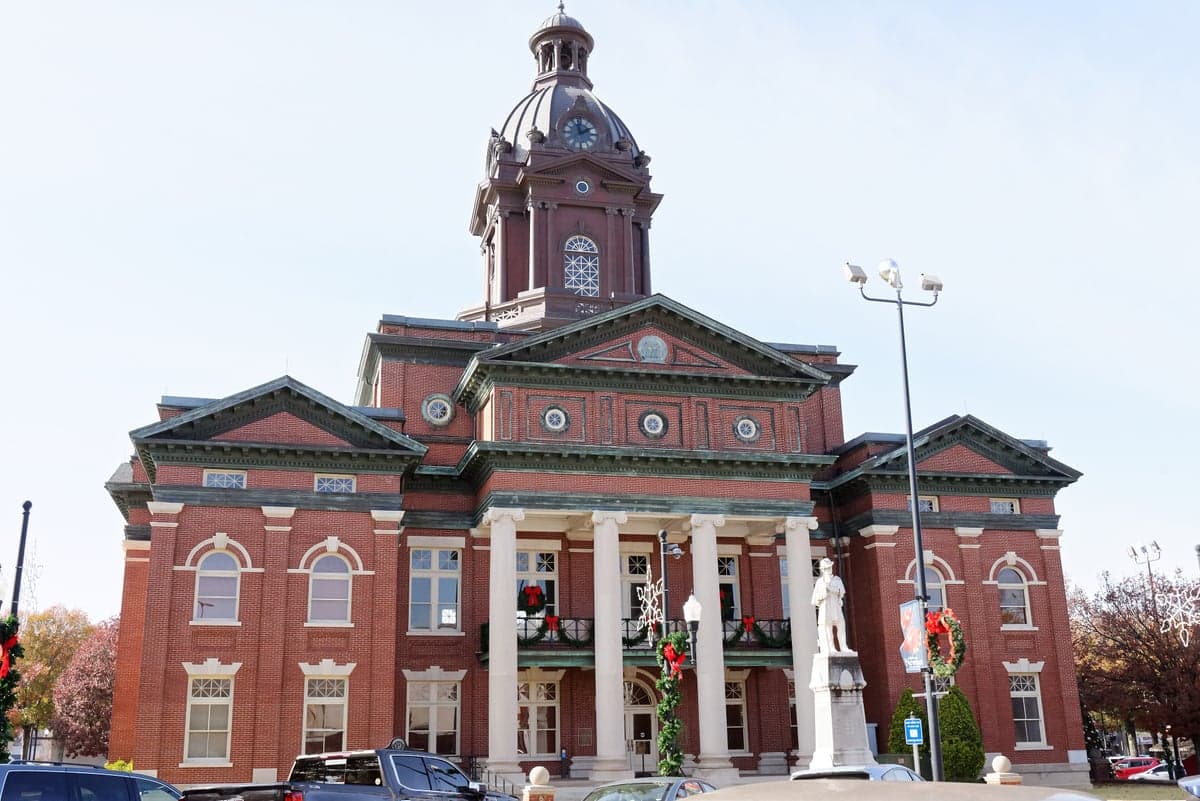
Photo: Wikipedia
Personal Sovereignty in Coweta County
Viable for self-reliance. Generally workable, though some barriers may limit total independence.
What does Personal Sovereignty tell us?
Personal Sovereignty measures your capacity for self-reliance and independence with minimal government friction. Higher scores mean fewer barriers between you and the way you want to live... but it assumes you have the space you need and good neighbors.
What does this tell us?
Personal Sovereignty measures your capacity for self-reliance and independence with minimal government friction. Higher scores mean fewer barriers between you and the way you want to live... but it assumes you have the space you need and good neighbors.
State Policy
Energy independence: Importer (12% of energy produced in-state)
Personal Liberty
Homesteading

Personal Liberty Analysis
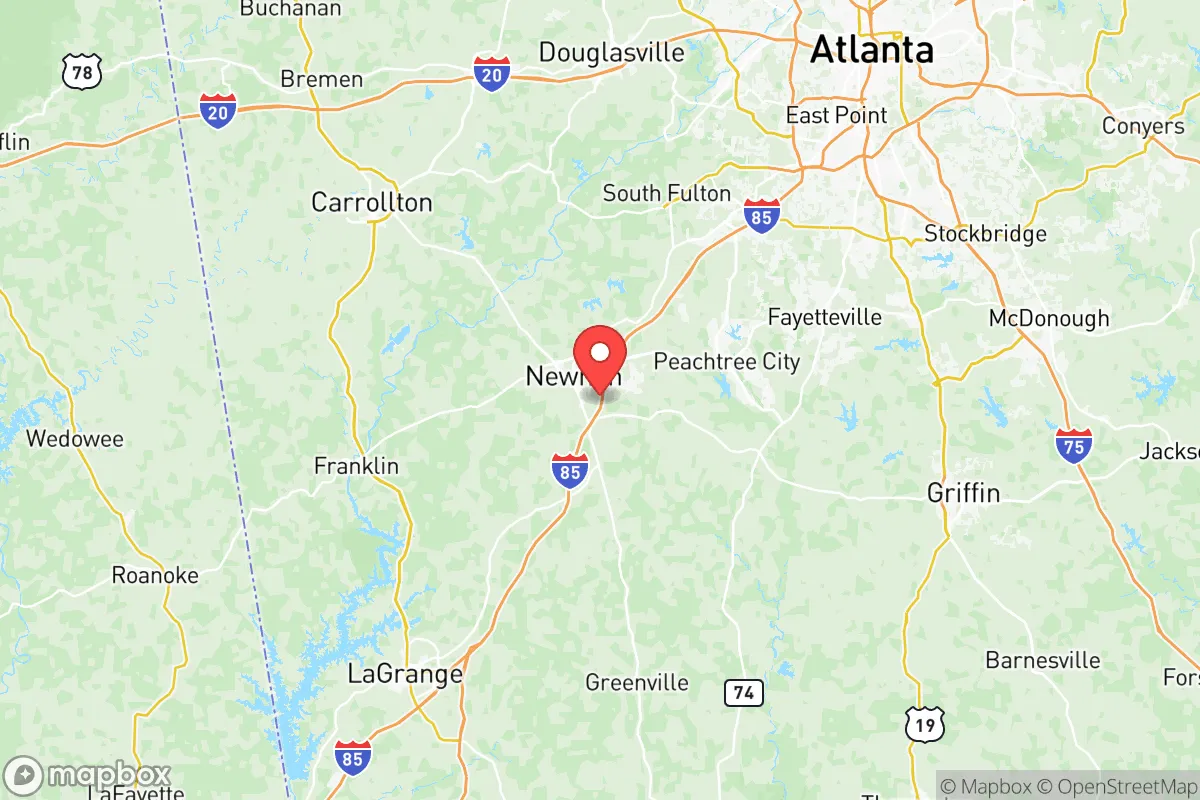
Coweta County, Georgia, offers a notably high degree of personal sovereignty, blending a light-touch regulatory environment with strong protections for self-defense, property rights, and parental autonomy. Located just southwest of Atlanta, the county's 580 square miles encompass a spectrum of living situations, from the historic, walkable downtowns of Newnan and Senioa to the sprawling, rural acreages near Haralson and Moreland. For individuals and families prioritizing independence, the area's legal and cultural framework consistently favors personal choice over government oversight, though the specific experience of that freedom varies significantly depending on whether you settle within a city's limits or on unincorporated county land.
Tax burden and regulatory posture: How Georgia's state-level policies shape local freedom
Georgia's state-level policies create a foundation of low tax burden and limited regulation that Coweta County largely amplifies. There is no state-level property tax on vehicles, and the state's homestead exemption shields a significant portion of a primary residence's assessed value from school taxes. In Coweta, the combined county and school millage rate for unincorporated areas hovers around 12.5 mills, which is moderate for metro Atlanta but notably lower than neighboring Fulton or DeKalb counties. The county's regulatory posture is best described as permissive. There is no county-wide zoning overlay that restricts basic property uses; instead, the county relies on a straightforward land-use ordinance. For example, in unincorporated areas near Sharpsburg or Turin, you can operate a small home-based business, keep livestock, or run a repair shop without the layers of permitting common in more urbanized jurisdictions. The city of Newnan does have a more traditional zoning code, but it is applied with a practical bent—permits for accessory dwelling units or home occupations are routinely approved. The overall message is clear: the county expects residents to manage their own affairs, and the tax code is structured to keep that money in your pocket rather than in government coffers.
Self-defense and gun law specifics: A constitutional carry environment with local nuance
Georgia is a constitutional carry state, meaning no permit is required to carry a loaded handgun openly or concealed for anyone 21 or older legally allowed to possess a firearm. Coweta County's law enforcement culture aligns with this posture. The Coweta County Sheriff's Office, led by a sheriff who has publicly stated his support for the Second Amendment, does not engage in "gun control" enforcement beyond state and federal law. The county's gun-friendly culture is evident in daily life: you will see firearms openly carried in hardware stores, restaurants, and on private property without incident. The only notable local restriction is that firearms are prohibited in county courthouses and some city-owned buildings, but these are standard exceptions. For those seeking to purchase firearms, the county has multiple FFL dealers, including a large Cabela's in Newnan and several independent shops near Grantville. The state's "stand your ground" law applies fully, with no duty to retreat in any place where you are lawfully present. This legal framework gives residents a high degree of confidence in their ability to defend themselves, their families, and their property without fear of prosecution, provided the use of force is reasonable under the circumstances.
Self-reliance and homesteading viability: Lot sizes, zoning, and off-grid feasibility across the county
The viability of a self-reliant, homesteading lifestyle varies dramatically across Coweta County, driven primarily by lot size and municipal boundaries. In unincorporated areas, minimum lot sizes for single-family homes are typically 1 to 3 acres, depending on the specific zoning district. Near Haralson and Moreland, you can find parcels of 5, 10, or even 20 acres, often with existing wells and septic systems. The county's land-use ordinance explicitly permits keeping chickens, goats, and horses on parcels of 1 acre or more, with no permit required for up to 10 chickens. Beekeeping is also allowed without a permit. Off-grid feasibility is high in these rural areas. The county does not require connection to municipal water or sewer if you have a permitted well and septic system. Solar panels are permitted by right, and the county's building code does not impose any special restrictions on battery storage or off-grid electrical systems. However, within the city limits of Newnan or Senioa, the picture changes. These cities have stricter zoning, smaller lot sizes (often 0.25 to 0.5 acres), and require connection to municipal water and sewer. Raising livestock is generally prohibited, and home-based businesses face more scrutiny. The key takeaway: if your goal is to live off the land, you want to be in the unincorporated county, ideally west of I-85 near Grantville or east of Sharpsburg, where the regulatory touch is lightest and land is most affordable.
Personal liberties: Parental rights, medical autonomy, speech, and property protections
Georgia's legal framework provides strong protections for personal liberties that Coweta County's local governance reinforces. Parental rights are explicitly protected under state law, with a presumption that parents have the fundamental right to direct the upbringing, education, and healthcare of their children. The Coweta County School System, which serves over 23,000 students, has a policy of notifying parents of any changes in a student's services or monitoring, and it does not enforce any "critical race theory" or gender-identity curriculum that would override parental authority. Medical autonomy is similarly robust. Georgia has no state-level vaccine mandate for adults, and the state's "Right to Try" law allows terminally ill patients to access experimental treatments. Coweta County does not have any local health ordinances that restrict personal medical choices beyond state law. Property rights are strongly protected. The county's eminent domain authority is limited to public projects like road widening, and it is rarely used for private development. The county's tax assessor's office is known for being responsive to appeals, and property taxes are assessed at 40% of fair market value, with a standard assessment freeze for homeowners over 65. Speech is protected under the First Amendment, and the county does not have any local ordinances that restrict political signage, leafleting, or public assembly beyond standard time, place, and manner restrictions. The overall environment is one where the default assumption is that the individual, not the government, knows what is best for their own life.
Compared to other metro Atlanta counties, Coweta stands out as a stronghold of personal sovereignty. Its tax burden is lower than Fulton, DeKalb, or Cobb, its gun laws are among the most permissive in the nation, and its rural areas offer genuine off-grid living opportunities that are increasingly rare within commuting distance of a major city. For the individual or family who values autonomy—whether that means carrying a firearm, raising chickens, homeschooling children, or simply being left alone—Coweta County delivers a level of freedom that is difficult to find in most other parts of the Atlanta metropolitan area. The trade-off is that you must be self-reliant: the county does not provide the same level of services or infrastructure as more urbanized jurisdictions, and the expectation is that you will handle your own problems. For those who see that as a feature, not a bug, Coweta is a compelling choice.

* Values derived from national, state, county, city and local statistics and may differ in a specific area. Last updated: 2026-07-03T03:15:17.000Z
Narrative content on this page is AI-generated and may contain mistakes. Verify any details that matter before acting on them.
ReloMaps may earn a commission from affiliate links at no extra cost to you.

