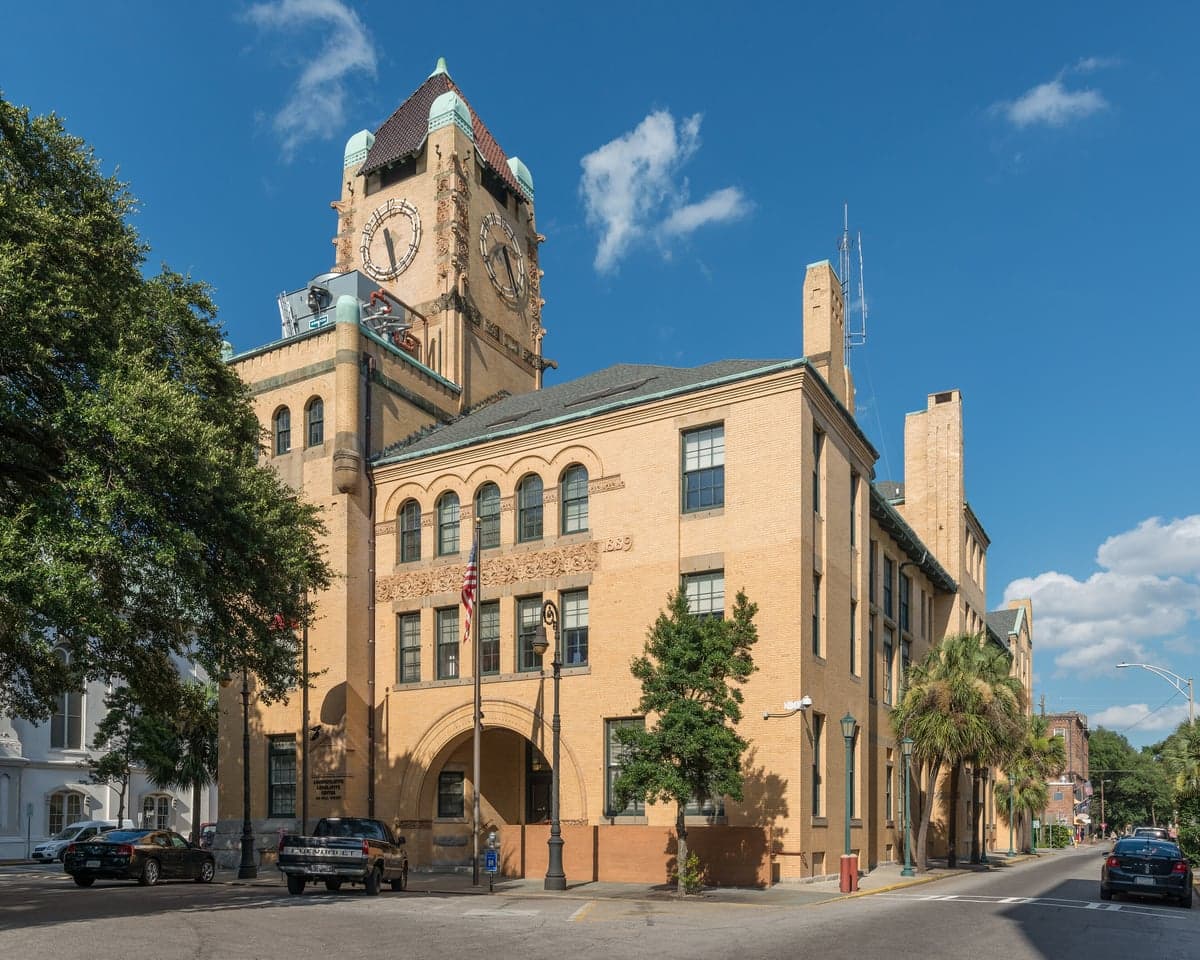
Photo: Wikipedia
Quality of Life in Chatham County
A livable area that tracks near national norms for affordability, walkability, and neighborhood health.
What does Quality of Life tell us?
Quality of Life measures an area by evaluating factors like cost of living, nearby amenities, country club access, airport proximity, socioeconomic signals and neighborhood character. For large states, this is a general average — quality of life can vary dramatically between metro areas, suburbs, and rural communities within the same state.
What does this tell us?
Quality of Life measures an area by evaluating factors like cost of living, nearby amenities, country club access, airport proximity, socioeconomic signals and neighborhood character. For large states, this is a general average — quality of life can vary dramatically between metro areas, suburbs, and rural communities within the same state.
Cost of Living
10% above national average
89%
The Real Cost of Living in Chatham County for 2026
| Tier | Individual | Family (4) |
|---|---|---|
| Survival | $22k | $41k |
| Comfortable | $53k | $78k |
| Luxury | $126k+ | $195k+ |
| Elite (Top 5%) | $156k+ | $242k+ |
Quality-of-Life Analysis
Chatham County, Georgia, offers a broad quality-of-life spectrum that ranges from the dense, historic urban core of Savannah to quiet, unincorporated rural pockets and small-town communities, attracting everyone from creative professionals and students to military families and long-time agricultural residents. The county’s character is defined by this contrast: Savannah provides walkable, amenity-rich living with a strong tourism and arts economy, while the northern and western parts of the county offer more space, lower density, and a slower pace of life. The average commute of 22.7 minutes reflects the manageable scale of the county, though traffic patterns differ significantly between the urban core and outlying areas.
Largest town(s) & population centers
Savannah is the dominant population center, home to roughly 150,000 residents and the county’s economic, cultural, and governmental hub. Daily life here centers on the Historic District’s grid of squares, the Savannah College of Art and Design (SCAD) campus, and a growing tech and film production sector. The city offers a dense, walkable lifestyle with a high concentration of restaurants, bars, and cultural venues, but also faces challenges like higher traffic on arterial roads (e.g., Abercorn Street) and a cost of living index of 110, which is 10% above the national average. Pooler, a rapidly growing city west of Savannah, has become a major suburban population center with over 25,000 residents. Its daily life revolves around the Tanger Outlets, the Mighty Eighth Air Force Museum, and new master-planned subdivisions, attracting families and commuters who work at Gulfstream Aerospace or Hunter Army Airfield. Garden City and Port Wentworth are industrial and logistics hubs, home to the Port of Savannah’s container terminals and numerous distribution centers, offering more affordable housing but less recreational infrastructure.
Smaller towns & rural pockets
Beyond the urban and suburban centers, Chatham County contains several smaller communities and unincorporated areas that preserve a distinctly rural character. Tybee Island, a barrier island 18 miles east of Savannah, functions as a small beach town with a year-round population under 3,000, offering a laid-back coastal lifestyle with limited commercial development and strict building height restrictions. Thunderbolt and Isle of Hope are historic fishing and maritime villages along the Wilmington River, characterized by live oak-lined streets, working marinas, and a mix of modest cottages and waterfront estates. In the western part of the county, unincorporated areas like Burroughs and Meldrim remain sparsely populated, with large tracts of pine forest, agricultural land, and mobile home communities. These rural pockets have no municipal services, relying on well water and septic systems, and offer the lowest housing costs in the county—often below $200,000 for a single-family home.
Cost & lifestyle range
The cost of living and lifestyle options vary dramatically across Chatham County. At the high end, the Historic District of Savannah and Ardsley Park command median home values well above the county’s $273,300 average, often exceeding $500,000 for renovated properties, with rents surpassing $2,000 per month. These areas offer walkability, historic architecture, and proximity to cultural amenities. At the low end, Garden City and Port Wentworth have median home values closer to $200,000 and median rents around $1,100, but residents contend with industrial noise, truck traffic, and fewer retail options. The county’s median rent of $1,382 is manageable for many two-income households, but affordable housing is increasingly scarce in the Savannah city limits. Pooler represents the middle ground: newer construction, good schools, and a median home value around $310,000, but with higher property taxes due to rapid infrastructure expansion. Rural areas like Burroughs offer the lowest cost of entry—land can be purchased for under $10,000 per acre—but require long drives to grocery stores and medical facilities.
Chatham County is best suited for people who value variety and are willing to trade off between urban energy, suburban convenience, and rural quiet. Young professionals and creatives thrive in Savannah’s Historic District and Starland District, where walkability and nightlife are priorities. Military families stationed at Hunter Army Airfield often choose Pooler or Richmond Hill (just over the county line in Bryan County) for newer schools and shorter commutes. Retirees and second-home buyers are drawn to Tybee Island and Isle of Hope for waterfront living. Industrial and logistics workers find affordable housing in Garden City and Port Wentworth, close to port-related jobs. The county’s 110 cost of living index is a moderate premium over the national average, but the range of housing options—from $150,000 rural fixer-uppers to $800,000 historic townhomes—means that most income levels can find a suitable niche.

Crime in Chatham County
Generally safer than 56% of comparable U.S. locations.
Violent CrimeViolent Crime Analysis
Property CrimeProperty Crime Analysis
Crime Analysis
Chatham County, anchored by Savannah, reports a violent crime rate of 262 per 100,000 residents and a property crime rate of 1,236.6 per 100,000, placing it above the statewide average for property offenses but slightly below the national violent crime benchmark. While the county benefits from the economic and cultural draw of Savannah, residents in areas like Garden City and Port Wentworth should remain alert for property-related incidents, while neighborhoods in northern Tybee Island and parts of Pooler tend to see fewer reported offenses. The overall safety picture is one of significant variation, heavily influenced by the policies of local law enforcement and the Chatham County District Attorney’s office.
Crime in context
Compared to Georgia’s statewide violent crime rate of approximately 390 per 100,000 and the national rate of about 380 per 100,000, Chatham County’s 262 per 100,000 figure is relatively low. However, its property crime rate of 1,236.6 per 100,000 sits well above both the state average (roughly 2,200 per 100,000) and the national average (around 1,950 per 100,000). This property crime surge is heavily concentrated in Savannah’s downtown core and near the I-16 corridor, while communities like Wilmington Island and Georgetown report significantly fewer property incidents. The Chatham County District Attorney’s office has faced criticism for a progressive approach that prioritizes diversion programs and reduced sentences for repeat property offenders, which critics argue has contributed to a revolving-door effect in the county’s justice system. Areas within the Eastern Judicial Circuit, particularly Savannah’s midtown and southern precincts, have seen elevated rates of vehicle break-ins and package thefts tied to lax enforcement of theft-related recidivism.
What residents experience
For most residents in Chatham County, the daily safety reality depends on location and time of day. In Savannah, visible nuisance crimes like panhandling, public intoxication, and abandoned vehicle reports are common in the Historic District and along Broughton Street, but violent confrontations remain relatively rare for tourists and suburban commuters. In Garden City and Port Wentworth, industrial areas near the Port of Savannah attract higher rates of cargo theft and associated vehicle break-ins, with property crime spiking during peak shipping seasons. Conversely, residents in Pooler, especially around the Godley Station area, report a more stable environment due to a robust police presence and community-oriented patrols. The most significant risk in the county comes from progressive sentencing policies that have been linked to early release for nonviolent property offenders, who then reoffend in adjacent neighborhoods. This pattern is most evident in Savannah’s Ardsley Park and Victorian District, where residents report serial break-ins by individuals cycling through the judicial system without meaningful consequences. Daily life for families in safer enclaves like The Landings on Skidaway Island includes neighborhood watch programs and private security, while those in higher-risk areas must rely on home security systems and situational awareness.
Neighborhood-level variation in Chatham County is stark, driven by a combination of socioeconomic factors and prosecutorial priorities. Tybee Island, for example, sees minimal violent crime (rates below 100 per 100,000) but occasional property theft near the beachfront during summer months. In contrast, downtown Savannah’s zip code 31401 exceeds 400 violent crimes per 100,000, driven by concentrated poverty and gang-related disputes that some local leaders attribute to insufficiently tough sentencing by the District Attorney. The county’s criminal justice system has been criticized for treating shoplifting and vehicle theft as low-priority offenses, a policy disproportionately affecting small business owners in Bloomingdale and unincorporated areas. Residents considering a move within Chatham County should research specific precinct data: neighborhoods in the southern portion, near the county line with Effingham County, generally report the lowest crime rates, while areas near the Savannah-Hilton Head International Airport corridor experience moderate property crime linked to transient populations. As of 2026, the community’s strongest safety advocates recommend supporting candidates who prioritize public safety over offender rehabilitation, arguing that progressive court practices are the primary driver of Chatham County’s elevated property crime statistics.
* Values derived from national, state, county, city and local statistics and may differ in a specific area. Last updated: 2026-06-29T01:31:10.000Z
Narrative content on this page is AI-generated and may contain mistakes. Verify any details that matter before acting on them.
ReloMaps may earn a commission from affiliate links at no extra cost to you.

