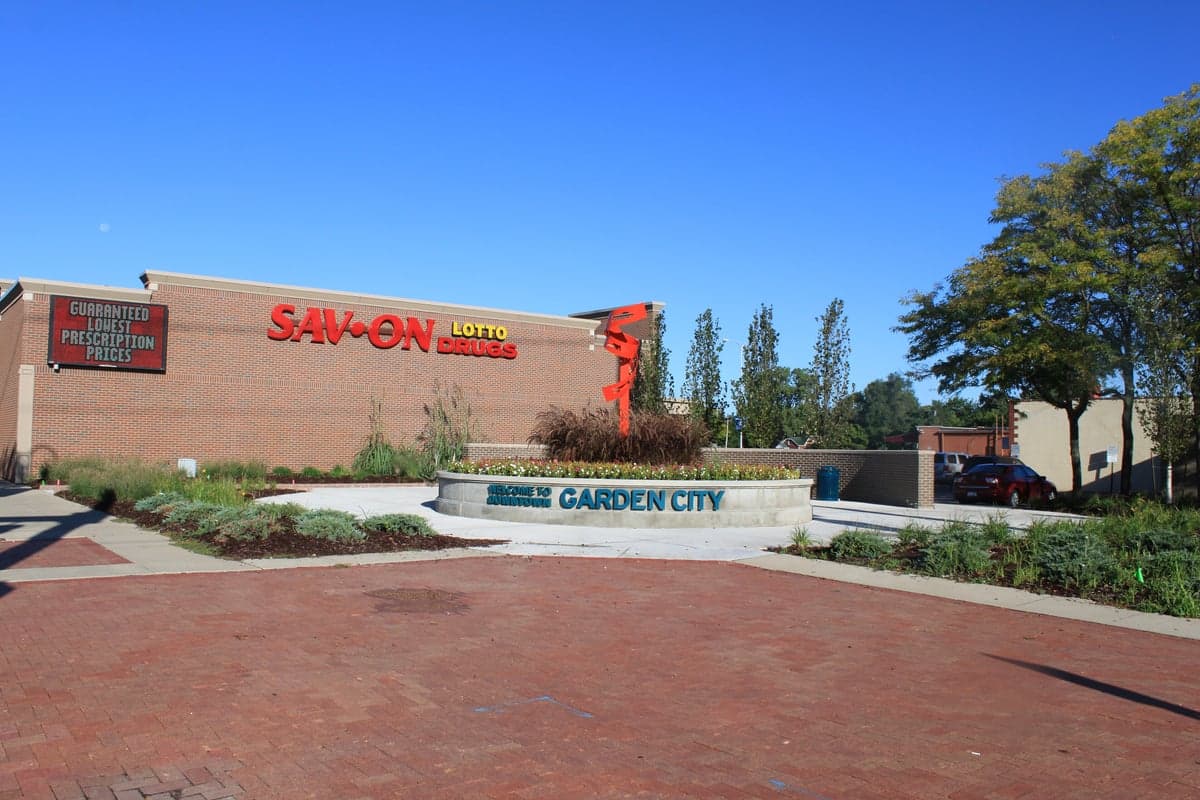
Photo: Wikipedia
Political ClimatePolitical Climate in Garden City, MI
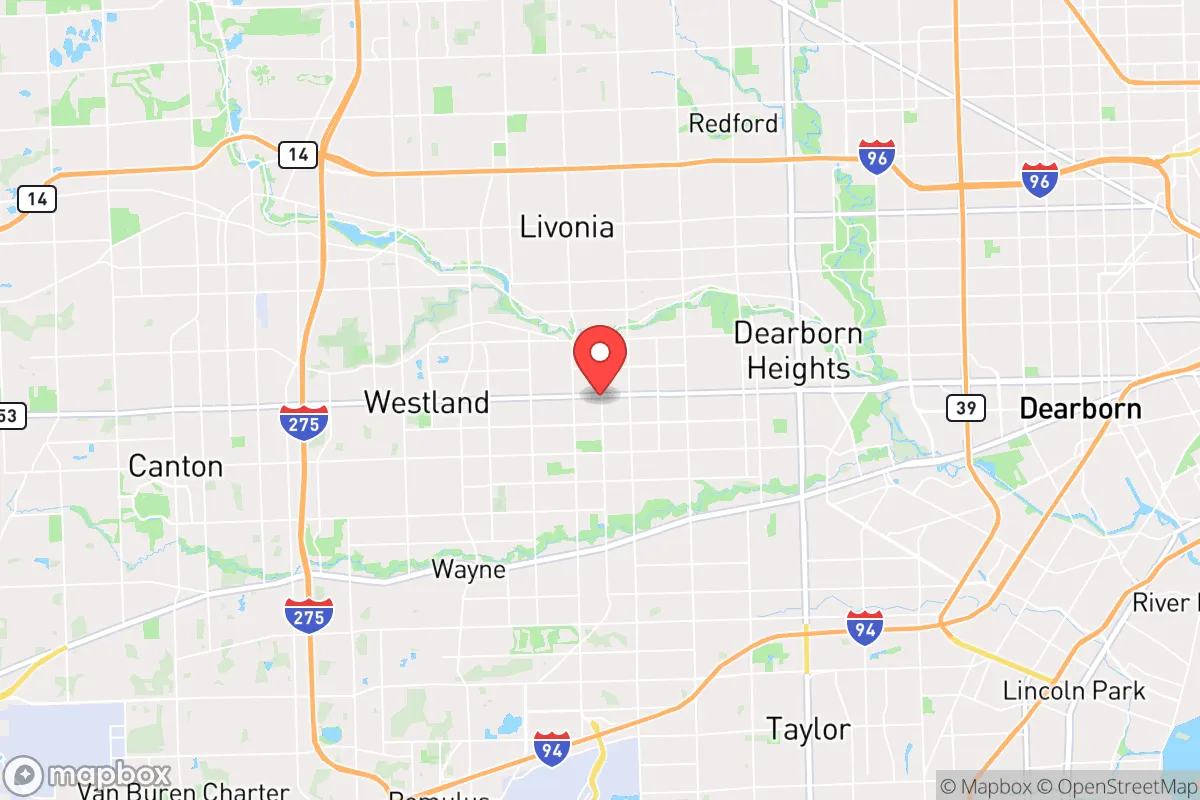
District shown is the primary district for this city’s centroid. Cities may span multiple districts.
Local Political AnalysisPolitical Analysis of Garden City, MI
Garden City is a solidly blue-collar, Democratic stronghold in western Wayne County, with a Cook Partisan Voting Index of D+21 — meaning it votes about 21 points more Democratic than the national average. That’s a deep blue pocket in a state that, as a whole, is a pure toss-up (Michigan’s statewide PVI is EVEN). Locals will tell you this isn’t a recent shift; the city has voted reliably Democratic in every presidential election since at least the 1960s, driven by a union-heavy manufacturing base and a strong Polish-American and working-class identity. The trajectory, though, is a slow drift rightward — not enough to flip the city, but enough that you see more Trump signs in yards than you did a decade ago, especially in the neighborhoods east of Middlebelt Road.
How it compares
Garden City’s politics stand in stark contrast to the surrounding region. Head west just 10 miles to Livonia, and you’re in a D+5 suburb that’s been trending Republican for years. Go another 15 miles north to Novi, and you’re in a solidly R+4 area. Even closer, the city of Dearborn — with its large Arab-American population — has a similar Democratic lean (D+15) but votes differently on local issues, especially around foreign policy and school board races. The real shock comes when you compare Garden City to the rest of Michigan: the state as a whole is a dead-even battleground, but Garden City is 21 points more Democratic than the national average. That means a Republican running for statewide office in Michigan can win the state while losing Garden City by 30 points. In 2020, Biden took Garden City with 58% of the vote, while Trump won the state by a razor-thin margin. Locals remember when the city was even more Democratic — in 2008, Obama pulled 64% here. The drop-off is real, but the base is still deep.
What this means for residents
For a liberal resident, Garden City is comfortable. You’ll find Democratic candidates at every level — city council, school board, county commission — and the local Democratic club is active, with monthly meetings at the library. The city’s union halls (UAW Local 22, IBEW 58) are still political power centers. For a conservative, life is more about coexistence than isolation. You won’t be shunned, but you’ll be in the minority. The local Republican Party has a small but vocal presence, mostly centered around the VFW post on Maplewood. The practical effect is that city services — police, fire, roads — are well-funded and non-ideological. The city manager and council tend to focus on potholes and parks, not culture wars. The biggest political fights in recent years have been over the city’s budget and a proposed senior center, not abortion or guns. That’s the Garden City way: pragmatic, union-minded, and a little stubborn.
The cultural distinction that sets Garden City apart from its neighbors is its unapologetic blue-collar identity. While Livonia and Novi have gentrified and become more professional-class, Garden City still feels like a place where people work at Ford’s Rawsonville plant or the Stellantis Warren Truck Assembly. The city’s politics reflect that: pro-union, pro-public school, skeptical of tax cuts that might trim services. You won’t find a Whole Foods here, but you will find a strong sense of community and a political culture that values stability over flash. For a newcomer, the takeaway is simple: if you want a reliably Democratic suburb with a working-class backbone and a no-drama local government, Garden City delivers. If you’re a conservative, you’ll find plenty of like-minded folks at the local diner — just don’t expect to win many elections.

State Political ClimatePolitical Climate in Michigan
State Political AnalysisPolitical Environment in the State
Michigan is the ultimate swing state, with a Cook PVI of EVEN that perfectly captures its knife-edge balance between the two major parties. Over the last 20 years, the state has shifted from a reliably blue stronghold in presidential elections (voting for Democrats from 1992 to 2012) to a true battleground that flipped to Donald Trump in 2016 by just 10,704 votes, then flipped back to Joe Biden in 2020 by 154,000 votes, and saw Trump reclaim it in 2024 by roughly 80,000 votes. This wild trajectory is driven by a shrinking, union-heavy base in the southeast and a surging, culturally conservative electorate in the west and north, making Michigan a state where no election outcome is ever a sure thing.
Urban vs. rural divide
The political map of Michigan is a story of three distinct regions. Wayne County (Detroit) and Washtenaw County (Ann Arbor) are the Democratic anchors, delivering massive margins that the rest of the state must overcome. Detroit alone provides about 250,000-vote Democratic cushions in statewide races. The second region is the suburban "blue wall" counties around Detroit—Oakland, Macomb, and Kent (Grand Rapids)—which have been trending Democratic in presidential years but remain competitive at the local level. Macomb County, in particular, is the ultimate bellwether: it voted for Obama twice, flipped to Trump twice, and then narrowly went for Biden in 2020. The third region is the vast rural and exurban expanse: the Upper Peninsula, the northern Lower Peninsula, and the western side of the state from Muskegon up to Traverse City. These areas have become deeply Republican, with counties like Missaukee and Osceola routinely giving Republicans 70-80% of the vote. The key swing counties that decide statewide races are Kent (Grand Rapids), Macomb, and the fast-growing exurbs of Livingston and Ottawa counties, where conservative families are moving from the urban core.
Policy environment
Michigan’s policy environment is a mixed bag that reflects its swing-state status. On taxes, the state has a flat 4.25% individual income tax and a 6% sales tax, with no tax on Social Security benefits—a plus for retirees. Property taxes are relatively high, averaging about 1.5% of assessed value, but the Proposal A system caps annual increases for homeowners. The regulatory posture is moderate: Michigan is a "right-to-work" state for private-sector workers (a 2012 law that was repealed by Democrats in 2023, but the repeal is being challenged via ballot initiative). Education policy is a flashpoint: the state has a robust charter school sector and a school choice program that allows students to attend any public school in their district, but the Detroit Public Schools system has been under state oversight for years. Healthcare is largely market-driven, with the state expanding Medicaid under the Affordable Care Act in 2014. On election laws, Michigan has become a national battleground: after 2020, the Democratic legislature passed a raft of voting expansions (no-reason absentee voting, nine days of early voting, drop boxes), while Republicans have pushed for voter ID requirements and signature verification standards. The net effect is a state that is moderately business-friendly but with a volatile regulatory landscape that can shift with each election cycle.
Recent policy direction
The last three years have seen a dramatic leftward shift in state policy under Democratic Governor Gretchen Whitmer and a Democratic legislative majority (2023-2024). Key legislation includes: the repeal of the 1931 abortion ban and codification of abortion rights via Proposal 3 (2022), the repeal of the right-to-work law, the expansion of the Elliott-Larsen Civil Rights Act to include sexual orientation and gender identity, and the elimination of the "death tax" (estate tax) for most estates. On gun policy, the state passed universal background checks, safe storage laws, and red flag orders in 2023—a major shift for a state with a strong hunting culture. On parental rights, the state has moved in the opposite direction of many red states: there is no "Don't Say Gay" law, and the state has expanded LGBTQ+ protections in schools. Property rights are generally strong, with no statewide rent control and relatively permissive zoning in most rural areas, though the state has mandated that all municipalities allow accessory dwelling units and higher-density housing near transit. On privacy and surveillance, Michigan has no comprehensive data privacy law, but the state police's use of facial recognition and automated license plate readers is largely unregulated. For conservatives, the recent direction is concerning: the state has become more restrictive on gun rights, more permissive on abortion and transgender issues, and more union-friendly. For liberals, the direction is a long-overdue correction after decades of Republican control.
Civil unrest & political movements
Michigan has been a hotbed of political activism on both sides. The most visible flashpoint was the 2020 lockdown protests at the state capitol in Lansing, where armed demonstrators opposed Governor Whitmer's COVID-19 restrictions—an event that drew national attention and led to the foiled "Wolverine Watchmen" kidnapping plot. On the left, the "Rise Up for Reproductive Rights" rallies have been large and sustained, particularly after the Dobbs decision. The "Whitmer Must Go" movement has evolved into a permanent grassroots conservative network that now focuses on school board races, county commissions, and the state legislature. Immigration politics are relatively quiet compared to border states, but the city of Detroit has a "sanctuary city" ordinance limiting cooperation with ICE, while rural counties like Ottawa have passed resolutions declaring themselves "Second Amendment sanctuaries." Election integrity remains a live issue: the 2020 "stop the count" protests in Detroit and the subsequent Republican-led "audit" of Antrim County (which initially showed a software error) have fueled ongoing distrust. A new resident will notice the political polarization in everyday life—yard signs, bumper stickers, and local Facebook groups are intensely partisan, especially in the swing suburbs of Grand Rapids and Macomb County.
Projection
Over the next 5-10 years, Michigan is likely to remain a swing state, but the demographic trends favor a slow rightward drift. The key factor is in-migration: the fastest-growing counties are Ottawa (Holland), Livingston (Howell), and Grand Traverse (Traverse City), all of which are heavily Republican. Meanwhile, Wayne County continues to lose population, and the Detroit exodus shows no signs of stopping. The Hispanic population is growing in the southwest (Berrien and Van Buren counties) and could become a swing voting bloc. The wild card is the state's independent voter base—about 30% of the electorate—which has shown a willingness to split tickets (voting for Trump while also supporting Democratic state Supreme Court candidates). If the national Republican Party moderates its stance on trade and manufacturing, Michigan could become a lean-Republican state by 2032. If it stays on its current populist trajectory, the state will remain a toss-up. For someone moving in now, expect a decade of close elections, shifting policies, and a state that is politically exhausting but never boring.
For a new resident, the bottom line is that Michigan offers a genuine swing-state experience: your vote truly matters, but you will also live in a state where policy can swing wildly from one election to the next. Conservatives will find a welcoming home in the western and northern parts of the state, with lower taxes and strong property rights, but will need to accept that the state government in Lansing may be controlled by Democrats for the foreseeable future. Liberals will find a solid base in the southeast, with progressive policies on abortion, LGBTQ+ rights, and voting access, but will have to contend with a deeply conservative rural and exurban population. The practical takeaway is to choose your county carefully—Livingston County feels like a different country from Washtenaw County—and be prepared for a political environment that is as unpredictable as Michigan's weather.
* Values derived from national, state, county, city and local statistics and may differ in a specific area. Last updated: 2026-10-17T20:50:06.000Z
Narrative content on this page is AI-generated and may contain mistakes. Verify any details that matter before acting on them.
ReloMaps may earn a commission from affiliate links at no extra cost to you.

