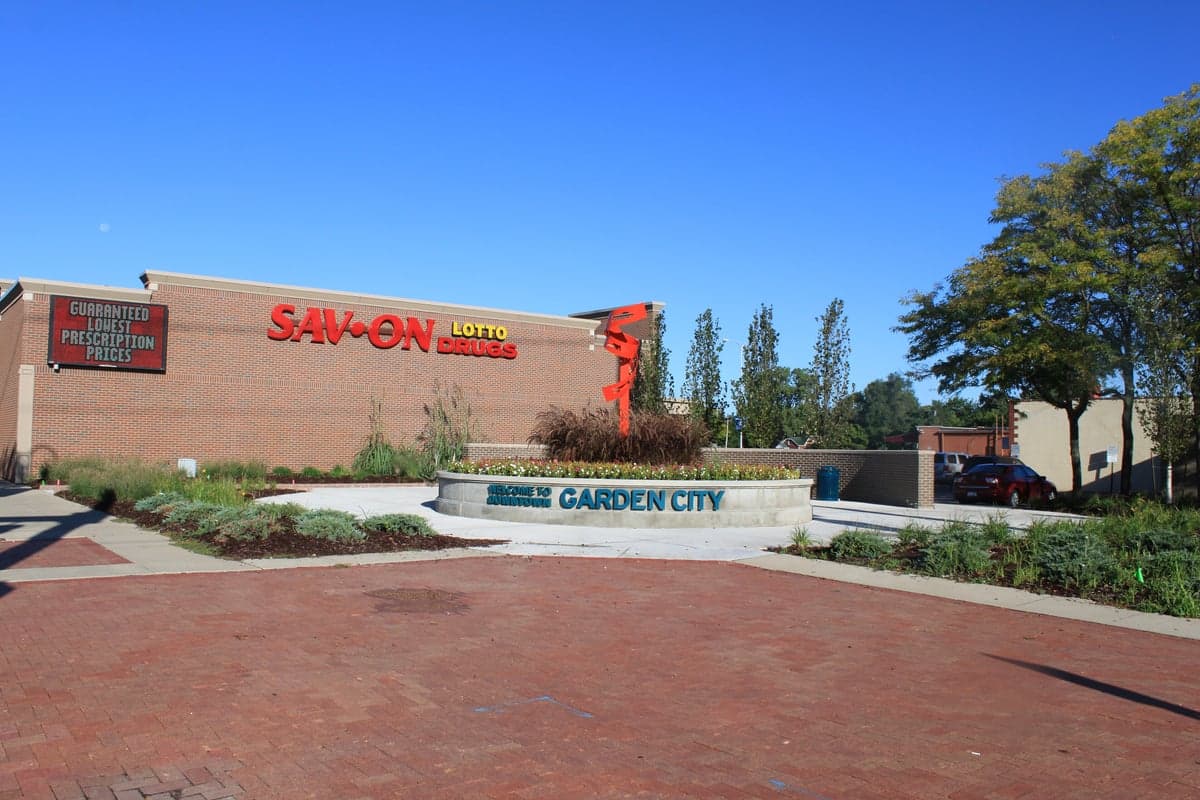
Photo: Wikipedia
Personal Sovereignty in Garden City, MI
Strong independent fundamentals that actively favor personal liberty and low regulation.
What does Personal Sovereignty tell us?
Personal Sovereignty measures your capacity for self-reliance and independence with minimal government friction. Higher scores mean fewer barriers between you and the way you want to live... but it assumes you have the space you need and good neighbors.
What does this tell us?
Personal Sovereignty measures your capacity for self-reliance and independence with minimal government friction. Higher scores mean fewer barriers between you and the way you want to live... but it assumes you have the space you need and good neighbors.
State Policy
Energy independence: Importer (20% of energy produced in-state)
Personal Liberty
Homesteading

Personal Liberty Analysis
Garden City, Michigan, offers a moderate personal sovereignty environment that balances the practical freedoms of a small, self-governed city with the regulatory realities of being a Metro Detroit suburb. While not a libertarian enclave, the city’s low tax burden relative to neighboring communities, a state-level legal framework that supports self-defense and parental rights, and a surprisingly viable homesteading niche within its residential zoning create a workable autonomy profile for families and individuals who value self-reliance without seeking complete isolation. The key trade-off is that Garden City’s regulatory posture is light-touch on property use and taxation but more conventional on land-use density and off-grid systems, making it a pragmatic choice for those who want freedom within a stable, middle-class suburban framework.
Tax burden and regulatory posture: How Garden City compares to Wayne County neighbors
Garden City’s tax and regulatory environment is notably favorable for a Wayne County suburb. The city’s property tax rate is approximately 49 mills (including the school operating millage), which is roughly 10–15% lower than neighboring communities like Dearborn Heights or Westland. This lower rate stems from the city’s relatively lean municipal budget and a lack of large-scale debt from major capital projects. Michigan’s Headlee Amendment caps annual property tax increases at the rate of inflation or 5%, whichever is lower, providing a structural check against runaway levies. For a family with a $200,000 home, annual property taxes run about $9,800—manageable compared to the $11,000+ seen in nearby Inkster or Livonia. The city also imposes a 1% income tax on residents (0.5% on non-residents working in the city), which is standard for Michigan cities but adds a modest layer of local revenue. Regulatory posture is light-touch in practice: the city’s zoning code is straightforward, with no overlay districts or historic preservation boards that complicate home renovations. Building permits for interior work under $5,000 are not required, and the city’s planning department is known for quick turnaround on standard permits—typically 2–3 weeks for a deck or fence. However, the city does enforce a strict rental registration ordinance (annual inspections for multi-unit properties), which signals a moderate regulatory hand aimed at maintaining housing quality rather than restricting owner-occupant autonomy.
Self-defense and gun law specifics: What Michigan’s preemption means for Garden City residents
Michigan is a shall-issue state for concealed pistol licenses (CPLs), and Garden City residents benefit from the state’s strong preemption law, which prohibits local governments from enacting gun ordinances stricter than state law. This means Garden City cannot ban open carry, restrict magazine capacities, or impose waiting periods beyond state requirements. The city itself has no local gun ordinances beyond the state baseline. For CPL holders, Michigan law requires a 8-hour training course and a background check, with licenses issued by the county (Wayne County) within 45 days. Stand-your-ground protections are codified in Michigan’s Self-Defense Act (MCL 780.951), which eliminates any duty to retreat in any place where a person has a legal right to be. This is a significant sovereignty advantage: a homeowner in Garden City who uses force in self-defense inside their home or on their property is protected by a clear legal presumption of reasonableness. The state also has a castle doctrine that extends to occupied vehicles. For those who prefer not to carry, Michigan allows unlicensed open carry of handguns (except in vehicles and certain prohibited places), though Garden City’s suburban density means open carry is rare and may attract police attention. The practical takeaway: Garden City’s gun laws are entirely state-driven, and the state’s framework is among the most permissive in the Midwest, with no local interference. The only notable limitation is that Michigan does not have constitutional carry—a CPL is required for concealed carry—but the shall-issue process is straightforward and non-discretionary.
Self-reliance and homesteading viability: Lot sizes, zoning, and off-grid feasibility in a suburb
Garden City’s residential lots are predominantly 50 feet wide by 120 feet deep (about 6,000 square feet), a standard post-war suburban plat that leaves room for a substantial garden but not for livestock or large-scale self-sufficiency. The city’s zoning code permits backyard chickens (hens only, no roosters) with a permit and a 25-foot setback from neighboring dwellings, which is feasible on most lots. Vegetable gardens, composting, and rain barrels are unrestricted. However, the city’s off-grid feasibility is limited: Michigan’s building code requires connection to municipal water and sewer for any habitable structure, and solar panels are permitted but must meet local electrical code and cannot exceed the roofline. Battery storage is allowed but must be in a detached structure or garage due to fire codes. The city does not have a specific “homestead exemption” or agricultural zoning within its limits, so any serious self-reliance effort (e.g., raising goats, beekeeping, or significant off-grid power) would require a property in the surrounding townships like Canton or Plymouth Township, where lot sizes are 1–5 acres and zoning is more permissive. For the typical Garden City homeowner, self-reliance means a productive vegetable garden, a small flock of chickens, and energy efficiency upgrades—not full independence. The city’s strong recycling program (single-stream, weekly pickup) and a community garden at Kelly Park (plots available for $25/year) provide low-barrier entry points for self-reliant living within the suburban fabric.
Personal liberties: Parental rights, medical autonomy, speech, and property rights
Michigan’s legal framework provides a solid baseline for personal liberties in Garden City. Parental rights are protected under state law, which gives parents the right to direct their child’s education, medical care, and religious upbringing. Michigan is a parental consent state for minors seeking abortion (requiring one parent’s consent), and the state’s Revised School Code allows parents to opt their children out of sex education and any curriculum they find objectionable. Garden City Public Schools, which serves about 3,000 students, has a standard opt-out policy and does not have a controversial “critical race theory” or gender-identity curriculum as of 2026—parental complaints are handled at the local board level. Medical autonomy is more mixed: Michigan has no state-level vaccine mandate for adults, but healthcare workers and school staff are subject to employer-driven requirements. The state does not have a “right to try” law for experimental treatments beyond federal law, and the Michigan Medical Marihuana Act allows for medical cannabis use with a doctor’s recommendation, though Garden City has no dispensaries within city limits (patients must travel to nearby Dearborn or Westland). Free speech is protected under the First Amendment and Michigan’s own constitution, which has been interpreted more broadly in some cases (e.g., protecting leafleting in shopping malls). The city has no local noise or sign ordinances that would restrict political expression beyond standard time-place-manner rules. Property rights are robust: Michigan is a “right to farm” state for agricultural operations, but this does not apply within Garden City’s urban zoning. The city’s code enforcement is complaint-driven and generally reasonable—no overzealous lawn-length ordinances or strict paint-color rules. The most notable property-rights issue is the city’s sidewalk repair ordinance, which holds homeowners responsible for sidewalk maintenance and replacement, a common suburban burden that can cost $1,000–$3,000 per repair.
Overall, Garden City’s personal sovereignty profile is best described as pragmatic suburban autonomy. It does not offer the wide-open freedoms of rural Michigan (where you can build an off-grid cabin on 10 acres without permits), but it also avoids the heavy regulatory hand of cities like Ann Arbor or Detroit, which impose stricter gun laws, higher taxes, and more land-use restrictions. For a family or individual who wants a low-tax, self-defense-friendly, and parent-empowered environment within commuting distance of Detroit’s job market, Garden City is a solid middle-ground choice. The city’s light-touch zoning, state-level preemption on guns, and modest tax burden create a workable autonomy package that is competitive with any other Wayne County suburb. The trade-off is density: you cannot have a large homestead or full off-grid independence here, but you can have a garden, chickens, a CPL, and a low tax bill—a combination that many self-reliant households find sufficient for their needs.

* Values derived from national, state, county, city and local statistics and may differ in a specific area. Last updated: 2026-10-17T20:50:06.000Z
Narrative content on this page is AI-generated and may contain mistakes. Verify any details that matter before acting on them.
ReloMaps may earn a commission from affiliate links at no extra cost to you.

