Photo: Wikipedia
Demographics of Garden City, MI
Affluence Level in Garden City, MI
A below-average socioeconomic profile. Incomes, home values, and educational attainment trail the U.S., with higher poverty and unemployment.
People of Garden City, MI
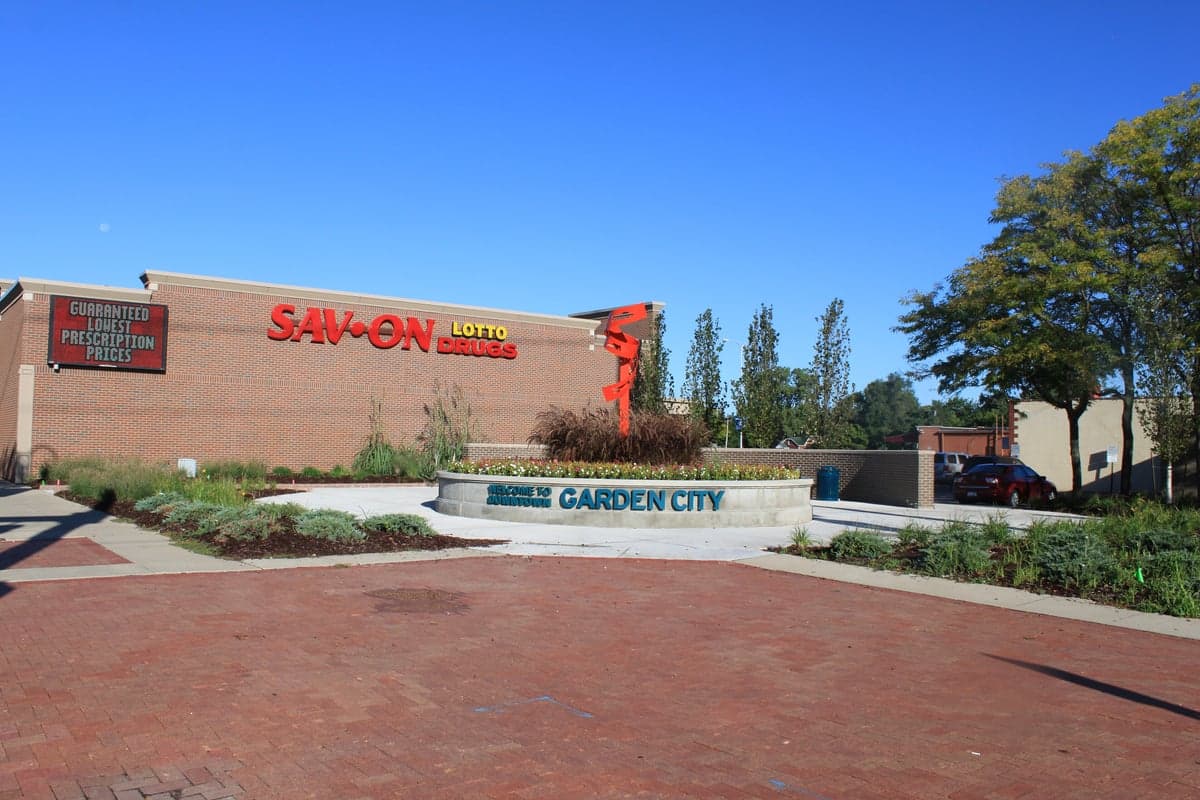
Garden City, Michigan, is a predominantly white, middle-class suburb of Detroit with a population of 26,910, characterized by a strong sense of local identity and a notably low foreign-born rate of just 1.3%. The city’s residents are overwhelmingly native-born, with a population that is 82.1% White, 6.6% Black, and 5.4% Hispanic, reflecting a community that has remained demographically stable compared to neighboring suburbs. With only 14.6% of adults holding a bachelor’s degree or higher, the city’s workforce is heavily rooted in skilled trades, manufacturing, and local service industries, giving it a distinctly blue-collar, family-oriented character. Garden City is a place where generations of the same families often remain, creating a tight-knit, community-focused atmosphere that values stability and local institutions.
How the city was settled and grew
Garden City’s population history begins not with a grand founding, but as a quiet farming settlement in the early 19th century. Originally part of Nankin Township, the area was first settled by farmers of German and English descent who were drawn by the fertile, flat land of southeastern Michigan. The arrival of the Detroit, Grand Haven and Milwaukee Railroad in the 1870s spurred the first real growth, with a station established at what is now the intersection of Middlebelt and Ford Roads. This small cluster of homes and businesses became known as Garden City Station, the city’s original historic core. The real population boom, however, came after World War II. The opening of the massive Ford Motor Company’s Rouge Plant in nearby Dearborn, along with other auto plants in the region, drew thousands of workers. Developers built affordable, single-family homes on former farmland, creating the neighborhoods that define the city today. The Maplewood and Kinloch subdivisions, built in the 1940s and 1950s, were filled primarily by returning veterans and their young families, overwhelmingly of Polish, Italian, and German Catholic heritage, who sought a suburban life close to the factories.
Modern era (post-1965)
The post-1965 era in Garden City was less about new immigration and more about internal migration and suburban consolidation. Unlike many inner-ring suburbs that experienced rapid racial turnover after the 1967 Detroit riots, Garden City remained a largely white, stable community. The city’s housing stock—mostly modest, post-war ranches and colonials—was affordable enough to retain its original families while attracting new ones from other parts of Wayne County. The Warwick Village neighborhood, developed in the 1960s and 1970s, became a popular destination for second-generation families moving out of older, denser neighborhoods like those in Dearborn and Detroit. The small Black population (6.6%) and Hispanic population (5.4%) are dispersed throughout the city, with no single neighborhood forming a majority-minority enclave. The East/Southeast Asian (0.5%) and Indian (0.4%) communities are very small, typically consisting of professionals employed at local hospitals or the nearby University of Michigan-Dearborn. The city’s identity as a “Polish and Italian” stronghold remains strong, visible in the number of Catholic churches, ethnic social clubs, and family-owned restaurants along Ford Road.
The future
Garden City’s population is projected to remain stable or decline slightly, mirroring trends across much of Wayne County. The city is not experiencing the rapid diversification seen in suburbs closer to Detroit. The foreign-born population is negligible, and the White share (82.1%) is expected to remain high, though the Hispanic and Black populations may grow modestly as younger families seek affordable housing. The downtown area along Maplewood Avenue is seeing slow reinvestment, with new mixed-use developments aimed at attracting younger residents, but the city’s cultural identity is likely to remain rooted in its blue-collar, family-centric past. The biggest demographic shift may be an aging population, as the original post-war homeowners age in place, with fewer young families moving in to replace them. For a newcomer, Garden City offers a stable, safe, and affordable community where the social fabric is well-established, but where rapid change or significant new diversity is unlikely in the next decade.
Garden City is becoming a place that values continuity over change, a stable, middle-class suburb where the past is still very present in its neighborhoods and institutions. For someone moving in now, it means joining a community where neighbors know each other, local events are well-attended, and the pace of life is predictable and secure, but where the demographic and cultural landscape will look very similar ten years from now.

* Values derived from national, state, county, city and local statistics and may differ in a specific area. Last updated: 2026-10-17T20:50:06.000Z
Narrative content on this page is AI-generated and may contain mistakes. Verify any details that matter before acting on them.
ReloMaps may earn a commission from affiliate links at no extra cost to you.

