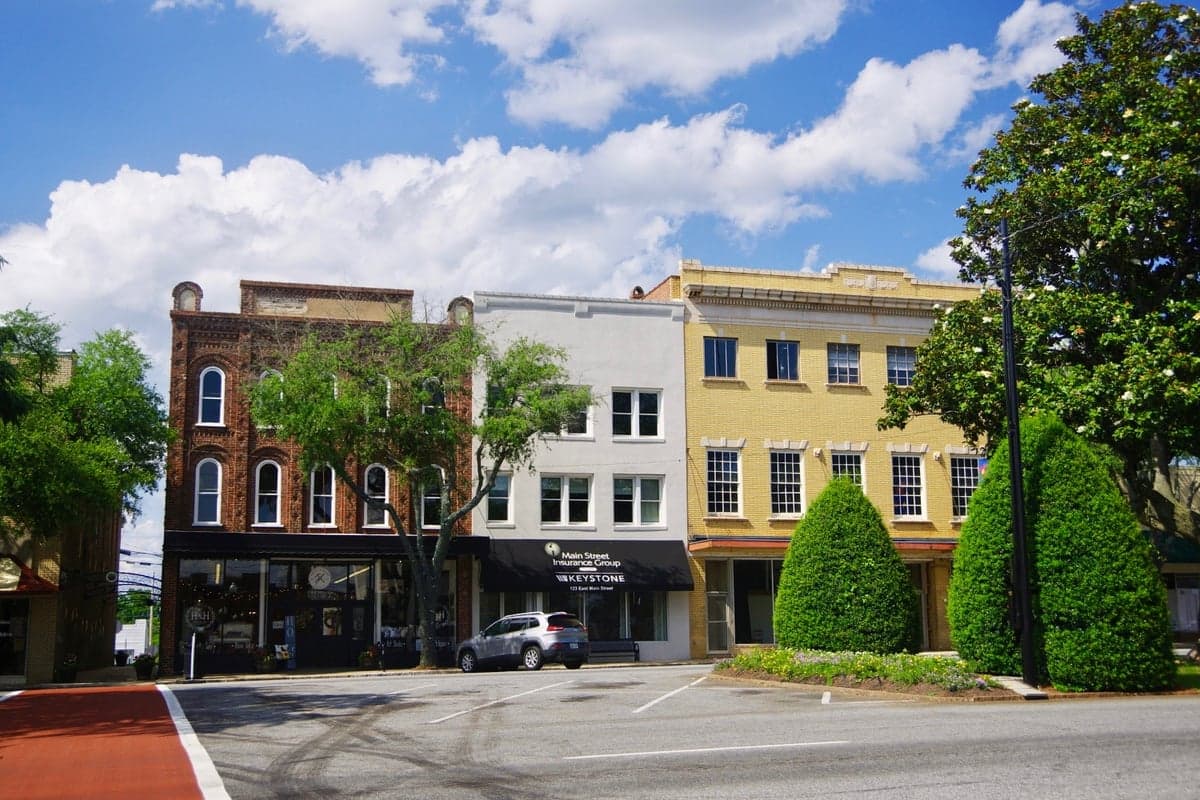
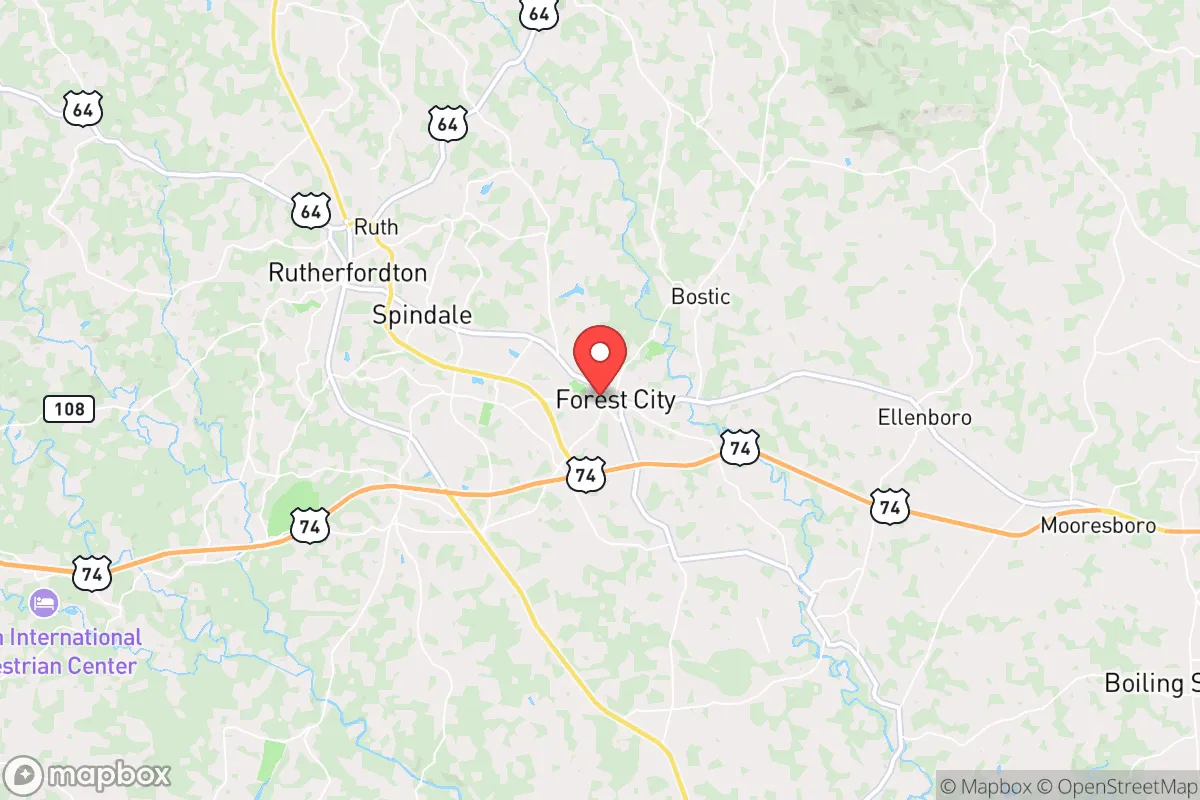
Photo: Wikipedia
Quality of Life in Forest City, NC
Above-average quality of iife. The area offers a reasonable cost of living, decent mobility, and a mix of neighborhood amenities.
What does Quality of Life tell us?
Quality of Life blends cost of living, nearby amenities, socioeconomic signals, and neighborhood character. City-level scores represent the whole municipality; individual neighborhoods can differ.
What does this tell us?
Quality of Life blends cost of living, nearby amenities, socioeconomic signals, and neighborhood character. City-level scores represent the whole municipality; individual neighborhoods can differ.
Cost of Living
38% below national average
The Real Cost of Living in Forest City, NC for 2026
| Tier | Individual | Family (4) |
|---|---|---|
| Survival | $13k | $24k |
| Comfortable | $28k | $41k |
| Luxury | $65k+ | $101k+ |
| Elite (Top 5%) | $95k+ | $148k+ |
88%
The Area Signal
A metric tracking the socioeconomic signals of the area.
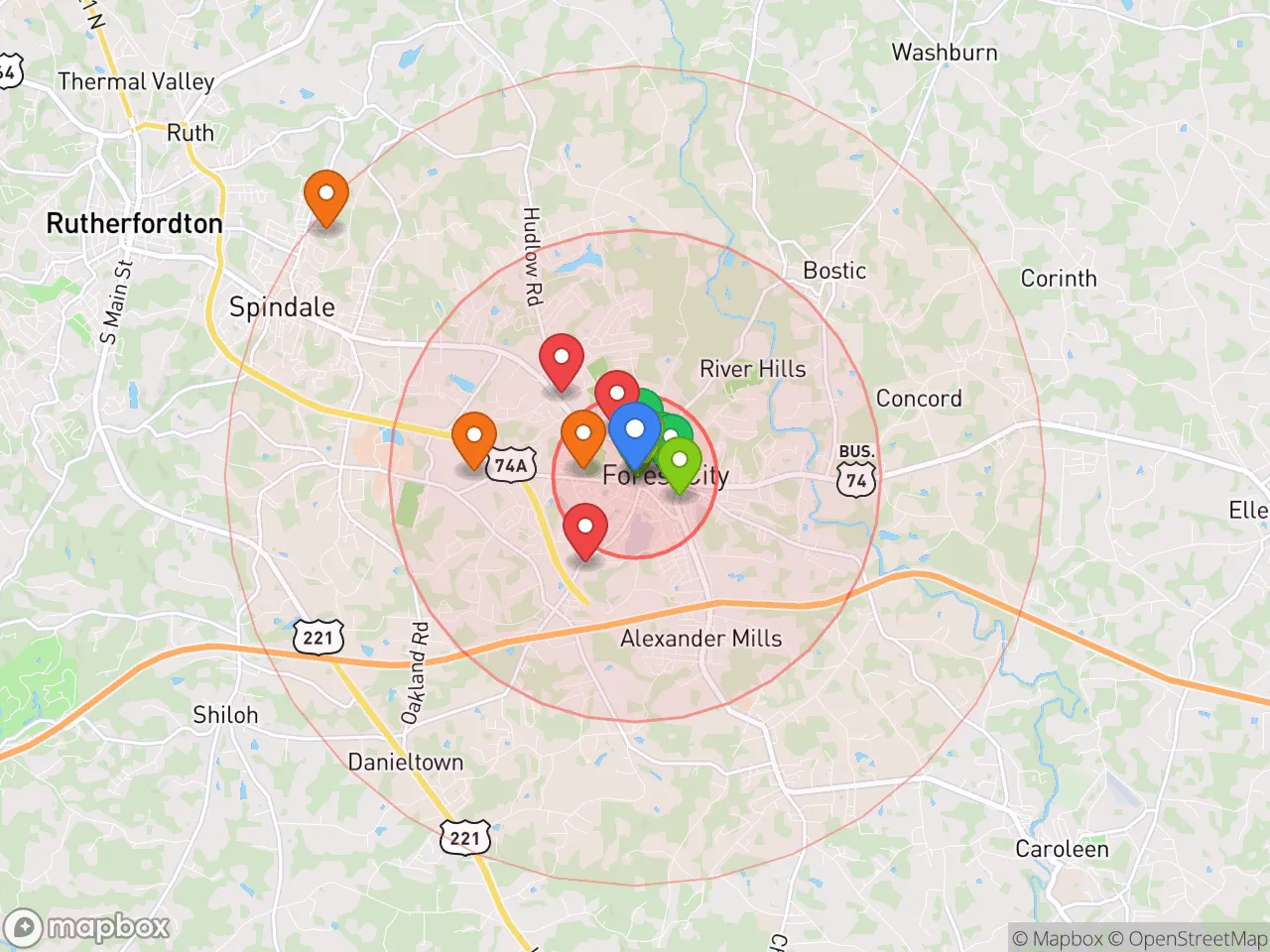
Hobbies
Explore the areaGroceries
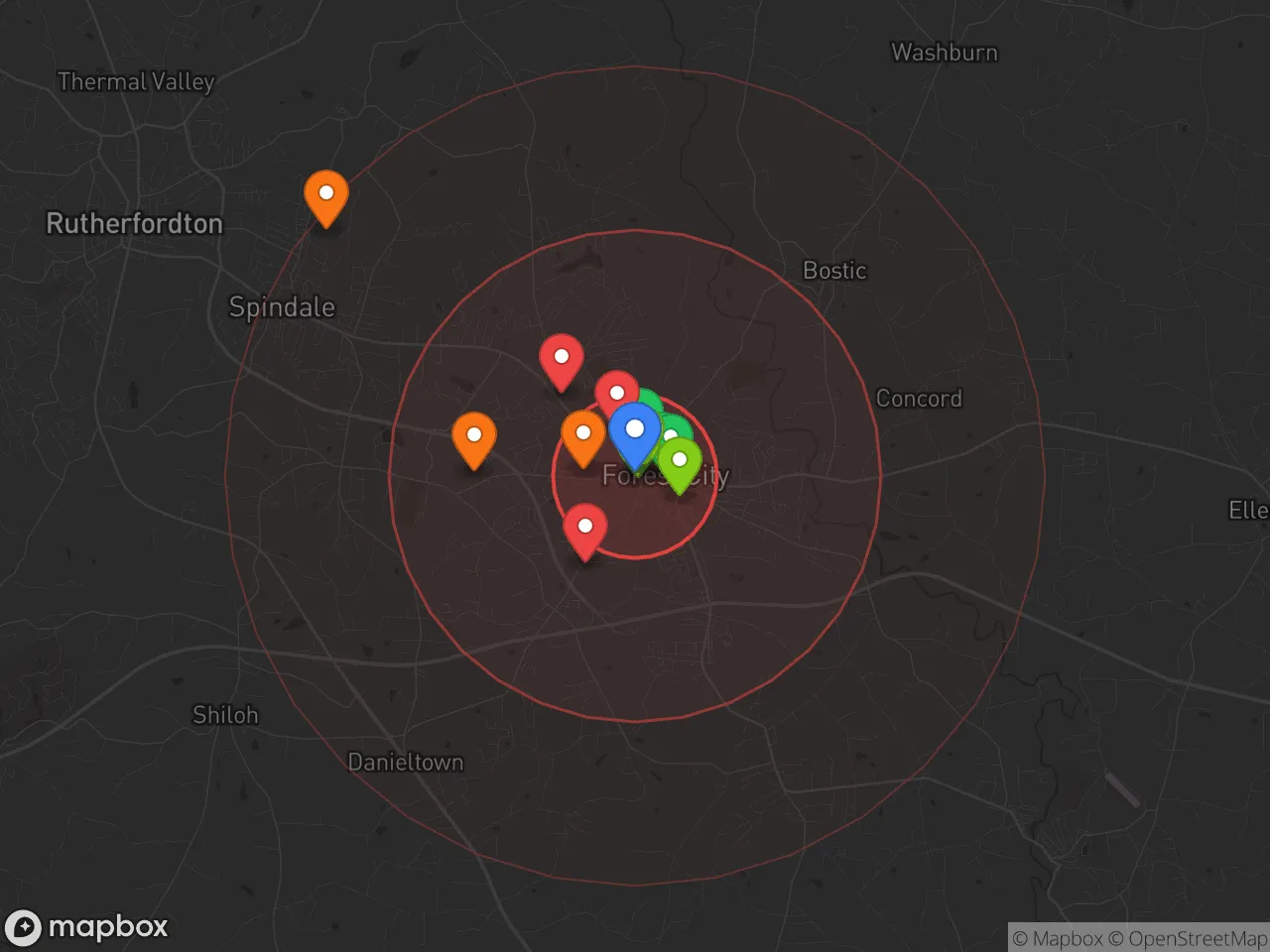
3 within 10 miles
Gas
11 within 10 miles
Hospital
3 within 20 miles
Airport
CLT — Charlotte Douglas International
Post Office
USPS — Forest City, NC
Critical Amenities
Quality-of-Life Analysis
Forest City, North Carolina, offers a quality of life defined by exceptional affordability and a slower, more community-oriented pace, attracting a mix of retirees, remote workers, and families seeking to stretch their income further than in larger metros. With a cost of living index of 62—well below the national average of 100—the area draws people who prioritize financial breathing room over urban amenities. The population skews older and more settled, with a significant number of residents employed in manufacturing, healthcare, and retail, though a growing cohort of telecommuters is finding the low housing costs and reliable internet a compelling draw.
Cost of living, housing affordability, and how it compares to nearby areas
Forest City’s cost of living is among the lowest in western North Carolina, making it a standout for budget-conscious movers. The median home value sits at $142,100, a figure that is roughly half the national median and significantly undercutting nearby Asheville (where the median exceeds $400,000) and even Spartanburg, SC (around $250,000). Renters also benefit, with a median monthly rent of $815, compared to over $1,400 in Asheville. The average commute of 25 minutes is manageable and typical for a rural town, with most residents driving to jobs in Forest City itself, Spindale, or Rutherfordton. While property taxes are low—Rutherford County’s rate is around $0.58 per $100 of assessed value—buyers should note that home inventory can be limited, and older homes may require updates. For those willing to trade urban nightlife for a mortgage under $1,000 a month, Forest City delivers a clear financial advantage over nearly every neighboring town.
Local amenities, schools, and what daily life is like for families
Daily life in Forest City revolves around local parks, community events, and a modest but functional downtown. The town’s Cool Springs Park and the nearby Lake Lure provide outdoor recreation, while the historic Forest City Depot hosts a farmers market and seasonal festivals. Schools are served by Rutherford County Schools, with Forest City’s own Chase High School and East Rutherford High School offering standard public education; for families seeking alternatives, private options like Rutherford Academy are available within a 15-minute drive. Healthcare access is solid for a town of this size, anchored by Rutherford Regional Health System and a cluster of clinics on US-74. Dining and shopping are limited to local diners, fast food, and a Walmart Supercenter, meaning residents typically drive 30–45 minutes to Asheville or Spartanburg for major retail, entertainment, or specialized medical care. The rhythm is quiet and neighborly—block parties, high school football games, and church activities form the social backbone.
Forest City is best suited for people who value financial freedom and a low-stress environment over cultural density and career variety. Retirees on fixed incomes, remote workers with stable salaries, and young families who want a house and yard without a six-figure mortgage will find the math works here. Those who need walkable nightlife, high-end dining, or a fast-paced job market will likely feel constrained. For the right resident—someone who appreciates mountain views, a slower clock, and a dollar that goes far—Forest City offers a stable, affordable foundation for daily life.

Crime in Forest City, NC
Higher crime rates than 70% of comparable U.S. locations.
Violent CrimeViolent Crime Analysis
Property CrimeProperty Crime Analysis
Crime Analysis
Forest City, North Carolina, presents a mixed safety profile that demands careful consideration from potential residents. The town's violent crime rate of 310.6 incidents per 100,000 residents is notably higher than the national average, while its property crime rate of 4,807.6 per 100,000 is significantly elevated, placing it among the higher-risk communities in Rutherford County. These figures indicate that crime is a tangible concern for those living in or moving to this small Piedmont town.
Crime in context
When compared to state and national benchmarks, Forest City's crime statistics are cause for caution. The violent crime rate of 310.6 per 100,000 is roughly 1.5 times the national average of approximately 200 per 100,000, and well above the North Carolina state average of around 240 per 100,000. The property crime rate of 4,807.6 per 100,000 is even more alarming, nearly double the national average of roughly 2,500 per 100,000. This disparity is particularly pronounced for larceny-theft, which drives the property crime total. As a small city near the larger Asheville metropolitan area, Forest City is not immune to the broader regional crime trends, and the influence of progressive prosecutorial policies in nearby urban centers can contribute to a revolving-door justice system that prioritizes offender rehabilitation over public safety, leading to higher recidivism and more criminals on the street.
What residents experience
Daily life in Forest City involves a heightened awareness of property crime. Residents commonly report vehicle break-ins, package theft, and burglaries, particularly in areas with lower foot traffic. The town's police department is active, but the sheer volume of property offenses strains resources. Violent crime, while less frequent, includes aggravated assault and robbery, often concentrated in specific pockets. The local judicial environment, influenced by the broader progressive lean of the region, can result in lenient sentencing and early release for repeat offenders, which undermines deterrence and victim confidence. For families and retirees, this means taking extra precautions: securing homes with alarm systems, avoiding leaving valuables in cars, and staying informed about neighborhood watch programs.
Neighborhood-level variation is significant in Forest City. The historic downtown area and newer subdivisions near the Rutherford County line tend to report lower crime rates, while older residential streets closer to the town's core and areas near major thoroughfares like US-74 experience higher incident counts. Prospective residents should consult local police crime maps and speak with neighbors to identify safer blocks. Overall, while Forest City offers affordable housing and a small-town feel, its crime data and the surrounding region's progressive justice policies create a safety environment that requires vigilance and proactive personal security measures.
* Values derived from national, state, county, city and local statistics and may differ in a specific area. Last updated: 2026-09-30T19:36:50.000Z
Narrative content on this page is AI-generated and may contain mistakes. Verify any details that matter before acting on them.
ReloMaps may earn a commission from affiliate links at no extra cost to you.

