Photo: Wikipedia
Demographics of Forest City, NC
Affluence Level in Forest City, NC
A low-income area with significant economic hardship. Household wealth and educational attainment are well below national averages.
People of Forest City, NC
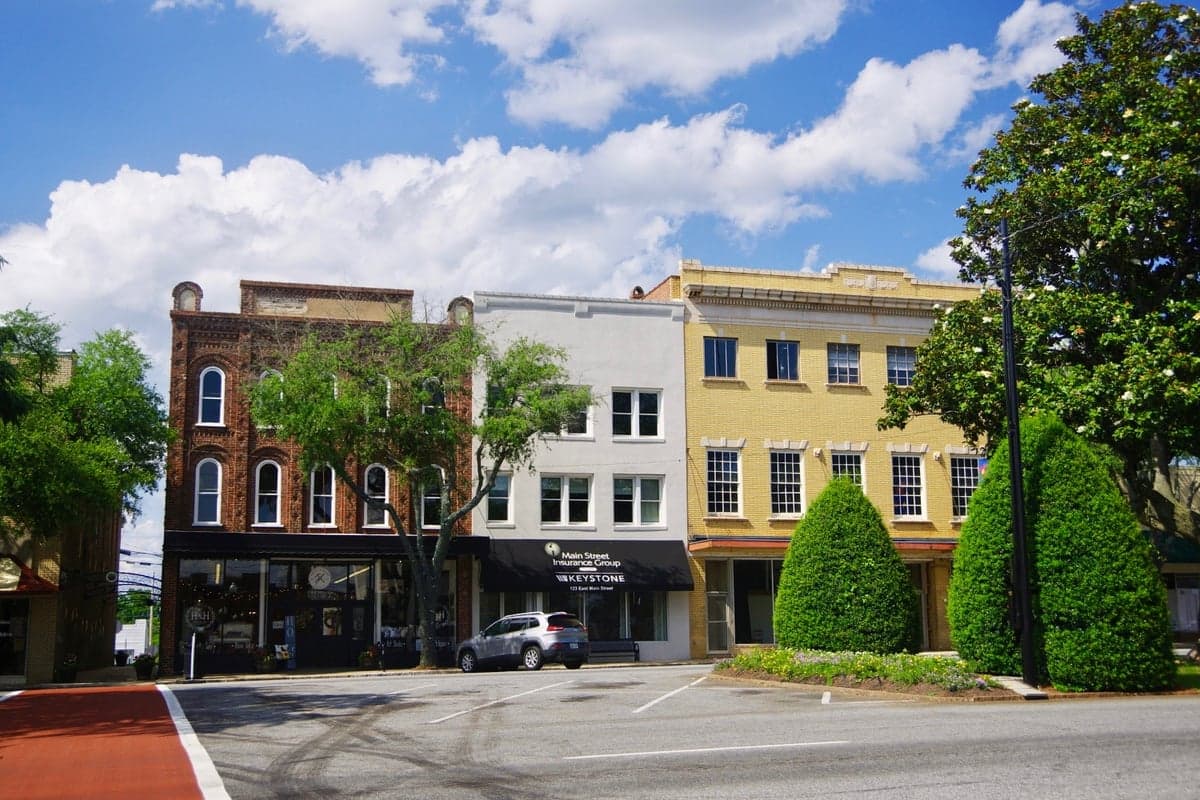
Forest City, North Carolina, is a small, historically industrial town of 7,368 residents where a majority-minority population has taken shape, defined by a 54.0% White, 25.0% Black, and 10.8% Hispanic composition. The city retains a working-class, family-oriented character rooted in its textile and railroad past, with a notably low foreign-born share of just 3.2% and a college attainment rate of 17.2%. Its people are predominantly native-born, with a strong sense of local identity that is slowly diversifying as Hispanic families establish roots in specific neighborhoods.
How the city was settled and grew
Forest City’s population history begins with its founding in the 1870s as a railroad depot town on the Broad River, drawing its first wave of settlers—mostly Scots-Irish and English farmers—from the surrounding Rutherford County countryside. The arrival of the Rutherford Railroad in 1877 and the subsequent boom in cotton textile mills transformed the hamlet into a mill town by the early 1900s. The original White mill-worker families settled in what is now known as Downtown Forest City and the Oakland Heights neighborhood, building modest company houses near the mills along Main Street and Depot Street. A second major wave came during the Great Migration (roughly 1910–1940), when Black families from rural Rutherford County and upcountry South Carolina moved into Forest City for mill and domestic work. They concentrated in the South Side district, particularly along Church Street and around the historic St. Luke’s CME Church area, forming a tight-knit community with its own schools, businesses, and churches. By 1950, the population had reached roughly 5,000, split roughly 60% White and 40% Black, with virtually no Hispanic or Asian presence.
Modern era (post-1965)
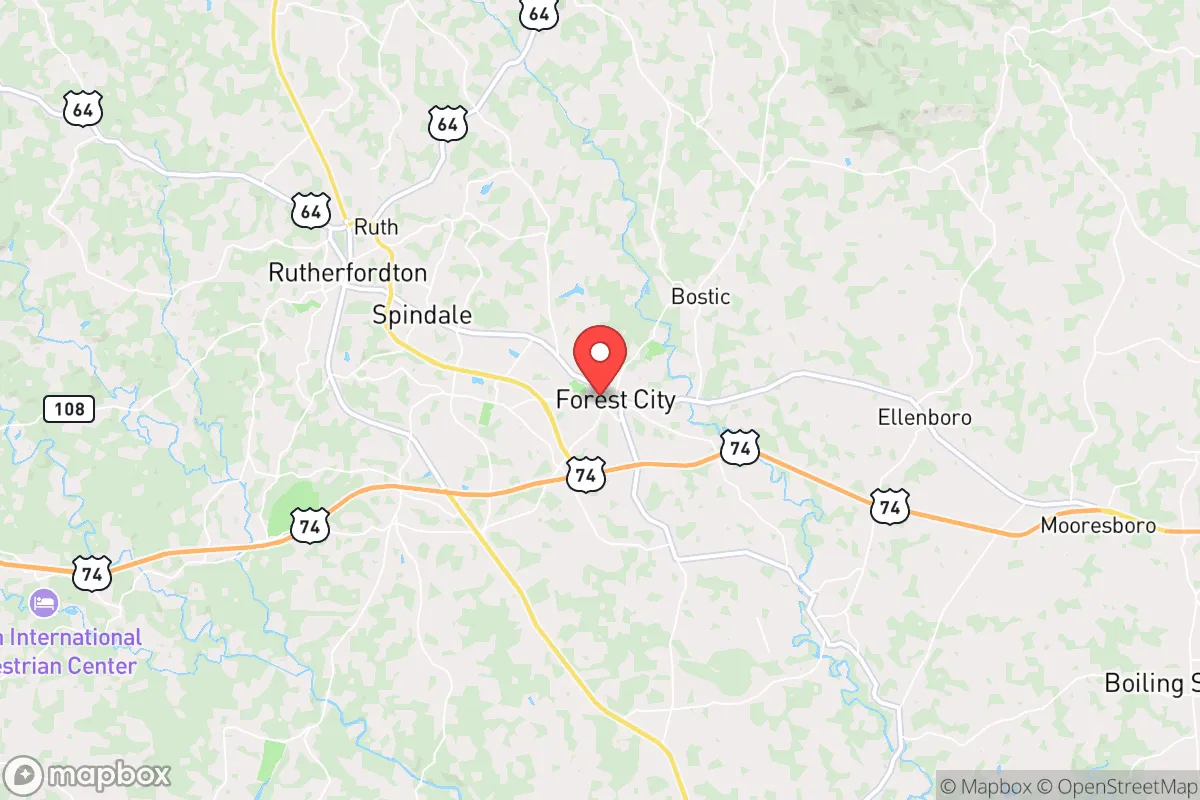
After the 1965 Immigration and Nationality Act, Forest City saw minimal foreign-born influx compared to larger Southern cities; the foreign-born share today remains just 3.2%. The most significant demographic shift since the 1970s has been the gradual out-migration of younger White families to suburban Rutherfordton and Lake Lure, coupled with the arrival of Hispanic workers—primarily from Mexico and Central America—drawn by poultry processing and light manufacturing jobs at plants like House of Raeford Farms and Graham Packaging. These Hispanic families have concentrated in the West End area, near the industrial parks off US-74, and in the Sunset Terrace mobile home park, where they now make up an estimated 30–40% of the neighborhood’s residents. The Black population, which peaked at roughly 35% in the 1980s, has declined slightly to 25.0% as some families moved to Charlotte or Atlanta for better opportunities, but the South Side remains predominantly Black and is the historic anchor of the city’s African American community. East/Southeast Asian residents (1.6%) are a very small presence, mostly Vietnamese and Filipino families who arrived in the 1990s and 2000s, living dispersed across the city with no single ethnic enclave. Indian-subcontinent residents are statistically absent (0.0%).
The future
Forest City’s population is projected to remain stable or grow slowly, with the Hispanic share likely rising from 10.8% toward 15–18% over the next decade as families expand and new workers arrive for industrial and agricultural jobs. The White share (54.0%) will continue a gradual decline as older residents age and younger adults leave for metro areas, while the Black share (25.0%) is expected to hold steady or dip slightly. New residential development is concentrated in the Oakland Heights and West End areas, where affordable housing and proximity to the US-74 corridor attract both Hispanic and White working-class families. The city’s cultural identity is evolving from a biracial Black-White mill town into a tri-ethnic community, though the pace is slow and the foreign-born share remains low. The college attainment rate (17.2%) is well below the national average, limiting the arrival of highly educated newcomers, but the area’s low cost of living and proximity to the Blue Ridge Mountains may draw remote workers in the coming years.
Forest City is becoming a slowly diversifying, working-class Southern town where the historic Black-White dynamic is giving way to a tri-ethnic mix, but the change is gradual and concentrated in specific neighborhoods. For someone moving in now, the city offers a tight-knit, family-oriented environment with a strong sense of local history, but limited economic mobility and a population that remains overwhelmingly native-born and rooted in the area’s industrial past.

* Values derived from national, state, county, city and local statistics and may differ in a specific area. Last updated: 2026-09-30T19:36:50.000Z
Narrative content on this page is AI-generated and may contain mistakes. Verify any details that matter before acting on them.
ReloMaps may earn a commission from affiliate links at no extra cost to you.

