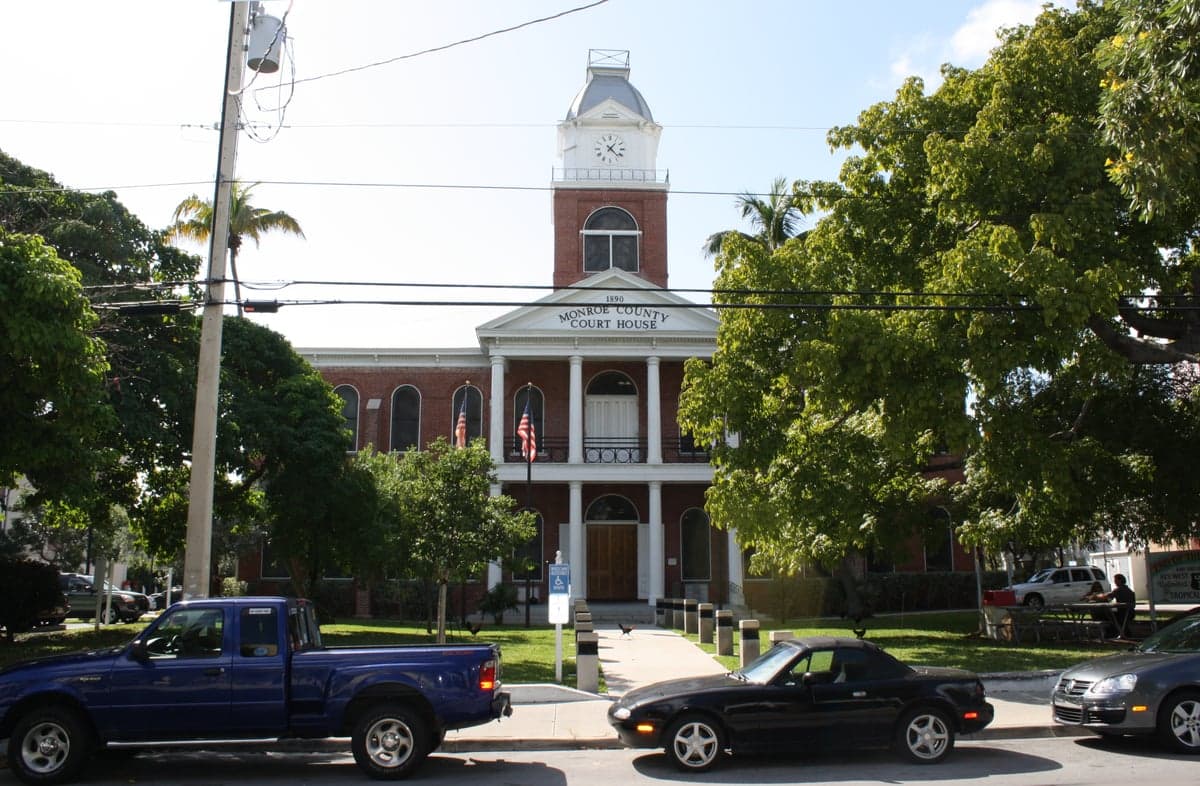
Photo: Wikipedia
Political ClimatePolitical Climate in Monroe County
Showing state-level results — no local-only data available.
Local Political AnalysisPolitical Analysis of Monroe County
Monroe County, Florida, is a political outlier in the Sunshine State, leaning reliably Democratic in a state that has trended red. While Florida as a whole carries a Cook Partisan Voting Index (PVI) of R+5, Monroe County has voted for the Democratic presidential candidate in every election since 2008, with Joe Biden winning the county by a 53.5% to 45.3% margin in 2020. This isn't a recent fluke—it's a long-standing pattern driven by the county's unique blend of environmentalists, tourism workers, and a significant retiree population that prioritizes conservation over the culture-war issues that dominate state politics. The trajectory here is stable blue, but with a notable caveat: the margin has narrowed slightly in recent cycles, and local races often hinge on development and water quality rather than national party labels.
How it compares
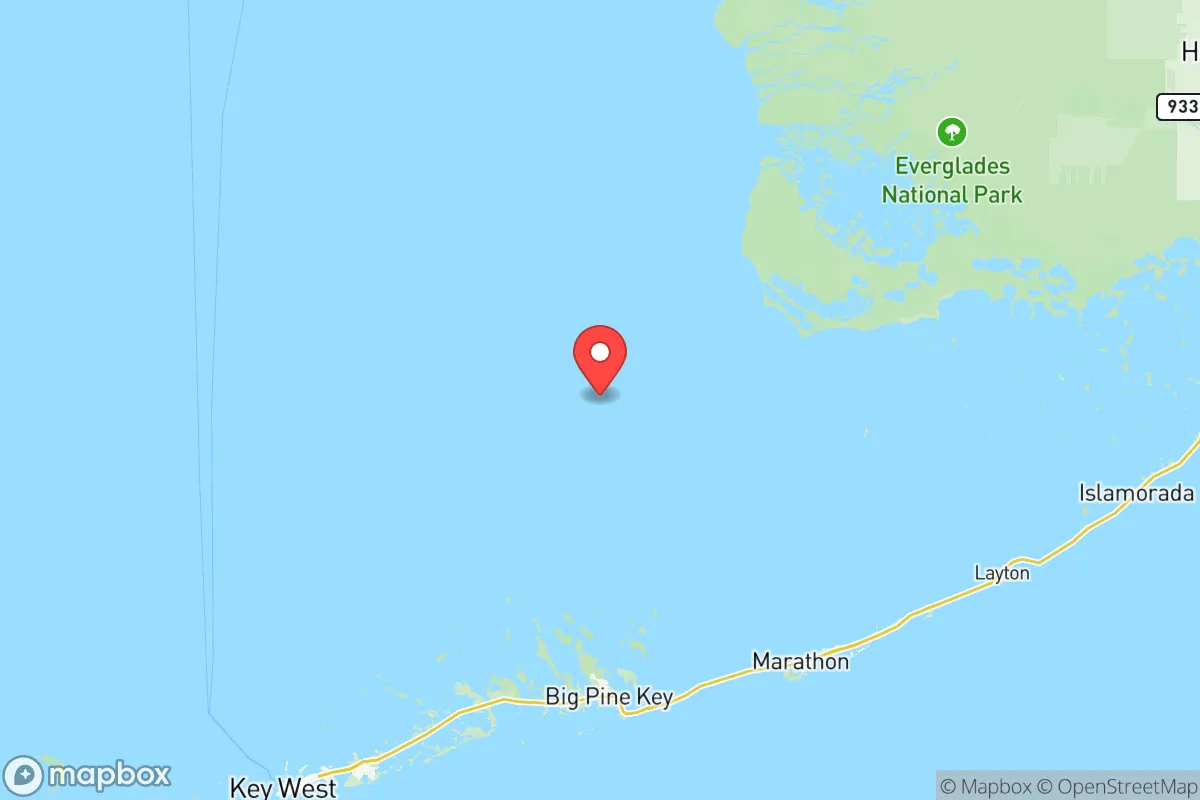
The contrast between Monroe County and the rest of Florida is stark. The state's R+5 PVI reflects a broad suburban and rural shift to the right, especially in the I-4 corridor and the Panhandle. Monroe County, however, behaves more like a coastal California or New England enclave. The political geography within the county itself is telling. Key West (the county seat) and the lower Keys are the Democratic strongholds, with precincts routinely delivering 60-70% of the vote for Democratic candidates. Key Largo and the upper Keys, particularly around Tavernier and Islamorada, are more competitive, often splitting 50-50 or leaning slightly Republican. The unincorporated mainland area near Flamingo (Everglades National Park) is sparsely populated but votes heavily Republican, though its tiny turnout barely registers. The swing precincts are in Marathon and the middle Keys, where a mix of second-home owners, fishing guides, and hospitality workers create a volatile electorate that can tip a local commission race. In the 2022 gubernatorial election, Republican Ron DeSantis actually won Monroe County by a narrow 50.2% to 49.8% margin, showing that down-ballot races can break differently from the presidential trend.
What this means for residents
For conservative residents, living in a blue county means their votes are often drowned out in national elections, but they have outsized influence in local Republican primaries and on issues like fishing regulations and property rights. For liberal residents, the county's Democratic lean provides a sense of alignment with local government on environmental protections and social services, but they face constant frustration with state-level preemption on issues like rent control and LGBTQ+ rights. Practically, this means Key West's city commission is reliably progressive, passing ordinances on short-term rental caps and plastic bag bans, while the Monroe County Commission (which covers the unincorporated areas) is more moderate-to-conservative, often clashing with the city over growth management. The result is a patchwork of policies: Key West has a higher minimum wage for city contractors and stronger tenant protections, while unincorporated areas have looser building codes and fewer social programs.
Culturally, the political divide manifests in everyday life. The Keys have a strong libertarian streak—"leave us alone" is a common sentiment across the political spectrum. This means you'll find Trump flags flying next to Pride flags on the same block in Key West, and a general tolerance for eccentricity that's rare in mainland Florida. The defining policy distinction is environmental: Monroe County residents, regardless of party, overwhelmingly support Everglades restoration and oppose offshore drilling, putting them at odds with the state's pro-energy development stance. Water quality—specifically the health of the Florida Keys National Marine Sanctuary—is the issue that can unite or divide a room faster than any national debate. For newcomers, the key takeaway is that local politics here are less about red vs. blue and more about how to balance tourism, conservation, and a fragile infrastructure on a string of islands that are literally sinking.

State Political ClimatePolitical Climate in Florida
State Political AnalysisPolitical Environment in the State
Florida is a solidly Republican state with a Cook PVI of R+5, but calling it a simple red state misses the real story. Over the past 20 years, the state has shifted from a classic swing state—where George W. Bush won by just 537 votes in 2000—to a reliably right-leaning powerhouse, driven by a massive influx of conservative-leaning transplants from the Northeast and Midwest, plus a decisive rightward shift among Hispanic voters, especially in Miami-Dade County. The dominant coalition today is a mix of suburban families, rural conservatives, and a growing bloc of Cuban-American and Venezuelan-American voters who prioritize anti-socialist rhetoric and economic freedom, while the Democratic base is increasingly squeezed into a few urban cores and college towns.
Urban vs. rural divide
The political map of Florida is stark. The major metros—Miami, Fort Lauderdale, and Orlando—still lean Democratic, but their margins have shrunk dramatically. Miami-Dade County, once a Democratic fortress, flipped to Trump in 2020 and again in 2024, driven by Cuban-American and Nicaraguan-American voters who see the GOP as the party of economic opportunity and strong anti-communist foreign policy. Tampa and Jacksonville are classic swing cities, with Tampa’s Hillsborough County trending redder as suburban growth pushes outward. The real engine of Republican dominance is the vast rural and exurban expanse: the Panhandle (think Pensacola and Panama City), North Central Florida (Gainesville is a blue island in a sea of red), and the sprawling I-4 corridor suburbs like The Villages—a massive retirement community that votes Republican by margins of 70% or more. The divide isn’t just geographic; it’s cultural. Urban areas are younger, more diverse, and more transient, while rural and suburban Florida is older, whiter, and deeply rooted in gun culture, church attendance, and a suspicion of government overreach.
Policy environment
Florida’s policy environment is aggressively conservative, built on three pillars: no state income tax, weak labor unions, and a business-friendly regulatory climate. The state is a right-to-work state, meaning you can’t be forced to join a union as a condition of employment. Property taxes are moderate, but homeowners’ insurance rates are among the highest in the nation due to hurricane risk and litigation abuse. Education policy has been a flashpoint: Governor Ron DeSantis pushed through the “Parental Rights in Education” law (HB 1557, dubbed “Don’t Say Gay” by critics), which restricts classroom instruction on sexual orientation and gender identity through third grade, and the “Stop WOKE Act” (HB 7), which limits how race and gender can be discussed in schools and workplaces. School choice is expansive, with a robust voucher program and charter school growth. Healthcare is a mixed bag: Florida did not expand Medicaid under the ACA, leaving roughly 800,000 low-income adults in a coverage gap, but the state has a competitive private insurance market. Election laws have been tightened: stricter voter ID requirements, limits on drop boxes, and a ban on ballot harvesting. The state also has a “stand your ground” self-defense law and a permitless carry law (HB 543, signed in 2023), allowing most adults to carry concealed firearms without a permit.
Recent policy direction
Over the past five years, Florida has moved decisively toward a model of “freedom” defined by limited government in some areas and assertive government in others. On gun and self-defense law, the state now has permitless carry, a “stand your ground” statute, and preemption laws that block local governments from enacting stricter gun ordinances. On parental and education rights, the state has banned critical race theory in schools, restricted transgender athletes from competing in women’s sports, and given parents the right to challenge school library books. On speech, the state has targeted social media platforms with laws (SB 7072) that require them to host political speech consistently, though parts have been blocked in court. On privacy and surveillance, Florida has banned the use of Central Bank Digital Currencies (CBDCs) and restricted the use of facial recognition by law enforcement without a warrant. On medical and bodily autonomy, the state enacted a six-week abortion ban (HB 5, signed in 2023), with exceptions for rape, incest, and the life of the mother, and has restricted gender-affirming care for minors. On property rights, the state has strong eminent domain protections and a “property rights” amendment that requires compensation for regulations that reduce property value. On taxation, the state has no income tax, but sales tax is 6% (local add-ons can push it to 8.5%), and there are periodic “tax holidays” for back-to-school and disaster preparedness. On voting and ballot access, the state has enacted strict voter ID laws, limited drop boxes, and banned ballot harvesting, while also expanding early voting days.
Civil unrest & political movements
Florida has seen its share of political flashpoints. The 2020 Black Lives Matter protests in Miami, Tampa, and Orlando were large but largely peaceful, though they sparked a backlash that helped fuel DeSantis’s “law and order” platform. The state has been a battleground over immigration: Governor DeSantis has bused migrants to Martha’s Vineyard and Sacramento, signed a law (SB 1718) that requires hospitals to ask about immigration status and penalizes transporting undocumented immigrants into the state, and has pushed for the death penalty for child rapists who are undocumented. There is no sanctuary city movement in Florida—state law preempts local “sanctuary” policies. Election integrity controversies have been constant: the 2020 and 2022 elections saw massive turnout and few irregularities, but the state has purged voter rolls aggressively and passed laws that Democrats say suppress turnout. The most visible political movement is the “DeSantis effect”—a populist, culture-war-focused conservatism that has made Florida a national laboratory for conservative policy. On the left, groups like the Florida Rising and Dream Defenders organize around criminal justice reform and voting rights, but they are outmatched by the state’s Republican supermajority. A new resident will notice the omnipresence of political yard signs, the intensity of local school board races, and the fact that many neighbors are recent transplants who moved here specifically for the political climate.
Projection
Over the next 5-10 years, Florida is likely to become more Republican, not less. The in-migration pattern is self-selecting: people moving from New York, California, and Illinois are disproportionately conservative or libertarian-leaning, seeking lower taxes, less regulation, and a culture they perceive as more aligned with their values. The Hispanic vote, especially among Cuban-Americans and Venezuelan-Americans, is trending right, and the state’s growing Puerto Rican population (which leans Democratic) is not enough to offset it. The Democratic Party in Florida is in disarray, with weak state leadership and a shrinking base in rural and suburban areas. Climate change will be a wildcard: rising sea levels and stronger hurricanes could eventually slow growth in coastal areas like Miami Beach and Fort Myers, but for now, the state is still booming. The biggest risk for conservatives is internal factionalism—between the DeSantis-style populists and the more traditional Chamber of Commerce Republicans—but that’s unlikely to flip the state blue. For a new resident, expect the political environment to remain intensely partisan, with a dominant conservative majority that shows no signs of weakening.
Bottom line for a new resident: If you’re a conservative, you’ll find a state government that actively champions your values on taxes, guns, education, and culture. If you’re a liberal, you’ll be in a clear minority, but you’ll find like-minded communities in Miami, Orlando, Tampa, and college towns like Gainesville and Tallahassee. The practical takeaway is that Florida’s political climate is not passive—it’s aggressive, intentional, and likely to stay that way. Your vote will matter less in statewide races, but local elections (school boards, city councils, county commissions) are where the real action is, and they’re often decided by a few hundred votes. Come for the weather, stay for the politics—or leave because of them. Either way, you’ll know exactly where you stand.
* Values derived from national, state, county, city and local statistics and may differ in a specific area. Last updated: 2026-06-13T07:11:33.000Z
Narrative content on this page is AI-generated and may contain mistakes. Verify any details that matter before acting on them.
ReloMaps may earn a commission from affiliate links at no extra cost to you.

