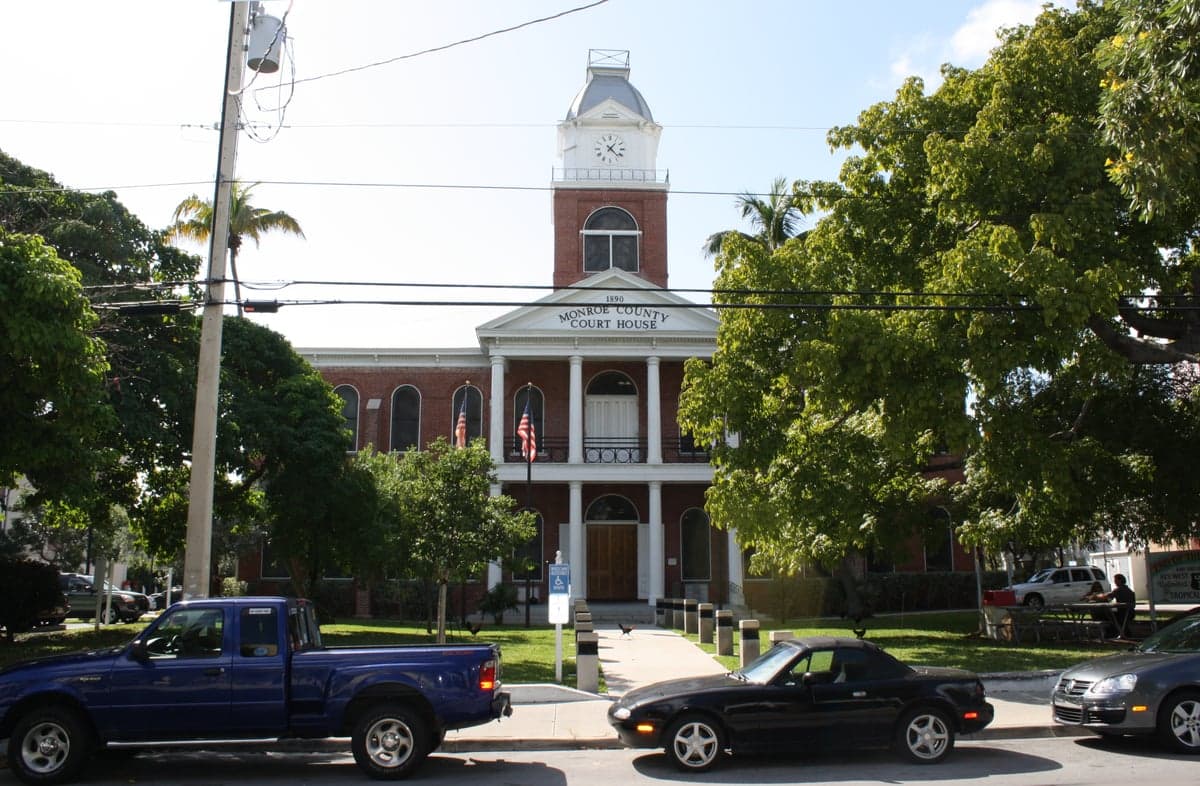
Photo: Wikipedia
Demographics of Monroe County
Affluence Level in Monroe County
An upper-middle-class area. Household wealth, education levels, and homeownership run ahead of national benchmarks.
People of Monroe County
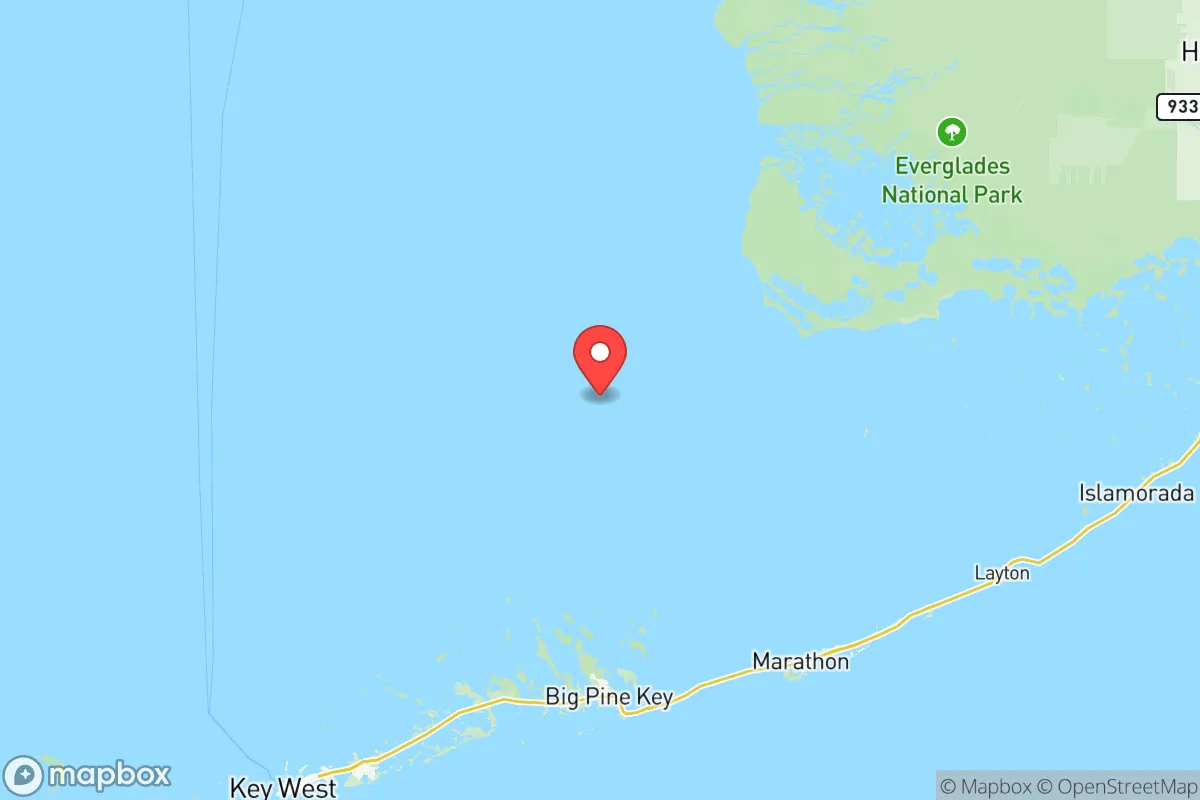
The people of Monroe County, Florida, are a distinctive blend of longtime Conchs, Cuban exiles, and service-industry transplants, concentrated in the island chain of the Florida Keys and the Everglades-edge community of the mainland. With a population of 81,840, the county is overwhelmingly white (64.8%) but carries a substantial Hispanic minority (24.0%), a small Black population (6.7%), and minimal Asian (0.8%) and Indian (0.3%) representation. The county’s identity is shaped by its geography—a narrow, hurricane-prone archipelago—and its economy, which is dominated by tourism, fishing, and a growing remote-work sector, giving it a character that is simultaneously insular, libertarian-leaning, and transient.
Settlement & growth (pre-1960)
Long before European contact, the region was inhabited by the Calusa and Tequesta peoples, who lived along the coast and on the Keys for thousands of years. The Calusa, a powerful shell-mound-building society, controlled much of southwest Florida, while the Tequesta occupied the southeastern mainland and the upper Keys. By the early 1700s, disease, slave raids, and warfare with Creek-allied groups had largely depopulated the area. The Spanish, who claimed Florida, made little effort to settle the Keys, using them primarily as a navigation hazard and occasional refuge for shipwreck survivors.
American settlement began slowly after the U.S. acquired Florida in 1821. The first permanent non-Native residents were "wreckers"—salvagers who made a living from ships that foundered on the coral reefs. Key West, the county seat, grew rapidly after the U.S. Navy established a base there in 1823, and by the 1830s it was the wealthiest city per capita in the United States, fueled by wrecking, sponge fishing, and cigar manufacturing. Cuban immigrants, fleeing Spanish rule, arrived in significant numbers in the 1860s–1880s, establishing a cigar industry that employed thousands and gave Key West a distinctly Latin character. By 1890, Key West was the largest city in Florida, with a population of nearly 18,000, roughly a third of whom were Cuban-born.
The Overseas Railroad, completed by Henry Flagler in 1912, transformed the county. It connected the Keys to the mainland, enabling tourism and year-round settlement. The railroad brought Bahamian laborers (often called "Conchs") and African American workers from the mainland, who built the bridges and settled in places like Key West, Islamorada, and Marathon. The 1935 Labor Day Hurricane, which killed over 400 people and destroyed much of the railroad, ended the rail era but spurred construction of the Overseas Highway (U.S. 1), completed in 1938. This highway opened the Keys to automobile tourism and seasonal residents. Through the 1940s and 1950s, the population remained small—about 30,000 by 1950—concentrated in Key West and the upper Keys, with a mix of fishing families, military personnel (Naval Air Station Key West was reactivated during World War II), and a growing number of artists and writers drawn to the subtropical isolation.
Modern era (post-1965)
The 1965 Hart-Cellar Act, which ended national-origin quotas, had a modest direct effect on Monroe County, as the county’s foreign-born population remains relatively low at 8.0%. However, the Cuban Adjustment Act of 1966 and the Mariel boatlift of 1980 brought thousands of Cuban refugees to Key West, the natural first landfall for those crossing the Florida Straits. Many settled permanently in Key West and Stock Island, reinforcing the county’s Hispanic character. Today, the Hispanic population stands at 24.0%, with the majority being Cuban-American, though there are smaller communities of Puerto Ricans and Central Americans.
Domestic migration reshaped the county far more than immigration. Beginning in the 1970s, the Keys became a destination for "back-to-the-land" hippies, artists, and gay and lesbian communities, particularly in Key West, which developed a reputation as a tolerant, bohemian enclave. Simultaneously, affluent retirees and second-home buyers from the Northeast and Midwest began purchasing property in Key Largo, Tavernier, and Islamorada, driving up real estate prices and transforming the economy from fishing and military to tourism and services. The population grew from 52,000 in 1970 to 78,000 in 1990, then peaked at 79,000 in 2000 before declining slightly to 81,840 in 2024.
The racial and ethnic composition has remained relatively stable since 1990. The white population has declined from about 75% to 64.8%, while the Hispanic share has grown from 15% to 24.0%. The Black population has held steady at around 6–7%, concentrated in Key West’s Bahama Village neighborhood and in Marathon. The Asian population (0.8%) and Indian population (0.3%) are tiny, reflecting the county’s lack of high-tech employment and its distance from major urban centers. The college-educated share is 37.8%, above the national average, driven by the influx of professionals and retirees.
The future
Monroe County’s population is projected to remain flat or decline slightly over the next decade, constrained by strict growth-management laws, limited developable land, and rising sea levels. The county has a "Rate of Growth Ordinance" (ROG) that caps new building permits, and the Florida Keys are already experiencing chronic flooding from king tides and storm surge. This has made the county increasingly unaffordable for working-class families, who are being pushed to the mainland—to Florida City and Homestead in Miami-Dade County—or to Marathon and the lower Keys, where housing is slightly cheaper.
The demographic future points toward an older, wealthier, and slightly more diverse population. The Hispanic share is likely to grow slowly, driven by natural increase and continued Cuban migration, while the white share will continue to decline. The Black population may shrink further as affordable housing disappears from Key West. The county is becoming less of a year-round community and more of a seasonal destination for wealthy retirees and remote workers, a trend accelerated by the pandemic. The cultural identity is evolving from a working-class fishing-and-military town to a high-end tourism and conservation hub, with a growing emphasis on environmental resilience and climate adaptation.
For someone moving in now, Monroe County offers a unique lifestyle—island living with a small-town feel, strong environmental consciousness, and a politically independent streak—but at a high cost of living and with significant climate risk. The population is stable but aging, and the county’s future depends on its ability to balance growth restrictions with the need for workforce housing and infrastructure that can withstand rising seas. It is a place for those who prioritize natural beauty and community over career opportunity and affordability.

* Values derived from national, state, county, city and local statistics and may differ in a specific area. Last updated: 2026-06-13T07:11:33.000Z
Narrative content on this page is AI-generated and may contain mistakes. Verify any details that matter before acting on them.
ReloMaps may earn a commission from affiliate links at no extra cost to you.

