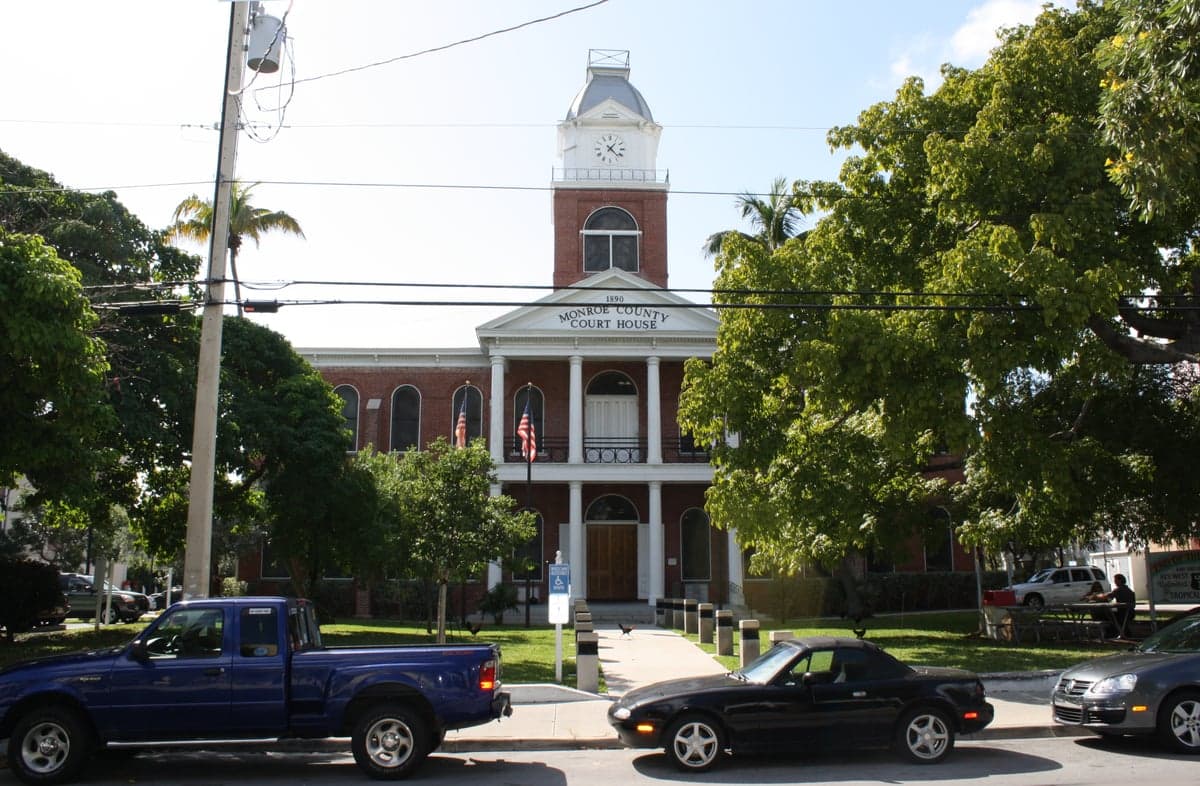
Photo: Wikipedia
Personal Sovereignty in Monroe County
Viable for self-reliance. Generally workable, though some barriers may limit total independence.
What does Personal Sovereignty tell us?
Personal Sovereignty measures your capacity for self-reliance and independence with minimal government friction. Higher scores mean fewer barriers between you and the way you want to live... but it assumes you have the space you need and good neighbors.
What does this tell us?
Personal Sovereignty measures your capacity for self-reliance and independence with minimal government friction. Higher scores mean fewer barriers between you and the way you want to live... but it assumes you have the space you need and good neighbors.
State Policy
Energy independence: Importer (10% of energy produced in-state)
Personal Liberty
Homesteading

Personal Liberty Analysis
Monroe County, Florida, presents a unique and often contradictory environment for personal sovereignty, where the state's generally pro-liberty legal framework collides with the intense regulatory demands of the Florida Keys ecosystem and a tourism-driven economy. While Florida law provides a strong baseline for gun rights, tax avoidance, and parental control, the day-to-day reality for residents in places like Key West, Marathon, and Islamorada is shaped by strict land-use codes, environmental restrictions, and a high cost of living that can constrain self-reliance. For a conservative-leaning individual or family, the autonomy picture is not uniform: the unincorporated areas of the county and the more rural stretches of the Upper Keys offer far greater latitude for self-directed living than the densely populated, heavily regulated city of Key West.
Tax burden and regulatory posture in the Florida Keys
Monroe County benefits from Florida's famously light tax environment: no state income tax, no estate tax, and a homestead exemption that can shield up to $50,000 of a property's assessed value from county taxes. However, the regulatory posture is among the most restrictive in the state due to the Keys' designation as an Area of Critical State Concern. This means that any new construction, renovation, or even landscaping can trigger reviews by the Florida Department of Economic Opportunity and the South Florida Water Management District. Property taxes in Monroe County are moderate by Florida standards—the millage rate for unincorporated areas is roughly 3.5 to 4.0 mills, but the high property values (median home price over $600,000) mean the actual tax bill is substantial. Sales tax is 7.5% (6% state plus 1.5% county surtax), which is higher than many inland Florida counties. For a resident seeking minimal government interference, the regulatory gauntlet for building a dock, adding a bedroom, or even replacing a septic system can be a significant frustration. The county's comprehensive plan strictly limits new residential density, and transferable development rights (TDRs) are often required to build, adding cost and complexity. In contrast, the mainland portion of Monroe County—the small community of Florida City (technically in Miami-Dade but serving as a gateway) and the Everglades National Park buffer zone—has far fewer land-use restrictions, though it lacks the Keys' amenities.
Self-defense and gun law specifics in Monroe County
Florida is a "shall-issue" state for concealed carry permits, and as of 2023, permitless (constitutional) carry is legal for anyone 21 or older who can legally possess a firearm. Monroe County's sheriff, Rick Ramsay, has historically been a strong supporter of Second Amendment rights, and the sheriff's office processes permits efficiently. Open carry is generally prohibited except when fishing, camping, or hunting, which is relevant given the county's extensive outdoor recreation. The county has no local ordinances that further restrict firearms beyond state law, meaning no additional waiting periods, magazine bans, or "assault weapon" restrictions. However, Key West and Islamorada have passed resolutions declaring themselves "Second Amendment Sanctuary" areas, though these are symbolic. The practical reality is that gun ownership is common and culturally accepted throughout the Keys, but the dense population and tourist traffic mean that responsible storage and transport are critical. For a self-defense-minded resident, the legal environment is favorable, but the physical environment—narrow streets, crowded bars, and limited safe shooting ranges—can be a constraint. The nearest public shooting range is the Rod & Gun Club of Key West (private membership) or the Big Pine Key Shooting Range (limited hours). For those who prioritize self-defense, the unincorporated areas of Big Pine Key and No Name Key offer more space for private practice, though county noise ordinances apply.
Self-reliance and homesteading viability in the Keys
True homesteading—growing your own food, raising livestock, and living off-grid—is extremely difficult in most of Monroe County due to lot sizes, zoning, and environmental regulations. The typical residential lot in the Keys is a quarter-acre or less, and many neighborhoods have homeowners' associations (HOAs) that prohibit chickens, goats, or large gardens. The county's Land Development Code restricts livestock to parcels of at least one acre in most zoning districts, and even then, permits are required. Off-grid living is nearly impossible: the county requires connection to the electrical grid for any habitable structure, and solar panels must be approved by the Historic Preservation Commission in Key West and by the county building department elsewhere. Rainwater catchment is allowed but regulated, and composting toilets are not permitted as a primary sanitation method. The exception is the Lower Keys (from Big Pine Key to Key West) and the unincorporated mainland area near Flamingo, where larger lots (1-5 acres) and fewer HOAs exist. In Summerland Key and Cudjoe Key, some residents successfully maintain vegetable gardens, keep bees, and raise chickens, but the salt spray, hurricanes, and poor soil make self-sufficiency a constant battle. For a family seeking true homesteading, the mainland portion of Monroe County—the Everglades buffer zone—offers larger parcels (often 5-40 acres) with fewer restrictions, but it lacks schools, hospitals, and grocery stores. The trade-off is stark: the Keys offer beauty and community but little room for self-reliance; the mainland offers space but isolation.
Personal liberties: parental rights, medical autonomy, speech, and property
Florida's recent legislative trends strongly favor parental rights in education and medical decisions. The Parental Rights in Education Act (HB 1557) and the Florida Parental Bill of Rights give parents broad authority over their children's schooling, healthcare, and upbringing. Monroe County Public Schools, which serves the entire island chain, has implemented these laws without significant local controversy. Medical autonomy is more complex: Florida law allows parents to refuse vaccines for their children (with a religious exemption), and the state does not mandate COVID-19 vaccines for school attendance. However, the Keys' healthcare system is dominated by Baptist Health South Florida and Lower Keys Medical Center, which follow standard protocols. For those seeking alternative or holistic medicine, options are limited; the nearest major alternative health community is in Miami. Free speech is protected under the First Amendment, and Monroe County has no local ordinances that restrict political speech or assembly. Property rights are strong in theory—Florida's Private Property Rights Protection Act limits eminent domain—but in practice, the county's comprehensive plan and the Florida Keys Area of Critical State Concern designation give regulators broad power to deny development permits. A property owner in Key Largo or Marathon may find that their ability to build a fence, add a shed, or clear vegetation is heavily constrained by environmental rules. The Monroe County Code of Ordinances includes strict tree protection, wetland buffers, and wildlife habitat conservation areas that can limit what you do on your own land.
Overall, personal sovereignty in Monroe County is a study in contrasts. The state-level framework—no income tax, constitutional carry, strong parental rights, and property protections—provides a solid foundation for individual freedom. But the local overlay of environmental regulation, high property costs, and dense development in the Keys creates a heavily managed environment that can feel restrictive to those accustomed to rural autonomy. For a conservative-leaning individual or family, the best balance of sovereignty and lifestyle likely lies in the Lower Keys (Big Pine Key, Cudjoe Key, Summerland Key) or the mainland Everglades buffer, where lot sizes are larger, HOAs are rarer, and the regulatory touch is lighter. Compared to other Florida counties, Monroe ranks high in state-level liberties but low in local flexibility—a trade-off that makes it a better fit for those who value legal protections over physical independence. For the truly self-reliant, inland counties like Glades or Hendry offer far more room to live off-grid, but they lack the Keys' unique environment and community.

* Values derived from national, state, county, city and local statistics and may differ in a specific area. Last updated: 2026-06-13T07:11:33.000Z
Narrative content on this page is AI-generated and may contain mistakes. Verify any details that matter before acting on them.
ReloMaps may earn a commission from affiliate links at no extra cost to you.

