
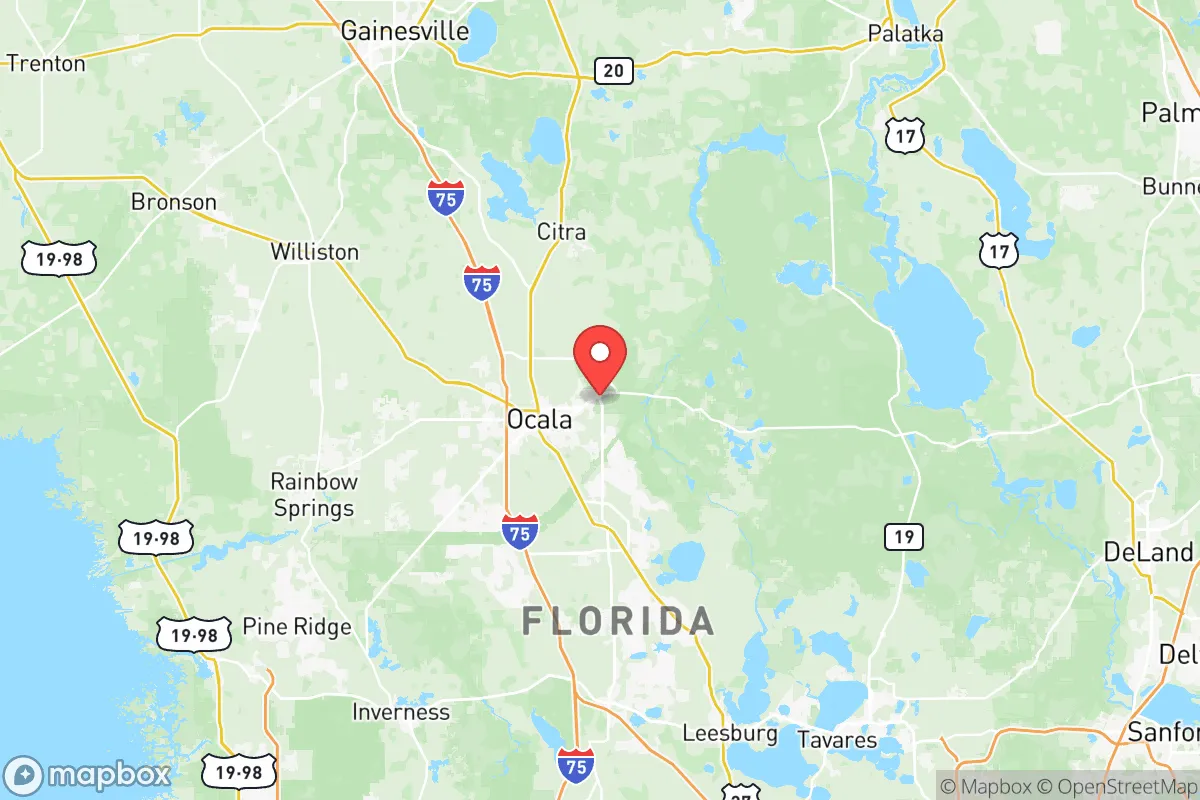
Photo: Wikipedia
Quality of Life in Marion County
A livable area that tracks near national norms for affordability, walkability, and neighborhood health.
What does Quality of Life tell us?
Quality of Life measures an area by evaluating factors like cost of living, nearby amenities, country club access, airport proximity, socioeconomic signals and neighborhood character. For large states, this is a general average — quality of life can vary dramatically between metro areas, suburbs, and rural communities within the same state.
What does this tell us?
Quality of Life measures an area by evaluating factors like cost of living, nearby amenities, country club access, airport proximity, socioeconomic signals and neighborhood character. For large states, this is a general average — quality of life can vary dramatically between metro areas, suburbs, and rural communities within the same state.
Cost of Living
8% below national average
93%
The Real Cost of Living in Marion County for 2026
| Tier | Individual | Family (4) |
|---|---|---|
| Survival | $19k | $35k |
| Comfortable | $43k | $63k |
| Luxury | $103k+ | $160k+ |
| Elite (Top 5%) | $122k+ | $189k+ |
Quality-of-Life Analysis
Marion County, Florida, offers a broad spectrum of living environments that range from the historic, amenity-rich city of Ocala to quiet, unincorporated crossroads and sprawling rural homesteads. The county’s character shifts noticeably as you move from its central urban core outward, attracting everyone from young professionals and retirees seeking walkable downtowns to equestrian enthusiasts and agricultural families looking for acreage and privacy. With a cost of living index of 92 — 8 percent below the national average — and a median home value of $220,800, the county provides tangible affordability across most of its subregions, though the trade-offs between convenience and space vary significantly by location.
Largest town(s) & population centers
Ocala is the county’s undisputed hub, home to roughly 65,000 residents and the region’s primary employment, retail, and healthcare center. Daily life in Ocala centers around the historic downtown square, the Paddock Mall, and the sprawling World Equestrian Center, which draws thousands of visitors and residents for year-round competitions. The city offers a mix of older neighborhoods with mature oak trees, newer subdivisions in the southwest quadrant, and a growing number of apartment complexes near Interstate 75. Belleview, about 10 miles south of Ocala, functions as a secondary population center with roughly 5,000 residents, offering a quieter, more suburban feel with its own small downtown and easy access to U.S. 441. Both towns provide the bulk of the county’s grocery stores, medical facilities, and chain restaurants, making them the go-to areas for residents who prioritize errand efficiency and short commutes.
Smaller towns & rural pockets
Beyond the main population centers, Marion County contains several distinct smaller communities. Dunnellon, on the county’s southwestern edge along the Withlacoochee River, is a historic river town known for its springs, canoeing, and a relaxed, retiree-friendly pace. Silver Springs Shores, an unincorporated community southeast of Ocala, is a large, master-planned subdivision with a diverse population and lower home prices, often attracting first-time buyers. Citra, in the northern part of the county, is a tiny crossroads community surrounded by horse farms and orange groves, where residents often commute 20–30 minutes to Ocala for work. Fort McCoy, in the east, is even more remote, with large tracts of forest and a handful of general stores serving as the only commercial nodes. These smaller towns and unincorporated areas offer a quieter, more self-sufficient lifestyle, often with larger lots and lower property taxes, but with fewer immediate services.
Cost & lifestyle range
The cost of living and available amenities shift dramatically across Marion County. At the more expensive end, Ocala’s southwest side near the World Equestrian Center and the Golden Ocala golf community features median home values well above the county average of $220,800, often exceeding $400,000 for newer single-family homes on larger lots. These areas offer high-end shopping, gated subdivisions, and proximity to I-75, but come with a higher price tag and longer commutes into central Ocala. At the more affordable end, Silver Springs Shores and parts of Belleview offer median home values closer to $180,000–$200,000, with median rents around $1,174 — well below the national average. Rural areas like Citra and Fort McCoy can be even cheaper for land, but residents face average commute times of 26.3 minutes or more, limited public transit, and a 20-minute drive to the nearest supermarket. The trade-off is clear: lower housing costs and more space versus longer drives and fewer nearby amenities.
Marion County works best for people who value affordability and space over urban density. Families and retirees who can tolerate a 25–30 minute commute to Ocala for work and shopping will find excellent value in the county’s smaller towns and rural pockets. Equestrian professionals and hobby farmers are particularly well-served by the land availability and horse-centric infrastructure around Ocala and Citra. Meanwhile, those who need walkable neighborhoods, frequent public transit, or a dense job market may find the county’s spread-out nature frustrating. For most, however, the combination of a cost of living index of 92, a median rent of $1,174, and a median home value of $220,800 makes Marion County one of Florida’s more accessible places to live — provided you are willing to drive for most daily needs.

Crime in Marion County
Generally safer than 69% of comparable U.S. locations.
Violent CrimeViolent Crime Analysis
Property CrimeProperty Crime Analysis
Crime Analysis
Marion County, Florida, presents a mixed safety profile: its violent crime rate of 207 incidents per 100,000 residents sits well below the national average, while its property crime rate of 896.7 per 100,000 is notably higher than both state and national benchmarks. This contrast means that while serious violent offenses are relatively uncommon, residents in areas like Ocala, Belleview, and Dunnellon face a heightened risk of theft, burglary, and vehicle break-ins. The county's sprawling geography and mix of rural, suburban, and urban zones create significant neighborhood-level variation in safety outcomes.
Crime in context
Marion County's violent crime rate of 207 per 100,000 is roughly 40% lower than the national average of 380 per 100,000 and also below the Florida state average of about 380 per 100,000. This places the county in a relatively safe tier for violent offenses like homicide, robbery, and aggravated assault. However, the property crime rate of 896.7 per 100,000 is approximately 50% higher than the national average of 600 per 100,000 and exceeds the Florida average of roughly 700 per 100,000. Larceny-theft and motor vehicle theft are the primary drivers, with Ocala—the county seat and largest city—accounting for a disproportionate share of these incidents. By contrast, smaller towns like Silver Springs Shores and Summerfield report property crime rates closer to the county average, while rural areas west of Dunnellon see significantly fewer incidents.
What residents experience
For most Marion County residents, the day-to-day safety concern is property crime rather than violent confrontation. Car break-ins, package thefts, and burglaries are common in Ocala's older neighborhoods and near major retail corridors like State Road 200 and College Road. The Ocala Police Department and Marion County Sheriff's Office both emphasize community policing and proactive patrols, but clearance rates for property crimes remain low—typically under 20%—meaning most stolen property is never recovered. Violent crime, while rare, is often concentrated in specific areas: Ocala's downtown core and the 441 corridor near Silver Springs see higher rates of aggravated assault and robbery, often linked to drug activity. Residents in gated communities in On Top of the World and The Villages (the latter partially in Marion County) report far lower crime rates, with many neighborhoods seeing zero violent incidents per year.
The judicial environment in Marion County is a point of concern for safety-conscious residents. The 5th Judicial Circuit, which covers Marion, Lake, Citrus, and Hernando counties, has seen a shift toward progressive sentencing policies in recent years. Judges in Ocala have increasingly favored diversion programs and reduced sentences for non-violent offenders, which critics argue has led to repeat property crimes and a revolving-door effect for burglary suspects. While these policies aim to reduce incarceration rates, they can frustrate victims who see offenders back on the street within weeks. In contrast, the more conservative bench in the rural western part of the county—around Dunnellon and Inglis—tends to impose stricter sentences, which correlates with lower recidivism in those areas.
Neighborhood-level variation
Safety in Marion County is highly localized. Ocala's 34470 and 34471 ZIP codes have the highest combined crime rates, driven by property offenses near the downtown and Paddock Mall areas. Belleview and Silver Springs Shores show moderate rates, with property crime slightly above the county average but violent crime below it. For those seeking safer options, the master-planned retirement communities of On Top of the World and The Villages report crime rates 60-70% lower than the county average, with 24/7 security patrols and gated entrances. Dunnellon and the Rainbow Springs area also rank among the safest, with violent crime rates under 100 per 100,000 and property crime rates near the national average. Prospective residents should research specific neighborhoods and consult the Marion County Sheriff's Office online crime map before choosing a location.
* Values derived from national, state, county, city and local statistics and may differ in a specific area. Last updated: 2026-06-18T05:08:24.000Z
Narrative content on this page is AI-generated and may contain mistakes. Verify any details that matter before acting on them.
ReloMaps may earn a commission from affiliate links at no extra cost to you.

