
Photo: Wikipedia
Quality of Life in Franklin County
A livable area that tracks near national norms for affordability, walkability, and neighborhood health.
What does Quality of Life tell us?
Quality of Life measures an area by evaluating factors like cost of living, nearby amenities, country club access, airport proximity, socioeconomic signals and neighborhood character. For large states, this is a general average — quality of life can vary dramatically between metro areas, suburbs, and rural communities within the same state.
What does this tell us?
Quality of Life measures an area by evaluating factors like cost of living, nearby amenities, country club access, airport proximity, socioeconomic signals and neighborhood character. For large states, this is a general average — quality of life can vary dramatically between metro areas, suburbs, and rural communities within the same state.
Cost of Living
10% below national average
86%
The Real Cost of Living in Franklin County for 2026
| Tier | Individual | Family (4) |
|---|---|---|
| Survival | $17k | $31k |
| Comfortable | $49k | $73k |
| Luxury | $113k+ | $176k+ |
| Elite (Top 5%) | $134k+ | $207k+ |
Quality-of-Life Analysis
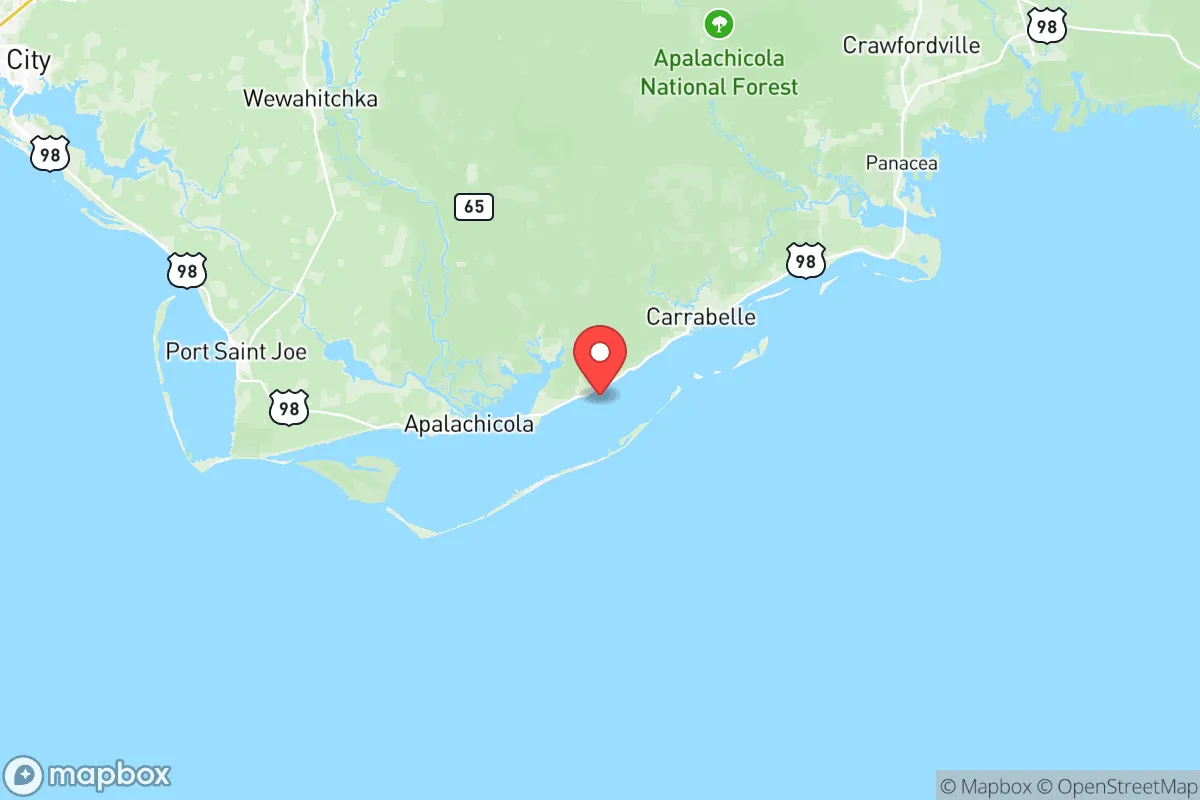
Franklin County, Florida, offers a spectrum of quality-of-life options that range from the historic, walkable streets of its coastal county seat to the deep quiet of rural panhandle timberlands. The county’s character is defined by its position on the Gulf of Mexico, with Apalachicola serving as the primary population and economic center, while smaller communities like Carrabelle and Eastpoint provide distinct, quieter alternatives. People are drawn to different parts of the county based on whether they prioritize coastal access, historic charm, or affordable rural living, with the average commute of just over 20 minutes making even the more remote areas feasible for daily life.
Largest town(s) & population centers
Apalachicola is the county’s largest town and its historic heart, with a population of roughly 2,200. Daily life here centers on the downtown waterfront, with a mix of seafood restaurants, art galleries, and the Apalachicola National Estuarine Research Reserve. The town’s historic district features antebellum homes and a walkable grid, making it a draw for retirees and remote workers who value character over sprawl. Carrabelle, about 20 miles east, is the second-largest population center with around 1,000 residents. It offers a more laid-back, working-waterfront feel, with the Carrabelle Beach and the Crooked River Lighthouse as local landmarks. Both towns serve as hubs for the surrounding unincorporated areas, providing grocery stores, medical clinics, and the county’s primary schools.
Smaller towns & rural pockets
Beyond the main towns, Franklin County’s smaller communities each have a distinct identity. Eastpoint, located across the bay from Apalachicola, is a unincorporated community of about 2,300 residents that feels like a quieter, more residential alternative to the county seat. It has its own seafood docks and a handful of local businesses, but lacks the tourist infrastructure of Apalachicola. St. George Island, a barrier island accessible by bridge from Eastpoint, is a mix of vacation rentals and permanent homes, with a small commercial strip and the St. George Island State Park. The island’s population swells seasonally, but year-round residents enjoy a tight-knit beach community. Further inland, Lanark Village is a small unincorporated community near Carrabelle, originally developed as a retirement village, with modest homes and a quiet, wooded setting. The most rural pockets are found along the county’s northern boundary, where the Apalachicola National Forest and Tate’s Hell State Forest create vast, sparsely populated tracts of pine flatwoods and cypress swamps.
Cost & lifestyle range
The cost of living in Franklin County is notably below the national average, with a composite index of 90 (where 100 is the U.S. average). However, this average masks a significant spread between the most and least expensive areas. At the higher end, St. George Island commands a premium, with median home values well above the county’s $254,300 average due to waterfront properties and vacation demand. The lifestyle there is oriented around beach access, boating, and seasonal tourism. At the lower end, Lanark Village and the rural forest tracts offer some of the most affordable housing in the county, with older homes and mobile homes often priced under $150,000. The median rent of $1,044 is manageable for many, though rental inventory is limited, especially in Apalachicola. The average commute of 20.5 minutes is short by state standards, but residents in the northern rural areas may drive 30-40 minutes to reach grocery stores or medical services in Apalachicola or Carrabelle. Amenities thin out quickly once you leave the coastal towns; there are no major hospitals in the county, with the nearest full-service hospital in Panama City (about 75 minutes from Apalachicola).
This county is best suited for people who value natural beauty, quiet, and a slower pace over urban convenience. Retirees and remote workers with stable incomes thrive in Apalachicola and St. George Island, where walkability and coastal access are strong. Families and those on tighter budgets often find better value in Eastpoint or Lanark Village, accepting longer drives for shopping and healthcare. Outdoor enthusiasts—anglers, kayakers, hikers—will find the entire county accessible, while those needing frequent medical care or diverse employment options may find the isolation challenging. Franklin County offers a genuine, unpolished slice of Florida’s Gulf Coast, but it demands self-reliance and a tolerance for limited services in exchange for its low cost and natural surroundings.

Crime in Franklin County
Generally safer than 68% of comparable U.S. locations.
Violent CrimeViolent Crime Analysis
Property CrimeProperty Crime Analysis
Crime Analysis
Franklin County, Florida, presents a mixed safety profile, with its violent crime rate of 210.1 per 100,000 residents falling below the national average but its property crime rate of 910.4 per 100,000 exceeding both state and national benchmarks. The county’s small, coastal communities—including the county seat of Apalachicola, the historic fishing village of Carrabelle, and the unincorporated areas of Eastpoint and St. George Island—experience crime differently, with property offenses like theft and burglary concentrated in more accessible tourist zones. While violent incidents are relatively rare, the elevated property crime rate signals a need for residents and visitors to exercise caution with valuables, particularly in areas with seasonal population surges.
Crime in context
Franklin County’s violent crime rate of 210.1 per 100,000 is roughly 40% lower than the national average of 380 per 100,000 and significantly below Florida’s state rate of 383 per 100,000. This places the county among the safer rural areas of the Panhandle for violent offenses such as homicide, rape, robbery, and aggravated assault. However, the property crime rate of 910.4 per 100,000 is about 30% higher than the national average of 700 per 100,000 and well above Florida’s state rate of 825 per 100,000. The disparity is driven largely by larceny-theft and motor vehicle theft, which spike during the winter tourism season when transient populations increase. By comparison, neighboring Gulf County reports a property crime rate near 600 per 100,000, while Leon County (Tallahassee) exceeds 1,200 per 100,000, underscoring Franklin’s middle-ground position in the region.
What residents experience
Residents of Apalachicola and Carrabelle consistently report that violent crime is not a daily concern, with most incidents involving domestic disputes or isolated altercations rather than random attacks. The Franklin County Sheriff’s Office, which patrols unincorporated areas including Eastpoint and St. George Island, maintains a visible presence, and the Apalachicola Police Department handles the town’s calls. Property crime, however, is a recurring frustration: unlocked vehicles, boat gear, and outdoor equipment are frequent targets, particularly in the summer months when vacation rentals fill. Carrabelle’s waterfront areas and Eastpoint’s commercial corridor along U.S. 98 see the highest number of theft reports. The county’s judicial system, overseen by the Second Judicial Circuit (which also covers Leon and Liberty counties), has not adopted progressive prosecutorial policies; the State Attorney’s office for this circuit is known for a traditional, law-and-order approach, meaning offenders face consistent charges and sentences. This contrasts with larger metro areas like Miami-Dade or Tampa, where progressive district attorneys have been criticized for reducing bail requirements and declining to prosecute certain property crimes, contributing to higher recidivism. In Franklin County, the lack of such policies helps keep violent crime low, though property crime persists due to opportunity rather than leniency.
Neighborhood-level variation
Safety varies notably across Franklin County’s communities. St. George Island, a barrier island with expensive vacation homes, experiences the lowest violent crime rates in the county but sees occasional burglaries of unoccupied properties. Apalachicola’s historic downtown and residential areas are generally safe, though the city’s proximity to U.S. 98 brings transient theft. Carrabelle, with its smaller population and tighter-knit community, reports fewer property crimes than Eastpoint, where rental housing and a higher density of seasonal workers correlate with more frequent incidents. The unincorporated areas of Lanark and Alligator Point are considered very safe, with crime largely limited to minor vandalism. For residents seeking the lowest risk, St. George Island and the rural stretches west of Carrabelle offer the best safety profiles, while those living in Eastpoint or near Apalachicola’s commercial zones should invest in home security and avoid leaving valuables in vehicles.
* Values derived from national, state, county, city and local statistics and may differ in a specific area. Last updated: 2026-11-13T17:13:36.000Z
Narrative content on this page is AI-generated and may contain mistakes. Verify any details that matter before acting on them.
ReloMaps may earn a commission from affiliate links at no extra cost to you.

