
Photo: Wikipedia
Personal Sovereignty in Franklin County
Viable for self-reliance. Generally workable, though some barriers may limit total independence.
What does Personal Sovereignty tell us?
Personal Sovereignty measures your capacity for self-reliance and independence with minimal government friction. Higher scores mean fewer barriers between you and the way you want to live... but it assumes you have the space you need and good neighbors.
What does this tell us?
Personal Sovereignty measures your capacity for self-reliance and independence with minimal government friction. Higher scores mean fewer barriers between you and the way you want to live... but it assumes you have the space you need and good neighbors.
State Policy
Energy independence: Importer (12% of energy produced in-state)
Personal Liberty
Homesteading

Personal Liberty Analysis
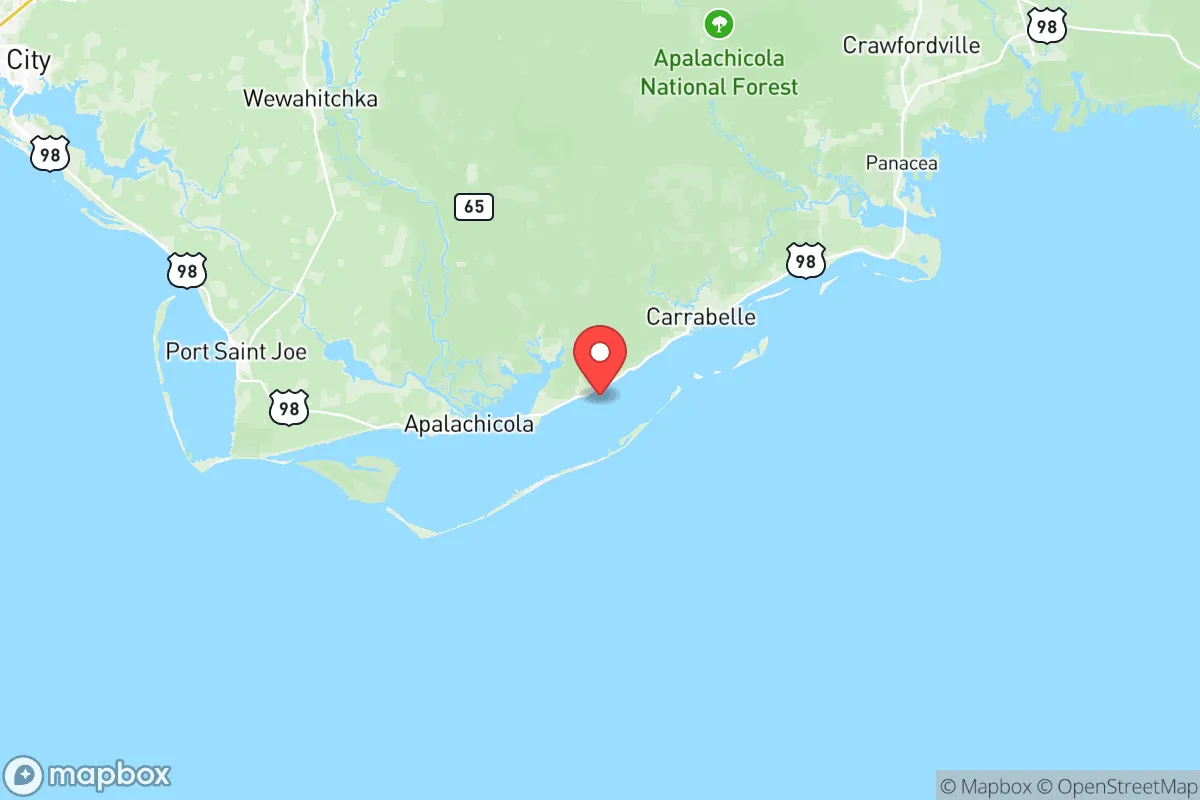
Franklin County, Florida, offers a notably high degree of personal sovereignty relative to many coastal and metropolitan areas in the state, driven by a light regulatory touch, low taxes, and a culture of self-reliance. The county’s unincorporated areas—stretching from the Apalachicola National Forest east of the county seat to the Gulf beaches near Alligator Point—present a landscape where individual autonomy is the default, not the exception. For single individuals and families seeking to minimize government interference in daily life, Franklin County provides a compelling environment, though the level of freedom varies between the small towns of Apalachicola, Carrabelle, and Eastpoint, and the more remote coastal enclaves.
Tax burden and regulatory posture: How Franklin County compares to Florida’s norms
Franklin County’s tax burden is among the lightest in Florida, a state already known for no personal income tax. The county’s millage rate for property taxes hovers around 4.5 to 5.0 mills, significantly lower than the state average of roughly 7.5 mills. This means a $200,000 home in Apalachicola or Carrabelle carries an annual property tax bill of roughly $900 to $1,000, compared to $1,500 or more in many other Florida counties. There is no county-level sales tax surcharge beyond the state’s 6% rate, keeping the total sales tax at 6%—well below the 7–8% rates common in urban areas like Tallahassee or Miami. The regulatory posture is equally light. Franklin County has no countywide zoning ordinance for unincorporated areas, meaning property owners in places like Eastpoint or St. George Island (outside the city limits) face minimal bureaucratic hurdles for building, fencing, or land use. Permitting is handled through the Florida Department of Health for septic systems and the county building department for structures, but the process is straightforward and low-cost. The county’s comprehensive plan is permissive, allowing agricultural and residential uses on most parcels without special exceptions. This combination of low taxes and minimal regulation creates an environment where individuals can keep more of their earnings and make decisions about their property with little government oversight.
Self-defense and gun law specifics: What the Second Amendment looks like in Franklin County
Florida is a shall-issue state for concealed carry permits, and Franklin County’s sheriff’s office processes applications efficiently, with typical turnaround times of 30–60 days. The county is a strong Second Amendment area; open carry is not legal in Florida (except for hunting and fishing activities), but concealed carry is widely practiced and socially accepted. In 2023, Florida enacted permitless carry (constitutional carry), allowing any law-abiding adult 21 or older to carry a concealed firearm without a permit. This law applies uniformly across Franklin County, meaning residents in Apalachicola, Carrabelle, and the rural areas can carry without prior government approval. The county has no local ordinances restricting firearm possession beyond state law, and there are no gun-free zones beyond those mandated by state statute (schools, courthouses, and government meetings). The sheriff’s office is publicly supportive of gun rights; the Franklin County Sheriff’s Office regularly hosts concealed carry classes and community safety events. For self-defense, Florida’s Stand Your Ground law applies fully in Franklin County, with no local modifications. This means individuals have no duty to retreat before using deadly force if they are in a place they have a legal right to be and reasonably believe force is necessary to prevent death or great bodily harm. The legal climate for self-defense is thus among the most favorable in the Southeast, with local law enforcement and judicial officials generally deferential to the rights of gun owners.
Self-reliance and homesteading viability: Lot sizes, zoning, and off-grid feasibility
Franklin County is one of the most homestead-friendly areas in Florida, particularly in its unincorporated regions. Minimum lot sizes in the county’s rural areas are typically 1 to 5 acres, with many parcels available for under $10,000 per acre in places like Eastpoint, Carrabelle, and the area around the Apalachicola River. There is no countywide zoning that restricts livestock, gardening, or home-based businesses, so residents can keep chickens, goats, or even cattle on their property without special permits. Off-grid living is feasible but requires attention to water and waste regulations. The Florida Department of Health requires a septic system permit for any dwelling, but composting toilets and alternative systems are allowed with proper design. Rainwater collection is legal and encouraged, with no state or county restrictions on cisterns. Solar panels are permitted without special county approval, and net metering is available through the local electric cooperative, Talquin Electric Cooperative, which serves most of the county. For those seeking complete independence, properties in the Apalachicola National Forest area (north of Carrabelle) offer deep well water and minimal neighbors. The county’s building code is based on the Florida Building Code, but enforcement is less aggressive than in urban areas; many residents build their own homes or hire local contractors without the delays common in larger jurisdictions. The main constraint is flood zone regulations in coastal areas like St. George Island and Alligator Point, where elevation requirements and flood insurance can add costs. For inland homesteading, however, Franklin County offers a rare combination of affordable land, permissive regulations, and a climate that supports year-round growing seasons.
Personal liberties: Parental rights, medical autonomy, speech, and property
Franklin County’s culture and governance strongly support parental rights and medical autonomy. The county school board, which oversees schools in Apalachicola, Carrabelle, and Eastpoint, has a conservative majority that emphasizes parental involvement in curriculum and health decisions. Florida’s Parental Rights in Education Act (the “Don’t Say Gay” law) and the state’s medical freedom laws—including prohibitions on vaccine mandates for public employees and students—apply fully in Franklin County. The county commission has not passed any local health mandates or emergency orders that restrict individual medical choices, even during the COVID-19 pandemic, when Franklin County was one of the few Florida counties to never issue a mask mandate or business closure order. Speech and assembly rights are robust; the county has no local ordinances restricting political signs, public gatherings, or expressive conduct. Property rights are strongly protected under Florida law, with Franklin County having no rent control, no inclusionary zoning, and no historic preservation overlay districts that limit what owners can do with their homes. The county’s comprehensive plan explicitly prioritizes private property rights, stating that “regulation of land use shall not be construed to diminish the value or use of private property.” This means residents can build, modify, or sell their property with minimal interference. The only notable limitation is in the Apalachicola Historic District, where the city’s historic preservation board reviews exterior changes to buildings in the downtown area—a narrow restriction that does not apply to the vast majority of the county.
Overall, Franklin County ranks among the top 10% of Florida counties for personal sovereignty, offering a rare combination of low taxes, minimal regulation, strong gun rights, and a culture that values individual autonomy. For comparison, the county is far more freedom-oriented than neighboring Leon County (Tallahassee), which has higher taxes, stricter zoning, and more government oversight. It is also more permissive than Gulf County to the west, which has more restrictive coastal development rules. For single individuals and families who prioritize self-reliance, Franklin County provides a legal and cultural environment where personal sovereignty is the baseline, not a privilege to be negotiated with local government.

* Values derived from national, state, county, city and local statistics and may differ in a specific area. Last updated: 2026-11-13T17:13:36.000Z
Narrative content on this page is AI-generated and may contain mistakes. Verify any details that matter before acting on them.
ReloMaps may earn a commission from affiliate links at no extra cost to you.

