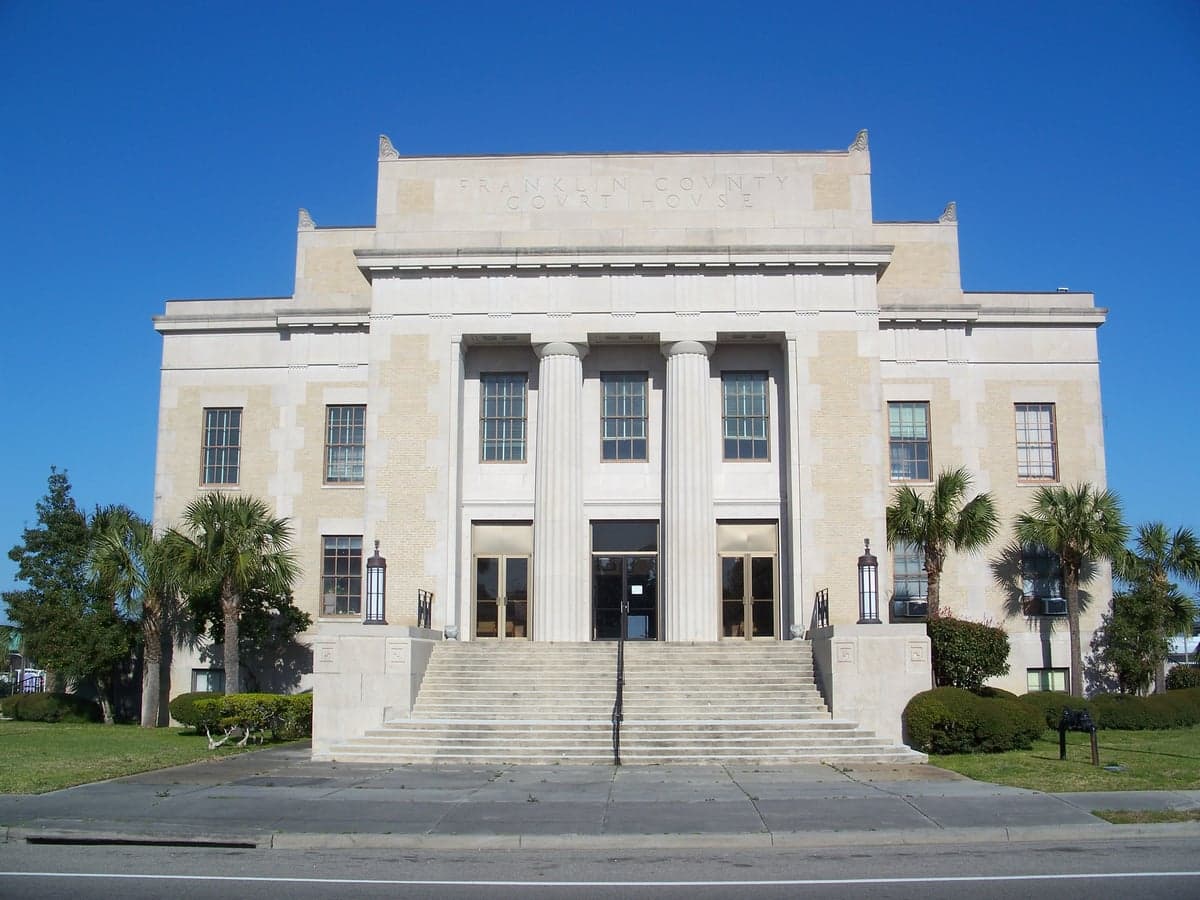
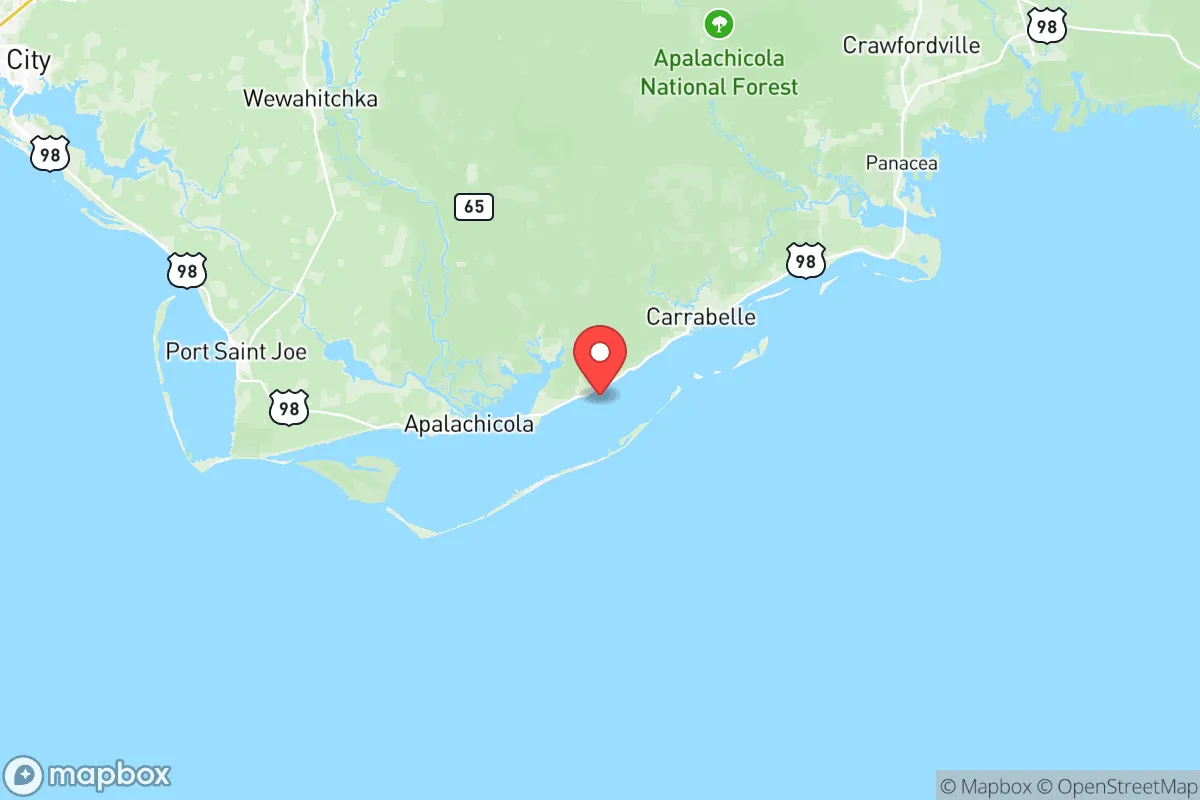
Photo: Wikipedia
Demographics of Franklin County
Affluence Level in Franklin County
A middle-class area roughly in line with national averages across income, home values, education, and employment.
People of Franklin County
Franklin County, Florida, is a sparsely populated coastal community of 12,418 residents where the population is overwhelmingly native-born and white (78.9%), with a significant Black minority (10.7%) and a small but growing Hispanic presence (5.4%). The county’s human character is defined by its deep-rooted, multi-generational families—many descended from 19th-century settlers—and a quiet, rural identity shaped by the Gulf of Mexico’s working waterfronts, the Apalachicola River’s commerce, and the slow rhythms of small-town life in places like Apalachicola, Carrabelle, and Eastpoint. With only 2.5% foreign-born residents and a college attainment rate of 25.3%, Franklin County remains one of Florida’s least diverse and most insular counties, a place where change comes slowly and where the past is still visible in the names on mailboxes and the accents on the docks.
Settlement & growth (pre-1960)
Long before European contact, the area now known as Franklin County was home to the Apalachee and later the Muscogee (Creek) peoples, who lived in scattered villages along the Apalachicola River and the coast, relying on fishing, hunting, and trade. Spanish explorers, including Hernando de Soto’s expedition in 1539, passed through the region, but no permanent Spanish settlement took root. The area remained a sparsely inhabited frontier under Spanish and then British rule, with only occasional visits by traders and missionaries.
American settlement began in earnest after the United States acquired Florida from Spain in 1821. The first wave of Anglo-American settlers—primarily from Georgia, the Carolinas, and Alabama—arrived in the 1820s and 1830s, drawn by the promise of cheap land and the economic potential of the Apalachicola River, which was then a major artery for cotton and timber shipments from the Deep South. These early settlers were mostly Scots-Irish and English yeoman farmers, and they established the county’s first permanent communities: Apalachicola, founded in 1831 as a cotton port, quickly became the region’s commercial hub, with a bustling waterfront and a population of merchants, river pilots, and enslaved laborers who built the town’s brick warehouses and Greek Revival homes. Carrabelle, founded in the 1870s, grew as a railroad terminus and fishing village, while Eastpoint and St. George Island developed as small fishing and oystering hamlets.
The Civil War and Reconstruction brought economic disruption, but the county’s economy rebounded in the late 19th century around the seafood industry—especially oysters, shrimp, and blue crabs—and the timber industry, which fed sawmills in Apalachicola and Carrabelle. The population remained overwhelmingly native-born white and Black, with the Black population concentrated in Apalachicola’s “Hill” neighborhood and in rural settlements like Lanark Village, where freedmen and their descendants worked as fishermen, laborers, and domestic workers. The early 20th century saw little new immigration; the county’s foreign-born population never exceeded 3%, and the few immigrants who arrived were mostly Greek and Italian fishermen who settled in Apalachicola and Carrabelle, adding a Mediterranean flavor to the local seafood culture. By 1950, Franklin County’s population had grown to just over 5,000, with the economy still anchored by fishing, forestry, and a small but steady tourist trade drawn to the beaches of St. George Island and the historic charm of Apalachicola.
Modern era (post-1965)
The 1965 Hart-Cellar Act had almost no direct impact on Franklin County. The county’s foreign-born population remains minuscule at 2.5%, and the few immigrants who have arrived since the 1970s are primarily Hispanic—mostly Mexican and Central American laborers who came to work in the seafood industry, construction, and agriculture. These workers have settled mainly in Apalachicola and Carrabelle, where they form a small but visible community, though they have not created the kind of concentrated ethnic enclaves seen in larger Florida cities. The Hispanic share of the population, now 5.4%, has grown from near zero in 1980, driven by both immigration and higher birth rates among Hispanic families.
The most significant demographic shift in the modern era has been domestic, not international. Beginning in the 1970s and accelerating after 2000, Franklin County has attracted a steady stream of retirees and second-home buyers from the Northeast, Midwest, and other parts of Florida, drawn by the county’s relatively low cost of living, its unspoiled barrier islands, and its reputation as a quieter, more authentic alternative to the crowded Gulf Coast resorts. These newcomers—overwhelmingly white, older, and more affluent than the native population—have concentrated on St. George Island, which has transformed from a sleepy fishing village into a vacation-home and retirement destination, and in gated subdivisions around Alligator Point and Bald Point. At the same time, the county’s Black population has declined as a share of the total, from roughly 25% in 1970 to 10.7% today, as younger Black residents have left for better economic opportunities in Tallahassee, Atlanta, and other urban centers. The Asian population remains negligible at 0.2%, and the Indian-subcontinent population is statistically invisible at 0.1%.
Suburbanization has been limited by the county’s geography—bounded by the Gulf, the Apalachicola River, and the Apalachicola National Forest—but the unincorporated area around Eastpoint has seen modest residential growth, with new single-family homes and mobile home parks catering to working-class families employed in the seafood and service industries. The county’s college attainment rate of 25.3% is below the state average, reflecting the blue-collar character of the local economy and the out-migration of educated young adults.
The future
Franklin County’s population is projected to grow slowly, if at all, over the next 10 to 20 years. The county’s remote location, limited job base, and vulnerability to hurricanes will continue to constrain growth, while the aging of the baby-boom generation on St. George Island and Alligator Point will likely lead to a gradual increase in the median age. The Hispanic share of the population is expected to rise modestly, reaching perhaps 8-10% by 2040, as younger Hispanic families have children and as a small number of new immigrants continue to arrive for seafood and construction work. The Black population share is likely to stabilize or decline slightly, as out-migration continues and as the county’s overall population becomes whiter due to retiree in-migration. The county will remain one of Florida’s least diverse, with a cultural identity rooted in its Southern, coastal, working-class heritage—a place where the rhythms of the tide and the oyster harvest still matter more than the rhythms of the global economy.
For someone moving in now, Franklin County offers a deeply traditional, slow-paced, and overwhelmingly white and native-born community where change is gradual and where the past is still present in the architecture of Apalachicola, the working docks of Carrabelle, and the quiet beaches of St. George Island. It is not a place of rapid demographic transformation or cultural mixing, but a place where families have lived for generations and where newcomers are expected to adapt to the local way of life rather than reshape it.

* Values derived from national, state, county, city and local statistics and may differ in a specific area. Last updated: 2026-11-13T17:13:36.000Z
Narrative content on this page is AI-generated and may contain mistakes. Verify any details that matter before acting on them.
ReloMaps may earn a commission from affiliate links at no extra cost to you.

