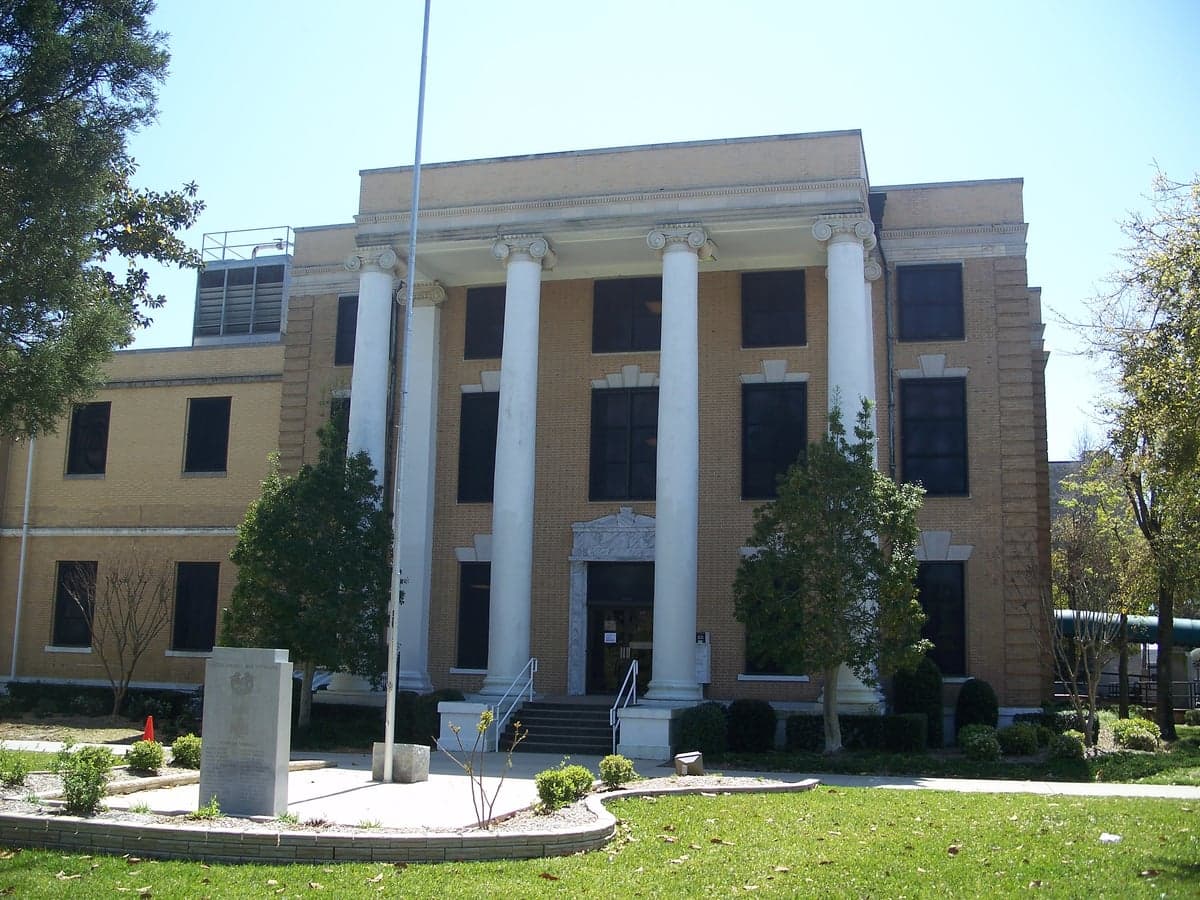
Photo: Wikipedia
Political ClimatePolitical Climate in Bay County
Showing district-level results — no local-only data available.
Local Political AnalysisPolitical Analysis of Bay County
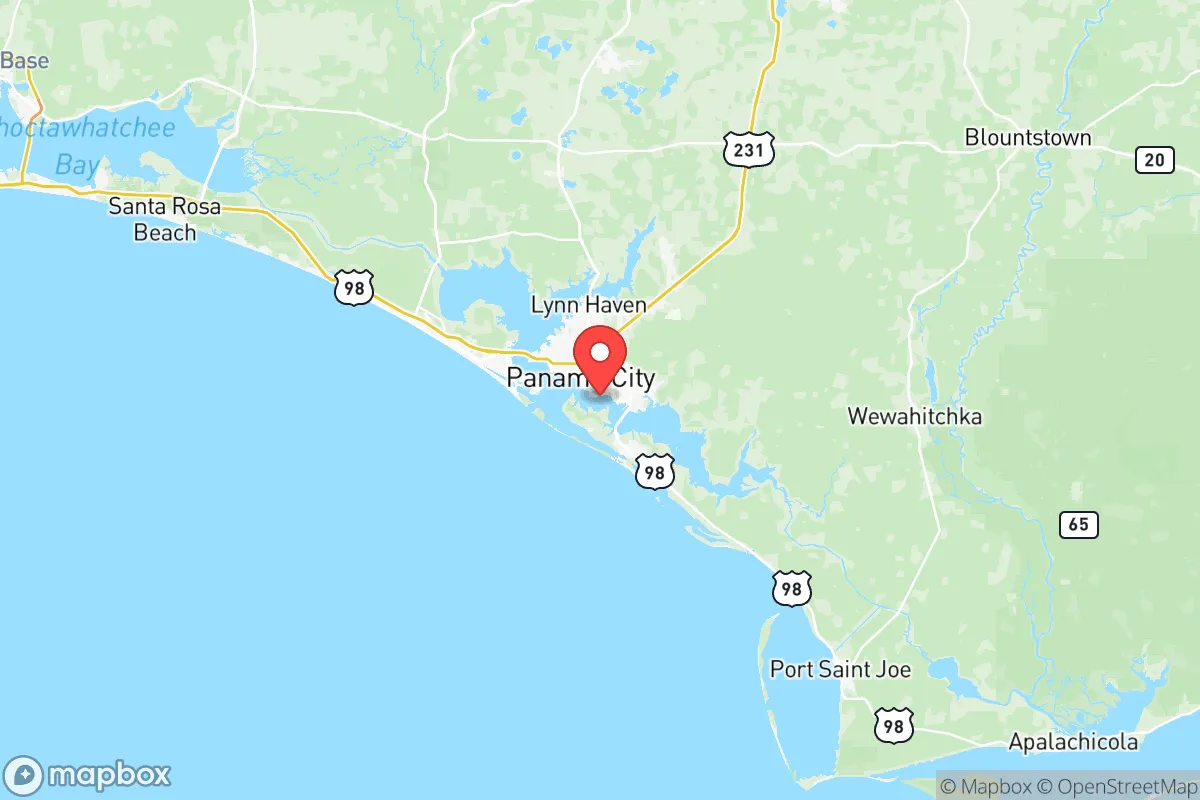
I've lived here in Bay County for over two decades, and I can tell you this area has always been a solid Republican stronghold. The Cook PVI sits at R+8, which is noticeably redder than Florida's statewide R+5. That gap has actually widened in recent cycles as we've held the line while some other parts of the state have drifted. The big shift I've witnessed isn't ideological—it's geographic. You still see deep red precincts in places like Lynn Haven, Callaway, and most of Panama City Beach, where folks are proud of their gun rights, low taxes, and limited government interference. Meanwhile, a few pockets around downtown Panama City and the St. Andrews area have started to trend a bit more purple, especially among younger transplants. The swingiest precincts are usually around the military base—Tyndall Air Force Base households tend to vote moderate, more focused on national security than culture war issues.
How it compares
Compared to Florida as a whole, Bay County is roughly three points more Republican on the PVI scale, but the real difference is in the voting patterns. Statewide, you've got deep-blue enclaves like Miami-Dade and Broward pulling the needle left. Here, we don't have any Democratic strongholds that come close to that. The closest thing to a blue area is a couple of precincts near downtown Panama City and some waterfront neighborhoods around St. Andrews Bay, but those are small and don't move the county needle. The biggest contrast is cultural: we're less transient than a lot of Florida, so our politics stay grounded in traditional conservation and personal responsibility. That's why when you see statewide shifts toward progressive policies on education or property rights, we tend to push back harder and more consistently.
What this means for residents
For the people who live here, the political climate means less government overreach in daily life. County commission meetings are still dominated by debates over beach access and building codes, not social engineering. School board races are actually competitive, but they usually hinge on parental rights and curriculum transparency, not radical DEI initiatives. Property taxes stay reasonable, and there's no appetite for local income taxes or rent control schemes. The downside is that some state-level policy changes creep in—like recent whole-home insurance regulations that have hammered the Panhandle harder than South Florida. But locally, the culture of self-reliance is strong. If you're the type who wants to be left alone to run your business, raise your family, and keep your firearms without someone in Tallahassee or Washington telling you how, this is still a good place to be.
One distinction that stands out is how military-connected folks mix with retirees and locals—it creates a politics that's patriotic first, partisan second. You see it in things like local support for law enforcement and the strong opposition any time there's talk of defunding the police. The coastal communities, especially Mexico Beach and the unincorporated areas west of Panama City Beach, are especially resistant to new regulations that might restrict property rights or recreational use of the Gulf. That said, there's a growing unease about newcomers bringing more progressive voting habits, especially in the more tourist-heavy zones. The trajectory's still conservative, but you have to keep an eye on it—especially as the state legislature continues to push bigger government at the local level under the guise of "home rule" conflicts. For now, Bay County remains a place where your vote really counts against the blue tide, and most residents plan to keep it that way.

State Political ClimatePolitical Climate in Florida
State Political AnalysisPolitical Environment in the State
Florida is a solidly Republican state with a Cook PVI of R+5, but don't let that single number fool you — it's a battleground of shifting coalitions, not a monolith. Over the last 10-20 years, the state has moved from a classic swing state (think 2000 recount chaos) to a reliably red-leaning powerhouse, driven by massive in-migration from blue states and a growing conservative-leaning Hispanic population, especially in the I-4 corridor and Southwest Florida. The dominant coalition is a mix of traditional Southern conservatives, retired Midwesterners, and Cuban/Venezuelan exiles who vote on freedom and economic opportunity, not identity politics.
Urban vs. rural divide
The political map of Florida is a tale of three regions. The deep-blue strongholds are the urban cores of Miami-Dade County (though it's trending right), Orlando (Orange County), and Tampa (Hillsborough County), where progressive activists and union households dominate. But the real story is the red wave in the suburbs and exurbs: Pasco County north of Tampa flipped hard red in 2020 and hasn't looked back, while Lee County (Fort Myers) and Collier County (Naples) are among the most Republican counties in the nation. The rural Panhandle — places like Santa Rosa County and Okaloosa County — is deep red, with military families and agricultural voters. The I-4 corridor from Tampa to Daytona Beach is the classic swing zone, but it's been trending redder as conservative transplants from New York and California settle in places like The Villages and Lakeland. The biggest shift? Miami-Dade went from a 30-point Democratic margin in 2012 to a single-digit margin in 2024, driven by Cuban and Venezuelan voters rejecting socialist rhetoric.
Policy environment
Florida's policy environment is a conservative dream compared to states like California or New York. There's no state income tax — a huge draw for high-earners and retirees. The regulatory posture is business-friendly, with a right-to-work law and minimal red tape for construction and small businesses. On education, Governor Ron DeSantis signed the Parental Rights in Education Act (HB 1557, 2022), which bans classroom instruction on sexual orientation and gender identity in K-3, and the Stop WOKE Act (HB 7, 2022), which restricts critical race theory in schools and workplace training. School choice is robust, with the Family Empowerment Scholarship program giving thousands of students vouchers for private or religious schools. Healthcare is mixed: Florida did not expand Medicaid under Obamacare, keeping costs lower for taxpayers, but the state has a high uninsured rate. Election laws tightened after 2020 with SB 90 (2021), which limited drop boxes, required ID for mail ballots, and banned ballot harvesting — measures that survived court challenges. Property taxes are moderate, but homeowners insurance is a crisis due to hurricane risk and lawsuit abuse, with rates among the highest in the nation.
Trajectory & freedom
Florida is becoming more free in many dimensions, especially compared to its Northeastern and West Coast peers. The Constitutional Carry law (HB 543, 2023) allows permitless carry of firearms, a major expansion of Second Amendment rights. The Live Local Act (2023) preempts local zoning to boost affordable housing, a property rights win. On medical freedom, Florida banned vaccine passports (SB 2006, 2021) and prohibited mask mandates in schools (2021 executive orders). The Parental Rights in Education Act and Stop WOKE Act are seen as bulwarks against government overreach into family and classroom matters. However, there are concerning trends: the Disney special district repeal (2022) was a targeted retaliation against a private company's speech, which some see as government overreach. Also, the state's anti-riot law (HB 1, 2021) enhanced penalties for protest-related crimes, which critics say chills free assembly. Overall, the trajectory is toward more personal liberty on guns, education, and taxes, but with a heavy hand against perceived corporate or activist overreach.
Civil unrest & political movements
Florida has seen its share of political flashpoints. The 2020 Black Lives Matter protests in Miami, Tampa, and Orlando led to curfews and property damage, prompting the aforementioned anti-riot law. The Moms for Liberty movement, founded in Brevard County in 2021, has become a national force for parental rights in schools, with chapters across the state. Immigration politics are hot: Governor DeSantis flew migrants to Martha's Vineyard in 2022, and the state passed SB 1718 (2023), which requires E-Verify for employers, bans local sanctuary policies, and makes it a felony to transport undocumented immigrants into the state. Election integrity remains a flashpoint — the 2020 and 2022 cycles saw intense scrutiny of mail ballots and drop boxes, with the state's new election police force (Office of Election Crimes and Security) making arrests for double voting. You'll see "Don't Tread on Me" flags and "Keep Florida Free" signs in equal measure, and the vibe is that this is a state that takes its politics personally.
Projection
Over the next 5-10 years, Florida will likely get redder in the aggregate, but with growing internal friction. The in-migration from blue states — roughly 1,000 people a day — is disproportionately conservative-leaning, as people flee high taxes and crime. The Hispanic vote, especially in Miami-Dade and Central Florida, will continue trending right, making the state a solid Republican stronghold for presidential elections. However, the progressive enclaves in Orlando, Tampa, and Tallahassee will push back harder, and the state's growing population of young, diverse renters in cities could shift the suburbs. Expect more battles over school curriculum, property insurance reform, and water rights (the Everglades and springs). The biggest wildcard is climate change: rising sea levels and stronger hurricanes could drive insurance costs even higher, potentially pushing out retirees and shifting the political calculus. For a new resident, expect a state that is fiercely independent, with a government that actively fights federal overreach, but also one where local politics can vary wildly — a Naples homeowner and a Gainesville renter live in different political worlds.
Bottom line for a new resident: If you're moving to Florida for freedom from high taxes, government mandates, and progressive social engineering, you'll find a state that largely delivers — but it's not a libertarian paradise. The government is activist in its own way, especially on immigration and education. Pick your county carefully: St. Johns County (St. Augustine) is a conservative haven with top schools, while Alachua County (Gainesville) is a blue island. The state's trajectory is positive for those who value personal responsibility and limited government, but expect the culture wars to remain front and center. You're not escaping politics — you're choosing a different flavor of it.
* Values derived from national, state, county, city and local statistics and may differ in a specific area. Last updated: 2026-06-05T15:20:39.000Z
Narrative content on this page is AI-generated and may contain mistakes. Verify any details that matter before acting on them.
ReloMaps may earn a commission from affiliate links at no extra cost to you.

