Photo: Wikipedia
Demographics of Bay County
Affluence Level in Bay County
A middle-class area roughly in line with national averages across income, home values, education, and employment.
People of Bay County
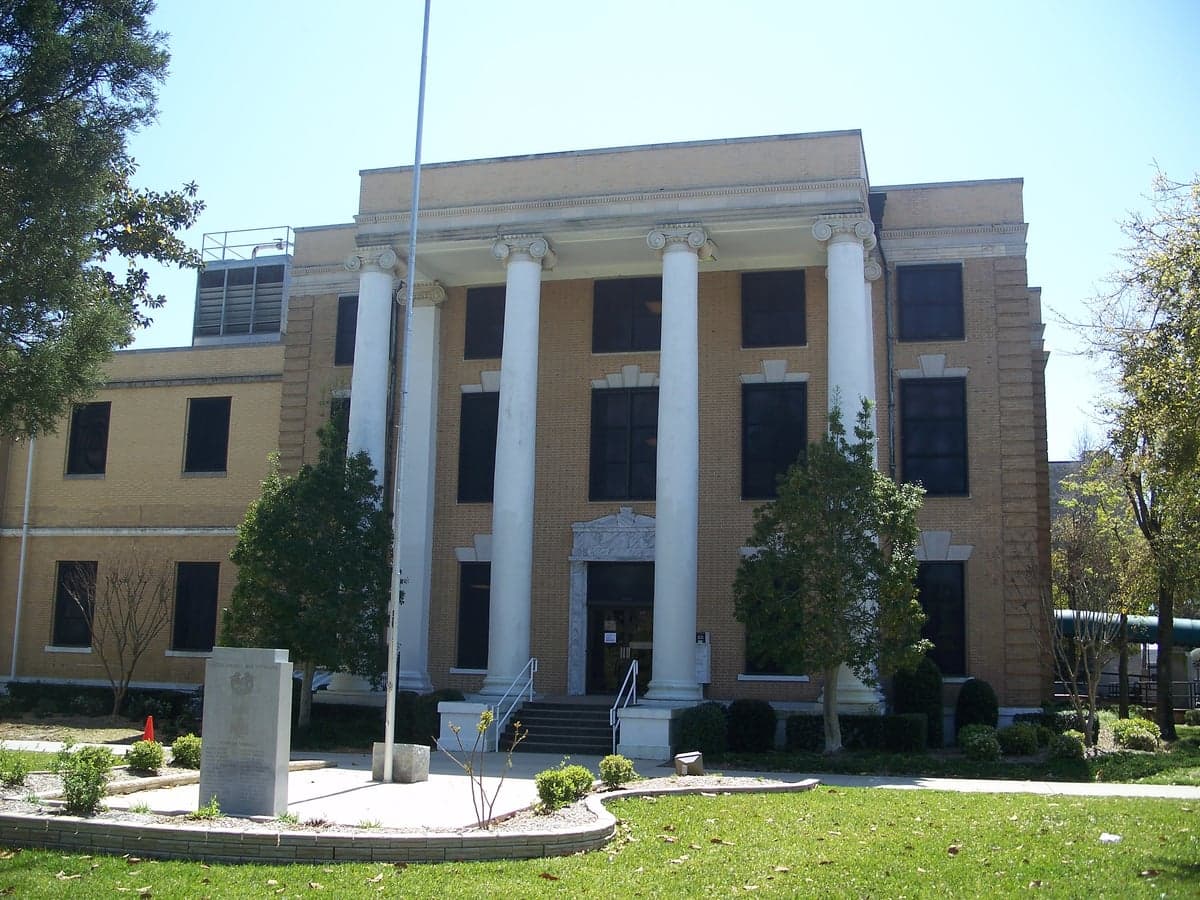
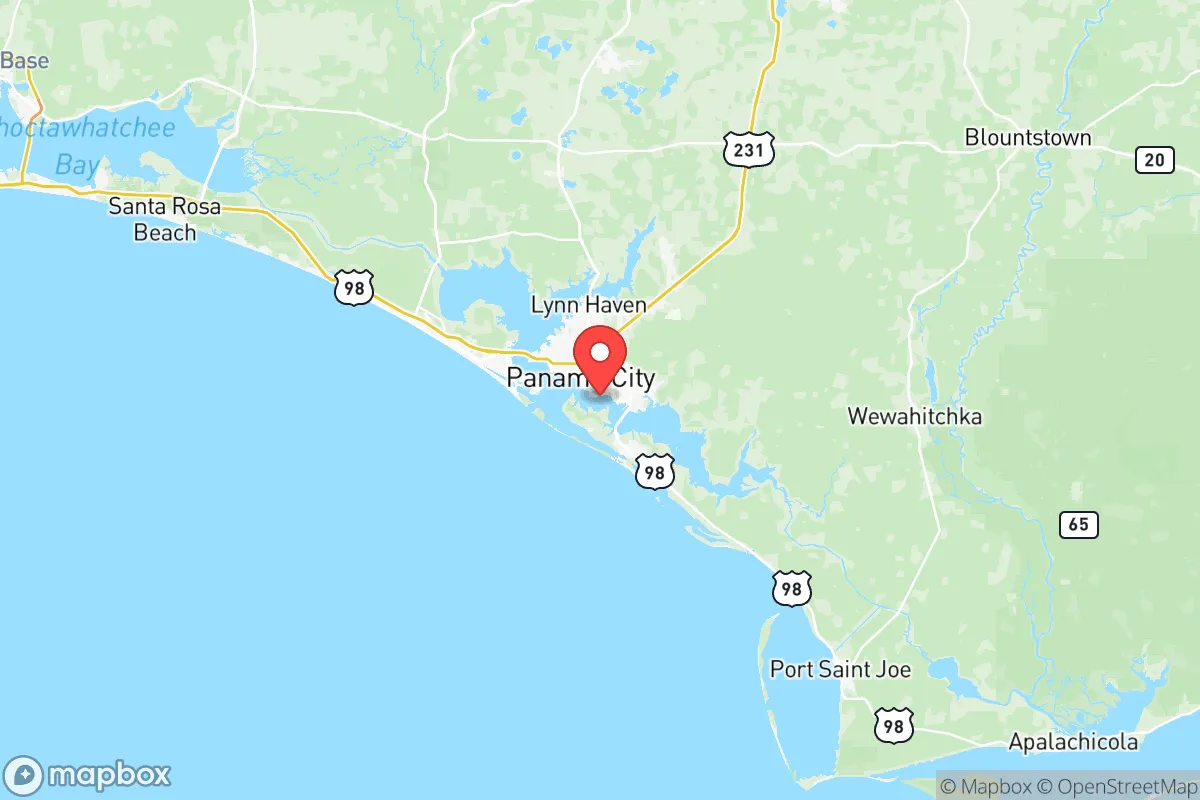
Bay County, Florida, is home to 181,368 residents who form a predominantly white (73.7%), native-born population with a distinctive military and tourism-driven character centered on Panama City and Panama City Beach. The county’s people are notably less diverse than Florida as a whole, with a foreign-born share of just 4.0% and a Hispanic population of 8.4%, reflecting a community shaped more by domestic migration from the U.S. Southeast and Midwest than by international immigration. The population is moderately educated, with 28.0% holding a college degree, and is concentrated along the Gulf Coast in a string of beach towns and inland suburbs that have grown rapidly since the mid-20th century.
Settlement & growth (pre-1960)
Long before European contact, the area now known as Bay County was inhabited by the Apalachee and later the Creek peoples, who used the coast for fishing and trade. Spanish explorers charted the coastline in the 16th century, but no permanent European settlement took hold until the 19th century. The region remained sparsely populated frontier through the Spanish and British periods, with only scattered Native American villages and a few seasonal fishing camps.
American settlement began in earnest after the United States acquired Florida from Spain in 1821. The first wave of Anglo-American settlers, primarily Scots-Irish and English families from Georgia and the Carolinas, arrived in the 1830s and 1840s, drawn by cheap land and the promise of timber and turpentine industries. They established small farming and logging communities along the coast, with the earliest permanent settlement at St. Andrews Bay (now part of Panama City) emerging as a shipping point for lumber. The county was officially created in 1913 from parts of Washington and Calhoun counties, with Panama City designated as the county seat.
The defining event for Bay County’s population was the arrival of the Atlanta and St. Andrews Bay Railroad in 1908, which connected the remote coast to national markets. This triggered a land boom and the founding of Panama City as a planned resort and industrial town. The 1920s saw an influx of Midwesterners and Northeasterners, many of them middle-class families seeking warm winters and investment opportunities in the nascent tourism industry. The construction of the Panama City-Bay County Airport in the 1930s and the establishment of Tyndall Air Force Base in 1941 transformed the county’s demographics permanently. Tyndall AFB, located southeast of Panama City, brought thousands of military personnel and their families from across the United States, creating a transient but economically vital population that remains a cornerstone of the county’s identity.
During the post-World War II boom, Bay County experienced its first major suburban expansion. Lynn Haven, founded in 1910 as a temperance colony, grew rapidly as a bedroom community for Panama City and Tyndall personnel. Callaway and Springfield developed as working-class suburbs, absorbing families from the rural Deep South who moved to the coast for jobs in construction, fishing, and the expanding tourist economy. By 1960, the county’s population had reached roughly 60,000, with a population that was overwhelmingly white, native-born, and Southern in character.
Modern era (post-1965)
The 1965 Hart-Cellar Act had a limited direct impact on Bay County compared to major metropolitan areas, as the county’s foreign-born population remains just 4.0% today. However, the post-1965 era reshaped the county through domestic migration patterns. The completion of Interstate 10 in the 1970s and the expansion of U.S. Highway 98 made Bay County more accessible to retirees and families from the Rust Belt and Midwest. Panama City Beach, which had been a quiet fishing village, exploded into a major spring break and family vacation destination, drawing seasonal workers and permanent residents from across the country.
The 1980s and 1990s saw significant in-migration from the Northeast and Midwest, particularly from Ohio, Michigan, and Indiana. These newcomers were predominantly white, middle-class families and retirees seeking lower taxes, warmer weather, and a slower pace of life. They concentrated in newer subdivisions in Panama City Beach and along the scenic Highway 30A corridor, as well as in master-planned communities like Bayou George and Southport. This wave diluted the county’s traditional Southern identity somewhat, introducing a more culturally Midwestern influence in churches, restaurants, and civic organizations.
Bay County’s Black population, at 9.8%, is concentrated in historic neighborhoods of Panama City, particularly the Glenwood and Millville areas, where African American families have lived since the early 20th century, working in the timber and fishing industries. The Hispanic population, at 8.4%, has grown steadily since the 1990s, driven by Mexican and Central American immigrants working in construction, hospitality, and agriculture. They are most visible in Panama City and Panama City Beach, where seasonal labor demand is highest. East and Southeast Asian communities (1.5%) are small but present, with Filipino families connected to Tyndall Air Force Base and Vietnamese families in the seafood industry. The Indian subcontinent population (0.4%) is tiny and largely professional, associated with the healthcare and engineering sectors.
The 2018 Hurricane Michael disaster caused a temporary population decline of roughly 10-15%, as many residents relocated to other parts of Florida or the Southeast. However, the rebuilding effort, fueled by federal disaster funds and insurance payouts, has spurred a construction boom that has attracted new workers from across the South and Latin America. The county’s population has since recovered and is now growing again, though at a slower pace than pre-storm projections.
The future
Bay County’s population is likely to continue growing modestly, driven by domestic migration from the Midwest and Northeast rather than international immigration. The foreign-born share, currently 4.0%, may rise slowly as the construction and hospitality sectors attract more Hispanic and Central American workers, but the county is unlikely to become a major immigrant destination. The white share (73.7%) is expected to decline gradually as the population ages and younger, more diverse families move in from other parts of Florida.
The county is not tribalizing into distinct ethnic enclaves in the way that larger metropolitan areas are. Instead, the population is relatively homogenized, with most groups dispersing across the county rather than forming concentrated neighborhoods. The main cultural divide is between the long-time Southern residents and the newer Midwestern transplants, a tension that is slowly resolving as the two groups intermarry and share civic life. The military presence at Tyndall AFB, which is being rebuilt and expanded after Hurricane Michael, will continue to inject a transient, nationally diverse population into the county, preventing it from becoming insular.
Over the next 10-20 years, Bay County will likely become slightly more diverse, slightly more educated, and slightly more politically moderate, but it will remain a predominantly white, native-born, conservative-leaning community. The biggest demographic wildcard is climate change and hurricane risk, which could slow or reverse growth if major storms become more frequent.
For someone moving in now, Bay County offers a community that is still recognizably Southern and traditional, with a strong military and tourism economy, a low cost of living, and a population that is welcoming to newcomers but not rapidly transforming. It is a place where the past is still visible in the present, and where the future looks more like a continuation than a revolution.

* Values derived from national, state, county, city and local statistics and may differ in a specific area. Last updated: 2026-06-05T15:20:39.000Z
Narrative content on this page is AI-generated and may contain mistakes. Verify any details that matter before acting on them.
ReloMaps may earn a commission from affiliate links at no extra cost to you.

