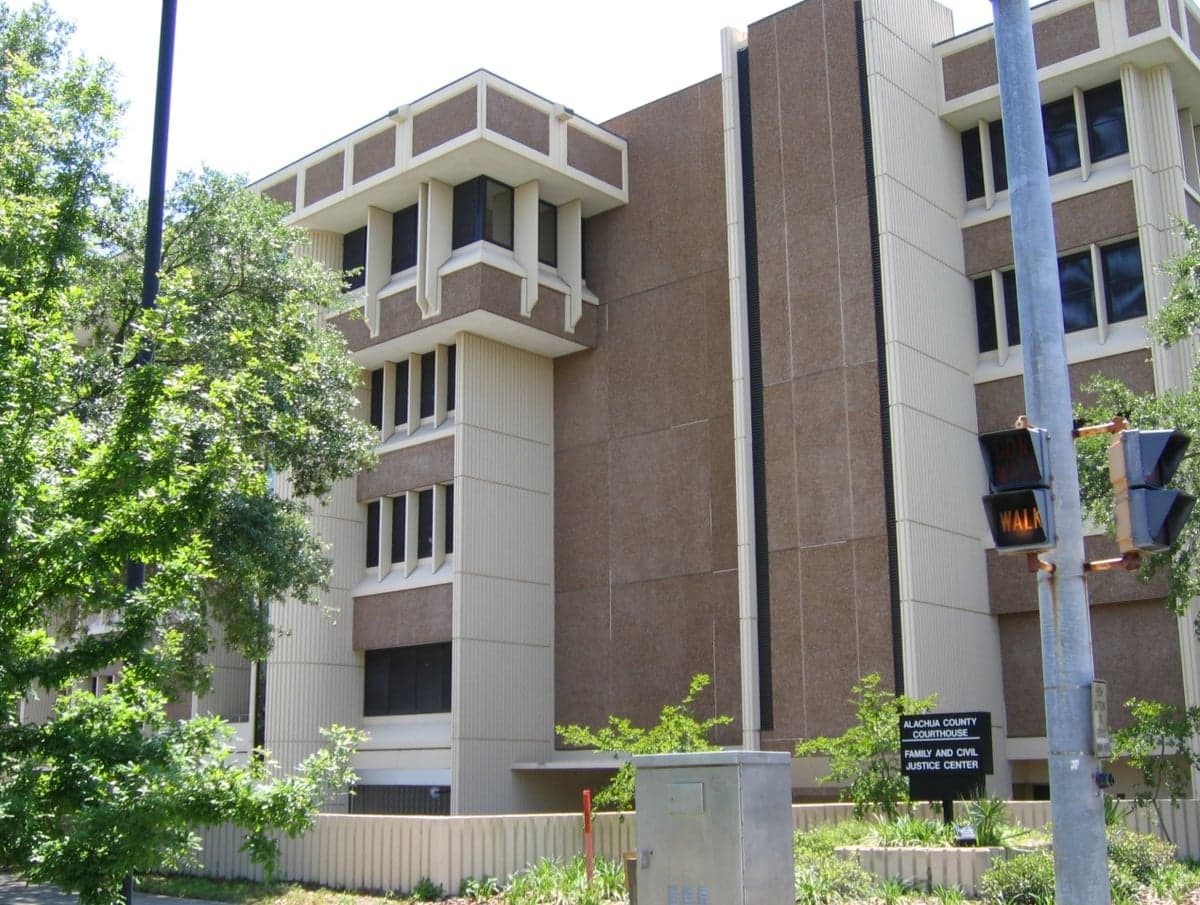
Photo: Wikipedia
Political ClimatePolitical Climate in Alachua County
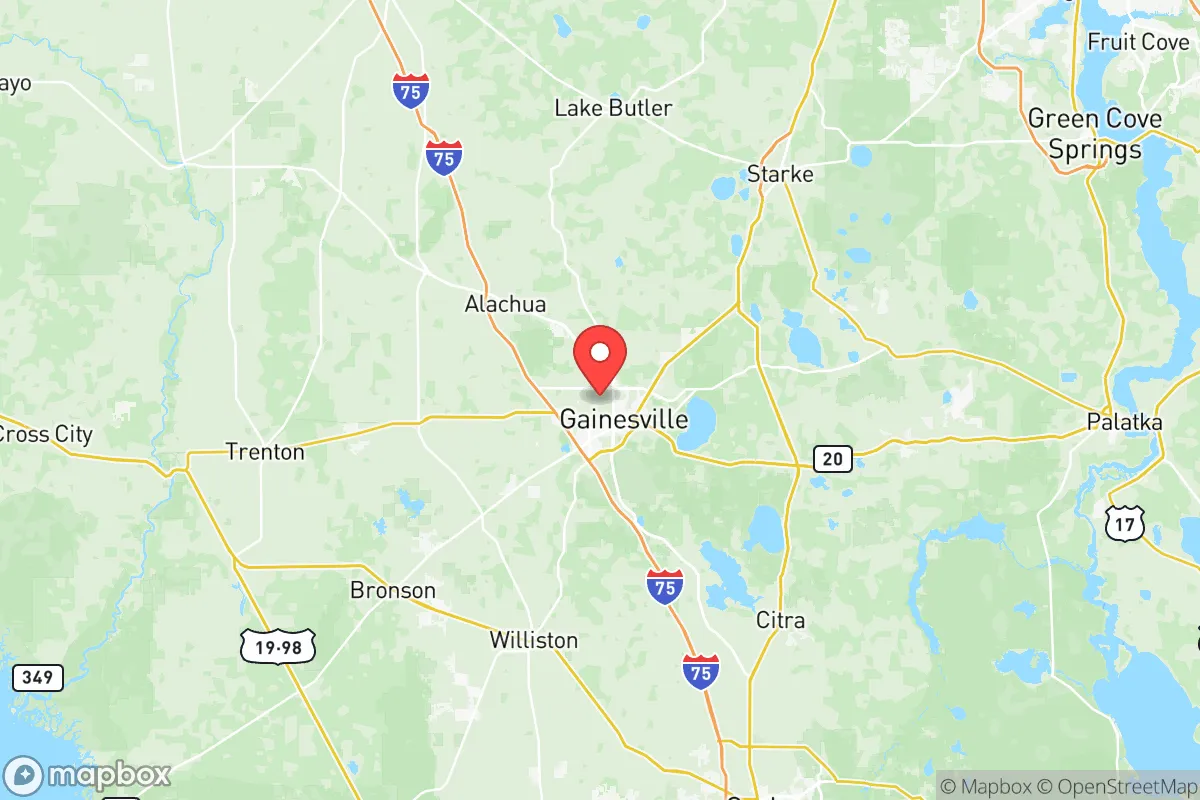
Showing district-level results — no local-only data available.
Local Political AnalysisPolitical Analysis of Alachua County
Alachua County is a deep blue island in a reddening state, consistently voting Democratic in presidential elections by double digits even as Florida as a whole has shifted right. The county’s Cook Partisan Voting Index (PVI) of D+10 stands in stark contrast to the state’s R+5 rating, making it one of the most reliably liberal areas in the South. This isn’t a recent fluke—Gainesville and its surrounding communities have voted Democratic in every presidential election since 1992, with margins often exceeding 15 points. The trajectory is actually widening: in 2020, Joe Biden won Alachua County by 20 points, while Donald Trump carried Florida by 3.4 points, a gap that has only grown as the state’s rural and suburban areas have swung harder right.
How it compares
The political split within Alachua County is stark and geographic. Gainesville itself, home to the University of Florida, is the Democratic stronghold—precincts near campus and downtown routinely vote 70-80% Democratic. The city’s student population and progressive faculty create a liberal ecosystem that feels more like Austin or Chapel Hill than the rest of North Florida. In contrast, Newberry and Alachua (the town, not the county) lean heavily Republican, often voting 60-65% for GOP candidates. The swing precincts are in the suburban unincorporated areas around Jonesville and Haile Plantation, where moderate families and professionals have made races competitive—these areas voted for Biden by only 3-5 points in 2020. Statewide, Florida’s R+5 PVI reflects a broad coalition of ex-urban retirees, Cuban-American voters in Miami-Dade, and rural Panhandle conservatives, a coalition that has no real parallel inside Alachua County’s borders.
What this means for residents
For liberal residents, Alachua County offers a rare sanctuary in Florida: local policies on LGBTQ+ rights, environmental protections, and affordable housing initiatives are far more progressive than state law allows. The county commission has passed resolutions opposing state preemption on gun laws and immigration enforcement, though these are largely symbolic. Conservative residents, particularly in Newberry and the rural eastern parts of the county, often feel politically isolated but still wield influence in school board races and local zoning decisions. The practical reality is that state-level policies—from abortion restrictions to book bans—apply uniformly, so the county’s blue lean doesn’t shield anyone from Florida’s conservative legislative agenda. What it does affect is the local culture: you’ll see more Pride flags than Trump signs in Gainesville, and the opposite in the outlying towns.
Culturally, the divide is visible in daily life. Gainesville’s downtown is filled with co-ops, vegan restaurants, and activist hubs, while Newberry’s main street features gun shops and barbecue joints. The county’s school system is a frequent battleground, with progressive school board members in Gainesville clashing with state-appointed conservative boards over curriculum and library books. Property taxes are relatively low compared to other Florida counties, but the local sales tax (7.5%) funds transit and environmental projects that rural residents often oppose. For newcomers, the key takeaway is simple: if you’re liberal, you’ll find your people in Gainesville; if you’re conservative, you’ll find more like-minded neighbors in the western towns. Either way, you’re living in a place that votes blue but is governed by a red state—a tension that defines daily life here.

State Political ClimatePolitical Climate in Florida
State Political AnalysisPolitical Environment in the State
Florida is a Republican-leaning state with a Cook PVI of R+5, but calling it solidly red misses the mark — it’s more of a purple state that’s been trending redder over the past decade, driven by a massive influx of conservative-leaning transplants from the Northeast and Midwest. The dominant coalition is a mix of Cuban-American and other Hispanic voters in South Florida, retirees from the Rust Belt, and rural conservatives across the Panhandle and interior, while Democrats hold a shrinking but still potent base in the urban cores of Miami-Dade, Broward, and Orange counties. Over the last 20 years, the state has shifted from a true swing state that decided the 2000 election to one where Republicans now hold a supermajority in the legislature and the governor’s mansion, with no signs of that momentum reversing.
Urban vs. rural divide
The political map of Florida is a study in stark contrasts. The Democratic strongholds are the dense, diverse urban corridors: Miami-Dade County, once a reliably Democratic bastion, has been shifting right — Trump won it in 2020 by a narrow margin after Hillary Clinton carried it by 19 points in 2016, a swing driven largely by Cuban-American and Venezuelan voters in Hialeah and Coral Gables who respond to anti-socialist messaging. Broward County (Fort Lauderdale) and Orange County (Orlando) remain deep blue, but their margins aren’t growing fast enough to offset the red wave elsewhere. The Republican base is anchored in the Panhandle — places like Panama City and Pensacola vote 70%+ Republican — and the sprawling suburban and exurban counties around Tampa, Jacksonville, and Orlando. Hillsborough County (Tampa) is a bellwether that has trended red in recent cycles, while Duval County (Jacksonville) flipped from blue to red in 2020 and has stayed there. The I-4 corridor, stretching from Tampa to Daytona Beach, remains the state’s most competitive battleground, but even there, the GOP has made steady gains among working-class white voters and some Hispanic communities.
Policy environment
Florida’s policy environment is defined by a low-tax, low-regulation posture that appeals strongly to conservative relocators. There is no state income tax, which is a major draw for high-earners and retirees. Property taxes are moderate, and the state’s homestead exemption offers significant relief for primary residences. The regulatory climate is business-friendly, with minimal red tape for new construction and professional licensing. Education policy has shifted sharply right under Governor Ron DeSantis: the state has expanded school choice through universal Education Savings Accounts (ESAs) and voucher programs, and it has restricted classroom instruction on sexual orientation and gender identity through the Parental Rights in Education Act (HB 1557, often called the “Don’t Say Gay” law). Healthcare policy leans toward market-based solutions — Florida did not expand Medicaid under the Affordable Care Act, and the state has some of the loosest telemedicine and direct-primary-care laws in the country. Election laws have been tightened: the state requires voter ID, limits drop boxes, and has strict signature-matching rules, which critics say suppress turnout but supporters argue ensure integrity.
Recent policy direction
The last five years have seen Florida pass a slate of legislation that signals a clear direction on personal liberties and government power. On gun rights, Florida is a “shall-issue” state for concealed carry and in 2023 passed permitless carry (HB 543), allowing most adults to carry a concealed firearm without a license. On parental and education rights, the state has banned critical race theory in schools and passed the Stop WOKE Act (HB 7), which restricts workplace and school training on race and sex. Speech protections are strong — the state has preempted local “hate speech” ordinances and sued social media platforms over content moderation. On medical and bodily autonomy, Florida banned abortion after six weeks in 2023 (HB 7, the Heartbeat Protection Act), with exceptions for rape, incest, and the life of the mother, and it has restricted gender-affirming care for minors. Property rights are robust: the state has strong eminent domain protections and a low property tax cap under the Save Our Homes amendment. Tax policy remains static — no income tax, and sales tax is capped at 6% (with local options up to 2%). Voting access is restricted relative to blue states: the 2021 election integrity law (SB 90) limited drop boxes, tightened signature verification, and banned third-party ballot collection, though early voting and mail-in voting remain widely available.
Civil unrest & political movements
Florida has seen its share of political flashpoints, but large-scale civil unrest is rare compared to states like Oregon or Minnesota. The most visible movements are organized around immigration and election integrity. Governor DeSantis has made national headlines for flying migrants to Martha’s Vineyard and for signing the state’s tough anti-sanctuary-city law (SB 168), which requires local law enforcement to cooperate with ICE. There is no sanctuary city in Florida — every county complies with detainer requests. Election integrity remains a hot-button issue: the 2020 recount in Broward and Palm Beach counties was chaotic, and the state has since purged voter rolls and prosecuted a handful of cases of alleged double voting. On the left, groups like the Florida Rights Restoration Coalition continue to push for felon voting rights after the 2018 Amendment 4 was gutted by the legislature. On the right, the Florida chapter of Moms for Liberty has been highly active in school board races and library book challenges. A new resident would notice the absence of visible homelessness encampments in most cities — the state has aggressively cleared them — and a general sense of order in public spaces that contrasts with some coastal blue states.
Projection
Over the next 5-10 years, Florida is likely to become more Republican, not less, driven by continued in-migration from high-tax, high-crime states like New York, Illinois, and California. The demographic trends favor the GOP: the new arrivals tend to be older, wealthier, and more conservative than the average Floridian, and the state’s Hispanic population — particularly Cuban, Venezuelan, and Nicaraguan communities — leans right on economic and foreign policy issues. The Democratic base in Miami-Dade is eroding, and the party has struggled to rebuild in the fast-growing suburbs of Tampa and Jacksonville. The biggest wild card is climate change: rising sea levels and stronger hurricanes could eventually slow growth in coastal areas like Miami Beach and Fort Lauderdale, but for now, development continues apace inland, especially in places like Ocala and Lakeland. A relocator moving in now should expect a state that continues to lower taxes, expand school choice, and restrict abortion and transgender rights, with a political culture that rewards assertive conservative leadership and punishes moderation.
For a new resident, the bottom line is this: Florida offers a stable, low-tax, business-friendly environment where conservative values are reflected in state law and local governance. Liberal residents will find their views increasingly marginalized in state policy, especially on education, abortion, and gun rights, but they will still have strong representation in Miami-Dade, Broward, and Orange counties. The practical takeaway is that Florida is a state where the government is generally hands-off on economic matters and very hands-on on social and cultural issues — and that balance is unlikely to shift anytime soon.
* Values derived from national, state, county, city and local statistics and may differ in a specific area. Last updated: 2026-07-12T07:58:14.000Z
Narrative content on this page is AI-generated and may contain mistakes. Verify any details that matter before acting on them.
ReloMaps may earn a commission from affiliate links at no extra cost to you.

