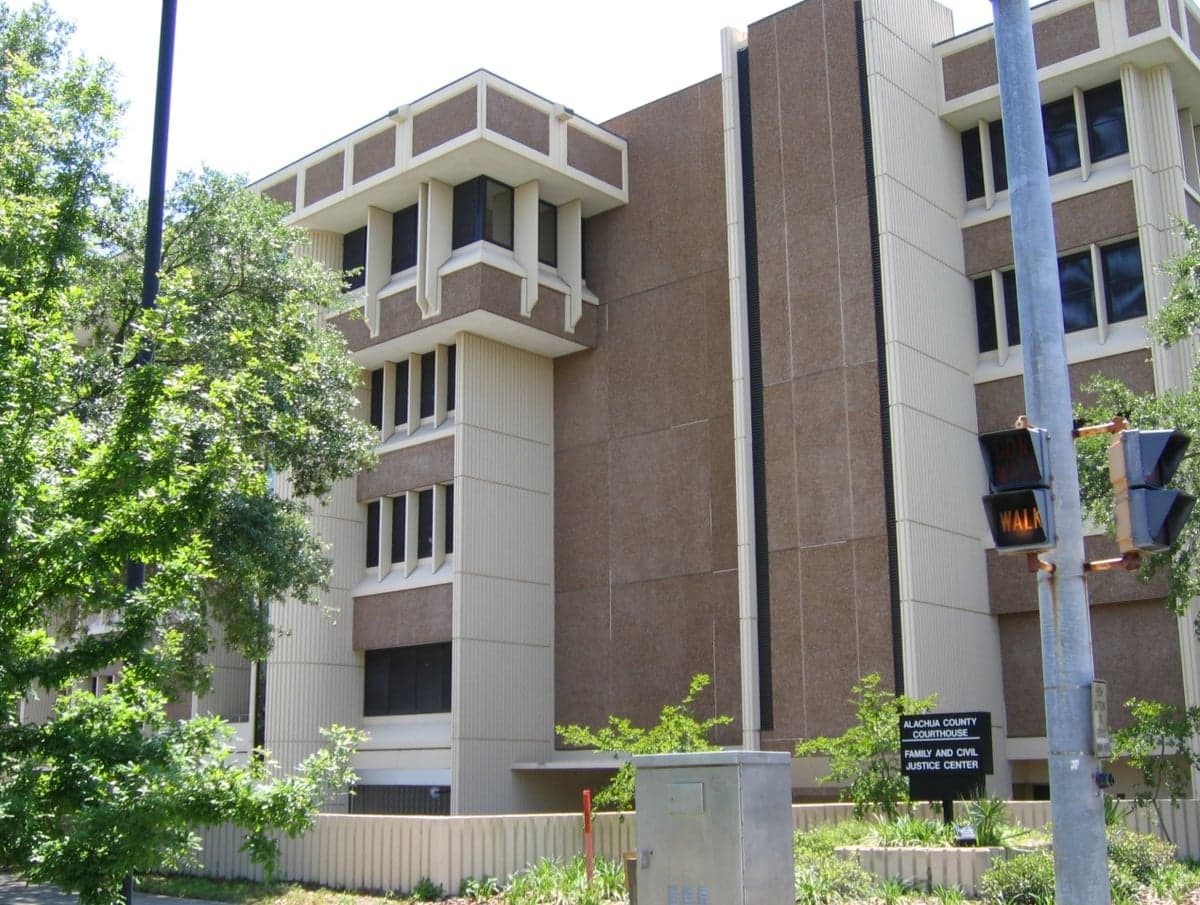
Photo: Wikipedia
Personal Sovereignty in Alachua County
Viable for self-reliance. Generally workable, though some barriers may limit total independence.
What does Personal Sovereignty tell us?
Personal Sovereignty measures your capacity for self-reliance and independence with minimal government friction. Higher scores mean fewer barriers between you and the way you want to live... but it assumes you have the space you need and good neighbors.
What does this tell us?
Personal Sovereignty measures your capacity for self-reliance and independence with minimal government friction. Higher scores mean fewer barriers between you and the way you want to live... but it assumes you have the space you need and good neighbors.
State Policy
Energy independence: Importer (10% of energy produced in-state)
Personal Liberty
Homesteading

Personal Liberty Analysis
Alachua County presents a nuanced personal sovereignty environment where state-level protections for gun rights and property rights intersect with a county-level regulatory culture that leans more interventionist than much of the rest of Florida. The autonomy a resident experiences here depends heavily on whether they live inside the Gainesville city limits, in a smaller town like High Springs or Newberry, or in the unincorporated rural areas around Archer and Micanopy. For a conservative-leaning individual or family weighing personal freedom, the county offers strong constitutional protections on paper, but the practical experience of self-reliance can be constrained by local zoning, building codes, and a county commission that has historically favored managed growth over laissez-faire development.
Tax burden and regulatory posture in Alachua County
Florida's lack of a state income tax provides a baseline advantage for personal financial sovereignty, and Alachua County does not add a local income tax. The county's sales tax rate is 7.5%, which includes the state's 6% rate plus a 1.5% local discretionary surtax. Property taxes are a more significant consideration: the county's millage rate hovers around 8.5 mills for the unincorporated area, but residents inside Gainesville pay a combined rate closer to 11 mills when city and school district levies are included. This is noticeably higher than in neighboring counties like Gilchrist or Levy, where millage rates are often 2-3 mills lower. The regulatory posture is moderate but not light-touch. The county enforces a comprehensive land development code, and the Gainesville city government is known for relatively aggressive code enforcement regarding property maintenance, short-term rentals, and building permits. Residents in unincorporated areas like Alachua town or Waldo experience fewer regulatory hassles than those inside city limits, but the county still requires permits for most structural additions and has setback requirements that limit some forms of dense development on small lots.
Self-defense rights and gun law specifics in the area
Florida is a shall-issue state for concealed carry permits, and Alachua County's sheriff's office processes applications without additional local restrictions beyond state law. As of 2023, Florida enacted permitless carry (constitutional carry) for residents who are legally allowed to possess a firearm, which applies uniformly across Alachua County. Open carry remains restricted except in specific circumstances like hunting or fishing. The practical environment for gun owners is favorable: there are multiple gun ranges in the county, including the Gainesville Gun and Archery Club and the Harry Beckwith Shooting Range in the Ocala National Forest just south of the county line. However, the cultural atmosphere differs by location. In rural areas around Archer and Micanopy, firearm ownership is common and socially unremarkable. Inside Gainesville, particularly near the University of Florida campus, the culture is more mixed, and some private businesses post no-gun signs. Stand-your-ground law applies statewide, and Alachua County has not enacted any local ordinances that restrict magazine capacity or ammunition sales. The sheriff's office has historically been supportive of Second Amendment rights, and the county does not maintain a local firearm registry or impose waiting periods beyond state requirements.
Self-reliance and homesteading viability across Alachua County
Homesteading and off-grid living are feasible in Alachua County but require careful location selection due to variable zoning and code enforcement. The county's minimum lot size in the agricultural (AG) zoning district is one acre, but many parcels in the rural fringe are sold in 5- to 10-acre increments. Areas around Newberry and High Springs offer the best combination of affordable land and permissive zoning for small-scale farming, livestock, and alternative housing. The county does allow accessory dwelling units (ADUs) on residential lots, which supports multi-generational homesteading arrangements. Off-grid systems face moderate hurdles: the county requires permits for solar panel installation and has building code requirements for structural loads, but it does not prohibit off-grid living outright. Well and septic systems are permitted through the county health department, with typical costs ranging from $5,000 to $15,000 for a well and $3,000 to $8,000 for a septic system. Rainwater collection is legal and not restricted. The county does not have a specific ban on tiny houses, but they must meet minimum square footage requirements (generally 150 square feet for a dwelling unit) and comply with the Florida Building Code. Residents in unincorporated areas near Waldo or Archer report fewer inspections and less code enforcement pressure than those closer to Gainesville. The main constraint for serious homesteaders is the county's relatively high land prices compared to rural counties to the north and west; an acre of raw land in Alachua County typically costs $15,000 to $30,000, whereas in Gilchrist or Levy counties, similar land can be found for $5,000 to $10,000 per acre.
Personal liberties: parental rights, medical autonomy, speech, and property
Florida has enacted several state-level laws that strengthen parental rights in education, including the Parental Rights in Education Act and the Florida Parental Bill of Rights. These apply uniformly in Alachua County, and the school board has not attempted to create local policies that contradict state law. Homeschooling is straightforward to establish: parents file a notice of intent with the county school district and maintain a portfolio of student work, with minimal oversight. The county does not impose additional reporting requirements beyond state statute. Medical autonomy is shaped by state law as well. Florida does not have a state-level vaccine mandate for adults, and Alachua County has not enacted any local vaccine requirements beyond state school-entry mandates. The county's health department follows state guidance on public health matters. Regarding speech and property rights, Alachua County has not passed any local ordinances that restrict political speech or signage beyond standard time-place-manner regulations. Property rights are generally respected, but the county does have a strong comprehensive plan that limits some uses of land, particularly in environmentally sensitive areas like the Paynes Prairie Preserve zone and the Santa Fe River corridor. The county's building department is known for thorough plan review, which can slow down construction projects compared to less regulated counties. Eminent domain is used sparingly and primarily for road widening projects, not for private economic development.
Overall, Alachua County offers a mixed sovereignty environment that is more constrained than the lightly regulated counties of north-central Florida but significantly freer than urban counties like Miami-Dade or Broward. For a conservative-leaning individual or family, the best strategy is to locate in the unincorporated areas or smaller towns like Newberry or High Springs, where regulatory pressure is lower and the culture is more self-reliance oriented. The state-level protections for gun rights, parental rights, and tax freedom provide a solid foundation, but the county's moderate-to-high property taxes and active code enforcement mean that personal sovereignty here requires proactive navigation rather than passive enjoyment. Compared to a place like Levy County to the west or Union County to the north, Alachua County feels more managed; compared to Orange County or Hillsborough County, it feels distinctly freer.

* Values derived from national, state, county, city and local statistics and may differ in a specific area. Last updated: 2026-07-12T07:58:14.000Z
Narrative content on this page is AI-generated and may contain mistakes. Verify any details that matter before acting on them.
ReloMaps may earn a commission from affiliate links at no extra cost to you.

