Photo: Wikipedia
Demographics of East Peoria, IL
Affluence Level in East Peoria, IL
A below-average socioeconomic profile. Incomes, home values, and educational attainment trail the U.S., with higher poverty and unemployment.
People of East Peoria, IL
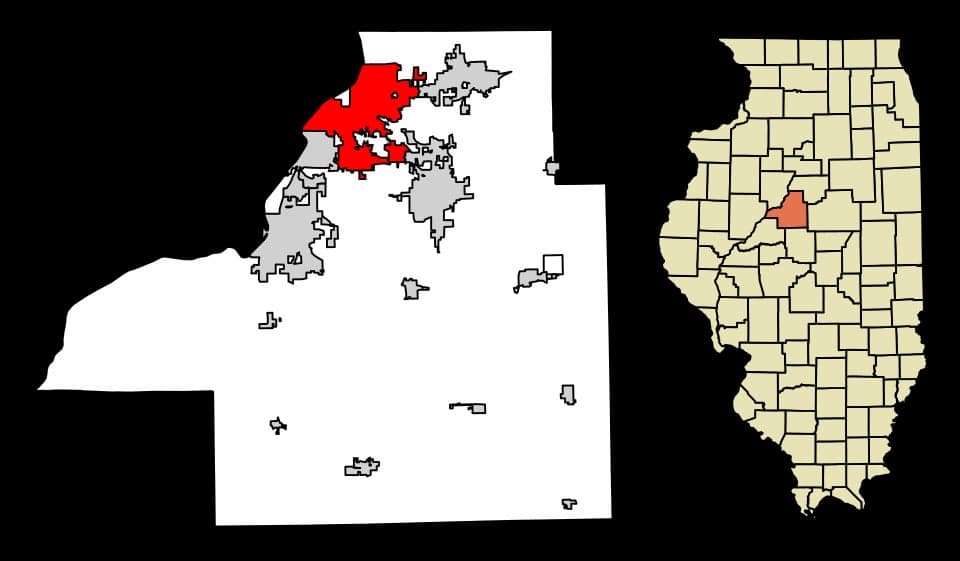
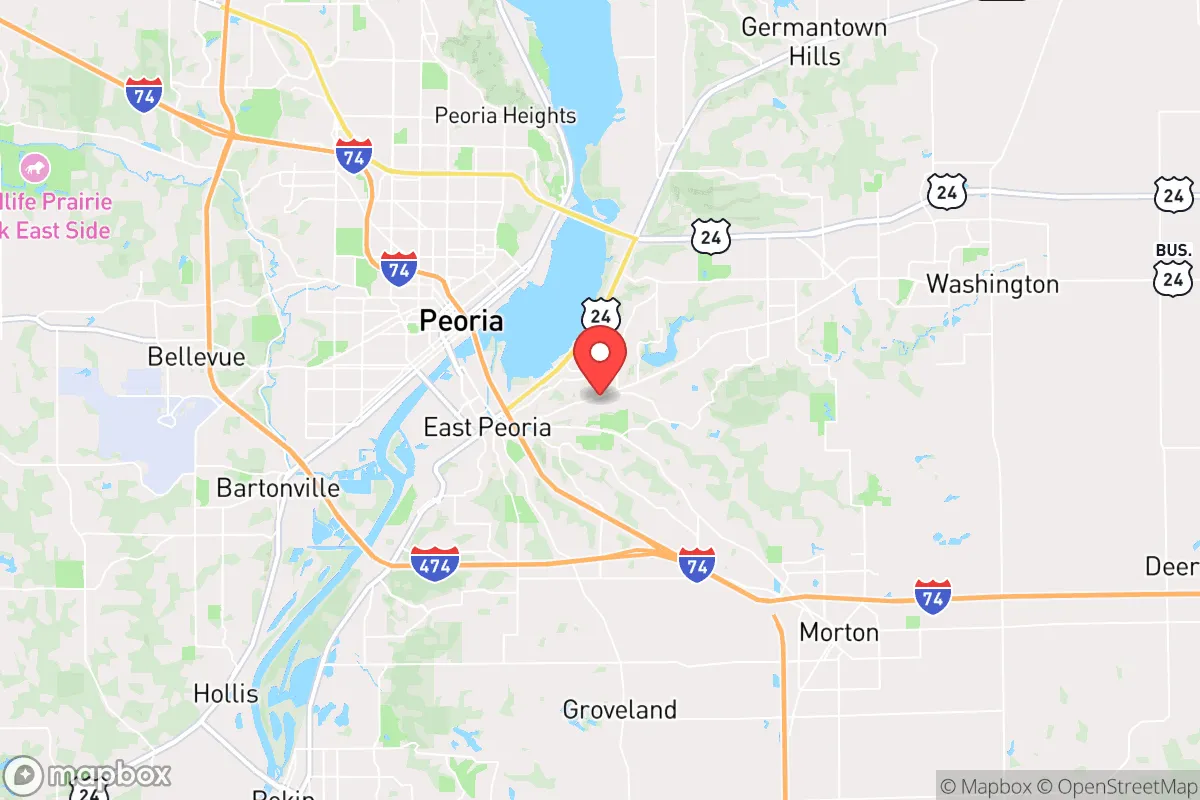
Today, East Peoria, Illinois is a predominantly white, working- and middle-class city of 22,485 residents, shaped by a century of industrial employment and family settlement. The city’s population is notably less diverse than the national average, with 92.1% identifying as white, 3.6% as Hispanic, 1.5% as Black, and less than 1% East/Southeast Asian or Indian. Despite its modest size, East Peoria maintains a distinct identity as a stable, blue-collar community with a strong sense of local pride, anchored by the Caterpillar Inc. headquarters and a riverfront that physically and culturally separates it from its larger neighbor, Peoria.
How the city was settled and grew
East Peoria’s population history is inseparable from the Illinois River and the railroads. The area was originally inhabited by the Illinois and Potawatomi tribes, but European-American settlement began in earnest after the Black Hawk War of 1832. The city’s founding as a distinct community came later, driven by the construction of the Peoria and Pekin Union Railway in the 1880s and the establishment of heavy industry along the riverfront. The first major population wave arrived in the early 20th century, drawn by jobs at the Keystone Steel & Wire Company (founded 1889) and later at the Caterpillar Tractor Company, which built its first East Peoria plant in 1925. These workers—largely German, Irish, and Italian immigrants and their descendants—settled in the Fondulac Township area and the historic Downtown East Peoria district, building modest homes within walking distance of the factories. A second wave followed World War II, when returning veterans and Appalachian migrants moved into new subdivisions like Sunset Hills and Maple Ridge, expanding the city’s footprint eastward. By 1960, East Peoria had grown into a dense, industrial town of roughly 12,000 residents, overwhelmingly white and native-born.
Modern era (post-1965)
After the 1965 Immigration and Nationality Act, East Peoria saw almost no influx of foreign-born residents—the city’s foreign-born population today is just 0.4%, one of the lowest rates in Illinois. Instead, the post-1965 era was defined by domestic migration patterns. The city’s white population peaked in the 1970s and has since declined slowly, while the Hispanic share grew from near zero to 3.6%, concentrated in the North Main Street corridor and parts of Fondulac Township. The Black population, at 1.5%, is small and dispersed, with no single majority-minority neighborhood. The East/Southeast Asian community (0.9%) and Indian community (0.1%) are tiny, largely consisting of professionals employed by Caterpillar or at nearby OSF Saint Francis Medical Center. The most significant demographic shift has been suburbanization within the city limits: families moved from the older, denser riverfront neighborhoods into newer subdivisions like Richland Farms and Eastwood, leaving Downtown East Peoria with an aging housing stock and a slightly older population. The city’s college-educated share (26.8%) is below the national average, reflecting the area’s enduring reliance on manufacturing and trades.
The future
East Peoria’s population is projected to remain stable or decline slightly over the next decade, mirroring trends across central Illinois. The city is not attracting significant international immigration, and domestic in-migration is modest, mostly from other parts of the Peoria metropolitan area. The Hispanic population is the fastest-growing demographic segment, likely to reach 5-6% by 2035, but the city will remain overwhelmingly white for the foreseeable future. New residential development is concentrated in the East Peoria Heights area and along the Illinois Route 8 corridor, where newer subdivisions and apartment complexes are drawing younger families and some retirees. The cultural identity of the city is evolving slowly: the old industrial-ethnic character is fading as Caterpillar’s local employment shrinks, replaced by a more generic Midwestern suburban identity. However, the city’s low crime rate, affordable housing, and strong school system in the Fondulac District continue to attract conservative-leaning families seeking stability.
For someone moving in now, East Peoria offers a predictable, safe, and affordable environment with a clear sense of place. It is not a diverse or rapidly changing community, but it is a stable one, where the population is largely white, native-born, and rooted in manufacturing and trades. The city’s future is one of slow, incremental change—more Hispanic families, more suburban-style development, and a gradual shift away from its industrial past—but its core identity as a quiet, family-oriented river town is likely to endure.

* Values derived from national, state, county, city and local statistics and may differ in a specific area. Last updated: 2026-10-11T13:01:13.000Z
Narrative content on this page is AI-generated and may contain mistakes. Verify any details that matter before acting on them.
ReloMaps may earn a commission from affiliate links at no extra cost to you.

