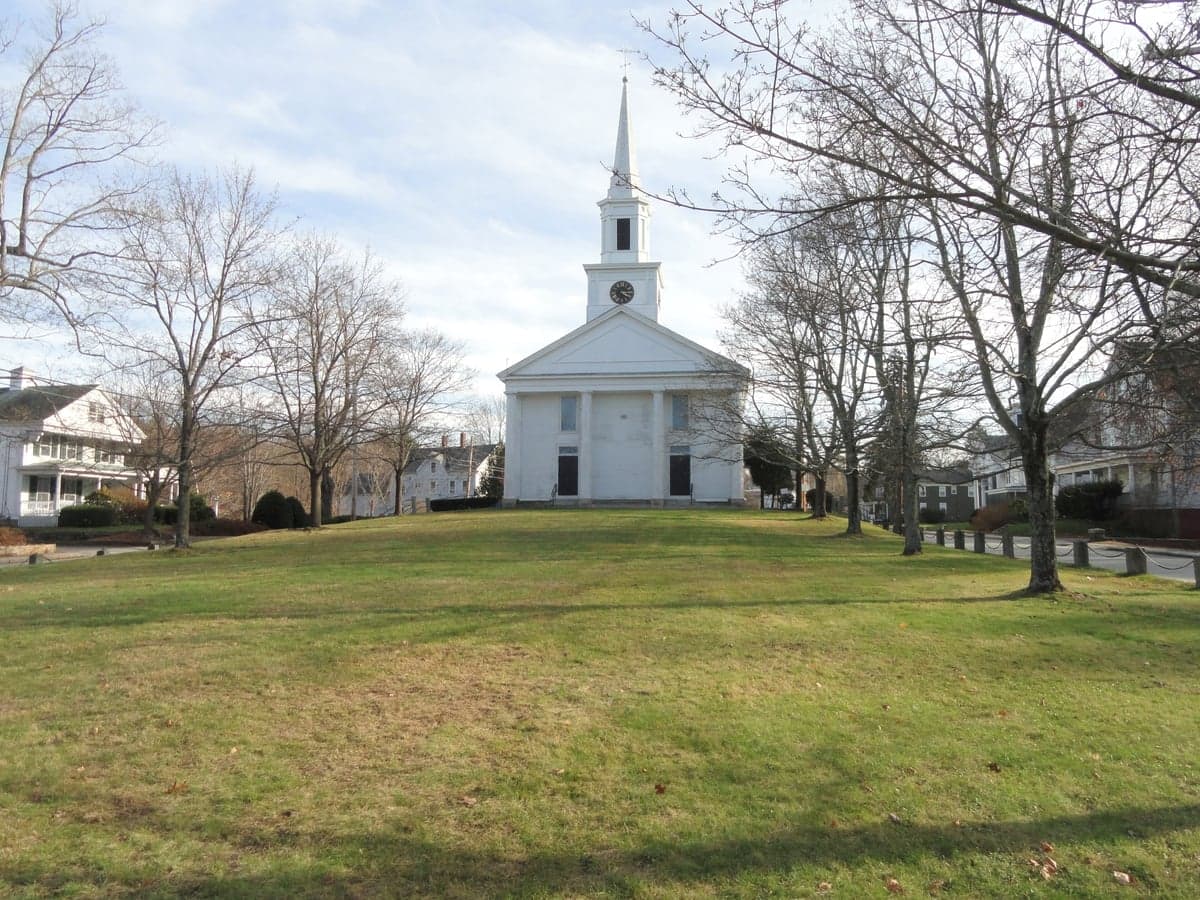
Photo: Wikipedia
Political ClimatePolitical Climate in Douglas, MA
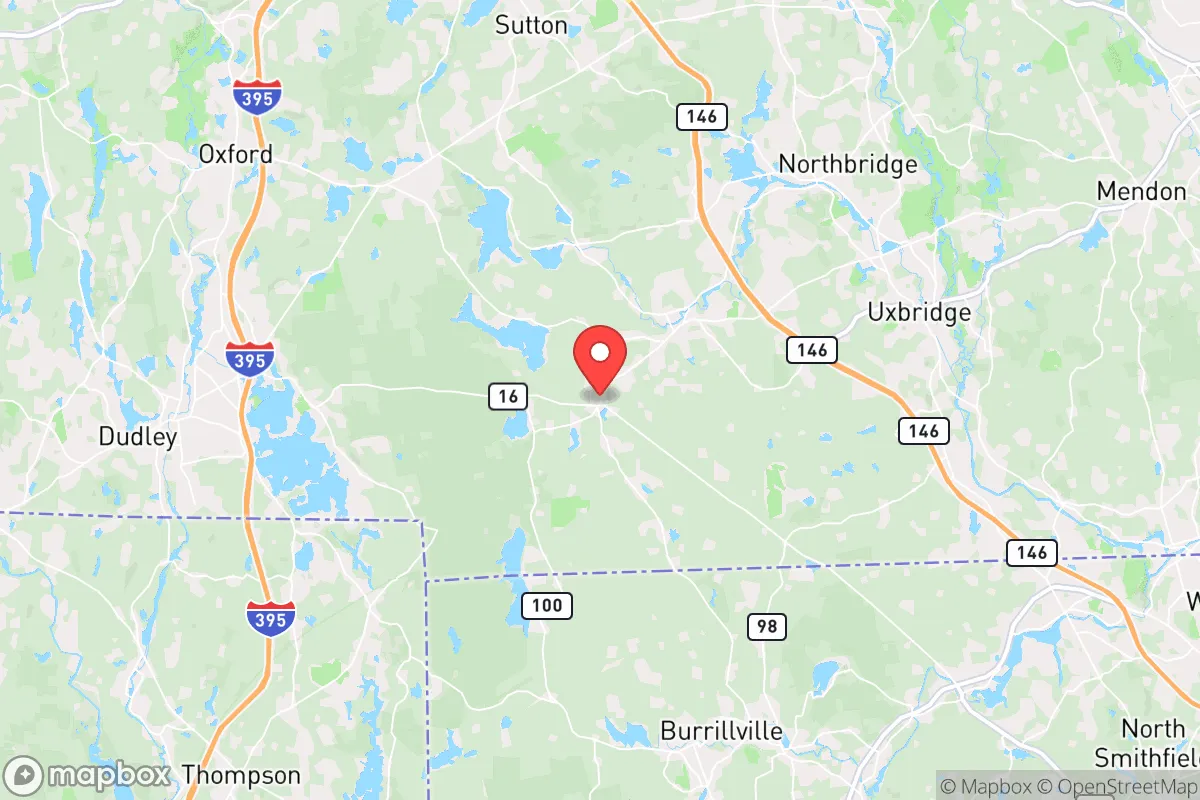
District shown is the primary district for this city’s centroid. Cities may span multiple districts.
Local Political AnalysisPolitical Analysis of Douglas, MA
Douglas leans Democratic, but it’s not the deep-blue stronghold you might expect from a town in Massachusetts. With a Cook Partisan Voting Index (PVI) of D+13, it’s slightly more conservative than the state as a whole, which sits at D+15. That two-point gap might sound small, but it reflects a real split in local voting patterns—especially in down-ballot races and town-level decisions. Over the past decade, Douglas has trended leftward, like much of the state, but it’s done so at a slower pace, leaving it as something of a purple-ish pocket in a blue region.
How it compares
Compared to the rest of Massachusetts, Douglas is a moderate outlier. The state’s D+15 PVI places it among the most Democratic in the country, but Douglas’s D+13 means it’s a touch more willing to split tickets. For context, nearby towns like Uxbridge (D+10) and Oxford (D+8) are even more conservative, while Worcester (D+18) and Boston (D+30) are far bluer. In the 2024 presidential election, Douglas gave Kamala Harris about 54% of the vote—solidly Democratic, but a few points behind her statewide margin. This isn’t a town that’s flipping red anytime soon, but it’s a place where a Republican candidate can sometimes pull 45% or more, especially in local races for select board or school committee.
What this means for residents
For liberal residents, Douglas feels like a comfortable but not complacent environment. You’ll find plenty of neighbors who share your views on social issues and climate policy, but you’ll also encounter a vocal minority who push back on taxes and state mandates. For conservatives, it’s a place where you’re not entirely isolated—there are enough like-minded folks to form a real community, especially around the town’s many churches and sports leagues. The practical effect is that town meetings can get lively, with debates over school budgets and zoning often breaking along predictable lines. Property taxes here are on the higher side, even by Massachusetts standards, which fuels a persistent undercurrent of fiscal conservatism. The state’s strong rent control laws and progressive income tax (the “millionaire’s tax” passed in 2022) are generally popular in Douglas, but not universally—you’ll hear grumbling at the local diner about Boston “running the show.”
One cultural distinction is Douglas’s relationship with its rural character. The town has a strong agricultural and equestrian tradition, and that influences local politics more than you might expect. Zoning fights over land use—like whether to allow a solar farm on former pasture—tend to pit environmentalists against property-rights advocates, and both sides can claim some wins. The state’s push for high-density housing under the MBTA Communities Act has also stirred tension here, with some residents worried about losing the town’s small-town feel. In practice, this means Douglas is a place where a Democrat can win a seat on the board of selectmen, but only if they’re seen as pragmatic, not ideological. The long-term trajectory likely stays D+13 to D+15, as younger families move in from more expensive areas like Franklin and Milford, bringing slightly bluer leanings with them. But don’t expect Douglas to ever become as reliably blue as Cambridge or Amherst—the town’s independent streak runs deep, and that’s something both sides can respect.

State Political ClimatePolitical Climate in Massachusetts
State Political AnalysisPolitical Environment in the State
Massachusetts is one of the most reliably Democratic states in the country, with a Cook Partisan Voting Index of D+15, meaning it votes about 15 points more Democratic than the national average in presidential elections. Over the past 20 years, the state has shifted further left, driven by the consolidation of the Boston metro area and the collapse of the old moderate Republican brand that once produced governors like Mitt Romney and Charlie Baker. In 2024, Kamala Harris carried the state by roughly 25 points, and every statewide office is held by a Democrat, but the picture is more nuanced than a simple blue monolith — the western part of the state, the Cape, and a handful of suburban towns still harbor a conservative-leaning minority that can make local races competitive.
Urban vs. rural divide
The political map of Massachusetts is a classic urban-rural split, but with a twist: the urban core is so dominant that it overwhelms the rest. Boston and its immediate suburbs — Cambridge, Somerville, Brookline — are among the most liberal jurisdictions in the country, routinely voting 80-90% Democratic. The I-495 belt, including towns like Framingham and Lowell, leans Democratic but with a larger share of moderate and independent voters. The real conservative strongholds are in the central and western parts of the state, particularly in Worcester County and the Berkshires. Towns like Sturbridge, Oxford, and Palmer regularly vote Republican at the local level, and the 9th Congressional District (which includes parts of Plymouth and Bristol counties) has been a rare GOP-held seat in recent cycles. The Cape and Islands — Barnstable, Falmouth, Martha's Vineyard — are a mixed bag: the year-round population leans moderate-to-conservative on fiscal issues, but the summer influx and second-home owners push the overall vote toward the center-left. The key takeaway: if you live inside Route 128, you're in a deep-blue bubble; if you live west of Worcester, you're in a purple-to-red pocket that feels culturally closer to upstate New York or rural New England.
Policy environment
Massachusetts has a high-tax, high-service policy environment that is a feature, not a bug, for its majority. The state income tax is a flat 5% (recently reduced from 5.15% via a 2022 ballot question), and the sales tax is 6.25%. Property taxes are locally set and vary widely — Boston has a relatively low rate (around $10.50 per $1,000 of assessed value) because of the commercial base, while rural towns like Charlemont can hit $18-$20 per $1,000. The state has a robust regulatory framework: strict environmental laws, a strong tenant-friendly landlord-tenant code, and one of the nation's most aggressive renewable energy mandates (Net Zero by 2050). Education policy is a point of pride — Massachusetts consistently ranks #1 in K-12 outcomes nationally, and the state spends over $20,000 per pupil. Healthcare is near-universal due to the 2006 Romneycare law, which served as the model for the ACA; the state has its own health insurance exchange and mandates coverage. Election laws are among the most accessible in the country: no-excuse mail-in voting, same-day registration, and early voting are all standard. For a conservative relocator, the policy environment means higher taxes and more regulation than most red states, but also high-quality public services and a well-functioning bureaucracy.
Recent policy direction
The last five years have seen Massachusetts move decisively left on several fronts. In 2022, the legislature passed the Work and Family Mobility Act, allowing undocumented immigrants to obtain driver's licenses, overriding a veto from then-Governor Charlie Baker. In 2023, the state expanded abortion protections with the NASTY Women Act (an acronym for "Negating Archaic Statutes Targeting Young Women"), which repealed a pre-Roe ban on abortion after 24 weeks and protected providers from out-of-state lawsuits. On gun policy, the state passed the Massachusetts Gun Safety Act in 2024, which bans "ghost guns," requires microstamping for new handguns, and expands the red flag law to allow family members to petition for removal. On education, the state has maintained strong parental notification laws for sex education (opt-in required), but has also expanded LGBTQ+ inclusive curriculum mandates. On property rights, Massachusetts has some of the strongest rent control and tenant protections in the nation, including a 2024 law capping rent increases at 10% in certain communities. On privacy and surveillance, the state has a strong data privacy law (the Massachusetts Data Privacy Act of 2020) but also allows warrantless license plate reader data collection by police. The overall direction is toward more regulation, more state intervention, and more protection for marginalized groups — which is a net positive for liberal residents but a source of frustration for conservatives who value local control and individual autonomy.
Civil unrest & political movements
Massachusetts has a long tradition of organized activism, but it's generally more institutional than confrontational. The 2020 Black Lives Matter protests in Boston were large but largely peaceful, leading to police reform legislation (the 2020 police reform bill banned chokeholds and created a certification system). The state is a sanctuary state — the 2017 Safe Communities Act limits local law enforcement cooperation with ICE, and Boston, Cambridge, and Somerville have all declared themselves sanctuary cities. Immigration politics are a flashpoint: in 2023, the state declared a state of emergency over the influx of migrants, straining shelter systems in places like Revere and Worcester. On the right, the Massachusetts Republican Party is small but active, with a strong grassroots presence in the western towns and a growing "Moms for Liberty" chapter in Plymouth and Bristol counties. Election integrity controversies are minimal — the state has a well-funded, nonpartisan election system, and audits consistently show negligible fraud. A new resident would notice the prevalence of yard signs (often for local races or ballot questions), the ubiquity of "Coexist" and "Science is Real" bumper stickers in the urban core, and the occasional Trump flag flying from a pickup truck in a rural town. The political temperature is lower than in swing states, but the cultural divide between the coastal liberal bubble and the inland conservative pockets is real and visible.
Projection
Over the next 5-10 years, Massachusetts will likely become even more Democratic, driven by two demographic trends: the continued urbanization of the Boston metro area (which is attracting young, college-educated, left-leaning transplants) and the out-migration of older, more conservative residents to lower-tax states like Florida and New Hampshire. The state's population is aging and growing slowly (0.2% annually), but the in-migration from other states is heavily skewed toward people who work in tech, biotech, and academia — all sectors that lean left. The Republican Party will continue to be a rump force, holding a handful of state legislative seats in the western and coastal districts, but unlikely to win a statewide office again soon. The policy direction will continue leftward: expect a state-level public option for health insurance, further gun restrictions (possibly a ban on semi-automatic rifles), and more aggressive climate mandates. The one wild card is the housing crisis — if the state fails to build enough housing, the cost of living could drive out the very young families and workers that the economy depends on, potentially slowing the leftward shift. For a conservative moving in now, the realistic expectation is that you will be in a permanent political minority at the state level, but you can find like-minded communities in the western towns and some Cape communities, and you can have significant influence at the local level (school board, town meeting, planning board).
For a new resident — whether conservative or liberal — the bottom line is that Massachusetts offers a high-functioning, stable, and predictable political environment with strong public services, but at a high cost in taxes and regulation. Conservatives will find the state's policy direction frustrating, but they will also find that the state's institutions are transparent, the elections are secure, and the culture is generally civil. Liberals will find a state that largely aligns with their values, but they will also face high housing costs and a bureaucracy that can be slow to change. The key practical takeaway: choose your town carefully — the difference between living in Boston and living in Sturbridge is the difference between living in a deep-blue city and a purple-to-red small town, and that choice will define your daily political experience more than the state's overall D+15 lean.
* Values derived from national, state, county, city and local statistics and may differ in a specific area. Last updated: 2026-10-21T14:14:07.000Z
Narrative content on this page is AI-generated and may contain mistakes. Verify any details that matter before acting on them.
ReloMaps may earn a commission from affiliate links at no extra cost to you.

