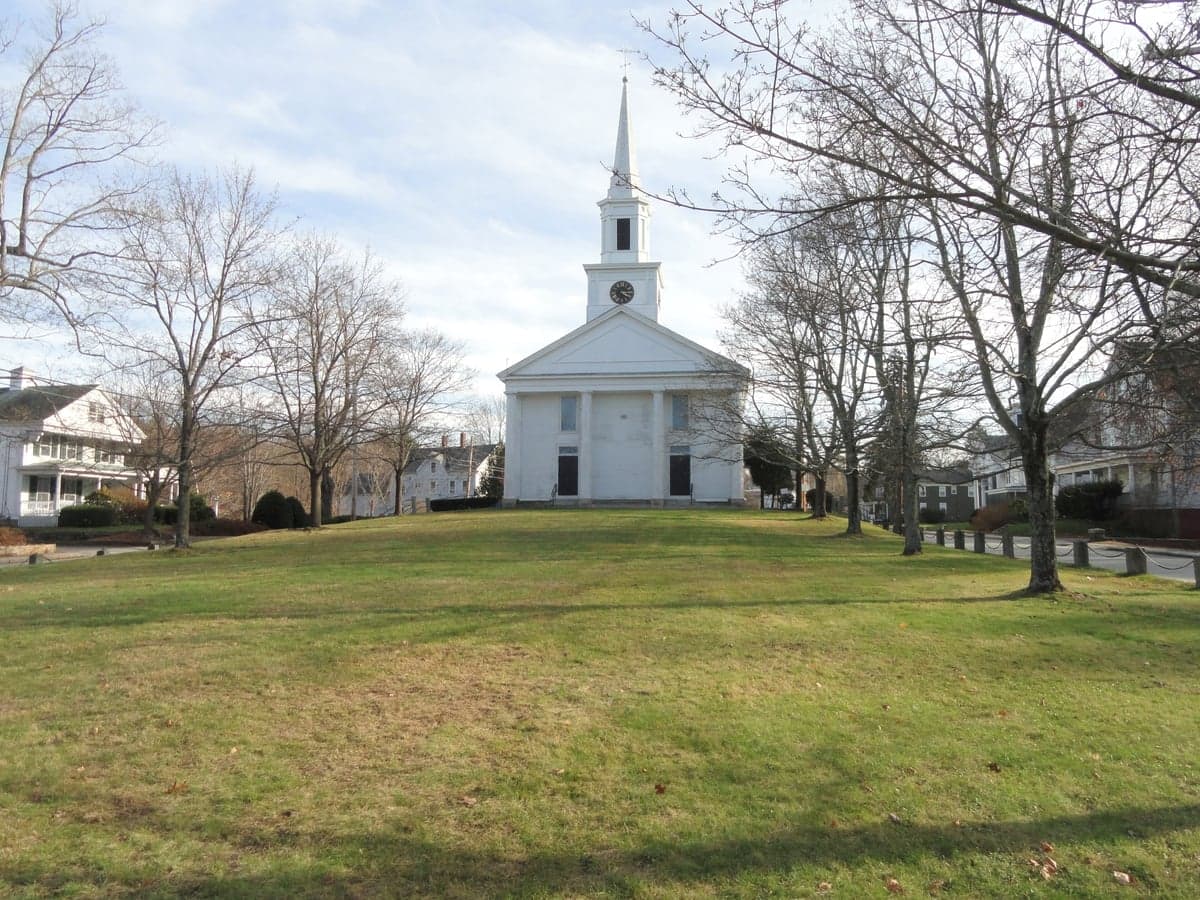
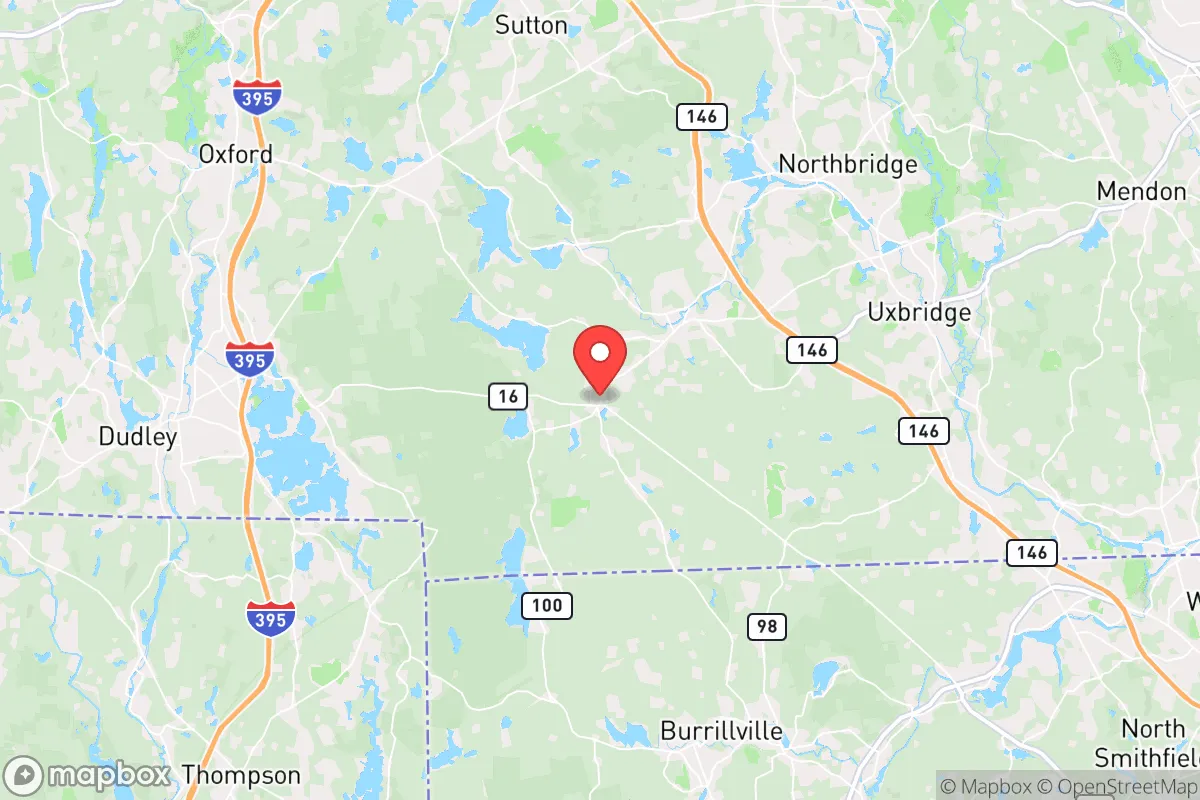
Photo: Wikipedia
Demographics of Douglas, MA
Historical data isn't available for Douglas, MA. Trends shown are for Worcester County, MA.
Affluence Level in Douglas, MA
An upper-middle-class area. Household wealth, education levels, and homeownership run ahead of national benchmarks.
People of Douglas, MA
The people of Douglas, Massachusetts, today form a small, predominantly white community of 5,891 residents, characterized by a notably high college attainment rate of 48.4% and a very low foreign-born share of just 0.3%. The town’s identity is rooted in its rural, small-town character, with a population that is 88.4% white, 6.8% Hispanic, and with small Asian (1.0%), Indian subcontinent (0.7%), and Black (0.8%) communities. This is a place where historic Yankee and Irish Catholic roots remain strong, but where a modest influx of Hispanic residents and professionals from the Boston and Providence metros is slowly reshaping the local character.
How the city was settled and grew
Douglas was first settled in 1721 by English colonists from Mendon and Bellingham, drawn by the promise of fertile land along the Mumford River. The town was officially incorporated in 1746 and remained a sparsely populated farming community for its first century. The real population wave came with the Industrial Revolution. By the 1820s, the Mumford River’s water power attracted textile mills, and the village of East Douglas became the town’s industrial heart. Irish immigrants arrived in large numbers during the 1840s and 1850s to build the mills and work the looms, settling in the mill housing along Main Street and Depot Street in East Douglas. A second wave of French-Canadian mill workers arrived after the Civil War, establishing a distinct community around South Douglas and the area near the Douglas State Forest. These groups built the town’s Catholic churches and parochial schools, creating a cultural divide from the older Yankee Protestant farmers in the outlying West Douglas and North Douglas districts. The mills declined after World War I, and the population stagnated at around 2,500 through the 1950s, with the town remaining a quiet, working-class mill village.
Modern era (post-1965)
The post-1965 era brought suburbanization, not immigration. The 1970s and 1980s saw the first wave of domestic in-migration as families from Worcester and Providence sought larger lots and lower taxes. These new residents—predominantly white, middle-class professionals—settled in the new subdivisions off Route 16 and around Wallum Lake, areas that had previously been farmland and summer cottages. The town’s population grew from 2,500 in 1970 to 5,891 by 2020, a steady increase driven entirely by domestic migration. The foreign-born population remains negligible at 0.3%, reflecting the town’s lack of immigrant-attracting industries or affordable rental housing. The modest Hispanic population (6.8%) has grown since 2000, concentrated in the more affordable rental units in East Douglas and along the Route 16 corridor, often working in landscaping, construction, and service jobs in the broader Blackstone Valley. The small Asian (1.0%) and Indian subcontinent (0.7%) communities are largely professionals employed in tech and healthcare in Worcester or Providence, living in the newer subdivisions near the town center. The Black population (0.8%) remains very small and dispersed. The town’s racial and ethnic composition has shifted only slightly since 2000, when it was over 96% white non-Hispanic.
The future
Douglas is likely to become slightly more diverse over the next 10–20 years, but the pace will be slow. The town’s high property values and limited rental stock will continue to filter for higher-income, predominantly white households. The Hispanic share may grow to 10–12% as families move from Worcester and Providence seeking better schools and lower crime, likely settling in the more affordable East Douglas and Route 16 areas. The Asian and Indian subcontinent populations may grow modestly as professionals are drawn to the town’s highly rated public schools and rural character, but they will remain small shares. The white population will remain the overwhelming majority, though its share may dip to the low 80% range. The town’s cultural identity will remain rooted in its Yankee and Irish Catholic heritage, with a growing Hispanic influence visible in local restaurants and community events. For a newcomer, Douglas offers a stable, safe, and increasingly educated community, but one where diversity is still emerging slowly and where the social fabric remains strongly traditional.
Douglas is becoming a slightly more diverse, well-educated bedroom community for the Worcester-Providence corridor, but its core identity remains that of a small, predominantly white New England town with deep Yankee and Irish Catholic roots. For a family or individual moving in now, the town offers excellent schools, low crime, and a strong sense of place, but the social and demographic change will be gradual rather than transformative.

* Values derived from national, state, county, city and local statistics and may differ in a specific area. Last updated: 2026-10-21T14:14:07.000Z
Narrative content on this page is AI-generated and may contain mistakes. Verify any details that matter before acting on them.
ReloMaps may earn a commission from affiliate links at no extra cost to you.

