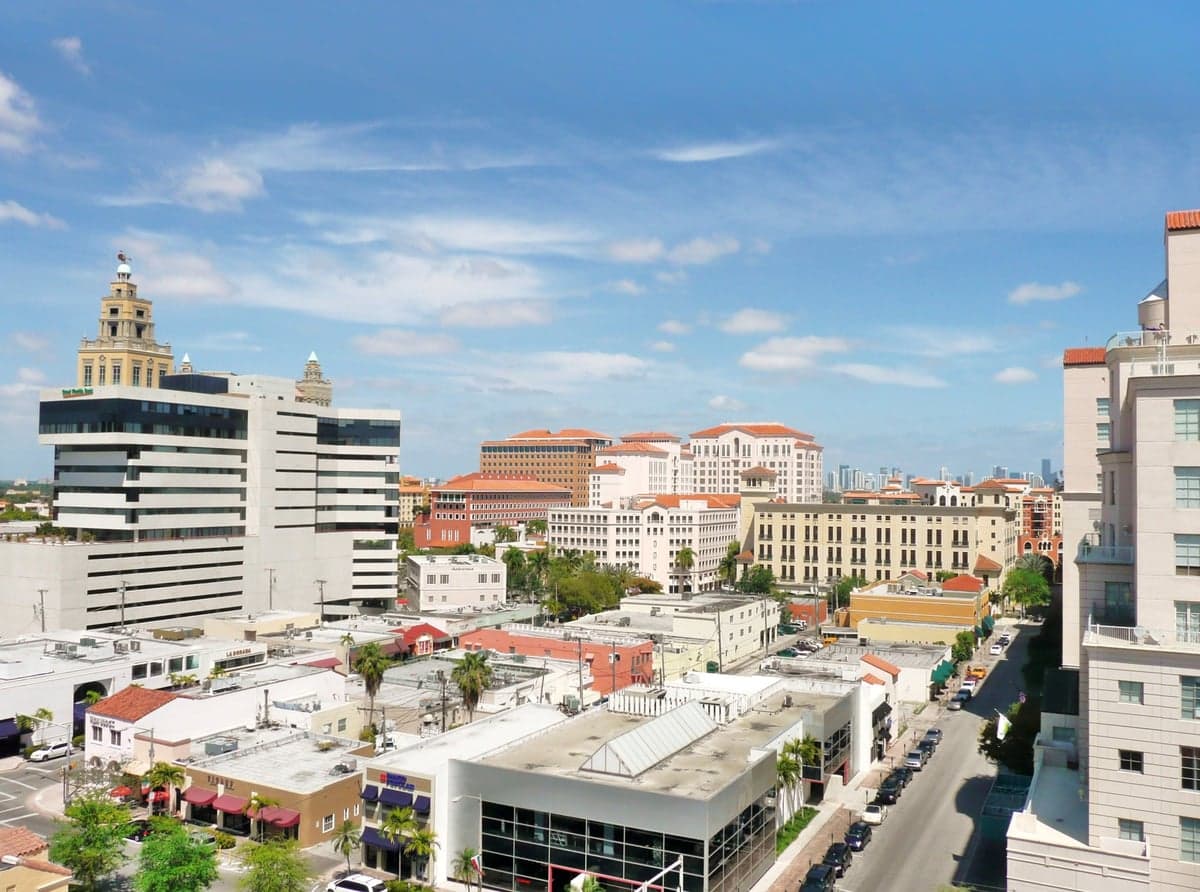
Photo: Wikipedia
Strategic Assessment of Coral Gables, FL
High tactical risk. This location is likely close to major population centers, strategic targets, or sits in a high-disaster corridor. A retreat property and careful exit planning is required.
What does the Strategic Assessment tell us?
Our Strategic Assessment grades tactical survivability of an area. Major population centers, military targets, fallout zones, natural disasters, and border exposure all drive risk — lower exposure means a more defensible position in a crisis.
This is heavily inspired by Joel Skousen's Strategic Relocation book. Highly recommended you checkout the book ($)What does this tell us?
Our Strategic Assessment grades tactical survivability of an area. Major population centers, military targets, fallout zones, natural disasters, and border exposure all drive risk — lower exposure means a more defensible position in a crisis.
This is heavily inspired by Joel Skousen's Strategic Relocation book. Highly recommended you checkout the book ($)Strategic Pillars
Key Distances
Regional Safe Places
Below is our recommended "safe zones" in Florida and the surrounding area based on our strategic heuristics. For most people, it's unrealistic to live in a “safe zone” full-time due to work, family or other personal reasons. They tend to be more rural. However, many of these areas are perfect for second homes and retreat properties that double as a vacation home or even a short-term rental.

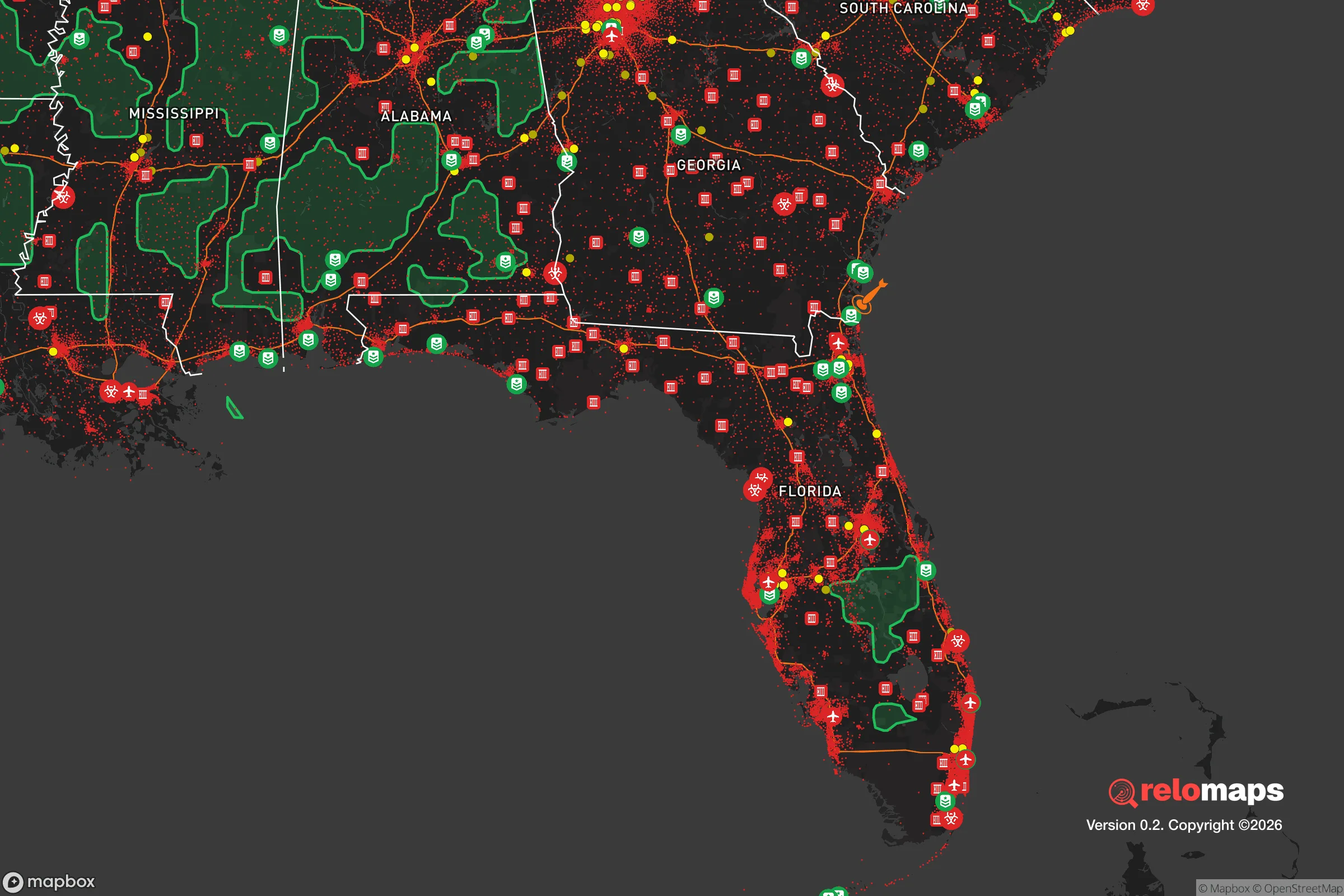


Important Note: For informational purposes only. This does not mean nothing bad ever happens in the green zones. Please use common sense. This is based on public data and modeled with AI. We tried to take a conservative approach but mistakes happen. We update this regularly as new information becomes available.
Solar Generator Recommendations
Backup power matters more here than in safer locations. We've picked three solar generators across budgets and capacity tiers — start with the budget unit if you only need a few essentials, or step up if you want to run a fridge and HVAC for days at a time.
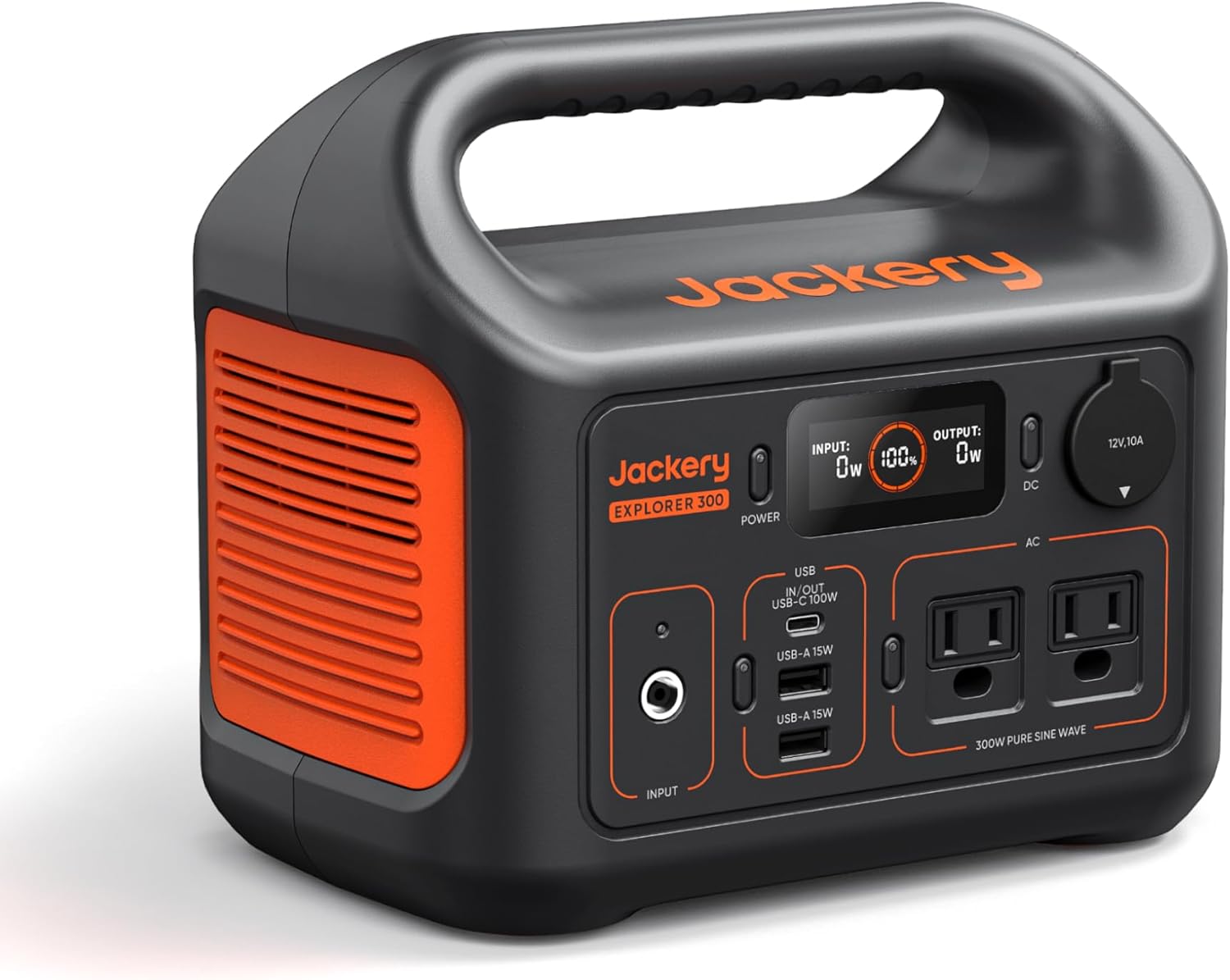
Jackery Portable Power Station Explorer 300
Budget OptionPower on the Go: Weighing only 11 lbs, it's convenient to set up and store with book-sized foldable solar panels

BLUETTI Portable Power Station AC180
Designed for both indoor and outdoor scenarios, AC180 is highly capable as it has a robost capacity and continuous output power.

EF ECOFLOW DELTA Pro Ultra Power Station
Upgraded PickEcoFlow DELTA Pro Ultra is a whole-home energy system designed to grow with your family. Integrated with the Smart Home Panel 2, it scales to meet your evolving energy needs — keeping your home powered, intelligent, and secure through every stage of life.
We earn a commission, at no additional cost to you.
Strategic Assessment Analysis
Coral Gables presents a mixed strategic picture for the relocation-minded reader prioritizing resilience and self-sufficiency. Its primary advantage is its position within a major metropolitan area that offers deep logistical and economic resources, but this very proximity to Miami and its dense urban core introduces significant vulnerabilities that a serious disaster-preparedness assessment cannot ignore. The city’s location on a narrow coastal strip, combined with its integration into a high-value, high-target region, means that while daily life is comfortable and well-resourced, the calculus for long-term stability in a crisis scenario requires careful, unsentimental evaluation.
Geographic position and natural advantages for long-term stability
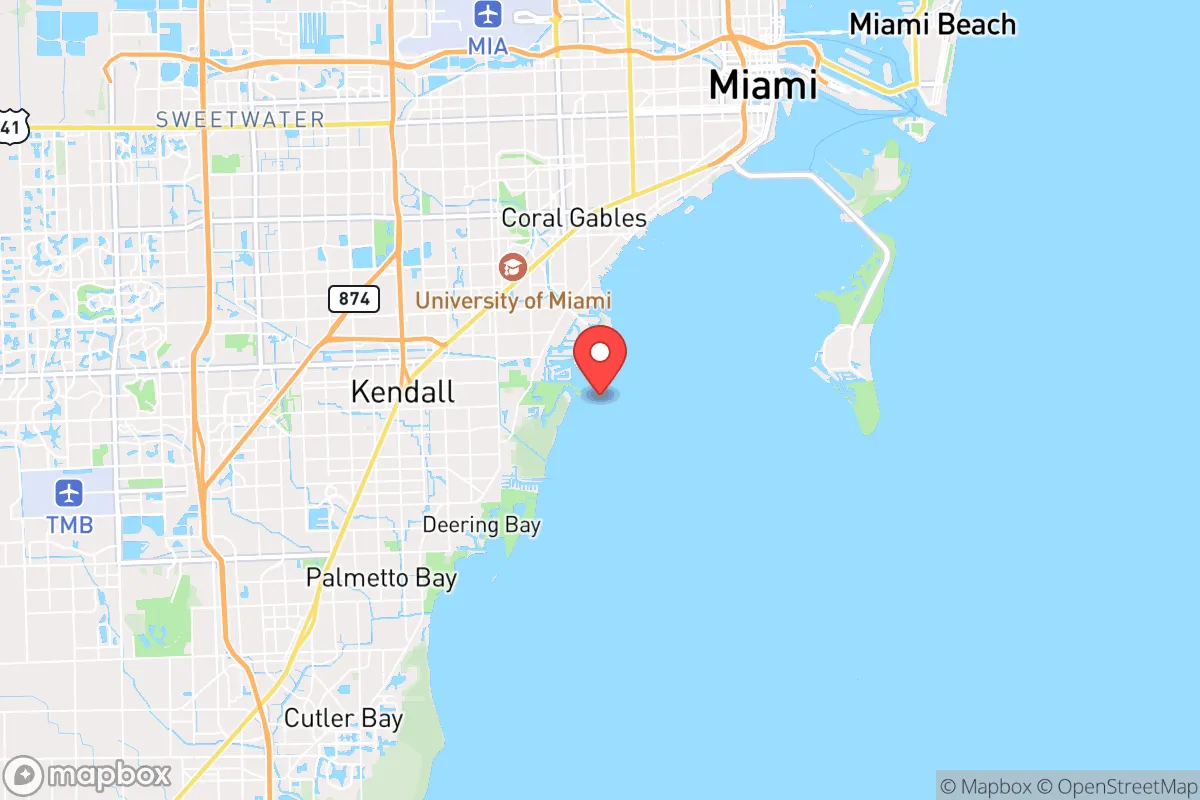
Coral Gables sits on the western edge of Biscayne Bay, roughly 7 miles southwest of downtown Miami. Its geographic position offers a few genuine natural advantages. The city is built on a limestone ridge that provides slightly higher elevation than the surrounding Everglades and coastal marshlands—typically 10 to 15 feet above sea level in the core neighborhoods, compared to the 3 to 6 feet common in much of Miami-Dade County. This modest elevation reduces, but does not eliminate, vulnerability to storm surge from a major hurricane. The city’s extensive tree canopy, including the iconic banyans and oaks along Coral Way and Granada Boulevard, provides natural cooling and some windbreak effect, though mature trees become projectile hazards in high winds. The Biscayne Aquifer lies directly beneath the city, providing a shallow, easily accessible freshwater source—a significant resilience asset for well-equipped properties. However, the aquifer is vulnerable to saltwater intrusion during storm surges and sea-level rise, and it is already subject to periodic contamination from septic systems and urban runoff. The city’s location also places it within a 30-minute drive of Homestead Air Reserve Base and the Port of Miami, both critical logistical hubs for federal disaster response, but also potential targets or choke points during a crisis.
Risk exposures and proximity to fallout-relevant landmarks
The most significant resilience liability for Coral Gables is its location within the Miami metropolitan area, a region of roughly 6.1 million people. In any large-scale disaster—whether a Category 4 or 5 hurricane, a prolonged power grid failure, or a public health emergency—the city would face extreme competition for resources, evacuation route congestion, and potential civil unrest. The city is bordered by the City of Miami to the north and east, and by unincorporated Miami-Dade County to the south and west, meaning there is no meaningful buffer zone. Evacuation routes are limited: the primary north-south arteries are US-1 (South Dixie Highway), the Palmetto Expressway (SR 826), and the Florida Turnpike, all of which become gridlocked during hurricane evacuations. Westward evacuation toward the Everglades and the Gulf Coast is funneled through the Tamiami Trail (US-41) and Alligator Alley (I-75), both of which are single-carriageway roads for long stretches. For a reader concerned with man-made risks, Coral Gables is within 15 miles of the Turkey Point Nuclear Generating Station in Homestead. While the plant has a robust containment structure and has operated safely for decades, any major incident—whether from a storm, sea-level rise, or mechanical failure—would place Coral Gables within the 10-mile emergency planning zone (EPZ) for potential exposure. The city is also within 20 miles of the Port of Miami, a major container and cruise port that handles hazardous materials and is a plausible target for maritime or terrorist incidents. The proximity to Miami International Airport (MIA), just 4 miles north, adds another layer of risk: air traffic accidents, hazardous material spills, or security incidents could directly affect Coral Gables neighborhoods, particularly those along the flight path.
Practical resilience for a relocator: food, water, energy, and defensibility
For a relocator serious about self-sufficiency, Coral Gables presents significant challenges. Food resilience is low. The city has no significant agricultural land within its 13.7 square miles. The nearest large-scale farming operations are in Homestead (30 miles south) and the Redland agricultural area, but these are themselves vulnerable to hurricanes and saltwater intrusion. The city’s grocery infrastructure is entirely dependent on just-in-time supply chains: Publix, Whole Foods, and smaller markets are abundant, but all would empty within 24-48 hours of a major storm warning. Water resilience is moderate but fragile. The city draws its municipal water from the Biscayne Aquifer via wells in the nearby West Miami-Dade wellfield. During a hurricane, power loss to pumps can disrupt supply for days or weeks. Properties with private wells and backup generators would have a significant advantage, but well permits are tightly regulated and not available in most residential zones. Rainwater catchment is feasible given the region’s 60 inches of annual rainfall, but most homes are not equipped for it. Energy resilience is poor for most residents. Florida Power & Light (FPL) serves the area, and its grid is increasingly hardened with underground lines in newer developments, but many older Coral Gables neighborhoods still have overhead lines that are vulnerable to wind and falling trees. Post-hurricane power restoration in Miami-Dade has historically taken 7-14 days for most customers, and longer for those in less critical areas. Solar with battery backup is viable—Coral Gables gets 260 sunny days per year—but homeowners’ association (HOA) restrictions in many historic districts can limit panel placement. Defensibility is the weakest category. Coral Gables is a dense, affluent suburb with a grid-like street pattern and multiple entry points from major roads. It is not defensible in any practical sense. During the 1992 Hurricane Andrew aftermath, looting and civil unrest occurred in parts of South Dade, and while Coral Gables was less affected, the city’s high-value homes and proximity to major thoroughfares make it a potential target for post-disaster crime. The Coral Gables Police Department is well-funded and responsive, but in a widespread crisis, response times would lengthen dramatically. Community resilience is a mixed asset. The city has active neighborhood associations, a strong civic culture, and a well-organized emergency management office that runs regular preparedness workshops. However, the population skews affluent and transient—many residents are professionals who could evacuate to second homes or family elsewhere, reducing the pool of long-term committed neighbors. For a relocator seeking a tight-knit, self-reliant community, Coral Gables offers more of a managed suburban environment than a frontier resilience hub.
The overall strategic picture for Coral Gables is one of calculated trade-offs. It offers excellent baseline resources—high-quality medical facilities (including the University of Miami Health System and Baptist Health), robust infrastructure, and a well-funded local government that takes disaster planning seriously. For a relocator who can afford to harden a home with storm shutters, a backup generator, and a well-stocked pantry, and who has the means to evacuate early when necessary, Coral Gables can be a comfortable base with reasonable resilience. But for someone seeking true self-sufficiency—off-grid capability, defensible space, and independence from fragile urban supply chains—this city is not the right fit. Its location within a dense, high-target metropolitan area, its vulnerability to hurricane storm surge and nuclear plant proximity, and its dependence on just-in-time logistics make it a location that requires active, ongoing risk management rather than passive security. The prudent relocator would view Coral Gables as a lifestyle choice with moderate resilience, best suited to those who can afford to layer multiple contingency plans on top of an otherwise attractive urban-suburban environment.

* Values derived from national, state, county, city and local statistics and may differ in a specific area. Last updated: 2026-11-08T01:58:22.000Z
Narrative content on this page is AI-generated and may contain mistakes. Verify any details that matter before acting on them.
ReloMaps may earn a commission from affiliate links at no extra cost to you.

