Demographics of Greater Bridgeport Planning Region County
Historical data isn't available for Greater Bridgeport Planning Region County. Trends shown are for Connecticut.
Affluence Level in Greater Bridgeport Planning Region County
A middle-class area roughly in line with national averages across income, home values, education, and employment.
People of Greater Bridgeport Planning Region County
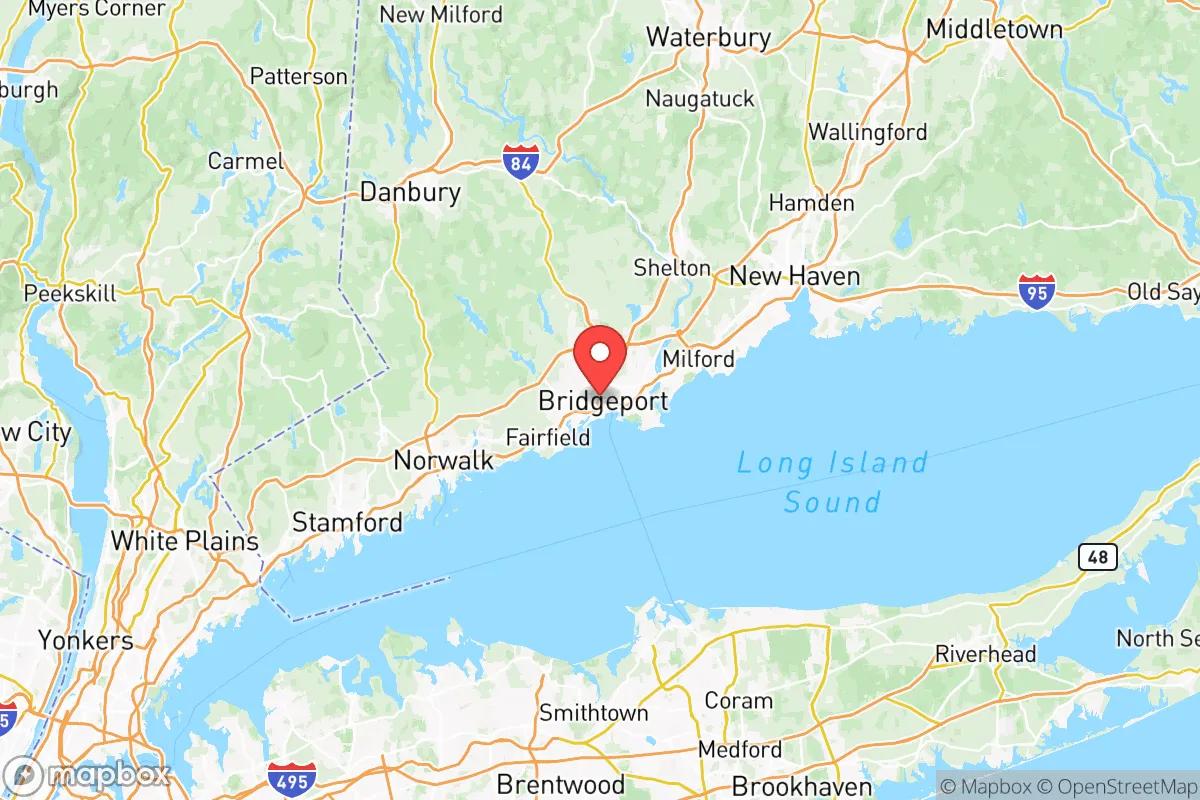
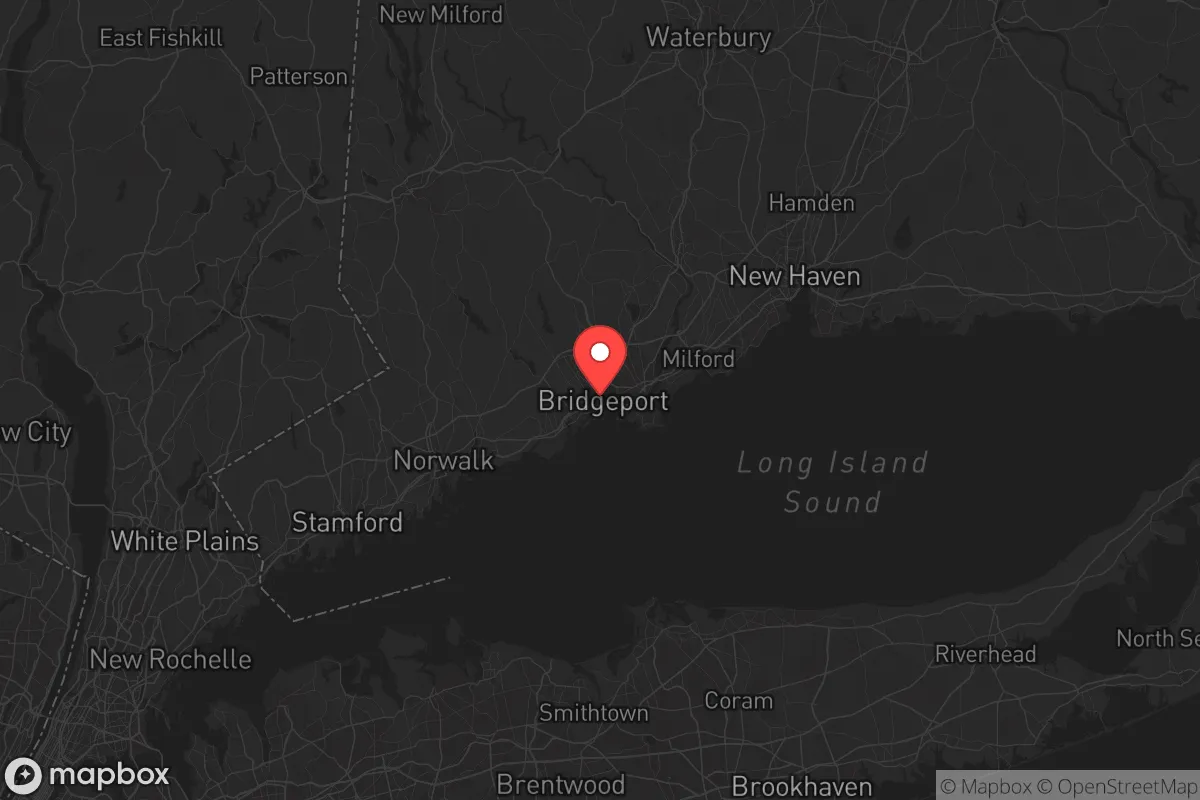
The people of Greater Bridgeport Planning Region County, Connecticut form a densely populated, historically industrial corridor of 326,296 residents, characterized by a majority-minority population where non-Hispanic whites make up 53.4% of the total. This is a region of sharp contrasts: historic factory towns like Bridgeport and Stratford sit alongside affluent commuter suburbs such as Fairfield and Trumbull, creating a diverse socioeconomic and ethnic landscape. With a foreign-born population of 10.9% and a college-educated rate of 41.7%, the county is both a working-class anchor and a knowledge-economy hub, shaped by successive waves of European immigration, mid-century suburbanization, and modern Latino and Asian influxes.
Settlement & growth (pre-1960)
Long before European arrival, the region was home to the Paugussett people, an Algonquian-speaking tribe who inhabited the coastal areas along the Housatonic River and Long Island Sound. English colonists from the Massachusetts Bay Colony began settling the area in the 1630s, establishing the town of Stratford in 1639 and Fairfield in 1639 as agricultural communities. These early settlements were Puritan strongholds, and the region remained predominantly English and agrarian through the colonial period.
The industrial revolution transformed the county in the 19th century. Bridgeport, incorporated as a city in 1836, became a manufacturing powerhouse, drawing waves of European immigrants. Irish laborers arrived in the 1840s and 1850s, fleeing the Great Famine and working on the railroads and in the factories. German immigrants followed in the 1850s and 1860s, settling in Bridgeport's East Side and in Stratford, where they established breweries and machine shops. By the 1880s, Italian and Polish immigrants began arriving in large numbers, taking jobs in Bridgeport's brass mills, sewing machine factories, and munitions plants. The city's population exploded from 18,000 in 1860 to over 100,000 by 1910, making it one of the most densely populated cities in New England.
The early 20th century brought a second wave of Italian and Eastern European immigration, with Bridgeport and Stratford absorbing most of the newcomers. The city's East End and South End became heavily Italian and Polish enclaves, while a smaller but significant Jewish community concentrated in the North End and in Fairfield. The post-World War II era saw a dramatic shift: the 1950s and 1960s brought an influx of African American families from the South during the Great Migration, drawn by defense-industry jobs at companies like Sikorsky Aircraft in Stratford and General Electric in Bridgeport. At the same time, white ethnic families began moving to new suburban developments in Trumbull, Monroe, and Easton, reshaping the county's demographic geography.
Modern era (post-1965)
The 1965 Hart-Cellar Act fundamentally altered the county's population. The most significant post-1965 shift has been the explosive growth of the Hispanic population, which now stands at 26.1% of the county's residents. Puerto Ricans began arriving in the 1960s and 1970s, settling primarily in Bridgeport's East Side and South End, followed by a wave of Dominican and Guatemalan immigrants in the 1990s and 2000s. Today, Bridgeport is a majority-Hispanic city, with vibrant bodegas, Latin American restaurants, and cultural festivals defining its commercial corridors. Smaller but growing Hispanic communities have also formed in Stratford and Fairfield.
The Asian population, at 3.1% East and Southeast Asian and 2.1% Indian subcontinent, is a smaller but rapidly growing segment. East Asian communities, particularly Chinese and Vietnamese, have concentrated in Fairfield and Trumbull, drawn by strong school systems and proximity to corporate jobs in Stamford and New York City. The Indian subcontinent population, including families from India, Pakistan, and Bangladesh, has grown notably in Monroe and Trumbull, where tech and finance professionals have settled. The Black population, at 11.1%, is concentrated in Bridgeport and Stratford, with a smaller presence in Fairfield. This community includes both long-established families from the Great Migration and newer immigrants from Jamaica and Haiti.
Domestic migration has also reshaped the county. The 1970s and 1980s saw significant white flight from Bridgeport to the surrounding suburbs, a trend that has slowed but not reversed. In the 2000s and 2010s, the county attracted young professionals and families priced out of Fairfield County's more expensive towns like Westport and Darien, settling in Fairfield, Trumbull, and Stratford. The county's population has remained relatively stable since 2010, with growth concentrated in the more affluent suburbs while Bridgeport has seen modest declines.
The future
The county is becoming more diverse, but at a slower pace than the national average. The Hispanic share is projected to continue rising, potentially reaching 30-32% by 2040, driven by both immigration and higher birth rates. The Asian and Indian subcontinent populations are expected to grow steadily, particularly in Trumbull and Monroe, as these communities are drawn to the region's strong school districts and proximity to New York City's job market. The non-Hispanic white population, already a slim majority at 53.4%, will likely fall below 50% within the next decade, making the county majority-minority.
New immigrant communities are dispersing more than in previous generations. While Bridgeport remains the primary entry point for Latino immigrants, second-generation families are moving to Stratford, Fairfield, and even Easton. The county's cultural identity is evolving from a historically white ethnic, industrial character to a more polyglot, suburban one. The biggest demographic wildcard is housing affordability: if the region's high cost of living continues to push out middle-class families, the county could see a bifurcation between wealthy, educated suburbs and a poorer, more diverse urban core.
For someone moving in now, Greater Bridgeport Planning Region County offers a mix of urban energy and suburban stability, with a population that is increasingly diverse but still retains strong ethnic enclaves and community identities. The region is becoming more cosmopolitan, but its industrial roots and working-class character remain visible in its neighborhoods, schools, and local politics. The key trend to watch is the continued suburbanization of diversity, as immigrant communities spread beyond Bridgeport into the surrounding towns, reshaping the county's social and political landscape over the next generation.

* Values derived from national, state, county, city and local statistics and may differ in a specific area. Last updated: 2026-06-29T12:22:02.000Z
Narrative content on this page is AI-generated and may contain mistakes. Verify any details that matter before acting on them.
ReloMaps may earn a commission from affiliate links at no extra cost to you.

