Political ClimatePolitical Climate in Capitol Planning Region County
Showing district-level results — no local-only data available.
Local Political AnalysisPolitical Analysis of Capitol Planning Region County
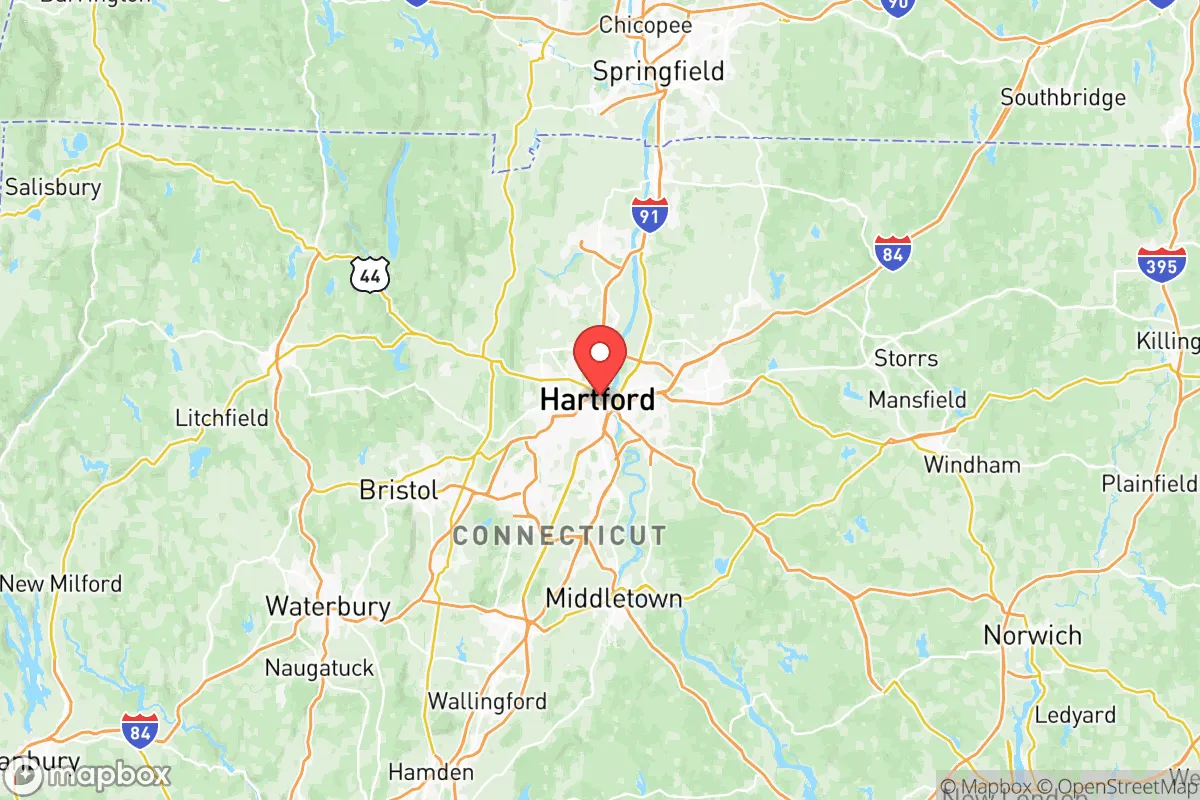
Capitol Planning Region County leans solidly Democratic with a Cook PVI of D+12, meaning it votes about 12 points more Democratic than the national average. That's four points bluer than Connecticut's state PVI of D+8, and the gap has widened over the last decade as suburban towns like West Hartford and Glastonbury have shifted further left while rural pockets like Andover and Bolton remain reliably red. If you look at the 2020 presidential results, Joe Biden carried the county by a comfortable margin – but you can still find plenty of Trump signs in the more exurban and farming areas east of the Connecticut River, especially in towns like Hebron and Coventry.
How it compares
Compared to Connecticut as a whole, the Capitol Planning Region is notably more progressive on social and environmental issues. The state's D+8 PVI already reflects a blue state, but this region's D+12 is driven by the concentration of state government employees, universities (UConn Hartford, Trinity College, Central Connecticut State University), and the headquarters of major insurance companies like Aetna and The Hartford. Towns like Hartford and New Britain are deeply Democratic – Hartford hasn't voted Republican for president in decades. In contrast, West Hartford and Simsbury rank among the most liberal suburbs in the entire state. Yet you can't paint the whole county with one brush: Southington voted for Trump in 2016 then flipped to Biden in 2020, making it a classic swing town. Bristol and Enfield are more moderate blue-leaning, while Suffield and Granby have noticeable Republican pres

State Political ClimatePolitical Climate in Connecticut
State Political AnalysisPolitical Environment in the State
Connecticut has long been a solidly blue state, carrying a Cook PVI of D+8 that reflects a consistent Democratic lean in presidential elections, but the reality on the ground is far more nuanced than a single number suggests. The state’s political identity is shaped by a deep urban-rural divide, a powerful suburban swing vote, and a fiscal conservatism that often clashes with its social liberalism. Over the last 20 years, the Democratic advantage has solidified in the wealthy, commuter-heavy towns of Fairfield County and the old industrial cities, while the rural eastern and northwestern corners have drifted rightward, creating a state that feels like two different countries depending on which exit you take off I-84.
Urban vs. rural divide
The political map of Connecticut is essentially a tale of three regions. The urban core—Hartford, New Haven, and Bridgeport—votes overwhelmingly Democratic, often delivering 70-80% of the vote to the party’s candidates. These cities are home to large minority populations, unionized public-sector workers, and a heavy concentration of state government employees, all of whom form the bedrock of the Democratic coalition. In contrast, the rural towns of Litchfield County (like Torrington and Kent) and the quiet corners of Windham County (think Brooklyn or Killingly) lean Republican, often by double digits, driven by gun rights, lower taxes, and a suspicion of Hartford’s one-size-fits-all mandates. The real battleground, however, is the suburbs of Fairfield County—towns like Greenwich, Darien, and Westport—where high-income, highly educated voters have trended blue over the past decade, flipping formerly red seats in the state legislature. This suburban shift, fueled by nationalized politics and a distaste for Trump-era Republicanism, is what keeps the state’s overall lean firmly Democratic, even as the rural areas grow more conservative.
Policy environment
Connecticut’s policy environment is a study in contradictions. On one hand, the state has a progressive tax structure with a top marginal income tax rate of 6.99% and a property tax system that is among the highest in the nation—the average effective property tax rate hovers around 2.1%, meaning a $400,000 home carries an annual bill of roughly $8,400. On the other hand, the state has a strong fiscal guardrail law (the “fiscal guardrails” passed in 2017) that caps spending growth and requires surplus revenue to be used for debt repayment, a move that has earned Connecticut rare praise from conservative fiscal watchdogs. Education policy is heavily centralized, with the state’s “Open Choice” program allowing inter-district transfers, but school funding remains a perennial flashpoint, with wealthy towns like Westport spending over $20,000 per student while poorer districts like Waterbury struggle to keep up. Healthcare is dominated by a strong insurance mandate and the state’s own exchange, Access Health CT, which has kept uninsured rates low but premiums high. Election laws are among the most accessible in the country: no-excuse absentee voting was made permanent in 2023, and same-day voter registration is available, though voter ID laws are minimal—a point of contention for conservatives who worry about ballot integrity.
Recent policy direction
Over the past five years, Connecticut has moved decisively left on several fronts, but with notable exceptions that matter to a conservative relocator. On gun law, the state passed some of the strictest regulations in the nation after the 2012 Sandy Hook shooting, including a ban on “assault weapons,” high-capacity magazines, and a requirement for safe storage. In 2023, the legislature expanded the ban to include more semi-automatic firearms and raised the purchasing age to 21—a move that has driven some gun owners to neighboring states. On parental rights and education, the state has been a battleground: in 2022, a bill requiring schools to notify parents of changes to a student’s gender identity or sexual orientation failed, but the issue remains alive, with conservative towns like Monroe and Southington pushing for local opt-outs. On medical and bodily autonomy, Connecticut has been a safe haven: in 2022, the legislature passed a law protecting out-of-state abortion providers and patients from prosecution, and it expanded access to gender-affirming care for minors, making it one of the most protective states in the Northeast for these rights. Property rights are relatively strong—there is no statewide rent control, and zoning is largely local—but the state’s “fair share” housing law, passed in 2023, requires towns to plan for more affordable housing, which has sparked backlash in wealthy suburbs. On privacy and surveillance, Connecticut banned the use of facial recognition technology by law enforcement in 2022, a rare bipartisan win. On voting, the 2023 expansion of early voting (14 days) and no-excuse absentee ballots has made casting a ballot easier, but conservatives argue it weakens election security, especially given the state’s lack of strict voter ID requirements.
Civil unrest & political movements
Connecticut is not known for the kind of dramatic civil unrest seen in larger states, but it has its flashpoints. The Black Lives Matter protests in 2020 were large and sustained in New Haven and Hartford, leading to the passage of a police accountability bill that banned chokeholds and created a statewide use-of-force standard. On the right, the “Second Amendment sanctuary” movement gained traction in rural towns like Woodstock and Easton, where local boards passed resolutions vowing not to enforce new gun laws. Immigration politics are a quieter but persistent issue: Connecticut is a “sanctuary state” under a 2013 law that limits cooperation between local police and federal immigration authorities, and in 2024, the legislature considered a bill to further restrict ICE detainers, though it stalled. The most visible political movement in recent years has been the “Fairfield County exodus” narrative—wealthy families moving to Florida or Texas for lower taxes—which has driven a small but vocal libertarian-leaning contingent that pushes for spending caps and tax reform. Election integrity controversies have been minimal compared to swing states, but in 2020, a few rural towns reported minor irregularities with absentee ballots, fueling local GOP calls for stricter ID laws that have so far gone nowhere.
Projection
Looking ahead five to ten years, Connecticut’s political trajectory is likely to remain blue, but with growing internal friction. The demographic trends are clear: the state’s population is aging and slowly declining, with the biggest losses in rural areas and the biggest gains in the wealthy, diverse suburbs of Fairfield County. This means the Democratic coalition will likely strengthen in the state legislature, as the rural Republican base shrinks. However, the fiscal pressure is mounting—the state’s pension debt still sits at over $30 billion, and the fiscal guardrails, while popular, may not be enough to prevent future tax hikes if the economy slows. A conservative relocator moving in now should expect to find a state where their vote in a presidential election will not matter, but their vote in local town council and school board races will be decisive. The suburbs will continue to be the battleground for issues like school curriculum, housing density, and property taxes, while the cities will push for more social spending and gun control. The wildcard is the potential for a major tax revolt if the state’s fiscal situation worsens, but for now, the path of least resistance is a slow, steady drift leftward on social issues, tempered by a grudging fiscal pragmatism.
For a new resident, the bottom line is this: Connecticut offers a high quality of life with excellent schools, low crime in most suburbs, and proximity to New York and Boston, but it comes with a high cost of living and a political environment that will feel comfortable to a liberal and frustrating to a conservative. If you are a conservative, you will find your people in the rural towns and some outer suburbs, but you will be fighting an uphill battle on state-level issues like taxes, guns, and education. If you are a liberal, you will find a state that largely aligns with your values, but you will also encounter a stubborn fiscal conservatism that keeps the state from going full California. Either way, the key is to pick your town carefully—the difference between Greenwich and Torrington is not just a 90-minute drive, but a fundamentally different political universe.
* Values derived from national, state, county, city and local statistics and may differ in a specific area. Last updated: 2026-06-22T07:56:12.000Z
Narrative content on this page is AI-generated and may contain mistakes. Verify any details that matter before acting on them.
ReloMaps may earn a commission from affiliate links at no extra cost to you.

