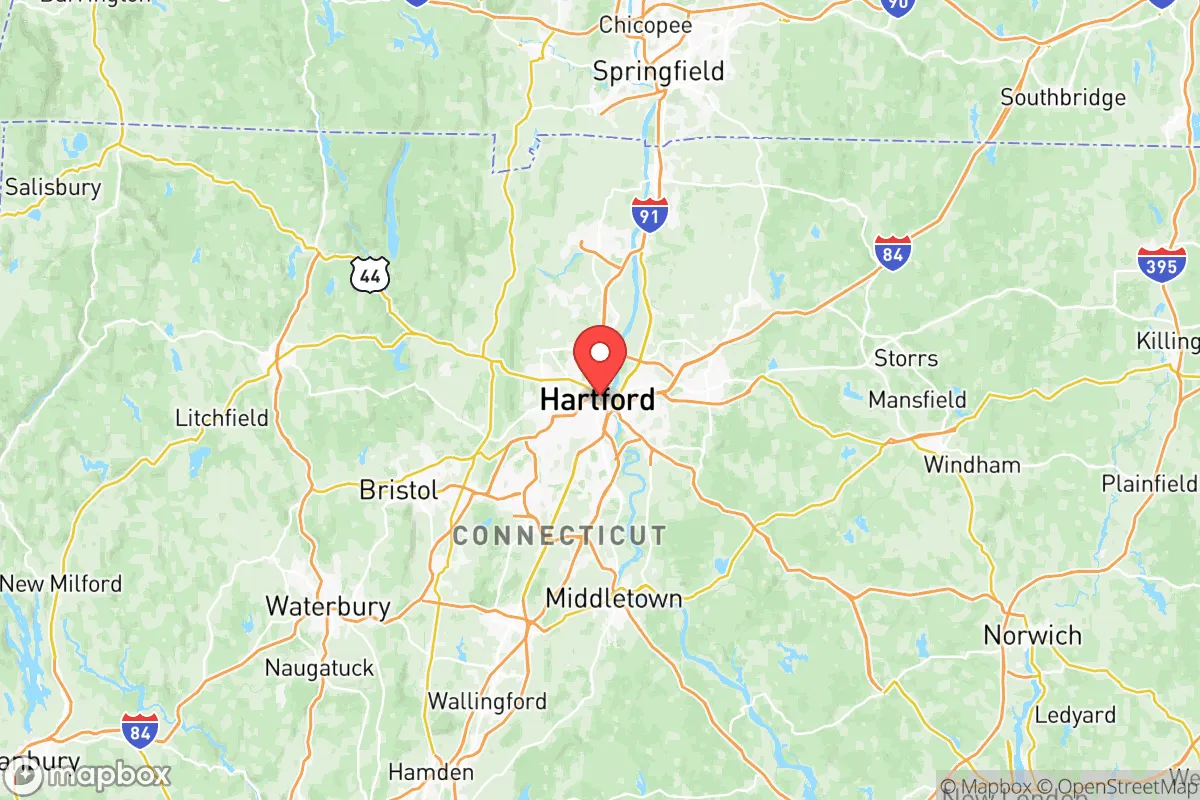
Personal Sovereignty in Capitol Planning Region County
Viable for self-reliance. Generally workable, though some barriers may limit total independence.
What does Personal Sovereignty tell us?
Personal Sovereignty measures your capacity for self-reliance and independence with minimal government friction. Higher scores mean fewer barriers between you and the way you want to live... but it assumes you have the space you need and good neighbors.
What does this tell us?
Personal Sovereignty measures your capacity for self-reliance and independence with minimal government friction. Higher scores mean fewer barriers between you and the way you want to live... but it assumes you have the space you need and good neighbors.
State Policy
Energy independence: Importer (5% of energy produced in-state)
Personal Liberty
Homesteading

Personal Liberty Analysis
The Capitol Planning Region of Connecticut, encompassing the greater Hartford area and its surrounding suburbs, presents a complex environment for personal sovereignty that varies significantly by municipality. While Connecticut as a whole is known for a more active regulatory posture compared to many states, the specific towns within this region—from the urban core of Hartford to the more rural fringes of Somers and Coventry—offer distinct trade-offs for individuals and families prioritizing autonomy. The region’s legal framework generally leans toward collective security and environmental stewardship, which can constrain certain personal freedoms, but local zoning, tax rates, and community culture create pockets where self-reliance is more attainable.
Tax burden and regulatory posture across Capitol Planning Region towns
Connecticut’s state-level tax burden is among the highest in the nation, and the Capitol Planning Region reflects this. The state income tax ranges from 3% to 6.99%, and property taxes are locally set, averaging roughly 2.1% of assessed home value—a figure that can be a shock for newcomers from lower-tax states. However, within the region, there is meaningful variation. Towns like Avon and Farmington have high property tax rates (around 2.5% to 2.7%) but offer excellent public services and low crime, appealing to families who value stability over low overhead. In contrast, Hartford itself has a mill rate that can exceed 7.4%, but this is partially offset by lower home values; the city’s regulatory posture is dense, with strict building codes, rental registration, and business licensing. For a freedom-oriented reader, the suburban towns of South Windsor or Enfield may offer a better balance—moderate property taxes (around 2.0% to 2.3%) and a more permissive local government that does not heavily interfere with home-based businesses or minor renovations. The state’s regulatory posture is heavy on environmental compliance—wetlands protection, septic system rules, and energy codes are enforced uniformly—so any homesteading or construction project will require permits and inspections, a reality that limits truly unregulated autonomy.
Self-defense rights and Connecticut’s gun law specifics in the region
Connecticut has some of the strictest firearm laws in the country, and the Capitol Planning Region is no exception. The state requires a permit to purchase any handgun or long gun, a background check for all sales (including private ones), and a permit to carry a concealed handgun, which is issued on a “may-issue” basis—meaning local authorities have discretion. In practice, permits are generally granted in most towns, but the process involves a safety course, fingerprinting, and a wait of several weeks. Hartford and New Britain have historically been more restrictive in issuing permits, with longer processing times and occasional denials for applicants without a specific self-defense need. In contrast, towns like Somers and Coventry—more rural and with a stronger hunting culture—tend to process permits more efficiently and have a more gun-friendly local culture. The state also bans “assault weapons” and high-capacity magazines, and has a safe storage law that requires firearms to be locked when not in use. For a reader prioritizing self-defense rights, the Capitol Planning Region is not a permissive environment; the legal hurdles are real, and the culture in urban centers is less supportive of armed self-reliance. However, the more rural towns offer a community where firearm ownership for hunting and sport is normalized, even if the state-level restrictions remain binding.
Self-reliance and homesteading viability: lot sizes, zoning, and off-grid feasibility
Homesteading and off-grid living are challenging in the Capitol Planning Region due to dense zoning and environmental regulations, but not impossible. The region is largely suburban, with minimum lot sizes typically ranging from 0.5 to 2 acres in towns like Glastonbury and Manchester. For serious self-reliance—raising livestock, growing substantial food, or installing solar panels with battery backup—larger parcels are needed. Coventry and Stafford offer more rural zoning, with minimum lot sizes of 2 to 5 acres, and some properties have existing wells and septic systems, reducing dependency on municipal utilities. Off-grid living is legally difficult: Connecticut requires connection to the electrical grid for new construction in most areas, and rainwater collection is restricted for potable use (though allowed for irrigation). Solar panels are permitted but must meet state net-metering rules, and composting toilets require health department approval. The state’s strong environmental regulations mean that clearing land, building ponds, or installing wind turbines triggers extensive permitting. For a family wanting to grow their own food and reduce utility bills, towns like Enfield or Suffield—with larger lots and more agricultural zoning—are the best bets. However, full off-grid independence is not legally feasible; the region’s regulatory framework is designed to ensure grid connection and environmental compliance, which limits the degree of self-reliance a homesteader can achieve.
Personal liberties: parental rights, medical autonomy, speech, and property
Connecticut’s legal environment generally prioritizes collective welfare over individual autonomy in several key areas. Parental rights are strong in theory—parents have broad authority over their children’s education, medical care, and upbringing—but the state mandates school attendance until age 18, and homeschooling requires annual notice and portfolio review. Medical autonomy is constrained: the state has strict vaccine mandates for school attendance (though medical and religious exemptions exist), and assisted suicide is legal but tightly regulated. During the COVID-19 pandemic, Connecticut had some of the longest-lasting mask and vaccine mandates in the Northeast, which may concern readers who prioritize medical freedom. Speech is protected under the First Amendment, but the state has hate speech laws that can be applied in cases of harassment, and defamation laws are standard. Property rights are limited by strong eminent domain powers and extensive zoning regulations; the state’s “fair share” housing laws require towns to allow multi-family housing, which can conflict with a property owner’s desire to maintain a low-density neighborhood. In towns like Avon and Farmington, property values are high and regulations are strictly enforced, while in Hartford, property rights are further constrained by rent control and tenant protection ordinances. For a reader valuing personal liberties, the region offers a mixed picture: strong protections for speech and parental choice in education, but significant state involvement in medical decisions, property use, and housing policy.
Overall, the Capitol Planning Region of Connecticut is not a high-sovereignty environment compared to states like New Hampshire or Texas. The tax burden is heavy, gun laws are restrictive, and off-grid living is legally difficult. However, within the region, towns like Coventry, Somers, and Stafford offer more room for self-reliance—larger lots, a gun-friendly culture, and less intrusive local government—while urban centers like Hartford and New Britain are more restrictive. For a freedom-oriented individual or family, the best strategy is to choose a town with lower property taxes, larger minimum lot sizes, and a local government that is less interventionist, while accepting that state-level constraints on firearms, medical autonomy, and property use are unlikely to change. The region is a compromise: it offers stability, good schools, and natural beauty, but at the cost of significant regulatory oversight that limits personal sovereignty.

* Values derived from national, state, county, city and local statistics and may differ in a specific area. Last updated: 2026-06-22T07:56:12.000Z
Narrative content on this page is AI-generated and may contain mistakes. Verify any details that matter before acting on them.
ReloMaps may earn a commission from affiliate links at no extra cost to you.

