Demographics of Capitol Planning Region County
Historical data isn't available for Capitol Planning Region County. Trends shown are for Connecticut.
Affluence Level in Capitol Planning Region County
A middle-class area roughly in line with national averages across income, home values, education, and employment.
People of Capitol Planning Region County
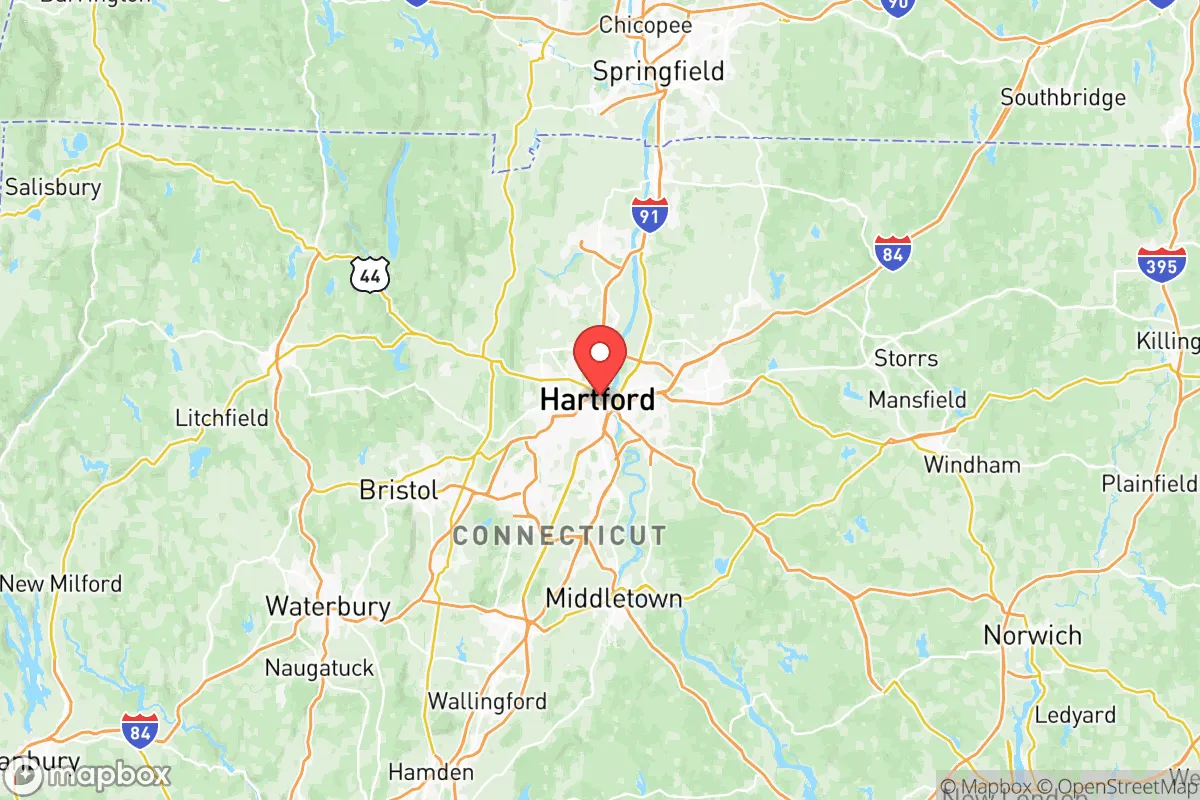
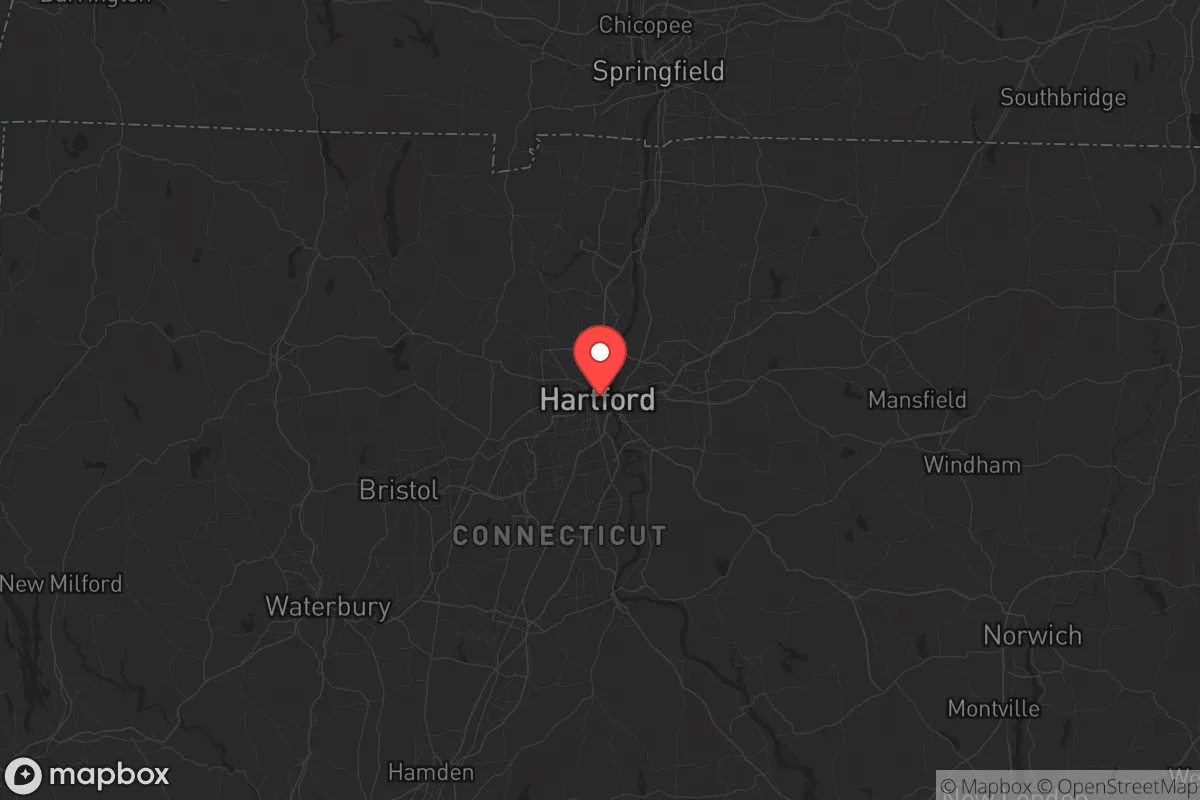
The people of Capitol Planning Region County, Connecticut — a region anchored by Hartford and encompassing 29 towns — number 969,029 as of the latest estimates, making it the state’s most populous county. The population is predominantly White (60.9%), with a significant Hispanic community (17.4%), a Black population of 11.5%, and growing East/Southeast Asian (2.4%) and Indian-subcontinent (3.5%) communities. With 41.5% of adults holding a college degree, the county is highly educated, but its character is defined by a mix of historic industrial cities, affluent suburbs, and rural towns, creating a complex identity that blends New England tradition with increasing diversity.
Settlement & growth (pre-1960)
The land now called Capitol Planning Region County was originally inhabited by the Algonquian-speaking tribes, including the Podunk, Wangunk, and Tunxis peoples, who lived along the Connecticut River and its tributaries for thousands of years. English Puritan settlers from the Massachusetts Bay Colony arrived in the 1630s, founding Hartford in 1635 and Windsor in 1633, establishing the region as a center of colonial governance and trade. The Dutch had briefly operated a trading post at the mouth of the Park River, but English control solidified quickly, and the area became a key part of the Connecticut Colony.
Through the 18th and early 19th centuries, the population grew slowly, dominated by English-descended Yankees who farmed the fertile Connecticut River Valley and established small manufacturing in towns like Manchester and South Windsor. The Industrial Revolution transformed the region after 1820, as Hartford became a hub for insurance, firearms manufacturing (Colt, Smith & Wesson), and precision manufacturing. This drew a wave of Irish immigrants in the 1840s and 1850s, fleeing the Great Famine, who settled in Hartford’s South End and East Hartford, working in factories and on the railroad. By 1870, the Irish made up roughly 15% of Hartford’s population.
French-Canadian immigrants arrived in large numbers between 1860 and 1900, drawn by textile mills and manufacturing jobs in Manchester, Rockville (now part of Vernon), and Bristol. They established tight-knit parishes and neighborhoods, such as the “French Hill” area of Manchester, where French was spoken in homes and churches well into the 20th century. Simultaneously, Italian immigrants began arriving in the 1880s, settling heavily in Hartford’s “Little Italy” (the Franklin Avenue neighborhood) and in New Britain, where they worked in hardware and tool factories. Polish immigrants followed in the 1890s and early 1900s, concentrating in New Britain’s Broad Street area and in Bristol, forming strong Catholic communities.
The Great Migration of African Americans from the South began during World War I and accelerated through the 1940s and 1950s, as Hartford’s industrial base — especially Colt, Pratt & Whitney, and the insurance sector — offered steady employment. Black families settled primarily in Hartford’s North End and in the Blue Hills neighborhood, as well as in Bloomfield and Windsor. By 1960, Hartford was roughly 20% Black, while the surrounding suburbs remained overwhelmingly White. The post-World War II suburban boom, fueled by the GI Bill and highway construction (I-84, I-91), saw White families move to towns like West Hartford, Glastonbury, and Farmington, reshaping the county’s population distribution.
Modern era (post-1965)
The 1965 Hart-Cellar Act fundamentally altered the county’s demographics. Prior to 1965, immigration was overwhelmingly European; afterward, new flows came from Latin America, Asia, and the Caribbean. The most dramatic shift has been the growth of the Hispanic population, which rose from under 2% in 1970 to 17.4% today. Puerto Ricans began arriving in the 1950s and 1960s as U.S. citizens, settling in Hartford’s South End and Park Street corridor, which became the cultural and commercial heart of the Puerto Rican community. Since the 1990s, immigrants from the Dominican Republic, Mexico, and Central America have also settled in Hartford and New Britain, with New Britain’s Hispanic population now exceeding 40%.
East/Southeast Asian communities, now 2.4% of the county, began growing after 1965, with a significant wave of Vietnamese refugees arriving after 1975, settling in Hartford and West Hartford. Chinese and Korean immigrants have concentrated in the suburbs, particularly in Avon, Farmington, and Glastonbury, drawn by excellent schools and professional opportunities in the insurance and healthcare sectors. The Indian-subcontinent population (3.5%) has grown rapidly since the 1990s, driven by H-1B visa holders and their families working in technology, finance, and medicine. They have concentrated in West Hartford, Avon, and Simsbury, where Indian grocery stores, temples, and cultural organizations are now well-established.
Domestic migration has also reshaped the county. Since the 1980s, the region has experienced net domestic out-migration, as residents moved to the Sun Belt (Florida, the Carolinas, Texas) for lower taxes and warmer weather. However, the county has gained population through international immigration, which has offset some losses. The Black population, 11.5% of the county, has become more suburbanized since 1990, with significant growth in Bloomfield, Windsor, and East Hartford, while Hartford’s Black population has declined slightly. The White population has aged and declined in Hartford and older industrial suburbs, but remains dominant in wealthier towns like Avon, Farmington, and Glastonbury.
The future
The population of Capitol Planning Region County is projected to remain stable or decline slightly over the next 10-20 years, as the region’s low birth rate and continued domestic out-migration are only partially offset by international immigration. The Hispanic share is expected to continue rising, potentially reaching 22-25% by 2040, driven by both immigration and higher birth rates. The East/Southeast Asian and Indian-subcontinent populations will likely grow further, as the region’s insurance, healthcare, and technology sectors continue to attract skilled immigrants. The White population, particularly in older suburbs, will continue to age and shrink, while younger White families may be drawn to more affordable towns like Enfield, South Windsor, and Vernon.
Diversity is increasing, but it is unevenly distributed. Hartford and New Britain will remain majority-minority cities, while wealthier suburbs like Avon, Glastonbury, and West Hartford will become more diverse but remain majority-White. The cultural identity of the county is evolving from its historic Yankee-Irish-Italian-French-Canadian base toward a more pluralistic mix, though tensions over school funding, housing affordability, and political representation persist. The region is unlikely to experience explosive growth, but it will become more ethnically and racially varied, with new communities dispersing into suburbs rather than concentrating solely in the urban core.
For someone moving in now, Capitol Planning Region County offers a stable, educated, and increasingly diverse environment, with strong schools in the suburbs and a revitalizing urban core in Hartford. The trade-off is a high cost of living and property taxes, balanced by access to New England’s cultural and natural amenities. The county is becoming a place where historic New England character meets 21st-century diversity — a transition that will define its next chapter.

* Values derived from national, state, county, city and local statistics and may differ in a specific area. Last updated: 2026-06-22T07:56:12.000Z
Narrative content on this page is AI-generated and may contain mistakes. Verify any details that matter before acting on them.
ReloMaps may earn a commission from affiliate links at no extra cost to you.

