
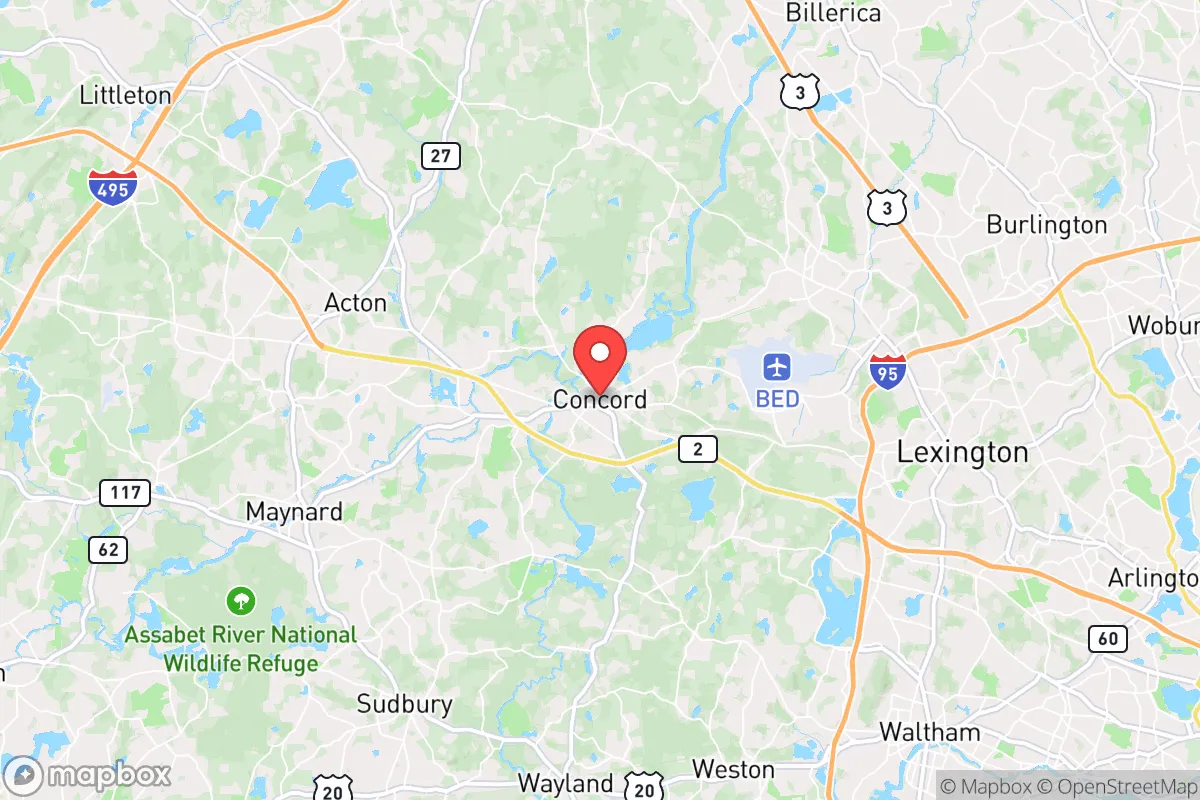
Quality of Life in Concord, MA
A high quality of life with strong walkability, manageable living costs, healthy neighborhood signals, and solid amenity access.
What does Quality of Life tell us?
Quality of Life blends cost of living, nearby amenities, socioeconomic signals, and neighborhood character. City-level scores represent the whole municipality; individual neighborhoods can differ.
What does this tell us?
Quality of Life blends cost of living, nearby amenities, socioeconomic signals, and neighborhood character. City-level scores represent the whole municipality; individual neighborhoods can differ.
Cost of Living
179% above national average
The Real Cost of Living in Concord, MA for 2026
| Tier | Individual | Family (4) |
|---|---|---|
| Survival | $38k | $71k |
| Comfortable | $271k | $399k |
| Luxury | $399k+ | $619k+ |
| Elite (Top 5%) | $569k+ | $882k+ |
55%
The Area Signal
A metric tracking the socioeconomic signals of the area.
Hobbies
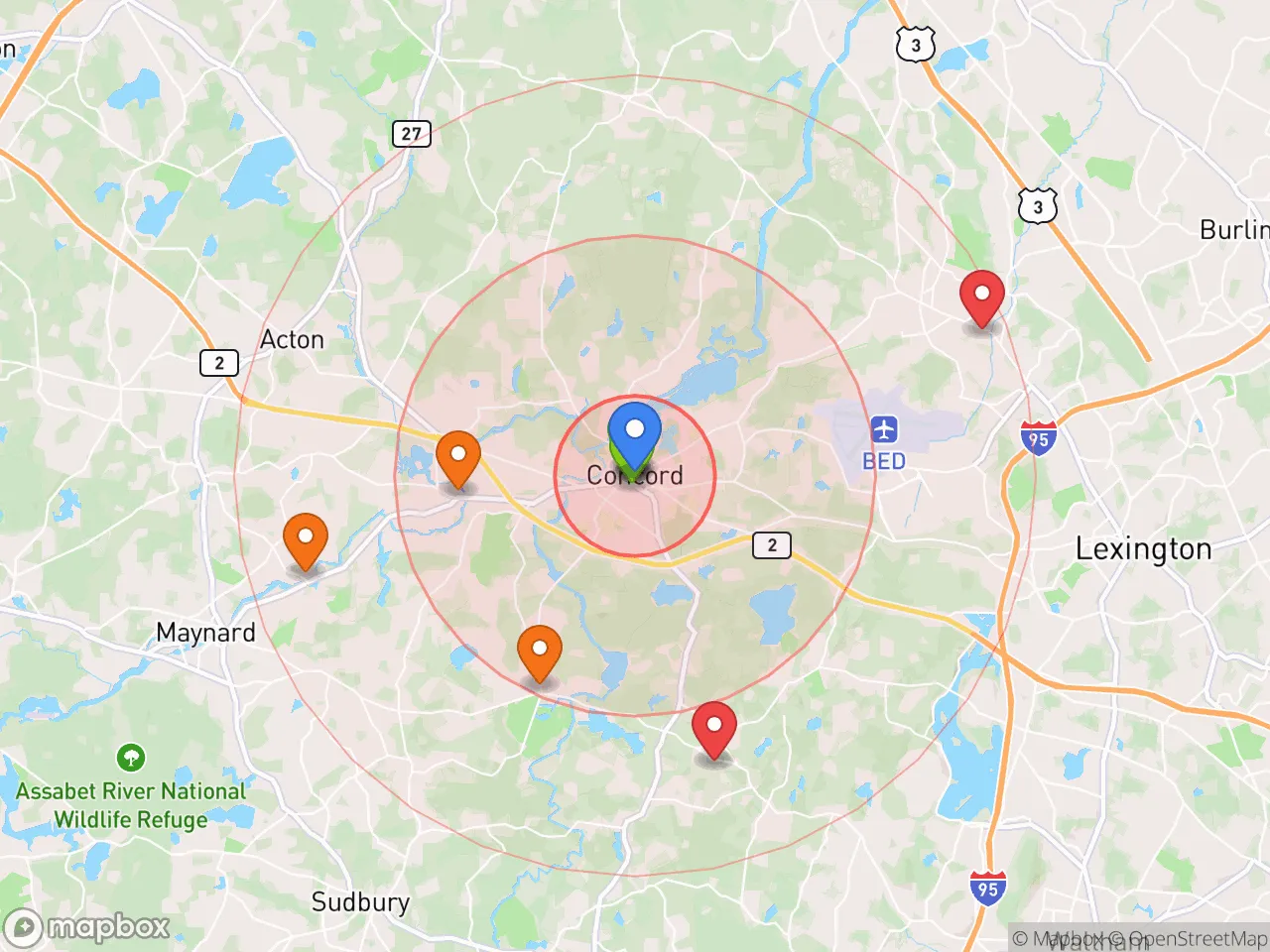
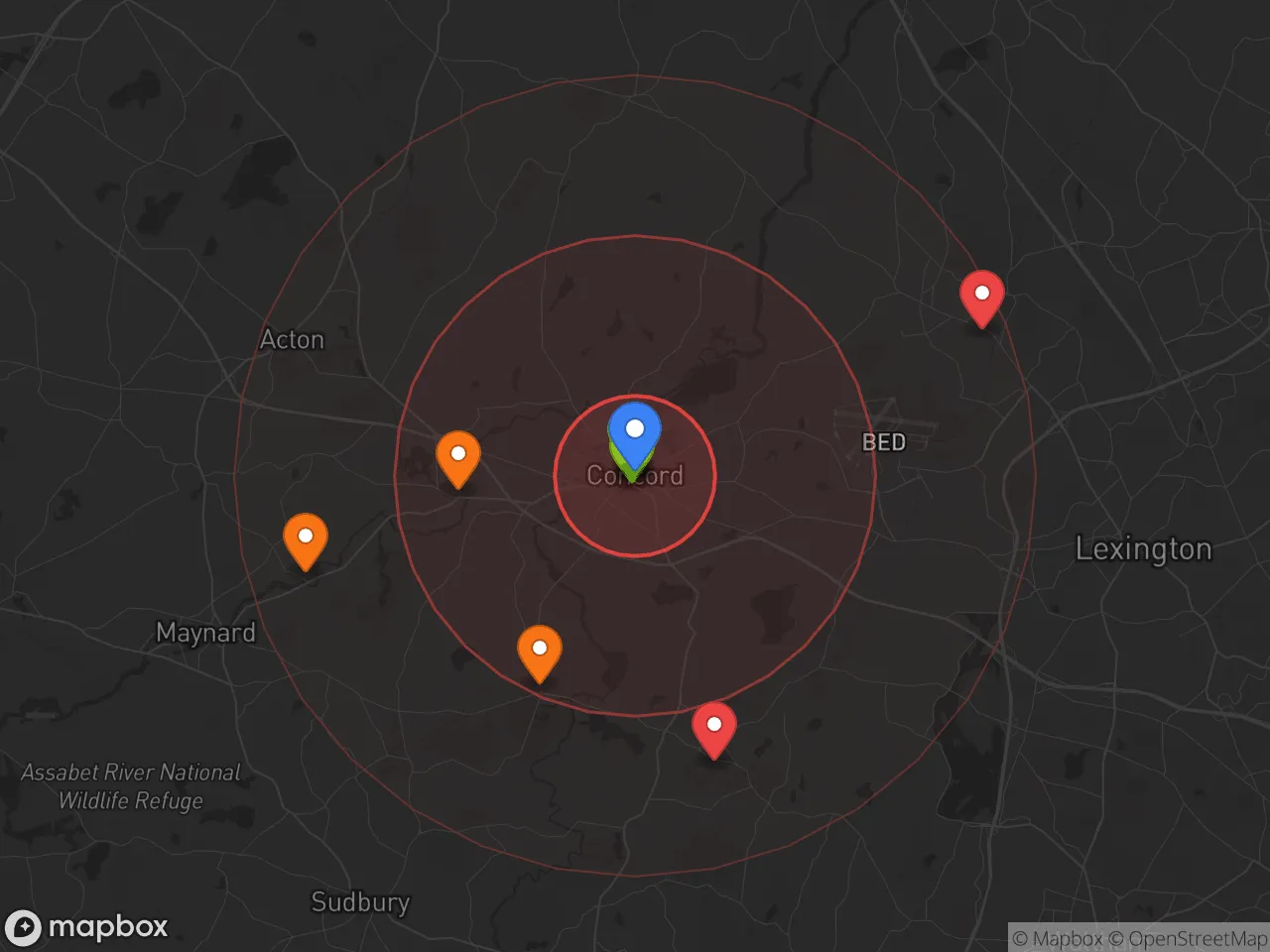
Explore the areaGroceries
7 within 10 miles
Gas
20 within 10 miles
Hospital
20 within 20 miles
Airport
PDX — Portland International Jetport
Post Office
USPS — Concord, MA
Critical Amenities
Quality-of-Life Analysis
Concord, Massachusetts, is one of the most affluent and historically significant towns in Greater Boston, drawing a population of highly educated professionals, academics, and families who prioritize top-tier schools and a preserved New England landscape. With a cost of living index of 279 (nearly three times the U.S. average), the town is overwhelmingly composed of upper-income households, many of whom work in Boston’s finance, tech, and biotech sectors or at nearby institutions like MIT and Harvard. The community is defined by its deep-rooted literary and revolutionary history, with residents valuing walkable village centers, conservation land, and a slower pace of life that contrasts sharply with the urban core.
Cost of living, housing affordability, and how Concord compares to nearby towns
Concord’s cost of living is among the highest in Massachusetts, driven almost entirely by housing. The median home value sits at $1,397,200, placing it well above neighboring towns like Acton (median ~$850,000) and Bedford (~$950,000), though slightly below pricier Weston and Lincoln. Renting offers little relief: the median rent of $1,556 is deceptively low because it reflects a small stock of older, rent-controlled or subsidized units; market-rate two-bedroom apartments typically exceed $2,800 per month. The average commute of 27.8 minutes is manageable by regional standards, with many residents using the Fitchburg Line commuter rail to reach Boston’s North Station in about 45 minutes. Property taxes in Concord run roughly 1.1% of assessed value, which is moderate for Massachusetts, but the high baseline home price means annual tax bills often exceed $15,000. For buyers, the affordability gap versus the national average is stark: a household earning the U.S. median income would need to spend over 80% of gross pay on a mortgage here.
Schools, amenities, and the daily rhythm of life in Concord
Concord’s public school system is a primary draw, with Concord-Carlisle High School consistently ranking among the top 5% of high schools nationally and sending over 90% of graduates to four-year colleges. Daily life revolves around the historic town center, anchored by the Concord Free Public Library, the Old North Bridge, and a walkable array of independent bookstores, farm-to-table restaurants, and boutique shops. Outdoor amenities are exceptional: the town maintains over 1,000 acres of conservation land, including the Great Meadows National Wildlife Refuge and the Walden Pond State Reservation, which draws over 600,000 visitors annually. For groceries and errands, residents rely on the Concord Center Market and nearby West Concord’s small retail strip, while larger shopping is a 15-minute drive to the Burlington Mall or MarketStreet Lynnfield. The cultural calendar is robust, with the Concord Museum, the Umbrella Arts Center, and seasonal farmers’ markets providing year-round activities. The overall rhythm is quiet and family-oriented, with evening social life centered on school events, town committees, and dinner parties rather than nightlife.
Concord is best suited for families and professionals who can absorb its high housing costs in exchange for exceptional schools, deep historical character, and immediate access to nature. Empty-nesters downsizing from larger homes in Weston or Lincoln also find the walkable village appealing. However, young singles, renters on a budget, or anyone seeking a vibrant nightlife scene will likely feel priced out or understimulated. For those who value a preserved, intellectually rich environment and can afford the premium, Concord offers a quality of life that few New England suburbs can match.

Crime in Concord, MA
Lower crime rates than 91% of comparable U.S. locations.
Violent CrimeViolent Crime Analysis
Property CrimeProperty Crime Analysis
Crime Analysis
Concord, Massachusetts, is one of the safest communities in the greater Boston area, with crime rates that are a fraction of both state and national averages. The town’s violent crime rate of 105.7 incidents per 100,000 residents and property crime rate of 489.5 per 100,000 place it well below the Massachusetts averages of 300 and 1,200, respectively, and far below national benchmarks. However, Concord’s location within a large, liberal-leaning metro area introduces a significant caveat: progressive criminal justice policies in Middlesex County and the broader Boston region can undermine local safety by prioritizing offender rehabilitation over public protection, potentially increasing recidivism and street-level crime.
Crime in context
Concord’s violent crime rate is roughly one-third the Massachusetts average and less than one-tenth the national rate of 380 per 100,000. Property crime in Concord is similarly low, at less than half the state average and about one-quarter the national rate of 1,950 per 100,000. These figures reflect a well-policed, affluent suburb with strong community cohesion. Yet the surrounding metro area’s progressive district attorneys and judges—who often favor diversion programs, reduced bail, and lenient sentencing—create a regional environment where offenders from nearby cities like Lowell, Lawrence, and Boston can reoffend with impunity. This dynamic means that while Concord itself is safe, its residents are not insulated from the downstream effects of a justice system that prioritizes sympathy for offenders over accountability.
What residents experience
For Concord residents, daily life is marked by a palpable sense of security. The town’s low crime rates mean that violent incidents like assault or robbery are rare, and property crimes such as burglary and theft are infrequent. Most crime in Concord is non-violent and opportunistic—car break-ins, package thefts, and occasional vandalism. However, the progressive policies of Middlesex County’s District Attorney’s office, which has championed cash bail reform and declined to prosecute certain low-level offenses, mean that repeat property offenders face minimal consequences. This can lead to a frustrating cycle where residents report a break-in, the suspect is arrested, and then quickly released without meaningful penalty. For victims, this lack of justice is a tangible cost of living in a region that prioritizes offender rights over public safety.
Neighborhood-level variation in Concord is minimal but worth noting. The town center and areas near the commuter rail station see slightly higher rates of minor property crime due to foot traffic and transient populations. In contrast, the more secluded residential neighborhoods along the Sudbury River and near Walden Pond experience virtually no crime. Regardless of location, Concord’s safety profile is excellent by any national standard, but the regional justice system’s progressive tilt remains a legitimate concern for residents who value accountability and long-term public safety over ideological leniency.
* Values derived from national, state, county, city and local statistics and may differ in a specific area. Last updated: 2026-08-29T03:40:00.000Z
Narrative content on this page is AI-generated and may contain mistakes. Verify any details that matter before acting on them.
ReloMaps may earn a commission from affiliate links at no extra cost to you.

