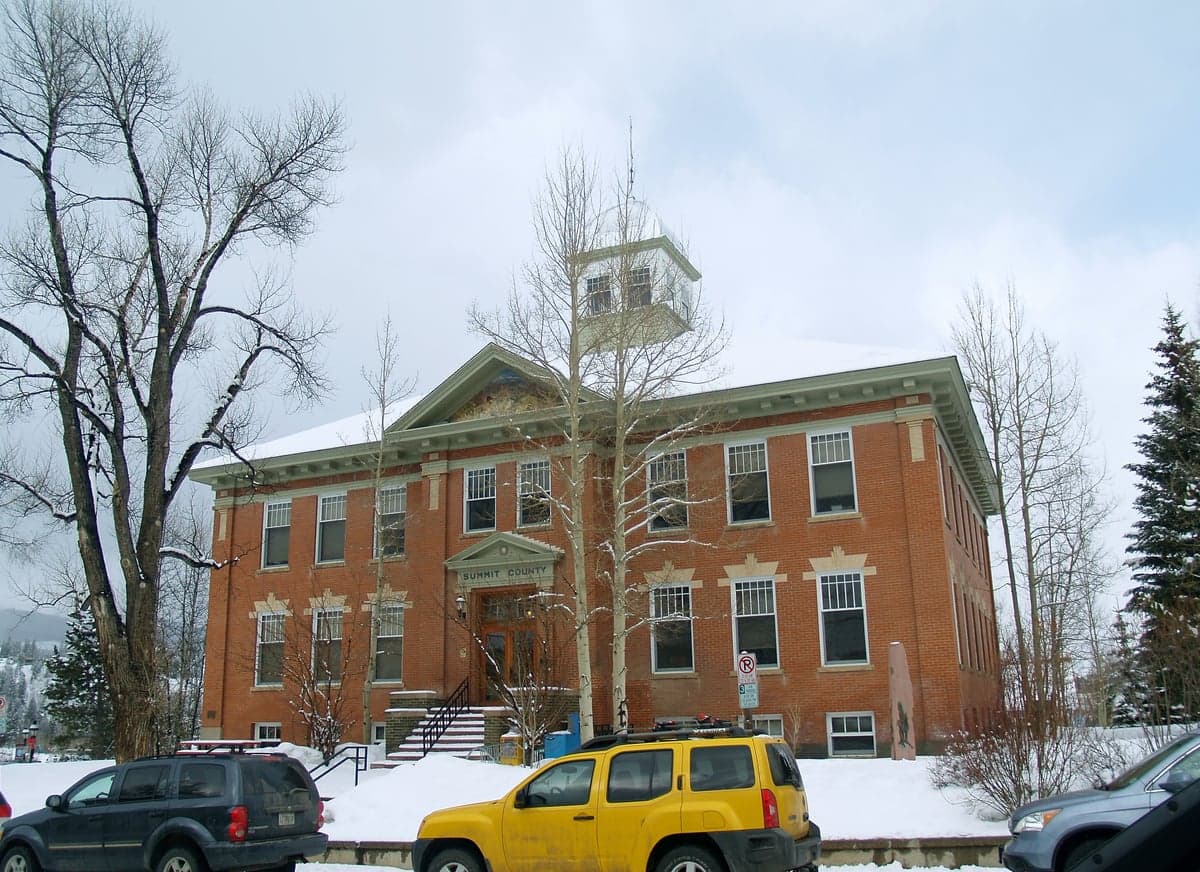
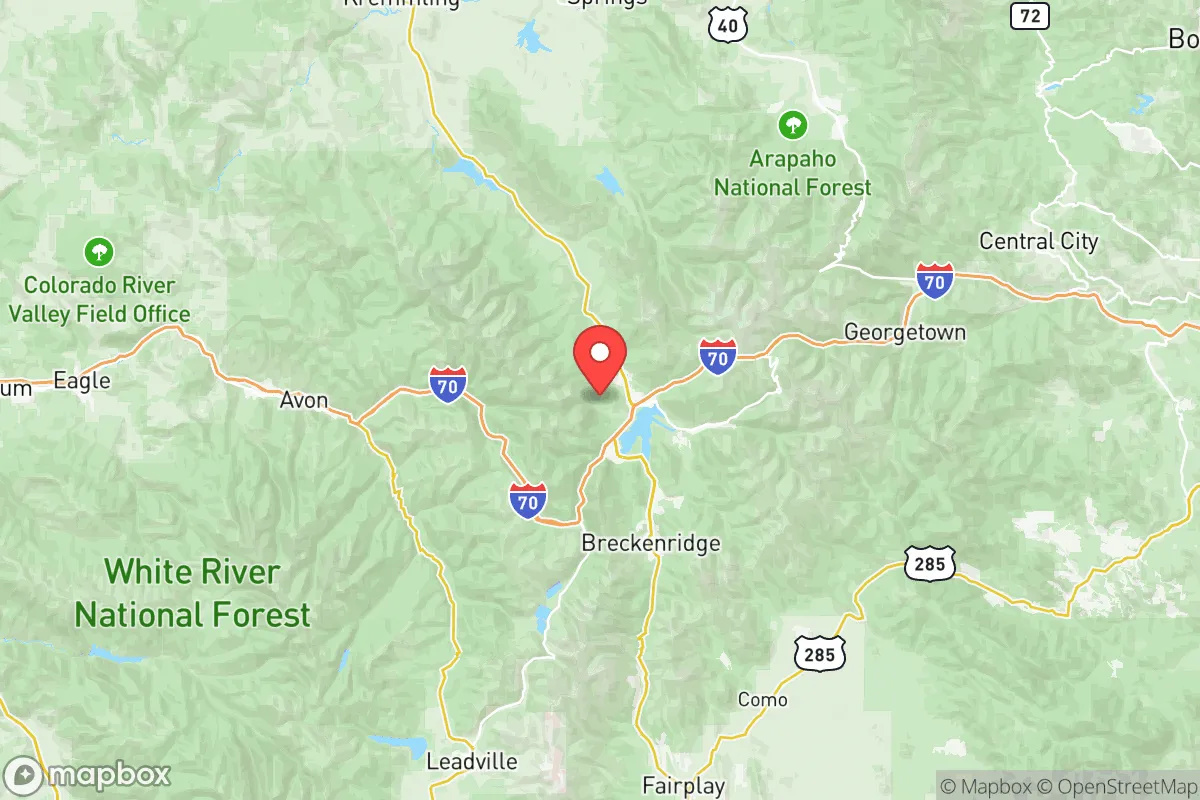
Photo: Wikipedia
Personal Sovereignty in Summit County
Viable for self-reliance. Generally workable, though some barriers may limit total independence.
What does Personal Sovereignty tell us?
Personal Sovereignty measures your capacity for self-reliance and independence with minimal government friction. Higher scores mean fewer barriers between you and the way you want to live... but it assumes you have the space you need and good neighbors.
What does this tell us?
Personal Sovereignty measures your capacity for self-reliance and independence with minimal government friction. Higher scores mean fewer barriers between you and the way you want to live... but it assumes you have the space you need and good neighbors.
State Policy
Energy independence: Net exporter (110% of energy produced in-state)
Personal Liberty
Homesteading

Personal Liberty Analysis
Summit County, Colorado, presents a nuanced personal sovereignty environment where state-level protections for individual rights intersect with a local regulatory culture that prioritizes environmental preservation and tourism-driven order. For a freedom-minded individual or family, the trade-off is clear: you gain robust constitutional protections on self-defense, property rights, and medical autonomy under Colorado law, but you operate within a county that enforces some of the state's strictest land-use and building codes. The autonomy you experience here is less about "do whatever you want" and more about "do what you want within a carefully managed mountain ecosystem." This is not a frontier libertarian enclave like parts of rural Saguache or Hinsdale counties; it is a high-amenity, high-regulation mountain community where personal liberty is exercised through informed compliance, not defiance.
Tax burden and regulatory posture: How Summit County compares to Colorado’s other mountain counties
Summit County’s tax burden is moderate by Colorado standards, but its regulatory posture is notably heavier than in less-populated mountain counties. The county’s property tax rate is approximately 0.49% of assessed value (2025 mill levy), which is lower than the national average but higher than neighboring Park County (0.35%) or Grand County (0.42%). Colorado’s flat income tax rate of 4.4% applies uniformly, and there is no state sales tax on groceries or prescription drugs. However, Summit County imposes a local sales tax of 4.5% on top of the state’s 2.9%, bringing the combined rate in towns like Breckenridge and Silverthorne to roughly 8.4% — higher than in rural Lake County (7.5%) but lower than Denver’s 8.81%. The regulatory environment is driven by the county’s 1970s-era growth management plan, which caps new residential building permits in unincorporated areas at a strict annual quota. In towns like Frisco and Dillon, building permits are issued on a first-come, first-served basis with a 90-day review period, and any structure over 35 feet requires a special-use hearing. By contrast, the unincorporated areas near Blue River and Heeney have slightly looser rules, but still require septic system approvals and wildfire mitigation plans that can add $5,000–$15,000 to a new build. For a freedom-minded builder, this means you cannot simply buy a lot and start framing — you must navigate a permitting process that can take 6–12 months. This is a far cry from the "just build it" culture of Costilla County or the San Luis Valley.
Self-defense and gun law specifics: What Summit County gun owners need to know
Summit County is a strong Second Amendment area within Colorado’s broader legal framework. Colorado is a "shall-issue" state for concealed carry permits, and Summit County’s sheriff’s office processes applications within the statutory 90-day window. As of 2025, there are no county-level magazine capacity bans or assault weapon restrictions — those are preempted by state law, which does ban magazines over 15 rounds (passed in 2013) and requires universal background checks for private sales. Open carry is legal without a permit in Summit County, but in practice, it is rare in tourist-heavy towns like Breckenridge and Keystone, where local ordinances prohibit firearms in town parks and municipal buildings. The county has no "gun-free zone" signage beyond what state law requires (schools, courthouses, and K-12 facilities). Shooting ranges are limited: the Summit County Shooting Range near Silverthorne is the only public facility, offering rifle and pistol lanes out to 200 yards, but it is closed during winter months (November–April). For private land target shooting, you must be at least 500 feet from any occupied structure — a rule that effectively limits practice to larger parcels in unincorporated areas like Montezuma or the Snake River Valley. Self-defense law follows Colorado’s "Make My Day" statute, which provides a legal presumption of reasonable fear when using deadly force against an unlawful intruder inside your home. However, there is no "stand your ground" law outside the home; Colorado imposes a duty to retreat in public spaces if safely possible. For a family prioritizing self-defense, Summit County offers solid legal protections but requires awareness of seasonal range closures and town-specific restrictions.
Self-reliance and homesteading viability: Lot sizes, zoning, and off-grid feasibility across Summit County
Homesteading and off-grid living in Summit County are constrained by altitude, zoning, and environmental regulations. The county’s minimum lot size in unincorporated areas is 35 acres for agricultural zoning, but most residential parcels are 1–5 acres in subdivisions like Wildernest or Mesa Cortina. True off-grid feasibility is limited: Colorado law requires new dwellings to have a permitted water source (well or hauled water) and a septic system approved by the county health department. Solar panels are allowed without a permit for systems under 10 kW, but net metering is available only through Xcel Energy, which serves most of the county. Composting toilets are legal but must meet NSF/ANSI Standard 41, and graywater systems are permitted only for subsurface irrigation — not for indoor reuse. The growing season is short (last frost typically June 10, first frost September 5), making serious food production challenging; most homesteaders focus on cold-hardy crops like kale, potatoes, and root vegetables in raised beds or hoop houses. Livestock regulations are permissive: you can keep chickens (hens only, no roosters) on parcels under 2 acres, and goats or sheep on parcels over 5 acres, but no swine or cattle are allowed in residential zones. In towns like Breckenridge and Silverthorne, backyard chickens require a $25 annual permit and a 10-foot setback from neighbors. For a family seeking true self-reliance, the unincorporated areas near Heeney or Blue River offer the most flexibility, with larger parcels and fewer HOAs. By contrast, the town of Dillon has a strict 6-foot fence height limit and prohibits outdoor wood-burning stoves — a dealbreaker for anyone wanting to heat with free fuel. Overall, Summit County is not a homesteading paradise; it is a high-altitude resort community where self-reliance requires significant capital and regulatory patience.
Personal liberties: Parental rights, medical autonomy, speech, and property in Summit County
Summit County’s personal liberties landscape is shaped by Colorado’s progressive state laws and a local culture that values individual choice within community norms. Parental rights are strong: Colorado’s "Parents’ Bill of Rights" (HB 22-1034) affirms that parents have the fundamental right to direct their children’s education, healthcare, and religious upbringing. Summit County School District RE-1 allows parents to opt their children out of sex education and specific curriculum materials without penalty. Medical autonomy is robust: Colorado has no vaccine mandates for adults, and the state’s "Right to Try" law (2015) allows terminally ill patients access to experimental treatments. Summit County has no local mask or vaccine mandates as of 2025, though private businesses in Breckenridge and Keystone may require them. Speech is protected under the First Amendment, and the county has no local ordinances restricting political signage beyond standard size limits (6 square feet in residential zones). Property rights are where friction occurs: Summit County’s short-term rental (STR) regulations, enacted in 2022, cap the number of STR licenses in unincorporated areas at 1,200, and require owner-occupancy for new licenses in towns like Frisco and Silverthorne. This limits the ability to use a second home as a passive income source — a constraint that does not exist in less-regulated counties like Park or Chaffee. For a family that values property autonomy, this means buying a home in Summit County comes with an implicit agreement to either live in it full-time or accept a capped rental market. The county also enforces a strict weed ordinance (noxious weeds must be controlled on all private property), and the HOA presence in subdivisions like Summit Cove and Keystone Ranch can impose additional rules on paint colors, landscaping, and parking. In short, personal liberties in Summit County are strong on paper but mediated by a dense web of local regulations that a freedom-minded individual must navigate carefully.
Overall, Summit County offers a moderate-to-strong personal sovereignty environment compared to Colorado’s more restrictive Front Range cities, but it falls short of the near-total autonomy found in the state’s rural counties. If you rank Colorado counties by regulatory burden, Summit sits in the middle tier — heavier than Costilla, Saguache, or Hinsdale, but lighter than Boulder, Denver, or Pitkin. For a conservative-leaning individual or family, the trade-off is access to world-class outdoor recreation, excellent schools, and a stable economy in exchange for a permitting-heavy approach to land use and a tourism-driven social culture. The key to maximizing personal sovereignty here is choosing your location wisely: Heeney and Blue River offer the most freedom for homesteaders and gun owners, while Breckenridge and Silverthorne impose the most restrictions. If you are willing to work within the system — securing permits, joining an HOA, and respecting setback rules — Summit County can be a rewarding place to exercise personal liberty. If you want to live entirely by your own rules, you will find more breathing room in the San Luis Valley or the Western Slope.

* Values derived from national, state, county, city and local statistics and may differ in a specific area. Last updated: 2026-06-24T23:01:55.000Z
Narrative content on this page is AI-generated and may contain mistakes. Verify any details that matter before acting on them.
ReloMaps may earn a commission from affiliate links at no extra cost to you.

