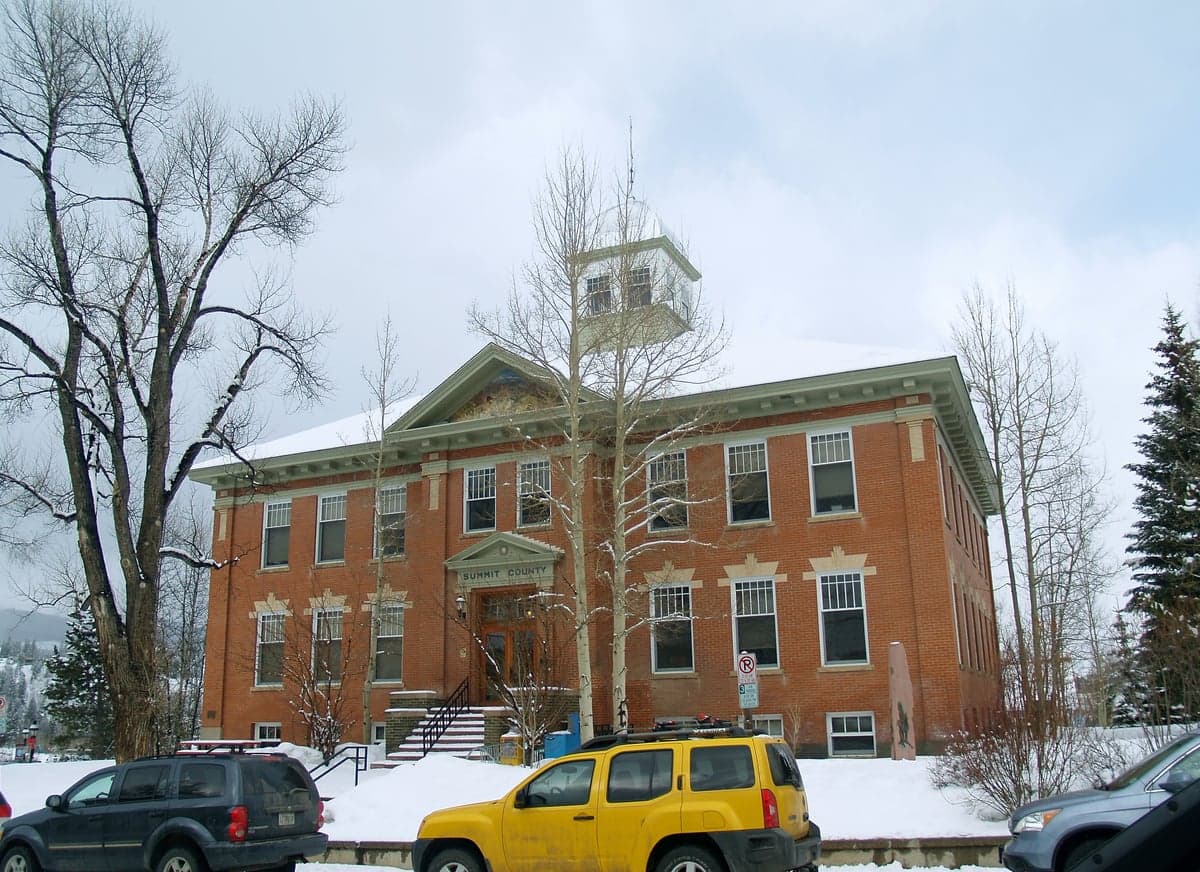
Photo: Wikipedia
Demographics of Summit County
Affluence Level in Summit County
An upper-middle-class area. Household wealth, education levels, and homeownership run ahead of national benchmarks.
People of Summit County
Summit County’s 30,857 residents are among the most educated in rural Colorado, with 52.5% holding a college degree, and the population is overwhelmingly White (74.9%) but growing more Hispanic (16.9%). The county’s identity remains shaped by ski tourism and second-home ownership — year-round locals in towns like Breckenridge, Silverthorne, and Frisco are outnumbered by seasonal visitors, creating a high-cost, high-amenity environment that attracts remote workers and outdoor enthusiasts while straining service-sector affordability. The foreign-born share (6.6%) is below the state average, with East/Southeast Asians (0.9%) and Indian-subcontinent residents (0.6%) forming small but visible professional clusters, while the Black population (0.4%) remains very low. Summit County feels simultaneously affluent and transient: a place where deep-rooted mountain town culture coexists with constant turnover of resort workers and vacation homeowners.
Settlement & growth (pre-1960)
Long before Euro-American arrival, the Ute people used the high valleys of Summit County as seasonal hunting and camping grounds, particularly around the Blue River and Snake River drainages. The Ute Trail passed through what is now Breckenridge and Frisco, but no permanent Ute villages existed due to harsh winters. Spanish expeditions never settled the area; French and British fur trappers (including members of the Hudson’s Bay Company) explored the region in the 1820s but left no permanent population. The 1859 Pikes Peak Gold Rush brought the first sustained wave of settlers — prospectors from the Eastern U.S., Germany, and Ireland who founded Breckenridge in 1859 after gold was discovered in the Blue River. The 1879 silver boom deepened settlement, drawing Cornish miners (“Cousin Jacks”), Irish laborers, and a small Chinese community that worked placer claims around French Gulch near Breckenridge. By 1880 the county’s population had reached roughly 5,000, but anti-Chinese violence and exclusion laws drove most Asian residents out by the 1890s. The collapse of silver in 1893 triggered a steep decline; by 1910 the county had fewer than 2,000 residents, many clustered in mining camps like Montezuma, Kokomo, and Robinson. A brief revival came from tungsten and molybdenum mining during World War I and II, but the county remained sparsely populated until the ski era. The U.S. Forest Service and early ski pioneers built the first lifts at Arapahoe Basin (1946) and Breckenridge Ski Resort (1961), kicking off a new economy that would reshape the population entirely. No significant waves of European immigration occurred after 1900; the pre-1960 population was almost entirely native-born White, with a small Hispanic presence from railroad and mining labor linkages to northern New Mexico.
Modern era (post-1965)
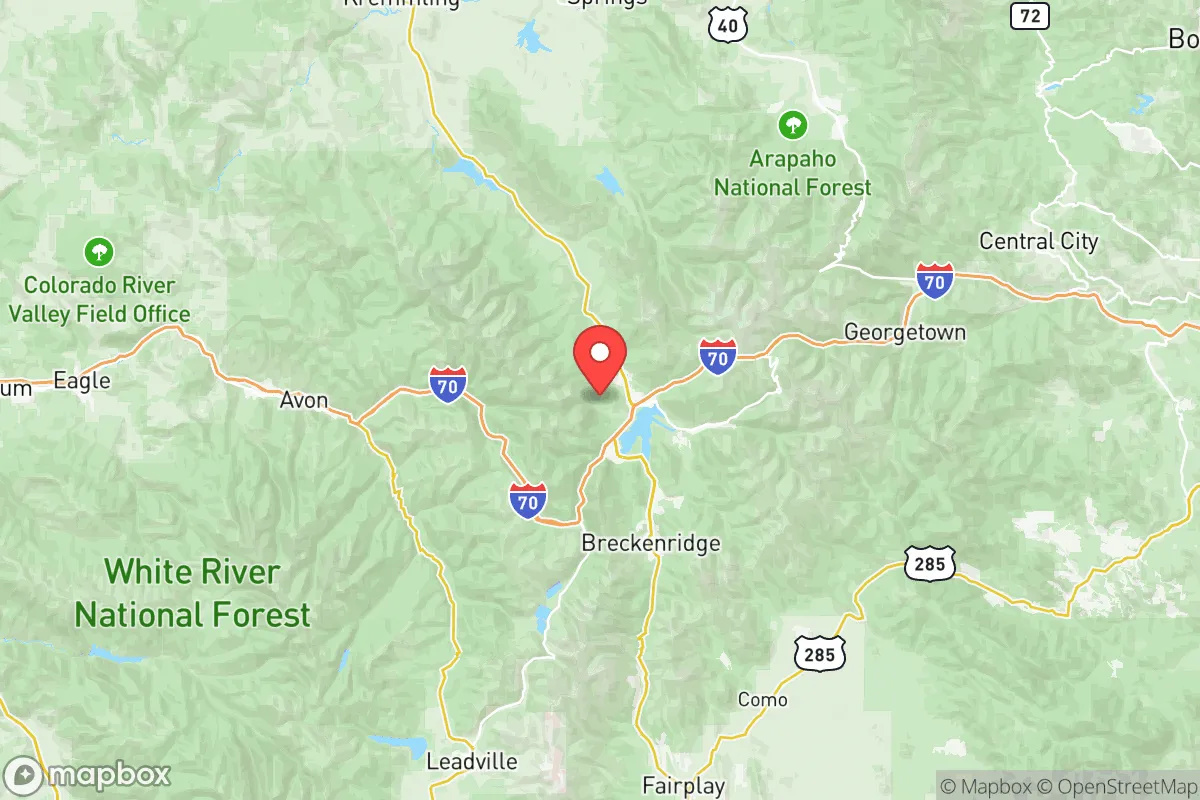
The 1965 Hart-Cellar Act had limited direct effect on Summit County because its population growth came overwhelmingly from domestic migration rather than overseas immigration. The key demographic shift after 1965 was the explosive growth of ski resort tourism and recreation-based suburbanization. Breckenridge incorporated as a town in 1880 but saw its population jump from under 400 in 1960 to over 1,500 by 1970 and more than 10,000 by 2000, driven by destination skiing and real estate development. Silverthorne was incorporated in 1967, Frisco in 1879 but modernized with condominiums and outlet shopping, and Dillon grew as a lakeside/reservoir community after the Dillon Dam was completed in 1963. These four towns — plus unincorporated Keystone and Copper Mountain — now contain nearly all of the county’s housing and population. Domestic migration from the urban Front Range (Denver, Boulder) and from other Western states brought a largely White, college-educated, liberal-leaning cohort that contrasts with the county’s older ranching and mining roots. Hispanic population growth accelerated after 1990, rising from roughly 5% to 16.9% as immigrant workers from Mexico and Central America filled hotel, restaurant, and construction jobs in the resorts. Most Hispanic residents live in lower-cost areas of Silverthorne, Frisco, and Dillon, often in workforce housing or mobile home parks; they face high housing costs but have formed active community organizations and bilingual services. East/Southeast Asian residents (0.9%) are concentrated in Breckenridge and Keystone, largely as professionals in hospitality management and tech remote work. The Indian-subcontinent population (0.6%) is very small but visible in the medical sector (St. Anthony Summit Medical Center in Frisco). The Black population (0.4%) remains minuscule, with no distinct enclave. Since 2000, the county added about 6,000 residents, but growth has slowed due to land constraints and a push for workforce housing caps. Summit County voted for Democrats in every presidential election since 2008, a liberal shift that mirrors the ski-town demographic — though many second-home and seasonal visitors hold more conservative political views.
The future
Summit County’s population is projected to grow only modestly in the next decade — likely under 1% annually — because buildable land is limited by National Forest boundaries and zoning that favors permanent open space. The county is becoming slightly more diverse over time: Hispanic share could approach 20% by 2035 as second-generation families remain in the service workforce, and small East/Southeast Asian and Indian professional cohorts are expected to grow with the expansion of remote work and niche tourism (e.g., Breckenridge’s annual Asian cultural festivals). However, the White non-Hispanic share will remain above 70% because housing costs ($1 million median home price) filter overwhelmingly for affluent buyers, and new construction is focused on luxury condos and single-family homes rather than affordable rentals. Future residents will likely be concentrated in the same four towns — Breckenridge, Silverthorne, Frisco, and Dillon — with Keystone and Copper Mountain adding seasonal worker housing only in small increments. The cultural identity is evolving from a “ski bum” ethos toward a more family-oriented, amenity-driven community, with year-round schools, expanded healthcare, and outdoor recreation infrastructure. For someone moving in now, Summit County offers a high-quality natural environment and educated social network, but newcomers should expect limited housing options, a transient workforce in service roles, and a political environment that leans progressive on land use but remains pragmatic on economic development.
Bottom line: Summit County is becoming a more diverse, more expensive, and more permanent version of its resort-town self — still overwhelmingly White and affluent, but with a growing Hispanic workforce and small but visible Asian and Indian communities anchored in specific towns. The county’s future is stable but selective: it will attract families and remote workers who can afford the entry price, while continuing to rely on imported labor for its tourism economy. For a prospective resident, the key takeaway is that Summit County’s population is not undergoing rapid change — it’s slowly grafting new diversity onto a deeply established mountain recreation culture that values open space, outdoor lifestyle, and high educational attainment.

* Values derived from national, state, county, city and local statistics and may differ in a specific area. Last updated: 2026-06-24T23:01:55.000Z
Narrative content on this page is AI-generated and may contain mistakes. Verify any details that matter before acting on them.
ReloMaps may earn a commission from affiliate links at no extra cost to you.

