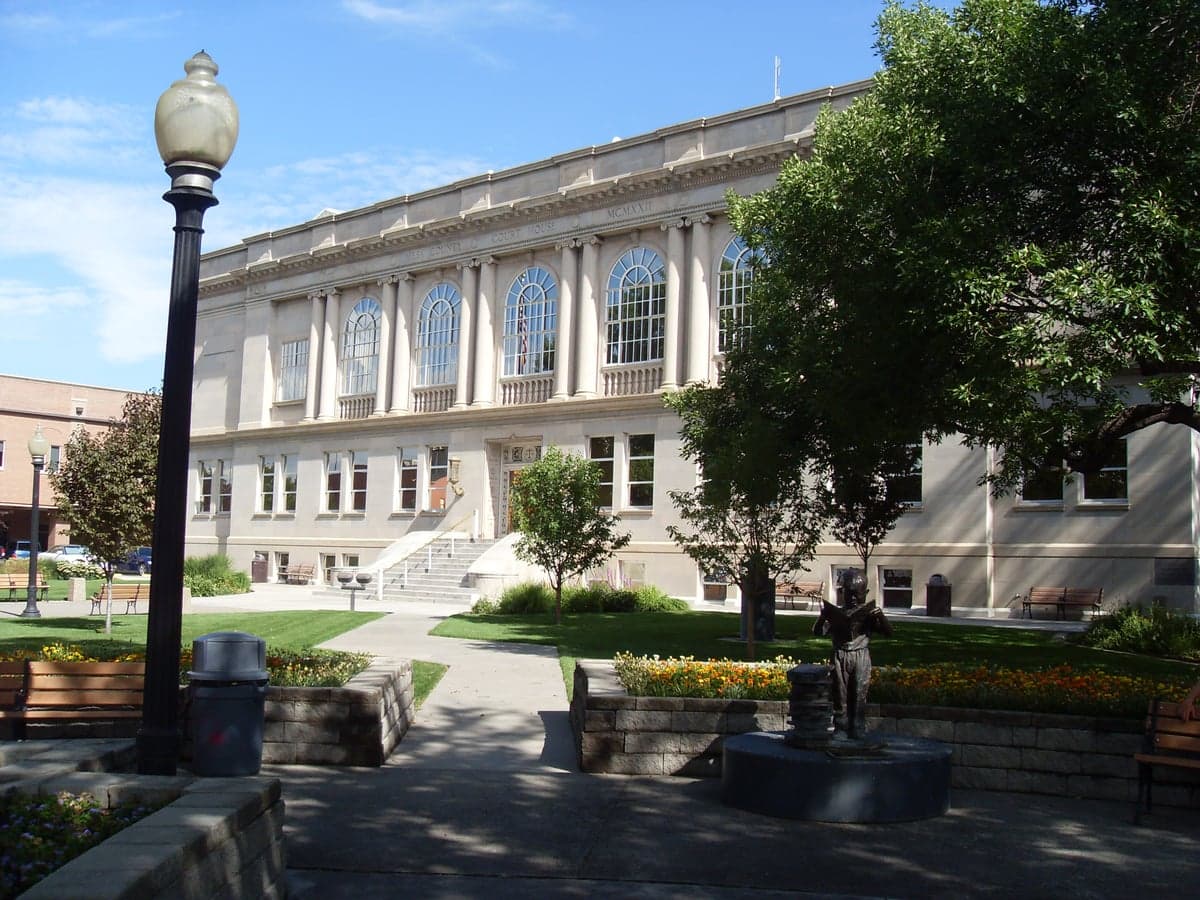
Photo: Wikipedia
Political ClimatePolitical Climate in Mesa County
Showing district-level results — no local-only data available.
Local Political AnalysisPolitical Analysis of Mesa County
Mesa County, Colorado, is a reliably conservative stronghold in a state that has shifted decisively blue over the past two decades. With a Cook Partisan Voting Index (PVI) of R+5, the county votes about five points more Republican than the national average, a stark contrast to Colorado’s statewide PVI of D+6. This 11-point gap between county and state means Mesa County is not just a red dot in a blue state—it’s one of the most politically distinct regions in Colorado, and its trajectory has actually been hardening in recent years, not moderating.
How it compares
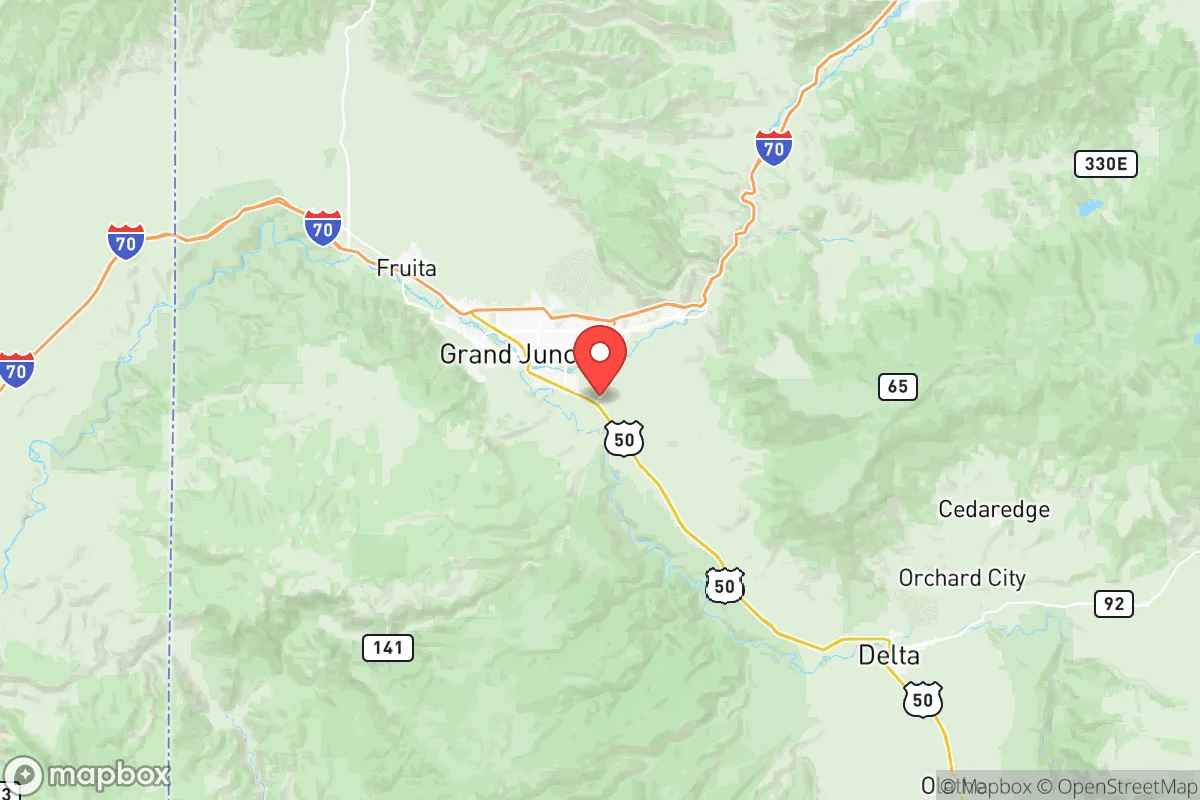
The political geography within Mesa County tells a more nuanced story than the county-wide numbers suggest. The city of Grand Junction, the county seat and largest population center, is a mix of deep-red precincts in its suburban fringes and a handful of reliably blue precincts near downtown and around Colorado Mesa University. The Orchard Mesa and Redlands neighborhoods lean heavily Republican, while the Fruita area—especially the newer developments along the I-70 corridor—has shown signs of becoming more competitive, though still solidly red overall. Smaller towns like Palisade and Clifton are overwhelmingly conservative, with Palisade’s wine-country charm doing little to shift its voting patterns. The real outlier is Carbondale? No, that’s in Pitkin County. Within Mesa County, the only precincts that consistently vote blue are those in central Grand Junction, where younger renters and college faculty create a small liberal pocket. Meanwhile, the rural eastern parts of the county, toward De Beque and Mack, are among the most conservative in the state. Compared to Colorado as a whole, Mesa County is essentially the mirror image of Boulder or Denver—where those areas have been trending left for decades, Mesa County has held steady or even drifted slightly right, especially in presidential elections since 2016.
What this means for residents
For conservative residents, Mesa County offers a rare experience in Colorado: local government that reflects their values without constant friction. The county commission, sheriff’s office, and school board have been reliably Republican for decades, and policy debates tend to center on growth management, water rights, and federal land use rather than the culture-war flashpoints that dominate state-level politics. For liberal residents, the reality is more isolating. While Grand Junction’s downtown core provides a small progressive community, it’s not uncommon to feel politically out of step at a neighborhood gathering or PTA meeting. That said, the political climate here is generally civil—people disagree without the hostility found in more polarized Front Range suburbs. The practical effect of the R+5 lean is visible in local policy: Mesa County was one of the first in Colorado to push back on statewide renewable energy mandates, and it has consistently opposed gun control measures passed in Denver. Property taxes remain relatively low compared to the Front Range, partly because the county’s conservative leadership resists new spending. For newcomers, the key takeaway is that Mesa County is not a purple swing area—it’s a place where conservative values shape daily life, and where even moderate Democrats often find themselves in the minority.
Culturally, Mesa County’s political identity is deeply tied to its Western heritage and economic reliance on agriculture, energy extraction, and outdoor recreation. The county’s resistance to statewide housing and land-use reforms reflects a broader skepticism of Denver-centric policymaking. Unlike some rural Colorado counties that have seen an influx of remote workers and liberal transplants, Mesa County’s growth has been more organic, with many newcomers drawn by affordability and conservative governance. The result is a community where the local newspaper’s editorial page leans right, where the county fair is still a bigger deal than any political rally, and where the biggest political fights are often about water rights and federal land management—not the national culture wars. For anyone moving here, understanding that Mesa County is politically distinct from Colorado’s blue majority is essential to navigating both local politics and everyday social life.

State Political ClimatePolitical Climate in Colorado
State Political AnalysisPolitical Environment in the State
Colorado has shifted from a classic purple swing state to a solidly blue one over the past two decades, now carrying a Cook PVI of D+6. The Democratic coalition is anchored by the Denver-Boulder-Aurora metroplex and the mountain resort towns, while the Eastern Plains, the Western Slope, and the southern tier remain deeply Republican. The trajectory has been a steady leftward march since the 2000s, driven by massive in-migration from blue states and a growing Latino and young professional population in the Front Range, but the state still retains a strong libertarian streak and a live-and-let-live ethos that complicates simple partisan labels.
Urban vs. rural divide
The political map of Colorado is a tale of two landscapes. The Denver metro area, including Denver, Aurora, Lakewood, and Boulder, votes overwhelmingly Democratic — Boulder County gave Biden 78% in 2020. The I-25 corridor from Fort Collins down through Denver to Colorado Springs is the state's political spine, with Colorado Springs being the major conservative redoubt on the Front Range, home to Focus on the Family and a heavy military presence. The mountain resort counties like Pitkin (Aspen), Summit, and San Miguel (Telluride) are also deep blue, driven by wealthy second-home owners and a tourism-based economy. In contrast, the Eastern Plains counties like Yuma, Kit Carson, and Prowers routinely vote 75-80% Republican, as do the Western Slope counties like Mesa (Grand Junction), Montrose, and Delta. The rural-urban divide is stark: the 2020 election saw Biden win just 15 of Colorado's 64 counties, but those counties contained over 80% of the population.
Policy environment
Colorado's policy environment reflects its purple-turned-blue trajectory. The state income tax is a flat 4.4%, down from 4.63% in recent years, and the state sales tax is 2.9% (local add-ons push it higher). Property taxes are relatively low compared to the national average, thanks to the Gallagher Amendment (repealed in 2020) and TABOR, which still caps revenue growth. The regulatory posture is mixed: Colorado is business-friendly in some sectors (tech, aerospace, outdoor recreation) but heavily regulated in others (energy, cannabis, environmental permitting). Education policy is a battleground — the state ranks near the bottom nationally in per-pupil funding due to TABOR constraints, but has adopted progressive policies like universal preschool and in-state tuition for undocumented students. Healthcare is dominated by the state-run Connect for Health Colorado exchange, and the state has expanded Medicaid. Election laws are among the most accessible in the nation: universal mail-in voting, same-day registration, and automatic voter registration at the DMV.
Recent policy direction
The last five years have seen a flurry of legislation that signals where Colorado is heading. On gun policy, the state passed a red flag law (Extreme Risk Protection Orders) in 2019, a ban on high-capacity magazines in 2022, and a three-day waiting period for all firearm purchases in 2023 — a sharp departure from its Western libertarian tradition. On education and parental rights, the state has moved in the opposite direction of many red states: it passed a law requiring schools to notify parents if a student changes their gender identity or pronouns, but also expanded protections for LGBTQ+ students. On speech and privacy, Colorado has a strong data privacy law (CPA) and has banned the use of facial recognition by government agencies in most contexts. Medical and bodily autonomy is fully protected — abortion remains legal without gestational limits, and the state has a shield law protecting providers and patients from out-of-state prosecution. Property rights are constrained by strict land-use regulations, especially along the Front Range, and a 2023 law (SB 23-213) preempted local zoning to allow more density near transit. On taxation, voters rejected a progressive income tax in 2020 but approved a nicotine tax hike in 2022. Ballot access remains wide open, with initiatives frequently making the ballot on everything from wolf reintroduction to psychedelics legalization.
Civil unrest & political movements
Colorado has seen its share of political flashpoints. The 2020 protests in Denver were large and occasionally violent, leading to debates over police reform and the city's budget. The state has a robust sanctuary movement — Denver and Boulder are sanctuary cities, and the state passed a law in 2019 limiting local law enforcement's cooperation with ICE. Immigration politics are heated: the state has seen busloads of migrants sent from Texas, straining Denver's shelter system and fueling backlash in suburban communities like Aurora and Thornton. On the right, the Colorado Republican Party has fractured between establishment and MAGA factions, with the state party chair facing calls to resign after controversial statements. Election integrity has been a persistent issue — Colorado's mail-in voting system is widely considered secure, but a 2021 audit of Mesa County's election equipment by a rogue clerk (Tina Peters) led to her indictment and conviction, a national cautionary tale. Secession rhetoric flares periodically on the Eastern Plains (the "State of Jefferson" movement) and in Weld County, but has never gained serious traction. A new resident would notice the ubiquity of political bumper stickers and yard signs, especially in swing suburbs like Jefferson County and Larimer County, where the fight for the state's soul plays out block by block.
Projection
Over the next 5-10 years, Colorado is likely to become more Democratic, not less. In-migration from California, Texas, and the Northeast continues to drive growth in the Front Range, and these newcomers tend to be younger, more diverse, and more liberal. The rural counties will continue to bleed population and political influence. The state's growing Latino population (now over 22%) is not a monolith — many are conservative on social issues but lean Democratic on economic and immigration policy — but overall it pushes the state leftward. The Republican Party's path to statewide victory is narrowing: a GOP candidate would need to run up huge margins on the Eastern Plains and Western Slope while keeping the suburban losses manageable, a math problem that gets harder every cycle. Expect continued progressive legislation on climate (the state has a goal of 100% renewable electricity by 2040), housing (more density mandates and rent control debates), and criminal justice reform. The wild card is the state's libertarian streak — Coloradans have a deep skepticism of government overreach, which could moderate the most aggressive progressive proposals, especially on property rights and taxation.
For a new resident, the bottom line is this: Colorado is a blue state that still feels purple in places. If you're conservative, you'll find your people in Colorado Springs, Grand Junction, or the rural counties, but you'll be swimming against the current in state politics. If you're liberal, you'll feel at home in Denver, Boulder, or the mountain towns, but you'll encounter a pragmatic, Western independence that resists ideological purity. The state's politics are shaped by its geography — a narrow band of urban and suburban density surrounded by vast, sparsely populated expanses — and that tension isn't going away. What you get is a state that taxes moderately, regulates unevenly, and votes reliably blue, but where the culture still rewards self-reliance and a healthy skepticism of authority. It's not Texas, and it's not California — it's Colorado, and it's still figuring out what that means.
* Values derived from national, state, county, city and local statistics and may differ in a specific area. Last updated: 2026-06-29T14:17:33.000Z
Narrative content on this page is AI-generated and may contain mistakes. Verify any details that matter before acting on them.
ReloMaps may earn a commission from affiliate links at no extra cost to you.

