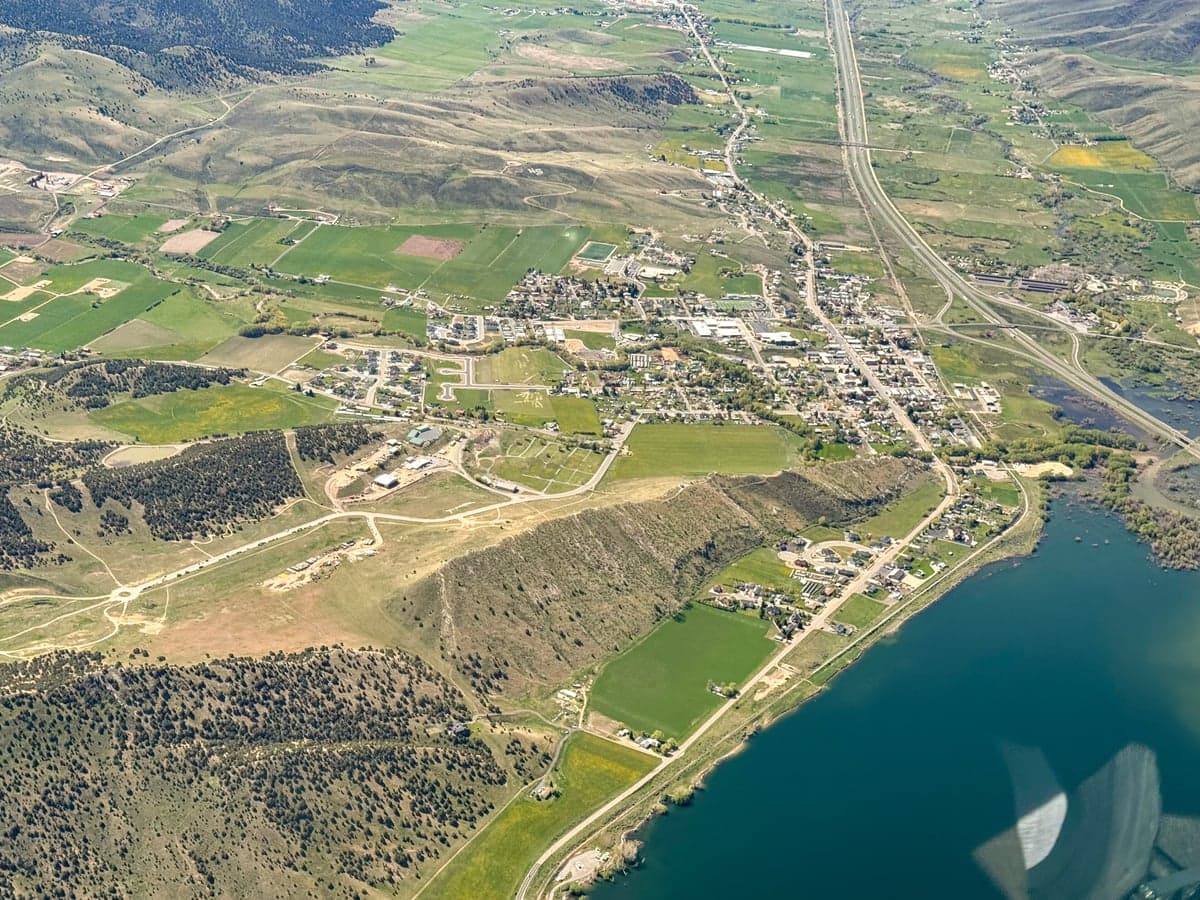
Photo: Wikipedia
Personal Sovereignty in Coalville, UT
Viable for self-reliance. Generally workable, though some barriers may limit total independence.
What does Personal Sovereignty tell us?
Personal Sovereignty measures your capacity for self-reliance and independence with minimal government friction. Higher scores mean fewer barriers between you and the way you want to live... but it assumes you have the space you need and good neighbors.
What does this tell us?
Personal Sovereignty measures your capacity for self-reliance and independence with minimal government friction. Higher scores mean fewer barriers between you and the way you want to live... but it assumes you have the space you need and good neighbors.
State Policy
Energy independence: Net exporter (108% of energy produced in-state)
Personal Liberty
Homesteading

Personal Liberty Analysis
Coalville, Utah, offers a notably high degree of personal sovereignty, anchored in a state culture that prioritizes limited government, individual responsibility, and a strong tradition of self-reliance. As the seat of Summit County, Coalville sits in a unique position—it benefits from Utah’s broadly liberty-friendly state laws while being somewhat insulated from the more regulatory, tourism-driven pressures found in the county’s western areas like Park City. For individuals and families seeking an environment where personal autonomy is the default, Coalville presents a compelling option, particularly for those who value low taxes, robust self-defense rights, and the practical ability to live independently.
Tax burden and regulatory posture in Coalville and Summit County
Utah’s overall tax burden is among the lowest in the nation, and Coalville residents benefit directly from this. The state levies a flat income tax rate of 4.85%, and there is no state-level tax on Social Security benefits, making it attractive for retirees. Property taxes in Summit County are moderate, with Coalville’s mill levy typically lower than in the more developed Park City area. The county’s assessed property tax rate for 2025 is approximately 0.68% of market value, which is competitive for the Intermountain West. Sales tax in Coalville is 7.25%, which includes state, county, and local components, but essential items like unprepared food are exempt. On the regulatory side, Utah is a right-to-work state with a strong pro-business climate. Summit County does enforce zoning and building codes, particularly in unincorporated areas, but Coalville’s town government is known for a relatively light touch compared to larger municipalities. Permitting for new construction or home additions is straightforward, and the town does not impose rent control or overly burdensome business licensing. The state’s regulatory environment is consistently ranked in the top 10 for business freedom, meaning fewer bureaucratic hurdles for entrepreneurs and self-employed individuals.
Self-defense and gun law specifics in Coalville and Utah
Utah is a shall-issue state for concealed carry permits, and as of 2021, it became a permitless carry state for anyone 21 or older who is legally allowed to possess a firearm. This means that in Coalville, residents can carry a concealed firearm without a permit, though obtaining a permit is still beneficial for reciprocity in other states. The state has strong castle doctrine and stand-your-ground laws, with no duty to retreat in any place where a person has a legal right to be. Use of deadly force is presumed justified if an intruder unlawfully and forcibly enters a residence or occupied vehicle. There are no state-level magazine capacity restrictions, no assault weapon bans, and no firearm registration requirements. Background checks are required for purchases from licensed dealers, but private sales between individuals are not regulated by the state. Coalville itself has no local ordinances that further restrict firearm ownership or carry, and the Summit County Sheriff’s Office is generally supportive of Second Amendment rights. For those interested in hunting, Utah offers abundant public land access, and a hunting license is required for most game. The overall legal framework strongly favors individual self-defense and firearm ownership.
Self-reliance and homesteading viability: lot sizes, zoning, and off-grid feasibility
Coalville’s rural character makes it a viable location for homesteading and self-reliant living. Residential lots in town can range from a quarter-acre to several acres, while properties in the surrounding unincorporated areas often come with 5 to 40 acres or more. Zoning in Coalville’s town limits allows for keeping chickens, goats, and other small livestock on standard residential lots, though larger animals like horses or cattle typically require a minimum lot size of one acre or more. The town does not have a blanket ban on front-yard gardens or food production, and many residents maintain substantial vegetable plots and fruit trees. Off-grid living is legally feasible in Summit County, but with important caveats. The county requires a building permit for any permanent structure, and dwellings must meet the International Residential Code (IRC) for safety. However, there is no county-wide prohibition on solar panels, rainwater collection, or composting toilets. The state of Utah has a statutory right to rainwater harvesting, and residents can collect up to 2,500 gallons without a permit. For those seeking true off-grid independence, properties outside the town limits with a private well and septic system are common. The main regulatory hurdle is that the county does require a minimum habitable dwelling size (typically 500 square feet) and does not allow permanent habitation in RVs or tiny houses on wheels without a conditional use permit. Overall, the area is friendly to self-reliance, with the understanding that basic building and health codes still apply.
Personal liberties: parental rights, medical autonomy, speech, and property
Utah has a strong legal framework for parental rights. The state’s Parents’ Bill of Rights, codified in Utah Code 53G-6-803, affirms that parents have the fundamental right to direct their children’s education, healthcare, and moral upbringing. This includes the ability to opt children out of specific curriculum content and to be notified of any medical or mental health services provided by schools. In Coalville, the local school district (North Summit School District) is known for being responsive to parental concerns, and school board meetings are typically well-attended by community members. On medical autonomy, Utah does not have a state-level vaccine mandate for adults, and while certain vaccines are required for school attendance, exemptions are available for medical, religious, and personal reasons. The state also has a right-to-try law and allows the use of investigational treatments for terminally ill patients. Freedom of speech is robustly protected under both the U.S. and Utah constitutions, and there are no local ordinances in Coalville that restrict expressive activities beyond standard time, place, and manner regulations. Property rights are strongly protected; Utah is a “Dillon’s Rule” state, meaning local governments only have powers expressly granted by the state, which limits the ability of counties to impose overly restrictive land-use regulations. Eminent domain is rarely used for private development, and property owners have strong legal recourse against regulatory takings.
In summary, Coalville offers a high degree of personal sovereignty that is competitive with any rural area in the Intermountain West. The combination of low taxes, permissive gun laws, viable homesteading options, and strong protections for parental and property rights creates an environment where individuals and families can live largely on their own terms. While Summit County does impose some zoning and building codes, they are generally reasonable and predictable, not arbitrary or punitive. For a relocation-minded reader who prioritizes autonomy and self-reliance, Coalville stands out as a place where the state and local governments largely stay out of the way, allowing residents to exercise a meaningful degree of personal freedom in their daily lives.

* Values derived from national, state, county, city and local statistics and may differ in a specific area. Last updated: 2026-11-07T07:12:17.000Z
Narrative content on this page is AI-generated and may contain mistakes. Verify any details that matter before acting on them.
ReloMaps may earn a commission from affiliate links at no extra cost to you.

