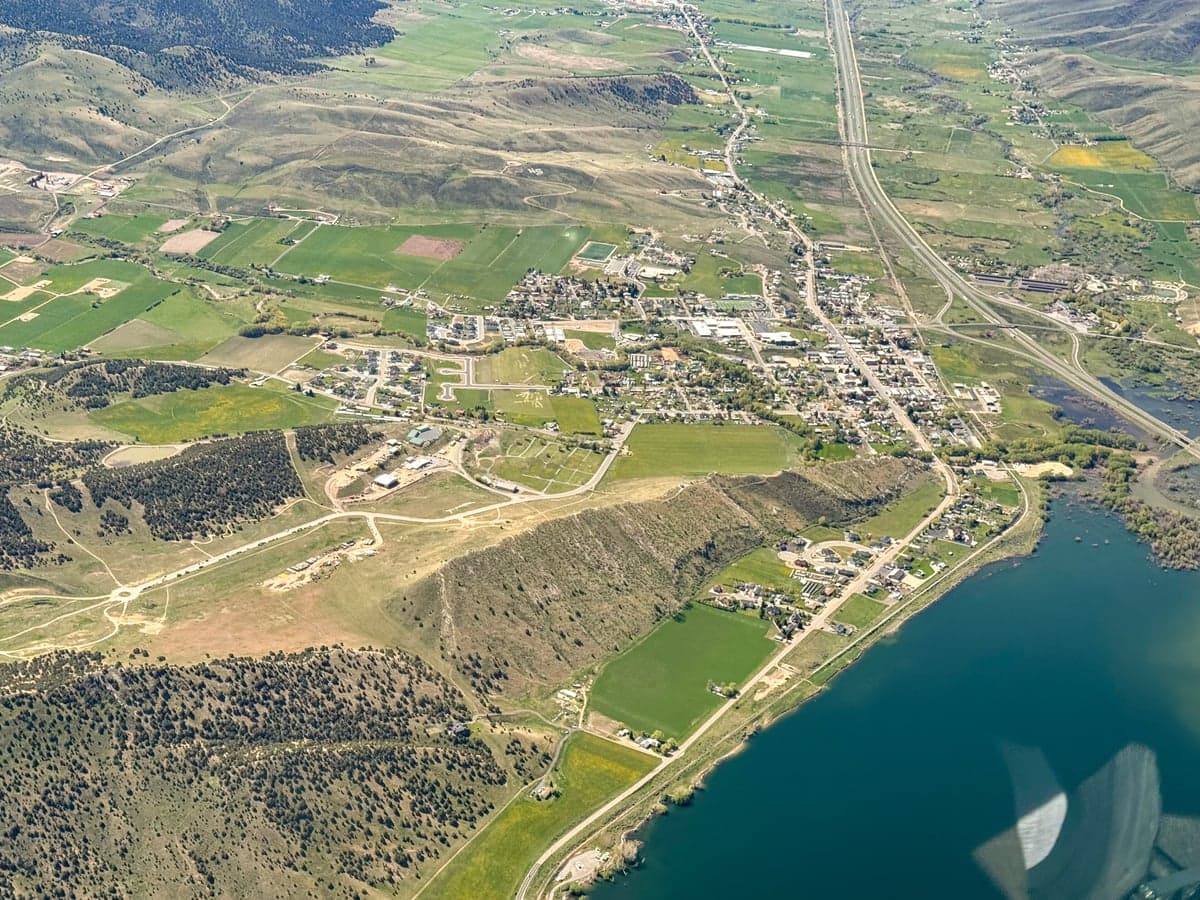
Photo: Wikipedia
Demographics of Coalville, UT
Affluence Level in Coalville, UT
A middle-class area roughly in line with national averages across income, home values, education, and employment.
People of Coalville, UT
Coalville, Utah, today is a small, tight-knit community of 1,915 residents where a nearly even split between white (48.1%) and Hispanic (49.9%) populations defines its distinctive character. The city is notably less diverse in other measures, with a very small Black population (1.4%) and no recorded East/Southeast Asian or Indian subcontinent residents. A relatively low college attainment rate of 21.4% and a foreign-born share of 16.2% point to a working-class, family-oriented community with deep roots in both pioneer heritage and newer immigrant labor.
How the city was settled and grew
Coalville’s human history begins with Mormon pioneers sent by Brigham Young in the 1850s to develop the region’s coal deposits, which gave the city its name. The original settlers were predominantly of English, Scandinavian, and Welsh descent, drawn by church-directed colonization and the promise of work in the coal mines and later the railroad. These founding families built the Historic Downtown District along Main Street, where stone and brick commercial buildings still stand, and established the Chalk Creek District to the east, where early farms and homesteads lined the creek. A second wave arrived in the early 1900s with the expansion of the Union Pacific Railroad, bringing Irish and Italian laborers who settled in the Railroad Addition neighborhood near the depot. By mid-century, Coalville remained overwhelmingly white and Mormon, with a population that hovered around 1,000 and an economy tied to mining, agriculture, and county government as the seat of Summit County.
Modern era (post-1965)
The most transformative demographic shift began in the 1970s and accelerated through the 1990s, as agricultural and construction labor demand drew Mexican and Central American immigrants to the region. These new residents concentrated in the South Coalville area, where older, more affordable housing stock and proximity to ranch work created a distinct Hispanic-majority neighborhood. By the 2020 census, the Hispanic share had risen to 49.9%, while the white share fell to 48.1%, making Coalville one of the most evenly split communities in Utah. The foreign-born population of 16.2% is nearly double the state average, reflecting ongoing chain migration from Latin America. Meanwhile, the white population has aged and shrunk, with many younger white families moving to newer subdivisions in Wanship or Hoytsville to the west, leaving Coalville’s core neighborhoods increasingly Hispanic and working-class. The Black population remains negligible at 1.4%, and there are no recorded East/Southeast Asian or Indian subcontinent residents, indicating that diversity is almost entirely a story of Hispanic in-movement.
The future
Coalville’s population is projected to grow modestly, driven by spillover from the Park City and Salt Lake City housing markets, but the demographic trajectory points toward continued Hispanic majority status within a decade. Newer subdivisions like Silver Creek Estates on the city’s northern edge are attracting a mix of white and Hispanic families seeking lower home prices than Park City, though these remain predominantly white. The city’s cultural identity is evolving from a historically Mormon, pioneer-rooted community into a bilingual, binational one, with Spanish increasingly heard in schools and local businesses. The low college attainment rate (21.4%) suggests that economic pressures may limit upward mobility, but the strong family networks and steady construction and service-sector jobs provide stability. Over the next 10-20 years, Coalville will likely become a majority-Hispanic, working-class suburb of the Park City-Salt Lake corridor, with its historic districts retaining pioneer character while its newer neighborhoods reflect a more diverse, younger population.
For someone moving in now, Coalville offers a genuinely mixed community where two cultures coexist in a small-town setting, but amenities and economic opportunity remain limited compared to larger Wasatch Front cities. The city is becoming more Hispanic and more working-class, with a cultural identity that blends pioneer history with immigrant energy. New residents should expect a place where Spanish and English share public space, where church and family ties remain strong, and where the pace of life is slower than in the booming ski towns to the south.

* Values derived from national, state, county, city and local statistics and may differ in a specific area. Last updated: 2026-11-07T07:12:17.000Z
Narrative content on this page is AI-generated and may contain mistakes. Verify any details that matter before acting on them.
ReloMaps may earn a commission from affiliate links at no extra cost to you.

